The European space telescope has spent five years revealing the most violent universe.
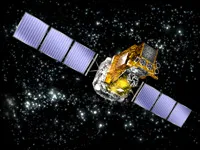
This Wednesday, October 17, the gamma-ray telescope of the European Space Agency (ESA), Integral, turns 5.
The gamma-ray telescope of the European Space Agency (ESA), Integral has spent five years observing the most energetic phenomena in the universe, discovering the unexpected and helping to understand the unknown.
Integral was launched on October 17, 2002. Since then it has proven to be the most complete and sensitive instrument for observing a still relatively little-known facet of the cosmos, that of the most violent phenomena or, in other words, those that involve the greatest release of energy.
Gamma rays are the most energetic radiation that exists. If this radiation reached the Earth's surface it would be lethal, so we must thank the atmosphere for acting as a barrier. But the fact that gamma radiation does not penetrate the atmosphere implies that to study the objects and phenomena that emit it, we must resort to space telescopes, which observe from outside our 'protective shield'.
The ESA's gamma-ray telescope, Integral, is the most advanced ever launched. It can detect radiation coming from objects that emitted it shortly after the origin of the universe, the Big Bang.
From the very beginning this satellite has helped scientists understand the gamma-ray universe - from the atoms that form all matter, to the densest objects in the universe, including giant black holes or the most violent explosions known as 'gamma-ray bursts', phenomena in which the greatest amount of this very high-energy radiation is emitted. Their cause is still not entirely clear; contributing to finding it is in fact an important goal for Integral.
But in addition, Integral studies other phenomena where a lot of energy is also released. Integral detects, for example, the extremely intense last cry of matter as it falls into a black hole, or the annihilation of matter and antimatter in the vicinity of the center of our galaxy.
Observations with Integral over these five years have allowed great progress in the knowledge of how stars are born and die in our galaxy; of black holes and neutron stars –the most compact objects that exist–; and, of course, of the extremely violent gamma-ray bursts.
According to Christoph Winkler, Project Scientist for the Integral mission, “Integral has played an indispensable role in modern gamma-ray astronomy. Much has happened in these five years, but much more is yet to come.”
Sources and related links
Note at ESA