A collaboration of 50 astronomers, the IPHAS consortium, led by Britain with European, American and Australian partners, has released today the first detailed optical survey of our Milky Way.
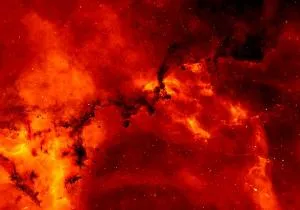
Carried out by searching for light emitted by hydrogen ions, using the Isaac Newton Telescope on La Palma, the survey contains incredible red images of nebulae and stars. The data are detailed in a paper submitted to Monthly Notices of the Royal Astronomical Society.
To date, the IPHAS includes 200 million unique objects in the recent catalog.
Janet Drew from the University of Hertfordshire says that "Using the distinctive signature of hydrogen we are able to observe some of the least understood stars in the Galaxy - those in the very early and very late stages of their life cycles. These represent less than one in a thousand stars, so the data will notably improve our picture of stellar evolution".
The IPHAS data, in addition to being available through traditional web access, is also being published through a Virtual Observatory interface where it can be automatically cross-matched with other relevant catalog data.
The initial observations released are from observations of the Northern Plane of the Milky Way (the star-filled section) covering 1600 square degrees, in two color bands, and a narrow band filter sensitive to hydrogen emission in the red part of the spectrum (H-alpha emission). The image resolution is high enough to allow the detection of individual stars exhibiting H-alpha emission, in addition to the diffuse gas of the beautiful nebulae we already know at a lower resolution.
The IPHAS database is revealing great scientific richness. For example, the team from the University of Southampton has led an effort to extract and catalog the stars with the highest H-alpha emission. This list of about 5000 objects is already the longest of its kind. The distribution of these special objects, across the northern sky, traces hotspots of recently formed stars in our Galaxy much more convincingly than has been done so far.
The survey will be expanded to cover the entire galactic plane.
Sources and related links
- Largest Digital Survey Of The Milky Way Released
- Initial Data Release from the INT Photometric H-alpha Survey of the Northern Galactic Plane (IPHAS)
- The IPHAS Catalogue of Halpha Emission Line Sources in the Northern Galactic Plane
About the images
This is an image of the center of the Rosette Nebula as observed for the survey, in H-alpha emission. The center of this HII region, where the star cluster (NGC 2244) is located, lies in the lower center of the image (North is to the left and East, down)
Credit Nick Wright, University College London, image taken using the Isaac Newton Telescope.