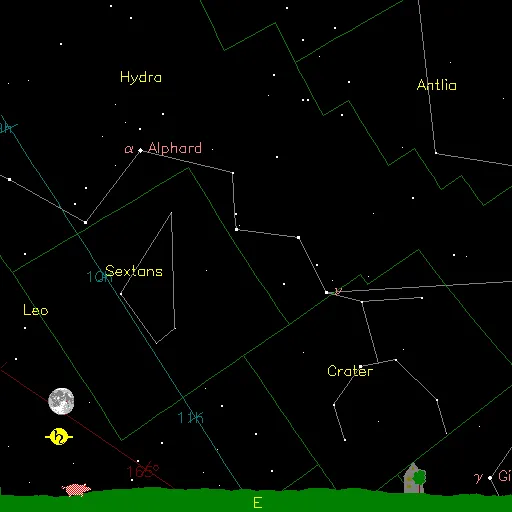
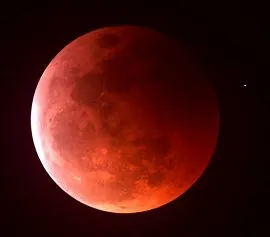
Our satellite visits the Seven Sisters tonight.
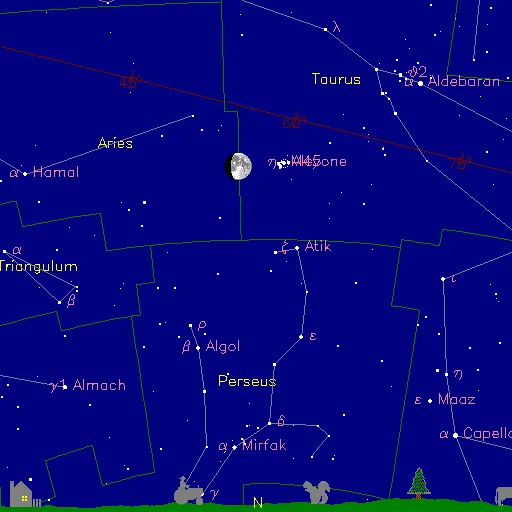
After sunset, find them at medium height towards the north. A pair of binoculars can be useful to locate the star cluster, a little more than 3° to the right and above the Moon.
The Pleiades (which means "doves" in Greek), also known as M45, The Seven Sisters or Cabrillas, is an object visible to the naked eye in the night sky with a prominent place in ancient mythology, located to the side of the constellation Taurus. The Pleiades are a handful of very young stars which are located at an approximate distance of 450 light-years from Earth and are contained in a space of thirty light-years. They formed approximately only about 100 million years ago, during the Mesozoic Era on Earth, from the collapse of an interstellar gas cloud. The largest and brightest stars in the cluster are bluish-white in color and about five times larger than the Sun.
Sources and related links
- *YourSky
- *Pleiades on Wikipedia
- *Guía del Cielo Nocturno, Ciencia Hoy, Volume 17 - No. 102
December 2007-January 2008
Guide No. 22, January - June 2008 by Pedro Saizar
About the images
Image generated with YourSky