Cosmologist Max Tegmark says mathematical formulas create reality.
Cosmologists are not common thinkers and Max Tegmark is not one. In a series of papers that captured the attention of physicists and philosophers around the world, he explores not what the laws of nature say but why these laws exist.
By Adam Frank. Photo by Erika Larsen
Adaptation from the Discover article
Is the Universe Actually Made of Math?
Given the length of the article it will be published in three parts.
Parts II and III are linked at the end of the article.
According to Tegmark, "everything that exists is mathematics". In his theory, the mathematical universe hypothesis, he updates quantum physics and cosmology with the concept of many parallel universes inhabiting multiple levels of space and time. By placing his hypothesis at the intersection of physics and philosophy, he goes back to the classic Greek question: What is real?
The scientist proceeded with his hypothesis, knowing that such a crazy idea could harm his reputation. But driven by his optimism and passion, he continued forward.
"I quickly learned that if I focused exclusively on these big questions I would end up working at McDonald's," says Tegmark and continues: "So I developed a Dr. Jekyll and Mr. Hyde strategy where, when applying for a job, I highlighted my main work. And then, on my own, I pursued more philosophical interests." Today he is a professor at the Massachusetts Institute of Technology and has a good reputation among the best physicists in the world.
These days, Tegmark is a busy man. With his wife, Brazilian cosmologist Angelica de Oliveira-Costa, he balances science with the demands of raising two young boys. The interviewer is theoretical astrophysicist Adam Frank from the University of Rochester, New York.
Max, you have gained a reputation for thinking about unusual questions, even for a cosmologist. Have you always reflected on deep questions like life, the Universe and Everything Else?
No. I was very confused when I was young. I came to that quite late and there was no one to talk to about philosophy when I was a teenager. I had a friend in high school who did things the opposite way of others. If people sent letters in rectangular envelopes, he would have made triangular envelopes. I remember thinking: "That's good. That's how I want to be."
Is that why you decided to go into physics?
Actually, my father is a mathematician and he was always encouraging me about mathematics, but physics was boring in high school. So I started studying economics.
That was an interesting choice. When did physics reappear again?
A friend gave me a book, Surely You're Joking, Mr. Feynman ("Surely You’re Joking, Mr. Feynman!") by physicist Richard Feynman. It was about choosing lockers and girls. It had nothing to do with physics, but between the lines it said loud and clear "I love physics!". I couldn't understand how that was the same boring subject from high school. It really piqued my curiosity.
In what way?
If you see a mediocre man walking down the street arm in arm with Cameron Díaz, you say to yourself: "I'm missing something here". So I started reading Feynman's lectures on physics and I was like... whoa! how did I not realize this before?
So you changed careers?
Umm, no. College is not paid for in Sweden, so I was able to enroll in a different university to do physics without telling them I was already studying economics.
You went to two universities at the same time?
Yeah. As you can see, I was confused. It got complicated at times. I had exams in both places on the same day, and I had to bike really fast.
Was it in college where you started thinking about the big questions?
I was taking the only quantum physics class offered and when I got to the chapter on measurements I felt that I was surely missing something.
You mean about how the observer seems to affect the measurement of what is being observed.
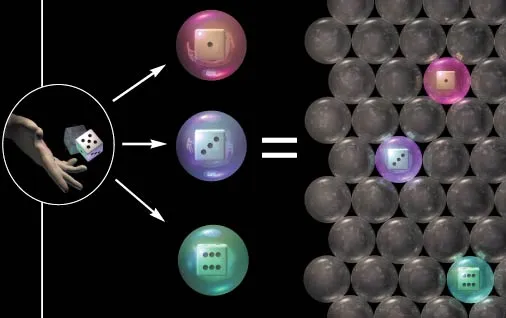
Correct. There is this beautiful mathematical equation in quantum theory called the Schrödinger equation. It uses something called the wave function to describe the system you are studying -an atom, an electron, whatever- and all the possible ways the system can evolve. The usual perspective of quantum mechanics is that as soon as you measure something, the wave function literally collapses, going from a state that reflects all possible outcomes to a state that reflects only one: the result you see at the moment the measurement was made. It seemed crazy to me. I didn't understand why I was supposed to use the Schrödinger equation before measuring the atom, but then, when measuring it, the equation didn't apply. So I took courage and knocked on the door of one of the most famous physicists in Sweden, a man on the Nobel committee, but he threw me out. It wasn't until years later that I had this revelation that it wasn't me who didn't understand it, it was him!
It's a beautiful moment in a scientist's education when you realize that these people in higher positions of power don't have all the answers. So you took your questions about the Schrödinger equation and the effect on measurements with you when you left for the United States and your doctorate at Berkeley
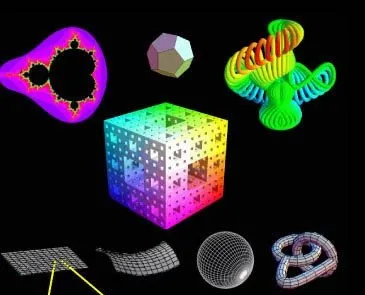
That's where it all began for me. I had this friend, Bill Poirier, and we spent hours talking about crazy ideas in physics. It made me nervous because I argued that any fundamental description of the universe should be simple. To annoy him, I said there could be an entire universe that was nothing more than a dodecahedron, a twelve-sided figure that the Greeks described 2500 years ago. Of course, I was just teasing him, but later, when I thought more about it, I got excited about the idea that the universe was really nothing more than a mathematical object. That left me thinking that every mathematical object is, in a sense, its own universe.
From the beginning you tried to publish this radical idea. Were you worried about whether it would affect your career?
I anticipated problems and didn't submit until I had accepted a postdoctoral appointment at Princeton University. My first paper was rejected by three journals. Finally I got a good review report from Annals of Physics, but the editor rejected it for being too speculative.
Wait...that's not supposed to happen. If a referee likes a paper, it's usually accepted.
That's what I thought. I was fortunate to be friends with John Wheeler, a theoretical physicist at Princeton and one of my greatest heroes in physics, who recently passed away. When I showed him the rejection letter, he said: 'Extremely speculative? Bah!' Then he reminded me that some of the original quantum mechanics papers were also considered extremely speculative. So I wrote an appeal to Annals of Physics and included Wheeler's comments. Finally, the editors published it.
Still, it wasn't your livelihood. You did your doctorate and postdoc in cosmology, a totally different subject.
It's ironic that my protection for these more philosophical interests was cosmology, a field that was usually seen as eccentric too. But cosmology gradually became more respectable because computing, space, and detection technologies combined to give us an avalanche of fabulous information about the universe.
Let's talk about your effort to understand the measurement problem by proposing parallel universes—or as you call them in total, the multiverse. Can you explain parallel universes?
There are four distinct levels of multiverse. Three of them have been proposed by other people, and I added the fourth, the mathematical universe.
The article will continue in part two where the interview leads to Tegmark's explanation of the different levels of multiverse.
Sources and related links
- Discover
Is the Universe Actually Made of Math? - Parallel Universes
Max Tegmark (Penn)
In "Science and Ultimate Reality: From Quantum to Cosmos", honoring John Wheeler's 90th birthday. J. D. Barrow, P.C.W. Davies, & C.L. Harper eds. Cambridge University Press (2003)
arXiv:astro-ph/0302131v1 - Scientific American:Parallel Universes
- Max Tegmark's page