NASA scientists concluded that at least one of the large lakes observed on Titan contains liquid hydrocarbons and have positively identified the presence of ethane. This makes Titan the only body in the Solar System -besides Earth- to have liquid on its surface.
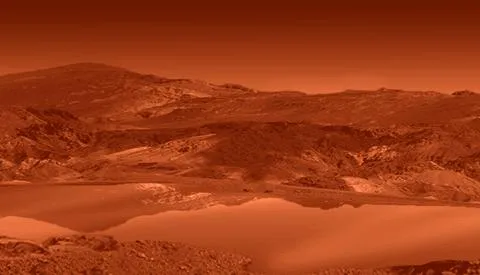
The instruments on the Cassini spacecraft identified the different chemical materials based on how they absorb and reflect infrared light. Before Cassini, scientists thought the moon would have global oceans of methane, ethane and other hydrocarbons. The more than 40 flybys of the spacecraft past Titan showed that those oceans did not exist, but there were hundreds of dark, lake-like features. Until now, it was not known whether these features were liquid or solid material. (See "There would be methane lakes on Titan")
"This is the first observation that really identifies that Titan has a lake on its surface filled with liquid," says Bob Brown of the University of Arizona, Tucson, leader of the Cassini instrument team. In reality, observations had already been made, thanks to Cassini's many flybys of Titan, that suggested the presence of these liquid ethane lakes. On July 27, 2006, NASA reported the finding of lakes in the arctic region of Titan, although that time, the observed lakes were smaller than Ontario Lacus.
Ethane and many other simple hydrocarbons have been identified in Titan's atmosphere, which consists of 95% nitrogen and 5% methane. Ethane and other hydrocarbons are products of atmospheric chemistry caused by the breakdown of methane by sunlight.
Cassini's visual instrument (VIMS) observed a lake, Ontario Lacus, in Titan's south polar region during a close flyby in December 2007. The lake has an area of almost 20,000 km2, a little larger than Lake Ontario in the United States.
The ethane is in a liquid solution with methane, other hydrocarbons and nitrogen. On the moon's surface, with temperatures near 185ºC below zero, these substances can exist as liquid and gas. Titan shows overwhelming evidence of evaporation, rain and channels draining into this lake of liquid hydrocarbons.
Just as Earth has a hydrological cycle based on water, Titan has a cycle based on methane. Scientists ruled out the presence of water ice, ammonia and carbon dioxide in this lake, which, according to observations, appears to be evaporating.
"In the coming days, the long set of lakes and seas in Titan's north polar region mapped by Cassini will emerge from polar darkness into sunlight, giving the infrared instrument rich opportunities to see seasonal changes in Titan's lakes," comments Larry Soderblom, Cassini interdisciplinary scientist at the U.S. Geological Survey.
Sources and related links
- NASA Confirms Liquid Lake on Saturn Moon
- The identification of liquid ethane in Titan's Ontario Lacus
R. H. Brown et al.
Nature 454, 607-610 (July 31, 2008)
DOI:10.1038/nature07100
About the images
Credit: NASA/JPL