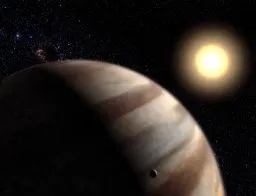
The Kepler mission, which will search for other planets like our own, is ready for its launch on March 6, from Cape Canaveral's Launch Complex 17-B. It will be launched on a Delta II rocket, at night.
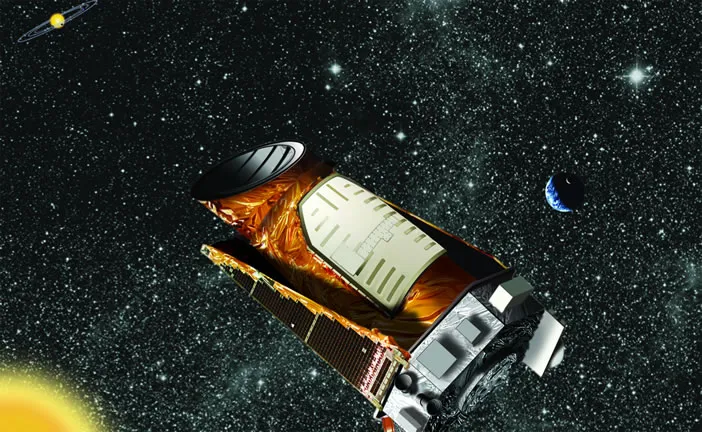
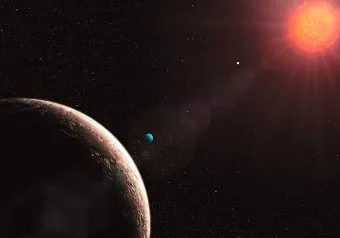
Kepler is designed to find Earth-like planets orbiting their stars in the habitable zone, regions where water can be found in liquid form. Liquid water is thought to be essential for the formation of life.
"The mission attempts to answer a question as old as time: Are there planets like ours out there? It's not just a scientific question, it's a basic human question," said Ed Weiler, of NASA's Science Mission Directorate.
It will take about two months until its commissioning is completed, after liftoff. Then, Kepler will observe more than 100,000 stars for three and a half years, searching for planets.
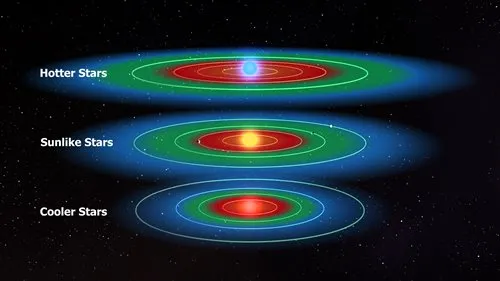
"We will monitor a wide range of stars, from the small and cold, where planets must orbit closely to stay warm, to stars larger and hotter than our sun, where planets must stay farther away to avoid being scorched," said William Borucki, a researcher at NASA's Ames Center.
Kepler will find planets by looking for variations in the starlight of the stars. Planets that pass in front of their stars, from Earth's point of view, cause the starlight to vary. Although the variation is extremely small, the powerful camera on the spacecraft can detect the change.
"Trying to detect Jupiter-sized planets crossing in front of their stars is like trying to measure the effect of a mosquito flying past a car's headlight. Finding Earth-like planets is like trying to find a flea," explained James Fanson, allegorically, Kepler Project Manager at NASA's Jet Propulsion Laboratory.
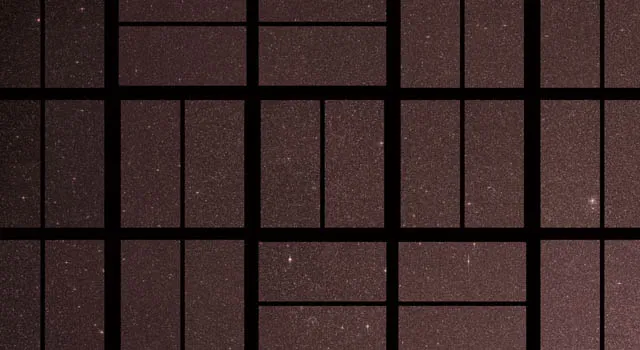
The spacecraft has the largest camera ever launched into space, a set of CCDs with 95 megapixels.
Scientific Objectives
1-Determine the percentage of terrestrial and larger planets in or near the habitable zone of a variety of stars
2-Determine the distribution of sizes and shapes of the orbits of those planets
3-Estimate how many planets there are in multiple star systems
4-Determine the variety of orbit sizes and characteristics (sizes, mass and density) of short-period giant planets
5-Identify additional members of each discovered planetary system using other techniques
6-Determine the properties of those stars that host planetary systems.
The Field of View
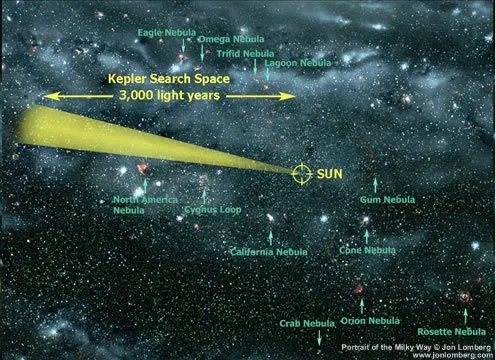
Since the transits of planets in front of their stars last a fraction of a day, the stars must be monitored continuously, that is, their brightness must be measured every few hours. The Field of View (from now on, we'll call it FOV) must not be blocked by the light of our Sun. Therefore, the FOV must be outside the plane of the ecliptic.
Another requirement is that the FOV must have the largest possible number of stars. This leads to selecting the region along the Cygnus Arm of our Milky Way.
To achieve the mission's objectives and have statistically significant conclusions, the mission design must be for at least 45 expected terrestrial planets, so thousands of stars are required to be observed simultaneously in the FOV.
A region of the solar neighborhood in the Cygnus region along the Orion Arm centered on coordinates (76.32°,+13.5°) or RA=19h 22m 40s, Dec=+44° 30' 00' was selected. The star field is sufficiently far from the plane of the ecliptic as to not be obstructed by the Sun at any time of the year. Furthermore, the field virtually eliminates confusion from occultations by asteroids and Kuiper Belt objects.
Data from the Palomar Observatory Sky Survey digitized by the U.S. Naval Observatory were used to calculate that there would be about 223,000 stars of visual magnitude less than 14 of all spectral types. An estimated 61% (136,000) are main sequence stars. Before launch, high-resolution spectroscopy was performed to eliminate giant stars from the FOV. During the first year of the mission, the 25% most active dwarf stars are eliminated to reduce the number to 100,000 useful stellar targets.
Sources and related links
- NASA'S Kepler Mission Set For Launch
- Five Things About Kepler
- Kepler mission site
About the images
Image 1: Artist's representation of Kepler. NASA/JPL
Image 2: Diagram of the habitable zone of three stars. JPL
Image 3: Artist Jon Lomberg's representation of Kepler's target field.