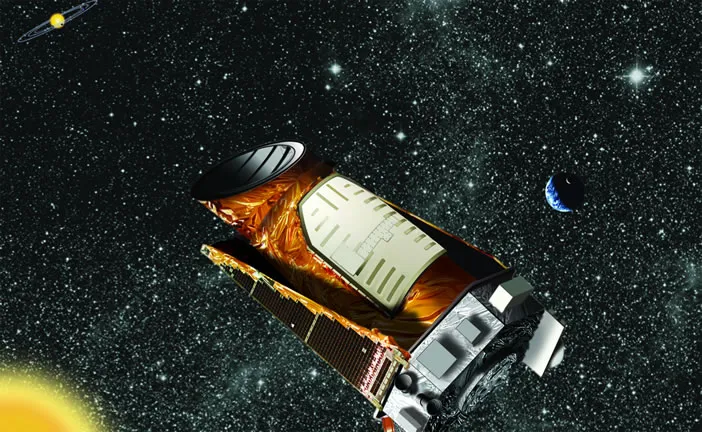
NASA's Kepler mission has taken its first images of the star-rich sky where it will soon begin its hunt for exoplanets.
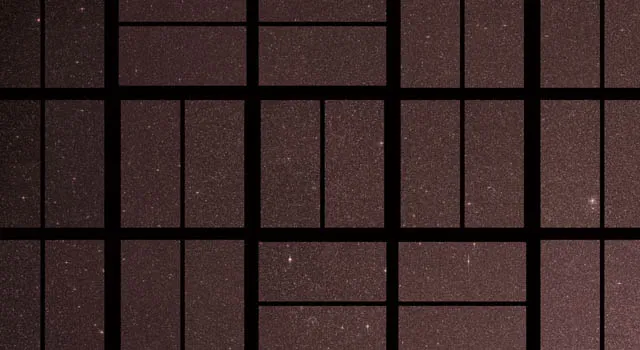
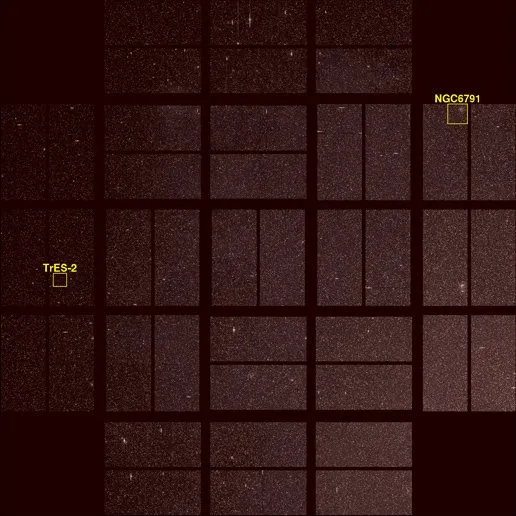
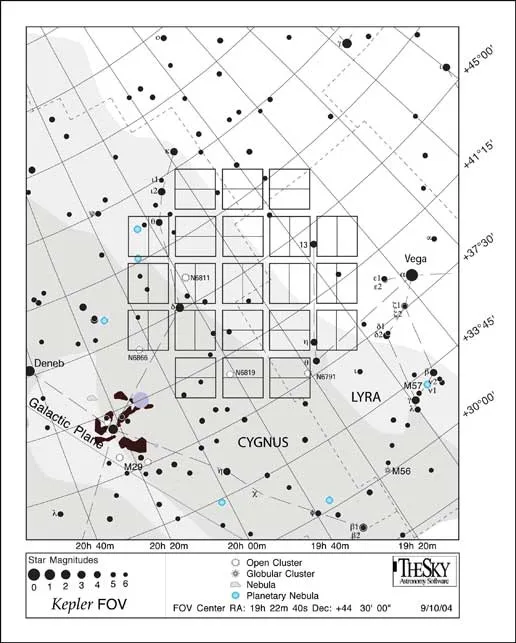
The images show the mission's target region of the sky, a vast stellar field in the Cygnus-Lyra region of our galaxy. One image shows millions of stars in Kepler's field of view, while two others are close-ups.
"Being able to see millions of stars in a single snapshot is simply stunning," commented Lia LaPiana of NASA's Kepler program.
One image shows the entire field of view—a portion of the sky of 100 square degrees. The regions contain an estimated 14 million stars, more than 100,000 of which were selected as candidates for hosting planets.
Two other images focus on just one thousandth of the field of view. In one, a star cluster located 13,000 light-years from Earth, called NGC 6791, can be seen in the lower left corner. The other image zooms in on a region containing the star Tres-2, with a known Jupiter-like planet orbiting it every 2.5 days.
"It's thrilling to see this treasure trove of stars," said William Borucki, principal science investigator at the Ames center.
Kepler will spend the next three and a half years searching, among more than one hundred thousand preselected stars, for signs of planets. It is expected to find a variety of worlds, from gas giants to the smallest rocky ones like ours. The mission is the first with the ability to find Earth-like planets, rocky, small, orbiting a Sun-like star in the habitable zone, where temperatures are right for liquid water to exist in lakes and oceans.
More details about the mission in our previous note: "Kepler Launches".
More images and higher resolution ones can be accessed on the Kepler at NASA site.
Sources and related links
About the images
Credit: NASA/Ames/JPL-Caltech