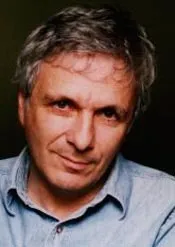
String theorist Michael Green will be the next Lucasian Professor of Mathematics at the University of Cambridge. Green, 63, succeeds Stephen Hawking, who held the chair from 1980 until his retirement last month. Hawking will now have a position as a distinguished researcher at the Perimeter Institute in Canada.
The position was created in 1663 as a result of a gift from Henry Lucas, at that time a Member of the English Parliament for the university. Since then, 17 people have already held the prestigious chair. Green, a professor at Cambridge since 1993, will be number 18.
The list of predecessors includes figures of the stature of Isaac Newton, who held the chair from 1669 to 1702, and Paul Dirac, from 1932 to 1969. The post must be left at age 67, according to Cambridge rules. This was the reason why Hawking left his seat.
Michael Green, a Fellow of the Royal Society, is one of the founding fathers of string theory. In 1984, in what is considered the first superstring revolution, he developed the Green–Schwarz mechanism: a discovery that led to the idea that string theory could describe all elementary particles and the interactions between them. String theory was the first theory in physics that predicted the number of dimensions and, in 1984, went from being a fringe activity to a mainstream current in theoretical physics.
Green has already been awarded the Dirac and Maxwell medals from the Institute of Physics of Great Britain and the Dirac Medal from the Abdus Salam International Centre for Theoretical Physics (ICTP) in Trieste, Italy.
The prestigious position at Cambridge will be occupied starting November 1.
"Professor Green is certainly a worthy successor to Hawking," said Robert Bruen, who maintains the site lucasianchair.org and has studied the history of the chair.
Sources and related links
- Physics World: String theorist takes over from Hawking, by Michael Banks
About the images
- Michael Green. Credit: University of Cambridge