Fans of the series Lost are waiting for the big event: the beginning of the end, the final season in which everything that must be revealed, will be. Or almost. Are the protagonists destined to do what they do or can they choose their destiny?
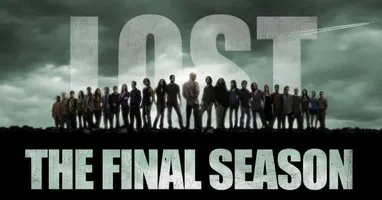
Lost always played with time and narrative through flashbacks or retrospective scenes. But time travel as a device was established during the last season. A good consequence was Lost University, through which we fans can learn a bit of physics and other real-life matters from the events of the TV show.
Naturally we wonder how respectable the treatment of time travel is, from a scientific point of view. Sean Carroll, a renowned physicist and author of Cosmic Variance, shares his thoughts on his blog.
In short: Lost is a TV fantasy, not a documentary and does not try to conform to general relativity and other laws of physics. But, happily, the most important Rules for Time Travelers are quite obeyed: there are no paradoxes. And, what is more interesting, the spirit of the laws is obeyed. The potential for time traveler paradoxes helps illuminate matters between free will and predestination, a central theme of the series. What more could you ask for?
Sean continues saying in his post that time travel in Lost can be analyzed on three levels: physics, logic, and metaphor. (Or ignore all these ideas and enjoy the show, but where would the fun be?).

Physics
Let's not be mistaken: the point in Lost is not to present a realistic description of time travel according to the laws of physics as we know them (or expect to know them). In his book From Eternity to Here, Sean explains, in its sixth chapter, that the remarkable thing about the theory of relativity is that it provides a context in which we can talk about time travel. Space and time are curved together, and the amount of time between two events is affected by motion and gravity. Traveling near the speed of light or using powerful gravitational fields could make us move into the future faster than someone floating freely in empty space.
It is easy to imagine -and impossible to build- a curvature so intense that you could board a ship and return before leaving. One mechanism could be wormholes, a shortcut through spacetime through which we could easily reach tremendous distances with very separated times with a relatively short trip. But it would still be a trip via some transportation, and not a dematerialization and materialization elsewhere.
The tremendous amount of energy and curvature of spacetime needed to maintain a realistic wormhole does not easily fit into the island environment of Lost. So they don't worry directly about those details. The characters (and even the Island itself) pass from one time to another randomly. Even more divorced from reality, Desmond and others seem to make their consciousness travel through temporal displacements in which their bodies retain memories and emotions from their "futures". There is no science here. Neither Einstein nor others have suggested that something like this could happen in the real world.
But it's a TV series and not a documentary, although the writers, nevertheless, aim for a scientific basis for that fictional scenario:
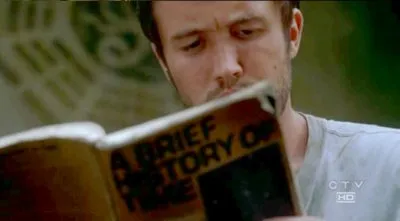
During the third season one of the Others is shown absorbed in reading A Brief History of Time. One of the Dharma Initiative orientation videos shows Dr. Chang explaining that the island contains a pocket of exotic matter. That could explain a way to maintain a wormhole, due to its negative energy. The Casimir Effect perhaps, is the way to obtain that energy. The effect arises when materials alter the energy contained in quantum vacuum fluctuations.
It's not an established theory by any means, but the show shows ideas from the real (theoretical) world and perhaps viewers will become interested in seeking more information about it.
Logic
More important than time travel, in Lost, is that it makes logical sense, its consistency with the rules, even if these are not those of the real world. You cannot go to the past to alter the future, there are no alternate histories. Daniel Faraday said: "Whatever happened, happened".
And the main rule is that things happen in a unique way in each space and time. However, the rules of the Island are still not known. We think we already know some, but a twist in the story could change this.
And we even already know something that goes in the opposite direction: Desmond's visions of the future. In his article, Sean thinks it's good to grant this to a poetic license to tell things in an interesting way, but that still respects the no-paradox rule.
Faraday seems to have changed his mind and, towards the end of the last season, believed he could alter time, through the detonation of a nuclear bomb in 1977 to prevent everything we know happened later.
Metaphor
One of the great themes (or directly the most important) is that of free will vs. predestination.
Sean finds the treatment of the theme annoying as a scientist, but interesting as a narrative. What happens is that certain conditions very likely result in certain outcomes.
I emphasize Sean's idea: the battle between destiny and free will is not one of winners and losers, we are all constrained by circumstances and are free to make decisions within that framework. That makes life interesting.
Finally, the idea of free will is tied to the arrow of time, says Sean. With perfect information about the present, in principle we could predict the past and the future. (*1) But we don't have perfect information. Due to low entropy as a boundary condition in the past, we can reconstruct what happened with a certain precision, which is why we think the past cannot be changed. But the future does not have that condition and the possibilities are open. Otherwise, I could tell you the next episodes of the series.
Although...we can watch the first minutes of the 6th season on YouTube!

Free but not that free?
The first thing we would have to define, if we want to delve into the topic of destiny and free will, are those two terms. Is free will being free? What is being free?
Let's think of freedom as the possibility of making the decisions we want, without any restriction. Suppose, as happens, that I impose on myself conditions for writing and selecting news on this blog. Immediately afterwards I have fewer options available, I am more restricted. If freedom is NOT having restrictions, can the previous action be said to be free? Will I be free after imposing conditions on myself?.
The Royal Academy, on the other hand, indicates several meanings of Libertad: The natural faculty that man has to act in one way or another, and not to act, for which he is responsible for his acts; State or condition of one who is not a slave.
It happens that, generally, we can choose between at least two paths. Otherwise, there would be no choice. I can make this blog and I can not make it.
But we are slaves, of our circumstances.
I was born in a specific geographical place, with a history and physical laws, and at a specific time. And the truth is that those conditions are not the same as others.
Let's think of two women who want to go into politics. Now imagine a current politician, who can give speeches, vote, propose projects, create foundations. She decidedly has a set of circumstances much more favorable than another woman who had been born... a century ago. Not to mention a woman from several centuries ago.
So when we think about free will, let's keep this in mind. Now, two people, faced with the same circumstances and resources, can make different decisions.
Is it written what decisions each of us will make at each step?
In part, this answer is conditioned by our sense of life. Those who have Faith in a higher entity may want that to happen.
We cannot be sure that our lives are written. Nor the opposite. We can choose to believe in one option or the other. I prefer to believe that my actions (which are not very wise, certainly) were a free choice of mine, the result of my musings and my previous actions and that they were not written by anyone.
So Lost is about to start. A complex series due to its development and content, but interesting, at least on this point. Do you believe in destiny or in free will?
Note (*1):
When Sean and other scientists indicate that with enough data from the present (and incredible computing power) it would be possible to know the past and the future, they do so strictly from the point of view of physics. It must be said, however, that the human mind is a topic that science has not yet managed to fully understand. Two similar human beings can act differently to the same stimuli. That's what we do every day. Genetic load and our life history (which could be traced with data) do not seem to be the only explanation. However, we all believe in the principle of causality. There are surely causes that produce our actions, which we still do not know. But if we knew them all, then, perhaps, in that assumption, could we know how a person would act in any circumstance? Something to think about.
Sources and related links
- Cosmic Variance: Time Travel in Lost: The Metaphorics of Predestination
- IO9: Will Lost's Time Travel Ever Make Sense?
- Popular Mechanics: Lost Season Five Premiere:
2 Hours of Time Travel, Wormholes and Exotic Matter - Discover: On LOST, Time Travel, and the Final Season
About the images
- Evangeline Lilly. Credit: ABC/BOB D'AMICO
- Dharma 3D Logo. Lostzilla
- Image Aldo-A Very Brief History of Time.
Credit: ABC/LospediaWiki