What do the sciences have to do with feelings? What traditional history hides is told by Nicolas Witkowski in "A Sentimental History of the Sciences".
"Why is the history of science, the one that weighs a dead donkey in specialized works and injects almost lethal doses of sedatives in school textbooks, so boring? Perhaps because that history is totally averse to any simplification: either you tell everything, and not only about the science, or you expose yourself, always in a rather clumsy way, to extract from a life of research what would be properly scientific, eliminating (or discarding as anecdotal) all the rest, that is to say, everything that contributes to making it intelligible."
This is how the author presents his work from the preface to develop this objective in 35 short chapters. If the approach is not usual, neither is the language used and the addition of document extracts at the end of each chapter.
The book is part of the wonderful Colección Ciencia que Ladra, Serie Mayor, from Siglo Veintiuno Editores, directed by Diego Golombek.
For several years now, historians have focused on taking the starch out of the paper and bronze heroes that swarm in high school textbooks and even in respective biographies that seem to exalt the gods.
The history of science was not left out of this phenomenon because, after all, Scientists are also human beings.
In the brief stories there is a French fragrance that perfumes everything. It is a translation (by Víctor Goldstein) of "Une histoire sentimentale des sciences" from 2003, published in Buenos Aires in 2007.
It is not a book of scientific gossip, but of curious or little-known data and stories about some main characters of science with the particular literary vision of the French physicist and journalist Nicolas Witkowski.
Examples?
The numerology behind the Balmer lines or the ingenious demonstration of the Doppler Effect with trumpeters, Wilson's clouds or Kepler's snowflakes.
The stories show us these characters who contributed so much to science in their own context, with the ideas of the time and their prejudices. Something like the scientists and their Zeitgeist. Through ideas that we do not accept as widely today as back then, those curious experimenters managed to advance in the explanations of the phenomena of Nature in ways that could now be considered unconventional.

The creative ideas and hypotheses from which they managed to unravel some aspects of this complex universe reveal interests and passions of all kinds to test with ingenious contraptions and suspicious premises how the world works.
Between God, mathematics and poetry, some of the foundations of current science began to be forged, reviewed in these stories that, although they can be read on the subway, will sometimes require a re-reading.
It is a work that I recommend, along with many other titles in the collection. Soon it will be the Buenos Aires Book Fair, and it's not a bad idea to start adding some pages to the shopping cart.
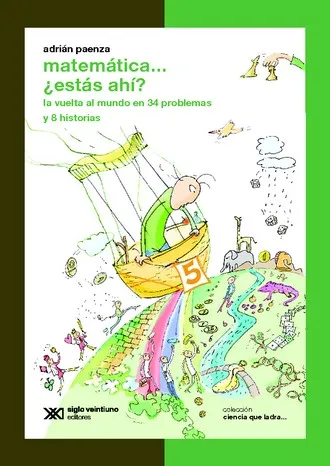
(PS: Shhh...they say that at the Book Fair, Adrián Paenza will present a new book in his series Matemática, ¿estás ahí?)
About the author
Nicolas Witkowski is a physicist, editor and writer. Author of several popular science books, including Manuel de physique à l'usage des élèves de seconde and État des sciences et des techniques. He is one of those authors in whom vocation and effort manage to change the view of the sciences. From 1997 to 2001 he assumed the editorial coordination of the Dictionnaire culturel des sciences, composed with attractive and fun definitions by various authors about James Bond's gadgets, the yeti, LSD and the recipe for the Molotov cocktail. Editor of Éditions du Seuil, Nicolas Witkowski is also a physics teacher, and readily confesses that he appropriates the ideas and questions of his students to write his books.
Summary of the work:
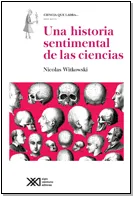
Nicolas Witkowski
"A Sentimental History of the Sciences"
Siglo Veintiuno Editores
Colección Ciencia que Ladra, Serie Mayor
272 pages
23 x 15.5
ISBN 978-987-1220-77-9
Sources and related links
Other reviews:
A Sentimental History of the Sciences, by Federico Kukso in Página/12
The Weight of a Dead Donkey, by Marcelo Pisarro in Clarín Weblogs
About the images
Cover of A Sentimental History of the Sciences. Credit: Siglo XXI.