In series like The Big Bang Theory and Numb3rs science has its place. Is it the right place?
One of the journalists I respect the most is Dennis Overbye, from the New York Times. Perhaps because he is the author of the fantastic book "Lonely Hearts of the Cosmos".
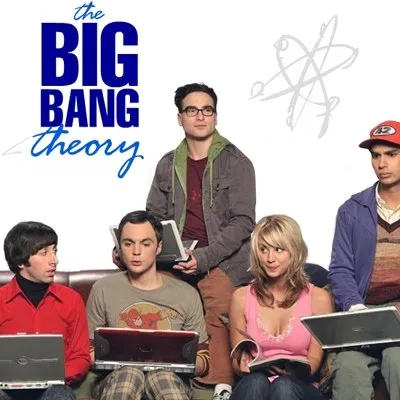
On the 26th he wrote in that newspaper an article about the series The Big Bang Theory (TBBT, from now on). It begins with a brief description of the central characters: Sheldon Cooper, a lanky theoretical physicist with an intelligence quotient (IQ) of 187, a precocious genius who at eleven had achieved what many of us will never achieve. And his roommate, Leonard Hofstadter, IQ 173, hopelessly in love with the waitress who lives next door, Penny, a blonde with "superficial" interests and little interest in using her intellect.
Other friends are part of the series: Rajesh Koothrappali, who literally cannot speak in the presence of a pretty woman, and Howard Wolowitz, a young Jewish man who still lives with his mother and tries, almost always unsuccessfully, to pick up girls.
They are clearly stereotypes of the average crazy and eccentric scientist and the pretty, blonde, somewhat dumb girl. Real scientists don't seem to like the first, women in general dislike the second, and theoretical physicists surely won't like either.
Bruce Margon, an astrophysicist at the University of California, says in the article that these stereotypes are steps backward for scientific literacy. Another who screams about the matter is Regina Caputo, who works on the ATLAS experiment at CERN, who on the US LHC blog explains why she hates the series.
Going against the grain is Lisa Randall, a particle theorist at Harvard who participated in the program on two occasions and appeared as an extra in a scene. "I think the writers are genuinely intelligent," she said.
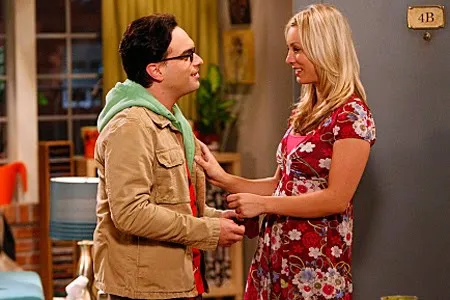
Lawrence Krauss, a cosmologist at Arizona State, commented that he changed his mind about the show: "First because it's funny. Second because the characters have developed softer edges and one of them has the girl!", he exclaimed, referring to Penny and Leonard being together.
The characters, Overbye recounts, emerged from the brainstorming sessions of Chuck Lorre and Bill Prady, the series' producers. Prady remembered people he had met when he was a computer programmer in New York, like the guy who could solve complex mathematical conversions in his head, but didn't know how to calculate the tip in a restaurant because he didn't know how to quantify "service".
The producers were thinking about a new series about a young woman and thought she could be the bridge to the world of those people who can speak Klingon, but don't know how to ask a girl out.
The four friends are decidedly nerds or geeks. In the ranking, Sheldon is the king, antisocial, irritating, with an immutable rationality, while Leonard is more "normal" and, in my opinion, it is he who truly builds the bridge between the "freak" people dedicated to science and the "common" people, by falling in love with Penny and trying to win her over.
The Big Bang Theory Presentation - Subtitles in Spanish
http://www.youtube.com/watch?v=xYb4V0H0Ezw&feature=related
Science is important for the series, particularly physics. For that they consult David Saltzberg of the University of California, who has a blog about the show (and in Spanish).
Prady rejects the idea of the "dumb blonde" stereotype that some put on Penny, claiming that the character has shown she possesses above-average intelligence and practical knowledge that often far exceeds that of the boys.
There are those who see these characters as "teacher's pets" as we would say in lunfardo. How could these characters influence teenagers who might be looking for a career? Well, many believe they will only scare them by reinforcing a caricatured, already outdated, unreal idea.
Lorre, however, pointed out that "Perhaps in the end, it will inspire some kids to study physics, just as 'Cheers' inspired countless young people to go to bars."
Perhaps, only perhaps, the producer's phrase is not just a joke. Do we really believe that all people who live in the country are like The Ingalls Family?
Stereotypes and reality
Presenting very stereotyped characters (linked to science or any other field), which do not reflect what really happens out there, is that wrong?
It occurs to me that if that happened in a documentary, history manual, or other format that supposedly tells the reality of what happens or what happened and its characters are stereotyped to "create" idols or enemies, then it is not right.
In recent years, this trend of telling history, particularly the history of our country, in a more real way (not Realist) has gained momentum.
Something similar has been happening with the history of science and, in that sense, TV series or some films seem to promote unreal scientists that could distance youth from the sciences or create antisocial and egocentric (and single!) researchers.
Is this so? I dare to doubt it. I suspect that behind an affirmation of that type hides something of the old ideas of the hypodermic theory, the one that said that the media inject their message into us, infecting and altering us, like the content of a shot.
TV series, films, and novels are fictions, not documentaries. The unreality of these series occurs within the context of fiction with more or less verisimilitude and with a greater or lesser relation to our interests.
What about Dr. House or Botineras? What about Ciega a citas, a series in which Lucía is willing to do anything to get a "normal" boyfriend just to win the bet with her mother that she will end up an old maid?.
The bridge
On the other hand, there are those who see series like TBBT or Numb3rs as a bridge. Because if in science fiction films and novels scientists are crazy freaks who want to dominate the world, in these series, the scientists, who have their quirks and their "madnesses", are not such outlandish characters, they don't live locked up in their garages, but interact with their surroundings and highlight that scientists exist, beyond the laboratories.
However, there is a criticism of the model. Does this mean we must resign ourselves to presenting science as entertainment?
Science and entertainment
They don't look much like the stereotypes from TBBT or Numb3rs, people like Adrián Paenza or Diego Golombek, scientists who also have their shows on TV. Even in Proyecto G there are comedic steps like "A way of telling science away from the laboratories" in the words of the scientist himself.
It's a different, more real way if you will than the American series, more local in its language and situations. This doesn't mean all scientists are exactly as they are presented there.
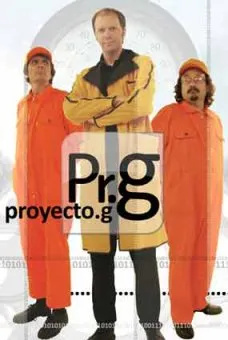
The big difference is in outreach. TBBT and similar series do not attempt, it seems to me, to popularize science. They take that context as an excuse to present situations, which leads to using physics terms, talking about characters or circumstances of that science, but they do not disseminate that knowledge.
Proyecto G, on the other hand, is the reverse. It uses fiction to spread scientific knowledge, as an entertaining, unstuffy way of bringing science to a general audience, primarily students.
Entertainment and the TED format
We talked in this blog about TEDx conferences recently because TEDxBuenosAires was held and there will be other similar events in Rosario, Mar del Plata and Mendoza soon.
On the topic, Matías Alinovi wrote a column in the Futuro supplement of Página/12 on Saturday, March 17 titled A Debatable Look.
The article is worth reading, even (and especially) for those for whom those conferences are recommended. And I say this because Alinovi's view is critical of those events for several reasons.
According to the author they are marketing events, aimed at an audience that the organizers consider "sleeping entrepreneurs" and with a foreign format.
And he also warns: "This arbitrary article is written under the inadvisable influence of opposition. It wants to oppose a spectacle. Or better, the unpleasant idea that some important things –or all– must become a spectacle".
One shouldn't stay only with the quoted paragraph and I invite you to read the full article.
There is something true in what the journalist expresses. It is also true that the Planetarium exhibits spectacles. That is, astronomy told in an entertaining way. And that has everything good and nothing bad about it, certainly.
But let's see the following: I recently told here about my attendance at a talk organized by SIGEN on Climate Change. The talk was open, free and not aimed at experts. It didn't last 18 minutes, it wasn't broadcast by dozens of websites, it didn't have marketing, let's say. It wasn't a deep conference, in the technical sense, but was intended to tell, from the perspective of an Argentine expert on the subject, some salient points to understand the issue.
Isn't it essentially the same?
Those who attended TEDxBuenosAires were chosen, it wasn't an event that anyone could freely attend. If university students who could be considered potential "entrepreneurs" were chosen to attend the event is of little importance because the event itself was freely broadcast on the internet. We could all "go to TEDx". All of us who have an internet connection, of course.
Despite what has been said, it remains interesting to analyze that we shouldn't therefore turn EVERYTHING into entertainment. True science is not a game, it is responsible work that requires vast knowledge and great effort for pay that is far from the best. And the highest-level science is practiced in public institutions, removed from an "entrepreneur" concept.
But to suppose that filling a blackboard with complex equations and incomprehensible terms is an alternative for bringing knowledge to the general public does not seem viable.
Hence the enormous value of the outreach done by the researchers themselves and that done by those of us who are not, but who try to tell how they work, what they do, and so on, in an enjoyable way. I include in this blogs and science supplements of newspapers, like Futuro.
Perhaps it is possible to establish different types of entertainment. Evidently there is "empty entertainment" and one that "tries to bring knowledge". But all of us, some more some less, need some leisure time that is more pastime-oriented.
Between watching series like "Medium" or Fringe or Supernatural, I prefer, without a doubt, the (for me not so weird) characters of TBBT, or the mathematical misadventures, sometimes not very believable, of Charlie Eppes in Numb3rs. And not for that do I think all theoretical physicists or mathematicians are as portrayed in those series.
Ultimately, I believe there is not ONE bridge. There are many ways to try to bridge the distance between the general public and science and scientific work. And critical thinking, which we advocate here, must also be applied to those bridges or methods or formats. The good thing is that we can choose and that science is accessible in different ways and not a hermetic set of knowledge for a few. Bazinga!
Sources and related links
- NYTimes: Exploring the Complexities of Nerdiness, for Laughs, by Dennis Overbye.
- Why physics will never be enjoyed by “normal” people, or why I hate the Big Bang Theory
- TBBT Argentina: Exclusive Interview. David Saltzberg, the real physicist of ‘The Big Bang Theory’
About the images
Images from The Big Bang Theory Credit: CBS.
Image of Proyecto G. Credit: Canal Encuentro