BASF presents its first Energy Efficiency House (CasaE) in South America, as part of the bicentennial of the Argentine Republic. What is energy efficiency and what should we think about it?
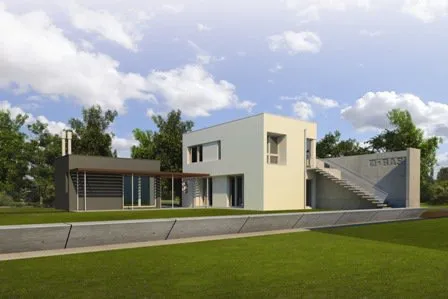
The CasaE has a covered area of about 200 square meters arranged over 2 floors. It presents various advanced technological solutions with innovative materials such as cellular plastics, polyurethanes, chemicals for construction, decorative paints and state-of-the-art special pigments. Due to these solutions and the efficient thermal insulation achieved, a saving of approximately 70% of all the energy needed for its operation can be achieved, according to a statement from the chemical company.
"Through this project, we make available to the industry the highest technology in high-performance materials, energy efficiency and products for design and decoration. Our commitment is to create chemistry with the aim of offering innovative and economically viable solutions for the construction of the future, contributing to sustainability," explains Diego López Casanello, President of BASF Argentina.
Located at the BASF production plant in Tortuguitas, the CasaE was built with the great commitment of Rehau, Stieglitz and Veka as strategic partners in this project. And it also has key sponsors such as Concepto&Luz, FV Ferrum, Grupo Estisol, Knauf, Leval, LG and Manifesto, leading companies at the forefront of sustainability and design that have dressed the CasaE.
For more information go to: http://www.lacasae.com.ar.
What is energy efficiency?
The concept of efficiency is widely used in various areas and even in our daily lives. If effectiveness is achieving an objective through a series of steps; efficiency is reaching the goal with few resources. That is, the cost is less than the benefit. In the particular case of energy, the idea is to obtain the most useful energy, a concept that leads to thinking about performance.
To heat or cool a room, for example, we need energy. We could get it from the Sun, to warm ourselves for example, but what do we do at night? We cover ourselves with blankets and that's it. But to create the blankets you have to sew and to make a machine work you need energy. In other words, Nature is a natural source of energy, but we humans have been "creating needs" for which it is necessary to transform energy to bring it to our homes and industries and have it available in various forms and at different times.
Video: Energy Efficiency
http://www.youtube.com/watch?v=AHDr3uInKmw&feature=related
In those transformation processes, energy is "lost". Let's say it now: energy cannot be created or destroyed. And heat transfers from a hot body to a cold one (with the exception of cats). And worse, part of the energy always transforms into other forms that are not useful (heat from friction, etc). Or as some wise person once synthesized the laws of thermodynamics:
I. You can't win.
II. You can't break even.
III. You can't get out of the game.
Speaking of thermodynamics, a supposed exam on the thermodynamics of Hell is well known, very ingenious!
If we wish to heat a room, we will use some kind of energy: electricity, natural gas, firewood. It is possible to use methods that are better than others, appliances that, due to their operation, are more efficient, different materials, etc.
In this way, we will use the least amount of energy for our purposes. That would be energy efficiency. Making the most of sunlight as much as possible, or the opposite, for example if we want to cool, isolating solar heat would allow us to use less electrical energy to achieve that goal.
Energy greed
Having said that, I want to raise another point. If we all had access to increasingly efficient ways of using energy, shouldn't we consume less and less? Why then is more and more consumed?
I suppose there are many factors. Someone who, until now, had not had an air conditioner, consumed less, and now, having bought one, consumes more. Improvement in purchasing power could be a variable. Enough? I tend to think not.
There is the economic issue. As energy becomes more efficient, it will be cheaper. There are already those who have presented this argument as the false promise of energy efficiency: if the use of energy is more efficient, I need less energy to do the same thing. I spend less (economically speaking) to achieve what before cost me more because I used more energy. Ultimately, it costs me less. And, normally, if it costs less, we use more.
If someone doesn't have a PC and has to go to an internet cafe. And the hour costs $1 and they have $1, they will browse for 1 hour. If later the hour costs $0.5, they won't browse for one hour, leaving a balance, but they will probably browse for 2 hours.
If before I had an inefficient car, perhaps I traveled fewer kilometers (I spent less energy, because it cost me more). Now, with more efficient cars, perhaps people travel more and spend more energy, even though the economic cost is similar.
But, if this line of reasoning is followed, then the cost of energy should increase, to reduce demand, along with the better technological use of energy. In this way, if before I spent $50 per month on electricity to connect the TV, refrigerator, PC and other appliances, later, with more efficient products, I will be able to achieve the same but using less energy, which, as it will be more expensive, I will end up paying the same. Same economic cost, lower energy cost. Does this happen or is it science fiction?
It seems more the latter than the former. However, if the economic cost increases, energy tariffs, more people will be excluded. And normally the cut is made along the thinnest line: those who have the least.
The issue is difficult and intricate. The issue of energy, its efficient use, the creation of new technologies and a fair and equitable energy policy should be a matter of State. Tariffs do not necessarily have to be the same for everyone, but there is no agreement on what variables to consider to set differential tariffs.
Economy, distribution of poverty, conservation and care of the environment, use of sustainable natural resources, are all issues that converge in the use of energy.
In Argentina, next year, there will be presidential elections. Candidacies are already taking shape and later we will hear proposals and promises to be broken, as always. I believe we all share some responsibility. We should start demanding from our leaders that the issue of energy be a national, not partisan, issue, and reached by consensus.
I perfectly understand that there are other important matters to improve and resolve, much more distressing and urgent. But it must be understood that the problems derived from energy and its use have a very large inertia. They are not solved overnight. It will take years. We must start seriously now. Yesterday.
Sources and related links
INTI: Residential sector: general recommendations for the efficient use of energy in homes http://www.inti.gov.ar/energia/residencial.htm
About the images
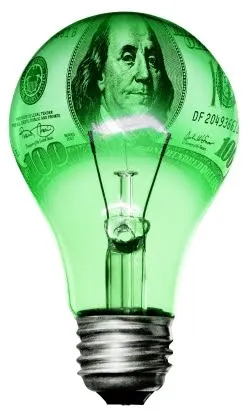
Lamp-Dollar by AccesoHispano.
Photo of the CasaE.Credit: BASF.