On July 20, 1969, Neil Armstrong set foot on the Sea of Tranquility to take a small giant step. Can that feeling of global brotherhood be repeated? Perhaps next September 18.
Reaching the Moon was a goal. "Dreaming costs nothing," it is often said, but turning those dreams into reality usually requires, besides inspiration, a lot of work, knowledge, and effort.
It was not the only time a human being managed to land a spacecraft on lunar soil, even though subsequent times had less public exposure, as reflected in the movie Apollo 13.
It is incredible that, despite this, there are still people who doubt this true technological feat, assuming that the recorded videos were made in a television studio, ignoring what was said before: man arrived several times to set foot on the Moon. Besides that mission, five others belonging to the Apollo Program also carried astronauts who descended, with lunar rover included.
To "Shed light on the lunar shadows", and remove the pseudoscience from those stories that discredit those achievements, Eugenio Fernández Aguilar wrote the very entertaining and didactic book "La conspiración lunar ¡vaya timo!".
NASA has a reminder site of the Apollo program with material in text and audio of the speech by then President Kennedy and other documents from the time.
And also the US agency created an interactive site with details of the Apollo missions from 1 to 13 (the following ones will be updated next year).
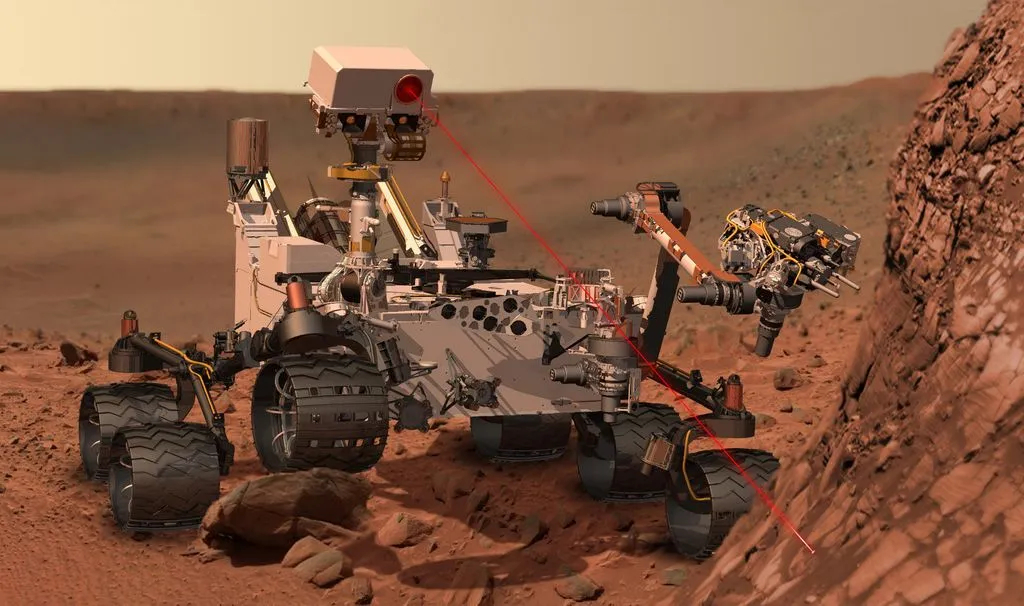
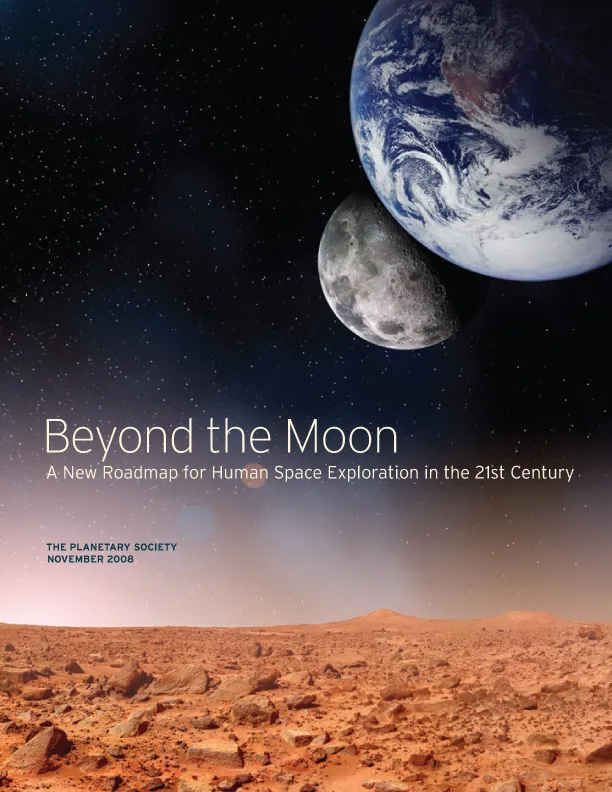
The Moon, without whose company we would not be here, has been an inspiring muse for great works of science fiction and has not ceased to be in the imagination of space exploration, although the idea now is to go a little further, to the red lands of Mars.
And why should we continue exploring?
With so much hunger and social inequality on this small pale blue dot, with so many things to do here for human well-being, why should we spend trillions of dollars to explore space?
The usual answers are linked to a human impulse -perhaps innate, perhaps culturally generated- to know. Certainly, human history goes hand in hand with other not-so-ideal facts, such as colonization and destruction.
We are no longer in the 1960s, but there are still arms races, wars, malnutrition, scourges caused only by us. Space exploration cannot be developed by all countries, but it remains an achievement of humanity. The International Space Station is, above all, that, a symbol of what with effort and overcoming we are capable of.
The search for new frontiers also brings with it scientific and technological development that end up changing our lives or expanding our frontiers of knowledge not only about other worlds, but about this ground we walk on.
We dream of discovering what is behind everything, the secrets of Nature that, for now, are hidden from us. We also explore for fun, for fantasy, for creativity, for illusion.
This exploration does not necessarily have to include astronauts. Very many space missions already in orbit, already on other planets or on the way, already in design, do not include human beings on board. In many cases it is not necessary and in others it is, until now, impossible.
I believe, certainly, that there are more earthly challenges that we must also take into account and as a priority. Conquering Mars while we cannot conquer our own brain -letting ourselves be carried away by primitive impulses of violence and envy- will lead to nothing.
But perhaps achieving goals as distant and complex as other worlds will serve as inspiration for us, and that feeling of global community that led to establishing in this part of world that date as "Friends' Day" will invade us again.
It would be good if we really also sow friendship with the rest of life on the planet. That we protect biodiversity, that we do not mistreat other animals (treating them as if they were "inferior"), making the effort to influence the environment as little as possible to preserve this planetary home in the best way for future generations.
That feeling of jubilation for having achieved such a difficult goal, of seeing the dreams of yesteryear come true, of marveling not at the technology, but at the human effort, is not very different from what societies today try to replicate in sporting events, for example.
Didn't such a feeling recently occur in the Spanish people, which in some way unites all the inhabitants of the Peninsula, regardless of their differences?
But not only with advances in astronautics can this common-union of peoples be achieved. The simple astronomical observation, together, simultaneously, of the wonders of the universe out there, also makes it possible for this feeling to be generated.

That is why the International Observe the Moon Night, established as a global event for September 18, can make us lift our gaze from the ground. Not only towards the darkness that follows the day, but towards the illumination of supportive knowledge. And then it becomes again the Moon of friends.
Sources and related links
About the images
- InOMN logo with NASA image.
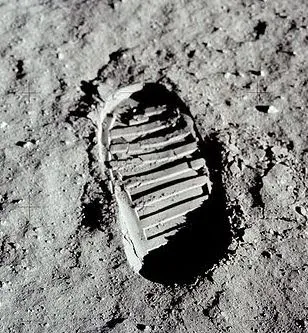
- Buzz Aldrin's footprint. Credit: NASA.