The successful documentary video commemorating the 50th anniversary of the first space flight can be translated into several languages and they are calling for collaboration.
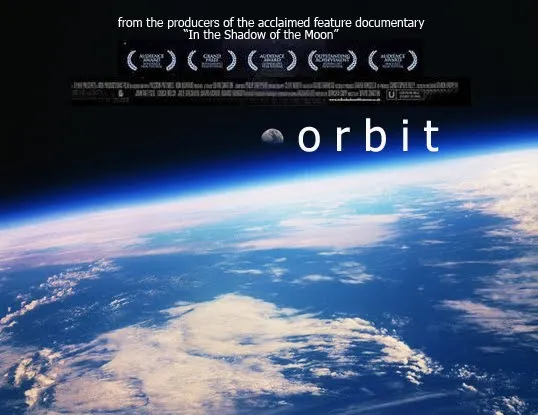
At the International Astronautical Congress being held between October 3 and 7 in Cape Town, the largest annual meeting of space professionals, there will be a "call to action" to the general public with the goal of translating the successful documentary First Orbit.
Chris Riley, the film's director, said: "Yuri Gagarin's words as he orbited the Earth in 1961 are so important to human history that they must be accessible to as many people on Earth as possible. With your help we hope to 'go viral' with the translation among many into as many languages as possible and we have chosen the 2011 International Astronautical Congress to launch this call to action in the hope that, with your help, we can reach the widest audience."
These words were transmitted to the International Congress by Chris Welch of the International Space University (ISU), Strasbourg, who is also one of the main collaborators of First Orbit. Welch conveyed Riley's words and also gave an analysis of the documentary in the absence of the director, who is in Slovakia with cosmonaut Vladimir Remek, the first space traveler from the European Union.
Statistics and facts
First Orbit was shown 1600 times (screenings) in more than 130 countries around the world, making it one of the most watched independent films in history.
YouTube, simultaneously, premiered the documentary on its platform, attracting more than 2 million views in the first 48 hours, the most watched feature film in the history of the video site. Watch First Orbit on YouTube.
Riley said that "Distribution through the internet has given us the opportunity to make direct contact with audiences all over the world. Now they have the chance to get involved with the next stage of this unique project. I can't wait to see how many translations we receive."
About the director
Christopher Riley, director and producer of First Orbit, worked with data from NASA's Spacelab 1 project, flew on an early Shuttle mission for his doctorate at Imperial College London before embarking on a documentary career for the BBC. He has worked with NASA archives for the last fifteen years on projects such as the BBC series "The Planets" and the acclaimed documentary "In the Shadow of the Moon". He created his first video installation of his material for the 40th anniversary of the first moon landing, during the northern summer of 2009. "Apollo Raw and Uncut" could be seen in galleries in Europe and the United States, the first time the full 23 hours of Apollo mission archive film were shown to the public. "First Orbit" was conceived as his second major work and is in the tradition of experimental documentaries like Baraka and Koyaanisqatsi. Riley is a professor of Science and Media at the University of Lincoln.
Paolo Nespoli, director of photography for First Orbit, is a European astronaut. He was born in 1957, the same year as the launch of Sputnik, and studied aerospace engineering in Milan and New York. He was selected as an astronaut in 1998 and made his first flight aboard Discovery (STS-120) in October 2007 on a 15-day mission constructing the International Space Station. He returned to the ISS in December 2010 as a member of Expedition 26 to stay there for six months in orbit, conducting experiments in fluid physics, radiation, biology and technology demonstrations, as well as performing outreach tasks like First Orbit.
The documentary, which was released last year on YouTube and can be viewed and downloaded for free, was made in collaboration with ESA and Expedition 25 through 27 crews of the ISS.
The film was created by matching the orbit of the ISS, as much as possible, with that of Gagarin's Vostok 1.
http://www.youtube.com/watch?v=PFS9L2HwXHA&feature=channel_video_title
The Space Station orbits the Earth approximately every 90 minutes, but it doesn't always follow the same path that Gagarin took. So to find when filming opportunities would occur, ESA joined Chris with German orbital mechanics guru Gerald Ziegler.
The music was composed by Philip Sheppard from his album Cloud Songs. Both worked together in 2006 on "In the Shadow of the Moon" and have since worked on a new musical piece inspired by space travel. The result is a fascinating combination of images and music that attempts to convey the emotions that went through Yuri Gagarin's mind.
For those who wish to contribute with translations, visit http://www.firstorbit.org/join-us. There you will see an .xls file (a spreadsheet) with the 180 lines of original text, in English. Above the text there are three fields to indicate: Name, email address and language. When we have completed the translation, we send it to [email protected].
I hope that among the blog's audience there are those who collaborate to translate this wonderful work into our language, as well as others like Portuguese, Catalan, etc. Viralize this news so that it is known by those who know English and other languages and wish to contribute their grain of sand.
Sources and related links
About the images
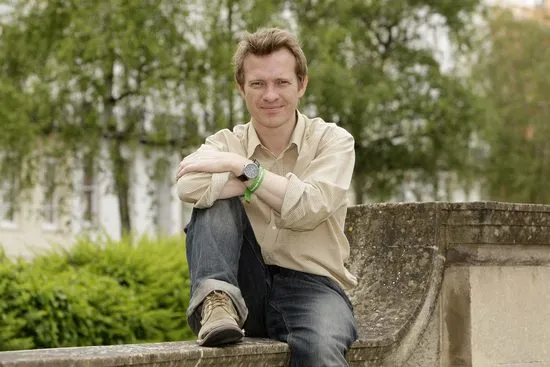
- Photograph of Chris Riley, provided by Rufus Stone.
- First Orbit poster.