The motto of the Royal Society—what does it tell us about our conduct in daily life?

Some readers may have noticed that in the right column, at the bottom, of this blog appears the motto "Nullius in verba" adopted by the Royal Society of London for Improving Natural Knowledge (RS, for short).
What does this phrase mean?
It has been translated as "in the words of no one." There are also those who interpret the phrase as "nothing in words." This second translation might suggest that words don't count, that they mean nothing, that they are empty of content. I am far from such a Gorgian interpretation.
"In the words of no one" is an interpretation more in line with my ideas, but it is necessary to rephrase (with more words) the concept, to disambiguate it.
The phrase comes from the Epistles of Horace Quintus Flaccus (Book I, 14) in whose text he compares himself to a gladiator who, having retired, is free from any control. He establishes his independence from the dogmatisms of any philosophical sect.
The particular phrase is "nullius addictus iurare in uerba magistri." Addictus is a legal term (it comes from additio) referring to debt slavery.
Horace does not "shelter under any roof," in the sense of taking refuge in sectarian dogmas, he is not "obliged to swear the formula of any master."
This does not imply that words have no value or that they do not convey ideas. Instead, it refers to the principle of authority by which an idea is accepted solely because it is asserted by a supposed authority, an entity that is not questioned, a "god," an "unquestionable superior knowledge."
Faced with a magister dixit there would be nothing to say, since it would necessarily imply a truth.
For the RS, as well as for the writer, that is a fallacy. That the force of gravity is inversely proportional to the square of the distance is true by the weight of evidence and not because Newton said so.
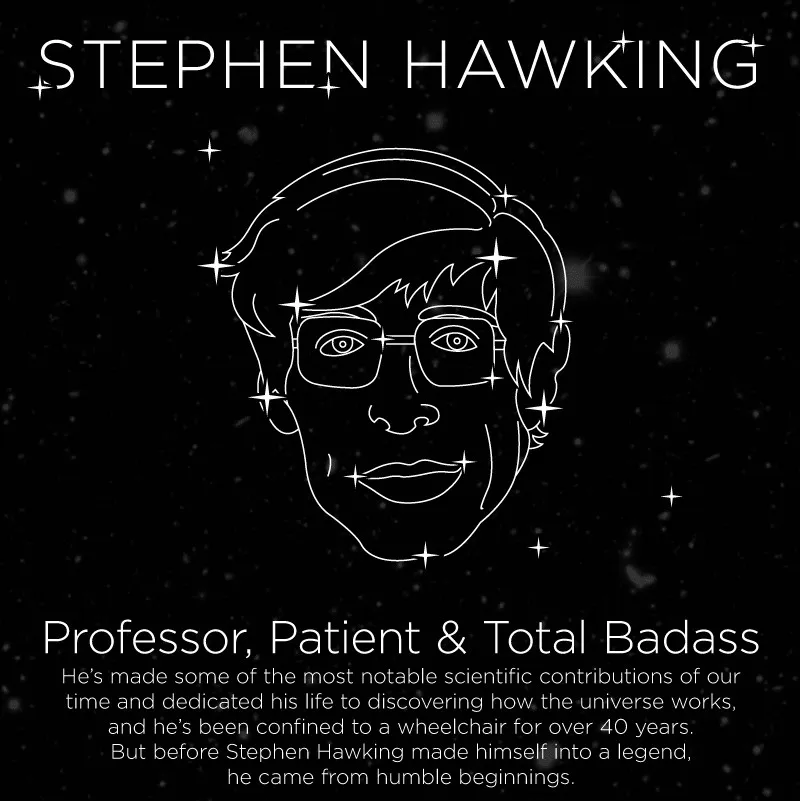
That Newton, Einstein, Hawking were or are geniuses does not imply that everything they say will be true. Even if what they say is true, we will not adopt that truth value because these geniuses pointed it out, but only if the data from reality agree with their theories.
In that sense, the idea could be interpreted as "words are carried away by the wind" (verba volant). Ideas, expressed in discourses, can be very nice, but if they are not supported by data, they will not be valid. This, of course, within the framework of scientific knowledge. It is similar to "res, non verba."
It is necessary, before continuing, to clarify that, even within the realm of science, from an epistemic perspective, the above can be criticized. Faced with the same set of data, there are different interpretations, and yet, due to various issues (which are not always scientific, but also political, economic, social, cultural) consensuses are generated that can be debated. Interpretations about "climate change" are an example of this.
But even considering these disquisitions, it is clear that, within scientific thought, arguments that appeal to authority are considered fallacious.
But what happens outside the scientific realm?
This is where I want to pause. I want to focus on how this occurs in daily life.
In our daily life (and this includes scientists) we perform certain tasks, we have some kind of knowledge, but we do not know everything about everything. Necessarily, due to this division of labor in society, we must turn to others. Thus, we go to the doctor, the dentist, the carpenter, etc.
However, there are better and worse doctors. There are "experts" of any kind who will give us confidence and others who will not. We do not go to the first one we come across, we try to distinguish between those who are more competent, ethical, etc.
We trust others. Not in our own experience, but in that of others. And we do so through words, discourses, "images" we have of our neighbor.
Someone says: "Mars is approaching Earth and will appear as large as the Moon." A reader may have knowledge about the motion of the planets, but not everyone. Some will try to establish if that is true or not, but how will they do it? Perhaps, if we uphold Nullius in verba, do we expect the ignorant to try to verify such a claim empirically? They will not, they do not have the means. They will have to "trust" others, in the same way that you trust your dentist.
How do we do that, how do we transfer that trust?
Certainly when we go to the dentist, we do not apply "Nullius in verba," at least not in the manner cited before. Do we do the opposite?
I think we do not do the opposite, but something different, a sort of "in verba quidam," since we trust in the "words of some."
In our daily life we do not adhere exclusively to empirical facts, we trust other discourses. Another example: "Apophis will collide with Earth at the end of 2012." A person, faced with that announcement, could go to the NASA/NEOs site and "verify" that Apophis in any case will approach our world in 2029 (and 2036). But is that a "verification" in the sense of "nullius in verba" or is it taking a discourse as true? It is doing the latter, we take that discourse as true, as valid. Does that discourse have a little crown over others? Yes, it is produced by experts who deserve our trust.
But is it that we trust some, with first and last names? More than trusting people, we trust methods and, in any case, institutions. Which is also to say that we transfer our trust to prestige, that is, to history.
THE PROBLEMS OF BLIND TRUST
However, this trust in third parties is not blind in many cases, and it is in others.
If we go to a doctor who seems trustworthy to us, who works in a prestigious medical institution, who obtained their diploma from a renowned university, but fails to make a good diagnosis, if we notice that they quickly prescribe a medication without having examined us, we may begin to distrust.
We could place our security in laboratories, agencies, or in reputed Universities of the world and, yet, distrust certain stated studies. To cite some recent examples: one might trust the journal PLoS ONE, the Monell Chemical Senses Center, but we could also question the results of a study on the "smells of age" considering that it is not only about subjective sensory perceptions, but that the experiment was conducted with only 41 participants.
This does not mean that subsequent, broader and more detailed studies may reach similar conclusions and thus gain greater solidity, but it does mean that these results should be taken "with a grain of salt".
By the way, the study was disseminated by mass media, for example like this: "A scientific study debunks the myth that the 'smell of old age' exists" in La Capital de Rosario.
Note that, aside from what is said in that article, I was able to access the specific, complete study, published in the journal.
Another example:
One might trust the University of Leicester, yet we might have reservations about headlines like this:
"Dogs resemble their owners… more than previously believed" and in English in The Globe and Mail.
The University of Leicester reported on the study on its website.
[irony: on]Thank goodness these studies exist. I thought Bush must be a good person because his pets were two sweet Scottish terriers, Barney and Beazley...(See video)
[irony: off].
A MATTER OF TRUST
For the DRAE, Trust is "Firm hope that one has in someone or something".
J. L. Orihuela pointed out recently that: "I have learned that trust (not resentment, envy, suspicion, nor revenge) is what makes us advance, what drives us to create, to change and to innovate. Trust is the oil of our relationships (personal, social and professional), and it is also the lubricant of markets".
I cannot say the same. There are well-founded trusts and blind hopes. True, it is impossible for us to live in permanent distrust in a society. We must, we need to trust others. But let us be careful where we place that feeling. If a topic matters a lot to us, let's seek information, gain knowledge, turn to experts, discuss with others. Let's not just stick with arguments from authority.
We have no choice but to trust others' discourses. But let's not just stay with the words. Let's be demanding. Let's evaluate the modus operandi, especially if the claims are grandiose.
What is the reason for this discourse?
As on other occasions, I often set down ideas here, generally in an interrogative mode, on various topics and for different reasons. These texts are usually triggered by particular situations, but they normally appeal to general ideas and not just conjunctural ones.
In the realm of Argentine politics, statements or acts appealing to the principle of authority are made from different sectors of power. I recently pointed out here that it seemed a fallacy to say we are facing a scenario of less freedom in Argentina because dollars cannot be bought. However, that does not mean one must endorse restrictive measures without knowing why they are taken. Even in the most obsequious circles, this concern cannot be answered. Why defend a measure if one does not understand it?
Fortunately, there are exceptions and journalists who, aside from having pro-government positions, dare to ask, even if they get no answers.
On the other hand, alarmist economic-political forecasts are made, based solely on the impunity of being able to say anything.
A lucid trust
Ultimately, that motto of the RS makes sense in the scientific realm, but in daily life, it is inapplicable. Perhaps it is advisable to generate other concepts, or deconstruct existing ones, like that of trust. Dr. in philosophy José Andrés Murillo (Chilean, with a particular history worth knowing), has written a book on what he calls "Lucid Trust". The Chilean is also director of the Fundación para la Confianza and one of the complainants in the Karadima case.
Given the reference, it occurs to me that the problem of blind trust is that there are abusers of our faith. There are those who write theories with illegible scribbles, numbers and supposed "laws", who use apparent "scientific jargon", only to deceive those of "light trust". In Spain the former are called "Magufos", although there is discussion about the use of the term.
These criminals of reason write things like the one illustrated below, to try to "prove" they know what dark matter is!.
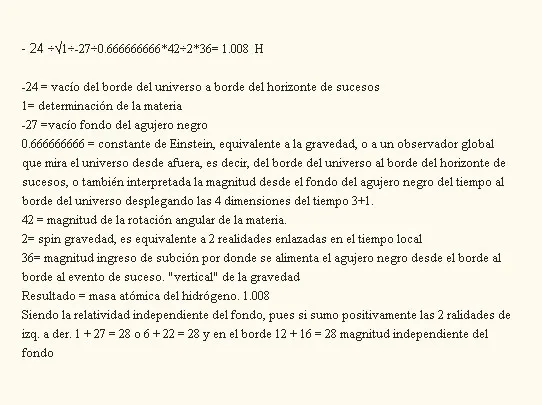
And faced with statements like this, as well as with claims from certain politicians, from some press media, I see no major differences. It's "deceptive nonsense".
The problem, faced with this type of statements, lies not only with the sender (the pig), but also with the audience (those of us who feed them). Let's make use of our lucid trust and in this sense, let's not be deceived by sophisms.
Sources and related links
- Epistle I, Horace Quintus Flaccus, at The Latin Library.
- Politics and trust, J. A. Murillo.
About the images
- Image generated with JPL Small-Body Database Browser of the main-belt asteroid 11059 Nulliusinverba (1991 RS).