Some of the main institutions that conduct science and technology in the country have agreed on new guidelines and criteria for evaluating scientific personnel dedicated to technological and social development activities.
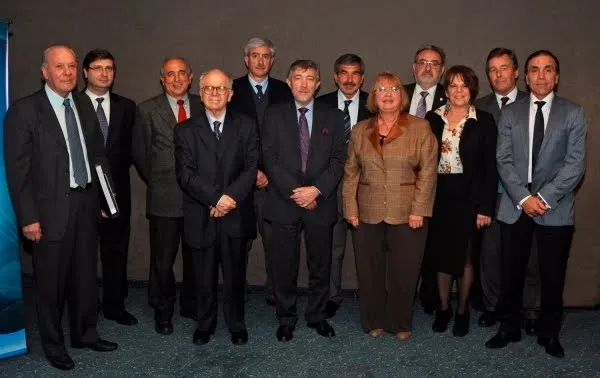
The Secretary of Scientific and Technological Articulation of the Ministry of Science, Technology and Productive Innovation, Alejandro Ceccatto, led the signing of the document that will allow equating the evaluations of researchers dedicated to basic science with those who conduct applied science.
During the signing, Ceccatto stated that "this is a historic consensus, nowadays it is very difficult to develop technology when scientific careers demand the constant publication of papers, this does not favor the central objective of this Ministry, which is for academic knowledge to be inserted into the productive system."
The new criteria, developed through the joint work of all institutions for over a year, aim to enrich the evaluation system by considering researchers not only in their individual trajectory but also in their integration and performance in strategic teams and projects. This aims to develop alternative evaluation guidelines for those who wish to dedicate themselves to technological and social development activities. The goal is for applied research to be considered on an equal footing with basic research when evaluating scientific personnel, thus encouraging research to become concrete developments, prototypes, or products. "We want knowledge not to remain only within the university or institutional sphere, today there is the political will for the scientific and technological system to be at the service of the country's well-being," concluded Ceccatto.
The initiative also contemplates the launch of the National Bank of Research and Technological Development Projects, which will group technological and social development projects aimed at taking advantage of strategic opportunities and social or market needs. In this case, the researchers and technologists who participate, always through institutions of the national scientific system, will be evaluated according to their degree of participation and their progress.
Ceccatto explained to Página/12 that: "These new parameters are not made at the expense of basic science. It is not diminished at all. Those researchers who dedicate themselves to basic science will continue publishing their brilliant papers," he indicated, "this is only for those who dedicate themselves to applied science, so they can develop technology and transfer without being penalized" by their home institutions.
The proposal was signed by the Consejo Nacional de Investigaciones Científicas y Técnicas (CONICET), the Consejo Interuniversitario Nacional (CIN), the Comisión Nacional de Evaluación y Acreditación Universitaria (CONEAU), and the Consejo de Rectores de Universidades Privadas (CRUP). In addition, institutions of the national scientific system also signed, such as the Instituto Nacional de Tecnología Industrial (INTI), the Instituto Nacional de Tecnología Agropecuaria (INTA), the Comisión Nacional de Energía Atómica (CNEA), the Comisión Nacional de Actividades Espaciales (CONAE), the Instituto Nacional del Agua (INA), the Instituto de Investigaciones Científicas para la Defensa (CITEDEF), the Administración Nacional de Laboratorios e Institutos de Salud (ANLIS), the Instituto Nacional de Investigación y Desarrollo Pesquero (INIDEP), the Servicio Geológico Minero Argentino (SEGEMAR), the Instituto Antártico Argentino (IAA), the Secretaría de Políticas Universitarias (SPU) of the Ministry of Education, and the Comisión de Investigaciones Científicas (CIC) of the province of Buenos Aires.
Sources and related links
- MinCyt: Evaluation Criteria for National Scientific Personnel Changed
- Página/12: Another Paradigm for Evaluation
About the images
- Photograph: Alejandro Ceccatto (center) with the presidents of the signing institutions. Credit: Ministerio de Ciencia.