A collection of links to music, images and videos relating art and science. Today: Images of NGC 604; Leonids; NGC 6362 and its stellar rejuvenation; The Galactic Center in Scorpius. Music: DJANGO: The Triangulum Nebula. Video: Symphony of Science - Our Greatest Challenge.

Images of the decade
NGC 604
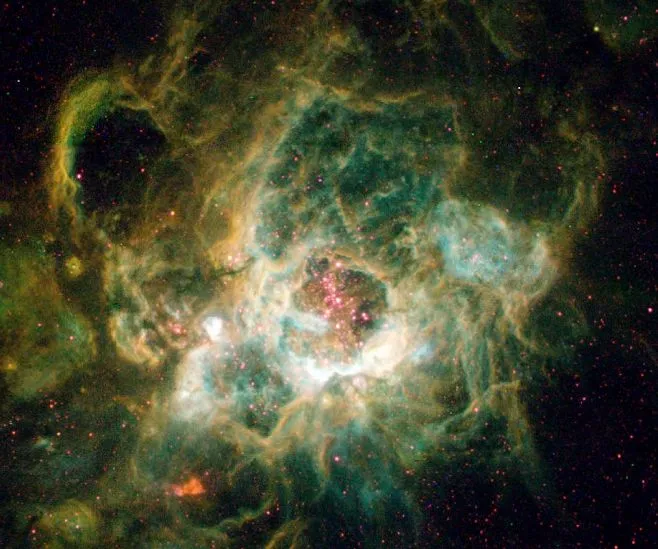
In this nebula lie more than 200 massive and hot, recently formed stars. With a diameter of 1500 light-years, this cloud of gas and dust is a giant star-forming region located about three million light-years away, in the spiral galaxy M33 (Its location is shown on HubbleSite).
Messier 33 is a nearby galaxy, a member of the Local Group, in the constellation Triangulum, which is why it is also known by that name. On these nights it is possible to observe it from these latitudes with a medium-sized telescope a few degrees above the horizon, very close to Andromeda.
Credits: H. Yang (UIUC), HST, NASA
It was NASA's Astronomy Picture of the Day (APOD) for November 2, 2002. And on Observatorio.
Leonids
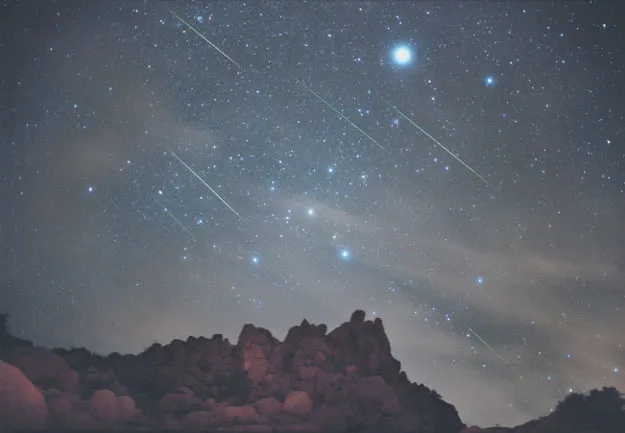
Meteors (or more popularly "shooting stars") appear in the sky when a cloud of particles from outer space evaporate in the upper layers of Earth's atmosphere.
The origin of these particles in the case of the Leonids is comet Tempel-Tuttle and since the light trails seem to come from the constellation Leo they are called Leonids.
The meteor rate (THZ) varies depending on the observing location. Although the Northern Hemisphere is favored, it is possible to see the shower from the South, but in places far from city lights.
This shower occurs in mid-November, with a peak expected on the 17th. Leo rises around 03:00 hours. The radiant, from where the shower seems to originate, is in the mane, near Algieba.
The image above shows several Leonid meteors from 2001 appearing in Joshua Tree National Park in California, USA.
Credit: Wally Pacholka (Astropics) & Tony Hallas (Astrophoto)
It was the Astronomy Picture of the Day (APOD) for November 4, 2002. And on Observatorio.
Images of the week
Stellar rejuvenation
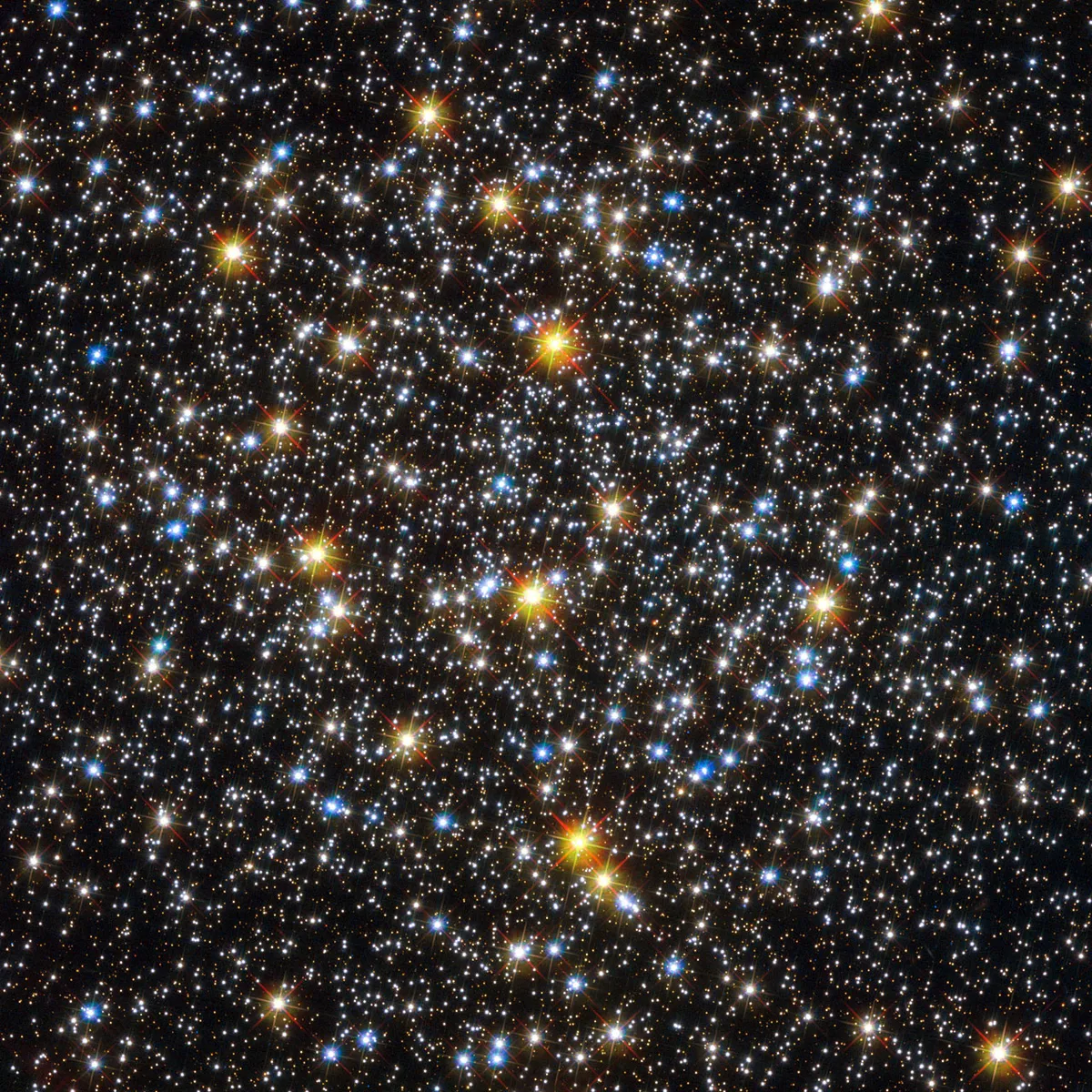
The Hubble telescope captured the center of the globular cluster NGC 6362 in this image. Globular clusters are groupings of old stars, twice the age of our Sun.
It is also thought that the stars in these clusters are all the same age. However, recent research has cast doubt on this idea, as some stars appear younger and bluer than their companions. NGC 6362 contains many of these stars. Since they are found in the core of these clusters, where the concentration is greater, the possible explanation is that they could be the result of collisions or material transfer between stars in binary systems. This flow of new material would heat the star, making it appear younger, and bluer, than its neighbors.
A form of cosmic facelift where more (material) is less (age).
The cluster is located 25,000 light-years away from Earth. A wider field image was published by ESO.
Credit: ESA/Hubble & NASA
It was the Hubble Space Telescope Picture of the Week.
The Galactic Center over the Scorpion
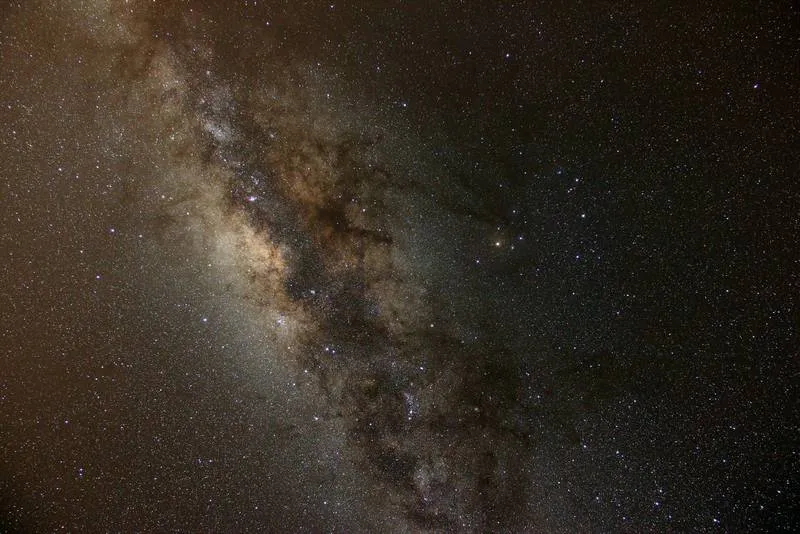
The Galactic Center accompanies us during the winter nights in the southern skies.
Single exposure (no stacking) of 300 sec.
Canon 600D camera at ISO 1600.
Canon 18-135 lens at 18mm at f5.
Processing with XnView in levels, brightness and contrast.
The recording, from July 8, 2012, is by Ariel Rodríguez from Espora, province of Buenos Aires, Argentina
It was the Amateur Astronomy Picture of the Day (AAPOD) October 29, 2012.
Space Music
DJANGO: TheTriangulumEmissionGarrenNebula
The user self-named DJANGO on SoundCloud offers us his musical interpretation of NGC 604, the nebula in the Triangulum Galaxy.
TheTriangulumEmissionGarrenNebula. by DJANGO
Animated Science
Symphony of Science: Our Greatest Challenge
The 16th episode of this series proposes thinking about climate change, through the voices of Bill Nye, David Attenborough, Richard Alley and Isaac Asimov.
The video is subtitled in Spanish.
http://www.youtube.com/watch?v=HHP9Rh-ooh0
More info at http://symphonyofscience.com
To access previous editions of this section, consult the Multimedia Selection Series. The series attempts to show that the immensity of the universe can be perceived in different ways. I choose some images from a decade ago -so they don't fall into oblivion- and from the current week that is ending, as well as sounds/music and videos that are artistic forms of expression with content related to astronomy and related sciences. I am also collecting these materials in the Pinterest account