A collection of links to music, images and videos relating art and science. Today: Images of NGC 1275; Hodge 301; NGC 6240; SNR 0519. Music: Moisés Guido Ramírez - Galaxias. Video: A Boy and His Atom, by IBM, subtitled.

Images of the decade
NGC 1275
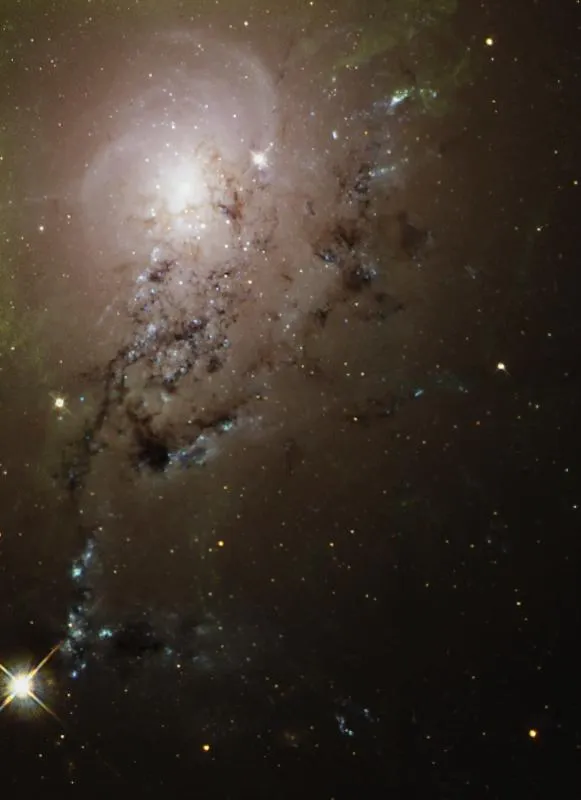
In this Hubble image we see a dusty spiral galaxy. Detailed observations indicate that the dusty material belongs to a spiral system seen almost edge-on in the background. The second galaxy, which lies beyond the first, is actually a giant elliptical with a very faint structure in its nucleus.
This pair of galaxies is located 235 million light-years from Earth in Perseus.
The violence of these two turbulent galaxies is giving rise to new stars in active star-forming regions.
It's worth remembering that on a May 1st a workers' strike began (which peaked a few days later in a revolt) that has been commemorated since 1889 as International Workers' Day.
In the sky there is no bourgeoisie or proletariat, although there are "revolts". Here, on Earth, the opposite has been happening.
Credits: NASA and The Hubble Heritage Team (STScI/AURA)//Acknowledgement: M. Donahue (STScI) and J. Trauger (JPL)
The image was published on HubbleSite on May 1, 2003.
Hodge 301: Inhabitant of the Tarantula Nebula
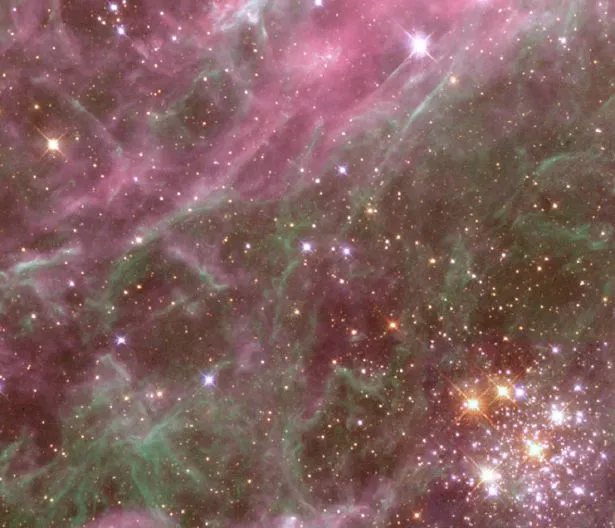
The star cluster seen at the bottom right in the image, cataloged as Hodge 301, is an inhabitant of the Tarantula Nebula (NGC 2070). The stars in Hodge 301 formed tens of millions of years ago and the most massive ones are approaching their final phase of stellar evolution, known as supernova.
But this cluster is neither the brightest, nor the youngest, nor the most populous in the Tarantula Nebula, as that honor goes to R136. Hodge 301 is ten times older than R136.
NGC 2070 lies in the Large Magellanic Cloud, about 168 thousand light-years from Earth.
There is more material on the topic (in English) on the Hubble Heritage site.
Credit: Hubble Heritage Team (AURA / STScI/ NASA)
It was NASA's Astronomy Picture of the Day (APOD) for May 3, 2003.
In Spanish at Observatorio.
Images of the week
NGC 6240
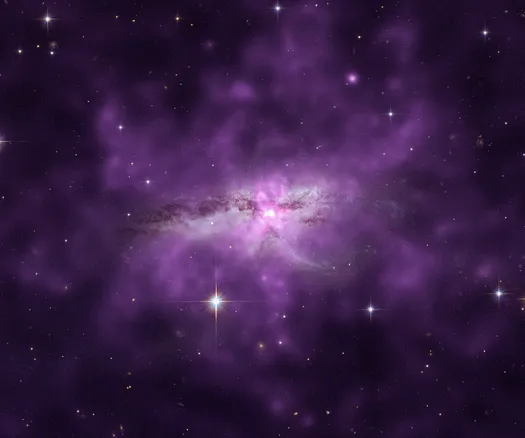
Scientists have used the Chandra Observatory to conduct a detailed study of a huge cloud of gas enveloping two colliding galaxies. This unusually large reservoir of gas contains as much mass as 10 billion Suns and expands about 300 thousand light-years.
This giant cloud, which astronomers call a "halo," is located in the NGC 6240 system, which consists of two spiral galaxies similar in size to the Milky Way, in the process of merging, 330 million light-years away, in Ophiuchus.
In the image composite, X-rays obtained with Chandra reveal the hot gas and are color-coded purple. That data was combined with optical data from Hubble, which shows the tidal tails of the galaxies extending to the right and down in the image. The optical data were coded red, blue, and green.
The research was conducted by E.Nardini et al.
The image was published on the Chandra site on April 30, 2013.
Credits: X-ray (NASA/CXC/SAO/E.Nardini et al); Optical (NASA/STScI)
SNR 0519
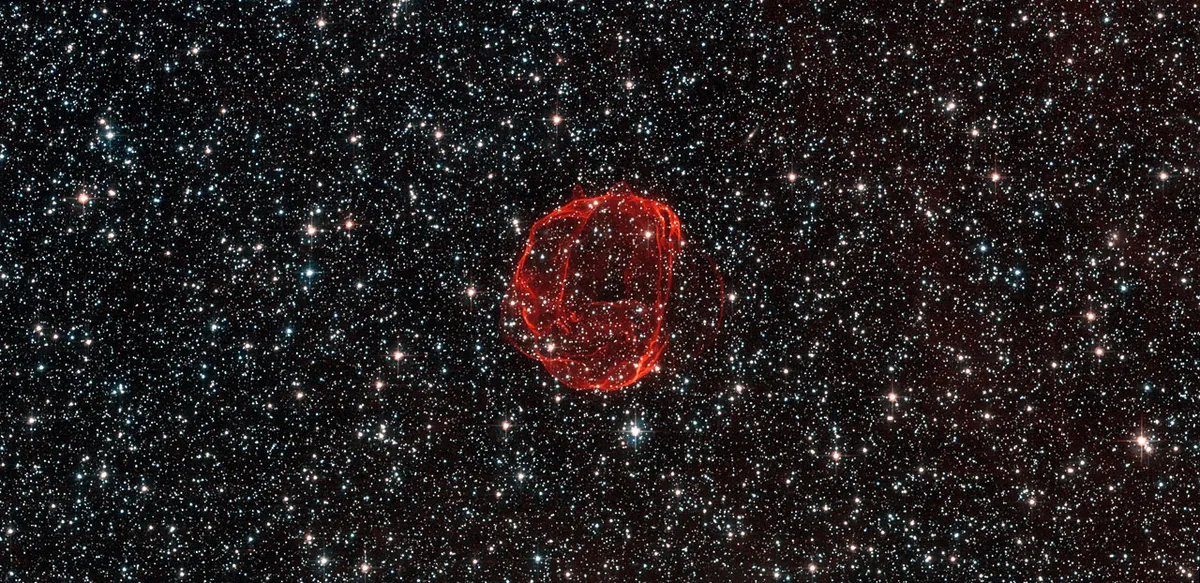
These delicate swirls of gas form the object known as SNR B0519-69.0, or SNR 0519. These are the remnants of a star that exploded as a supernova 600 years ago.
The object is located more than 150 thousand light-years from Earth, in the Large Magellanic Cloud, in the constellation Dorado.
Credits: ESA/Hubble & NASA. Acknowledgement: Claude Cornen
It was the SpaceTelescope Image of the Week.
Space Music
Moisés Guido Ramírez: Galaxias
This Costa Rican musician created fusion jazz sounds (available on SoundCloud) which he titled Galaxias.
https://soundcloud.com/moises-guido-ramirez/galaxias-1
Animated Science
A Boy and His Atom
Scientists from the company IBM have presented this week "the world's smallest movie," a work made with a microscope that shows the movements of atoms magnified 100 million times.
This video has Spanish subtitles thanks to user TradosPro on YouTube. At the end of the video there is a link to another video, also subtitled, about how this movie was made.
http://youtu.be/6bvS7jB1qhA
To access previous editions of this section, consult the Multimedia Selection Series. The series attempts to show that the immensity of the universe can be perceived in different ways. I choose some images from a decade ago -so they don't fall into oblivion- and from the current week that is ending, as well as sounds/music and videos that are artistic forms of expression with content related to astronomy and related sciences. I am also collecting these materials on the Pinterest account