On the possible, impossible, necessary, probable and improbable in mass communication.
Not long ago I performed here a critical analysis of a television series that addressed (very irresponsibly, in my view) certain topics I classify as pseudoscientific.
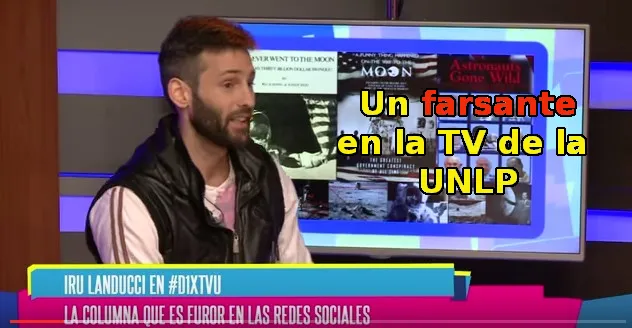
It has not been, nor will it be, the only example that can be found in the mass media.
It is worth asking why such content is produced. One hypothesis is economic: that this content is produced for money, for ratings, because the public wants it. We could say that about all media content. When one content is chosen over another, that reason is surely there, but there must also be others. Here I will address a hypothesis that does not exclude others.
At the same time, one could ask why the public consumes this content and how they "interpret" it, but that will be on another occasion.
The logic in the selection and treatment of topics in the media
What I propose is to think about how we think. I cannot be sure, but it seems to me that by examining our ways of thinking it is possible to explain, at least in part, why content like pseudoscientific content is produced in the media.
A clarification: when I talk about other people's thinking, it is clear I am not telepathic. Actually, I infer what they might think through their discourses (actions, writings, etc.).
Let's look then at two very similar ways of reasoning. What I will focus on is not their "truth" content but their validity.
Argument 1:
(P1 - Premise) A was not proven.
(C1 - Conclusion) Therefore A is false.
With A being a statement, I am particularly referring to pseudoscientific ones, such as: "The position of the planets in the sky influences the personality of human beings," or "ET spacecraft visit us," etc.
Is this reasoning valid? How do we get from premise (P1) to conclusion (C1)? A premise is missing.
The missing premise could be stated as follows:
What is not proven is false. (P2)
But is this logical?
This way of reasoning is based not on knowledge, but on ignorance. It is called "Absence of evidence as evidence of absence" and is part of the argument from ignorance, meaning it is a fallacy. (Note 1)
Another similar form is this:
Arg 2:
(P1) A was not refuted.
(P2) What is not refuted is true.
(C2) Therefore, A is true.
To refute is to prove that something is not true (or to prove it is false).
Now, if a statement A, for example the one related to astrology, was neither proven nor refuted, then what can we say about A?
At this point, someone might say that the astrological statement was indeed proven or indeed refuted. I will not discuss the topic here because I am trying to establish something general, even if I give examples. The same could be said of statements about UFOs, dragons, spirits, goblins, divinations.
Let's suppose for a moment that we think such statements were neither proven nor refuted. Then what can we say about such statements?
Logic, what seems logical to me, is that we say something very simple: "We don't know."
Later I will say something different from what was indicated in this last point. For now, let's stick with that.
From doubt to pseudoknowledge
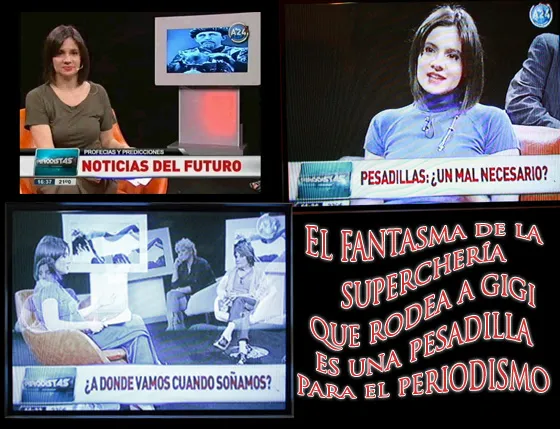
So about A we say we don't know. For example, the journalist I referred to in the previous article perhaps thinks this way regarding astrology or UFOs. Perhaps she tells herself it is neither proven nor refuted. But if she then thinks it is not known (not only she doesn't know, but we humans don't know), then the program would have been very different from the one she made, since in that series such topics were not addressed from uncertainty, but from an apparent knowledge of "experts" in those subjects who had no doubts about what they said. The journalist also did not seem to have doubts about the veracity of what the "experts" said (There were no challenges to them nor inquiry into how they knew what they claimed to know).
It is worth asking:
If we don't know something (because we don't have enough evidence for or against), then is that possible?
For example:
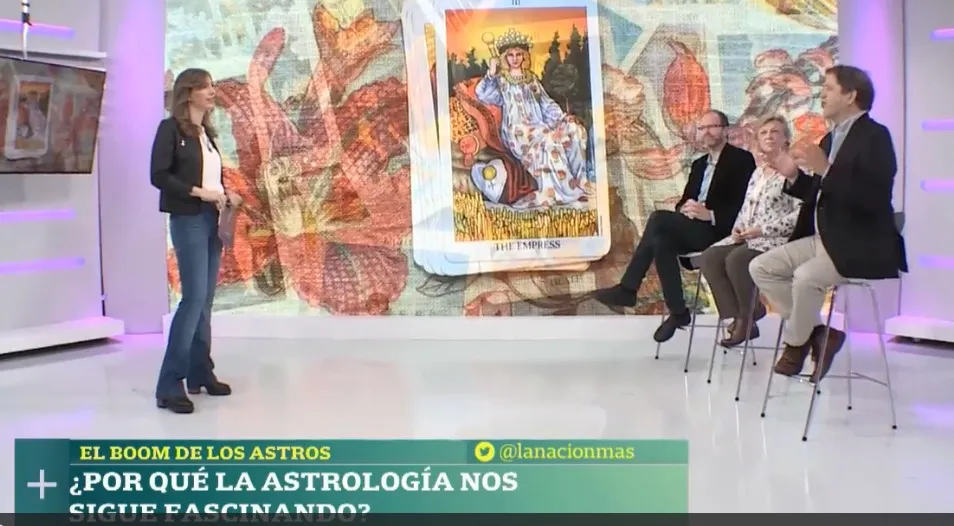
Astrology was not proven. Nor was it refuted. So is it possible that what astrology says is true?
I ask the reader. Is it possible? It seems logical to think yes.
We would obtain this reasoning
Arg 3
(P1) A was neither proven nor refuted.
(P2) What is neither proven nor refuted is possible.
(C3) Therefore A is possible.
But it turns out that's not quite the case.
In Argument 3 something similar happens to what happened in the previous two. In the first two arguments, by not knowing, if we choose for truth or falsehood, we fall into a fallacy. We cannot choose because we don't know.
Or, to put it another way:
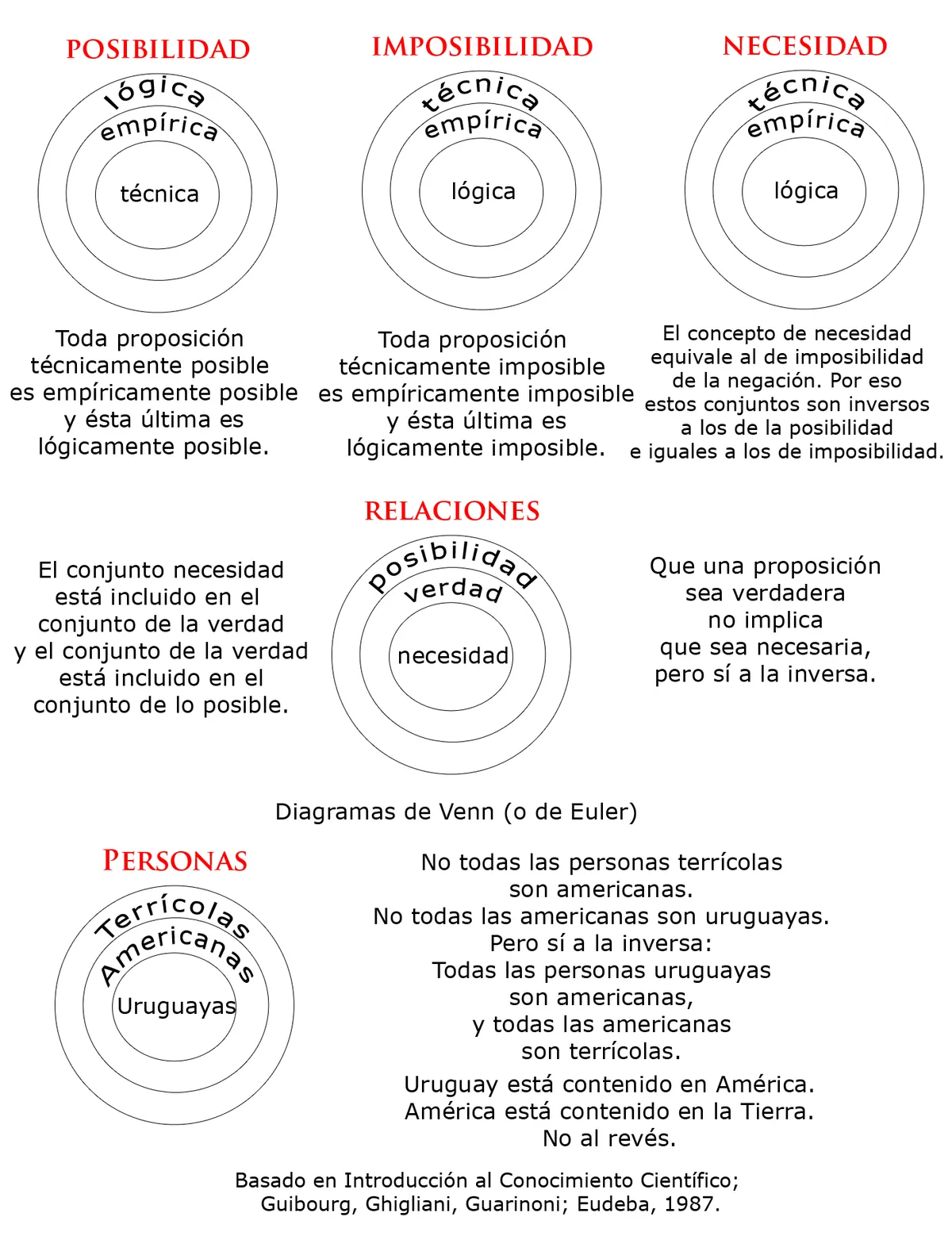
If we don't know if A is true or false, then A has two OPTIONS: 1-It is possible, 2-It is impossible.
The planes of the possible/impossible
To determine if something is possible or impossible we can choose different planes. (Note 2)
One plane is the technical or effective one.
Can humans put an astronaut on the Moon? We know it is possible. But, can Argentina put an astronaut on the Moon next week? No, it is impossible.
We could differentiate here between the possible-potential and the possible-effective.
The latter is relative to the resources available. For our country, now, it is impossible, but for others now, or for others at another time or for us in the future, it will be technically possible-effective.
The possible-potential is also relative. We did not always think it was possible-potential to put an astronaut on the Moon. In 1789, in France, some thought the impossible was possible (Later, the Paris Commune showed that the "impossible" was possible). But, in any case, in 1789 we thought it was impossible-potential and effectively impossible from a technical point of view to put a man on the Moon.
The empirical plane
Physical laws always allowed humans to escape Earth's atmosphere and land on the Moon. From an empirical point of view, it was always possible, we just didn't know.
A proposition is empirically possible when its eventual truth is compatible with such natural laws, it is empirically impossible when it is incompatible with such laws, and it is empirically necessary when its falsehood is incompatible with them.
The empirical plane is also relative... to our knowledge. Today we know certain laws of Nature that we did not know before, and in the future (that's what scientists do) we will discover others that we do not know today.
It could be said that everything that happens had to happen from a causal perspective, since we infer that everything is regulated by a cause-effect relationship. But even if that were the case, we do not know everything (and I think we will NEVER know). From this arises the concept of chance. Although the laws of physics seem to be deterministic, in effect they are not because we cannot predict everything due to our ignorance.
The logical plane
There are propositions that can be evaluated as possible or impossible from the logical plane. For example: "in some families, sterility is hereditary."
This proposition is logically impossible. If the family is sterile it cannot procreate and therefore cannot leave any inheritance.
This impossibility is stronger than that of the previous planes, since we could say it is contradictory in its own terms, it is self-contradictory.
A proposition will be logically possible if it is not self-contradictory. It will be impossible if it is, and it will be logically necessary if its negation is self-contradictory.
Relations between planes
The relations between these planes are inclusive, since some are included in others according to the following scheme:
Possibility and probability
When I toss a coin in the air there are two possibilities: heads or tails (landing on edge is not allowed). And since the two options are always there, it is very difficult for the coin to land heads a thousand times if I toss it a thousand times.
If a person always eats vegetables, perhaps it's because they have no other possibility. Or they might have it (eating meat), but for some reason (they don't like it, it's expensive) they always choose vegetables. In this case, eating vegetables is possible, but not equally probable as eating meat, for that person.
As can be seen, the probable is conditioned by some factor. Not everything that is possible, for example from the logical plane, is equally probable.
Tossing a coin a hundred times and getting heads is not impossible on any plane. But it is highly improbable. And this is a non-absolute, but central idea.
It is often said that if something walks like a duck, swims like a duck, and quacks like a duck, then it is a duck. (Note 3)
Actually, this inductive joke is only probable and not necessary. It could well be a platypus.
But...
The double standard
Suppose we say, based on everything stated above, that A has not been proven or refuted, so we can only say of A that "We don't know" and then after inspecting the planes of the possible we say that "It is possible that which we don't know."
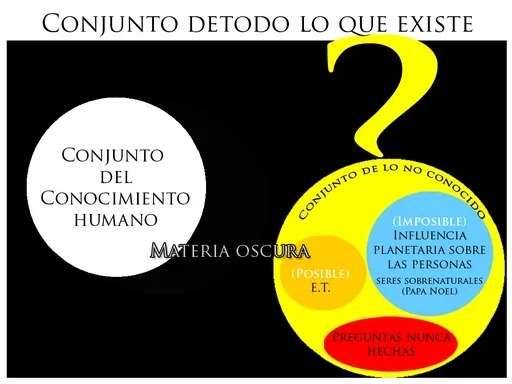
If this were so and only so, then what can we say about Santa Claus?
Santa Claus has not been proven or refuted. Therefore, about Santa Claus we should say "I don't know." And then decide, based on the previous analysis, whether it is possible or not.
To determine if it is possible or not from any plane, we should be clear about what Santa Claus supposedly is. For example, it's not the same if he is a human being or if he is not.
We said that from a technical point of view there are things that are possible-potential, but that can at the same time be technically impossible-effective.
If Santa Claus were a human being riding in a man-made vehicle, we could say it is impossible from a technical and empirical point of view, because to go around the world in one night stopping at every house would require a vehicle with acceleration and deceleration that are not compatible with Natural laws. Ergo, that idea of Santa Claus is empirically impossible and for that same reason it is technically impossible. However, it would be logically possible.
But if Santa Claus were not a human being (as flying reindeer and elves would indicate) then we cannot say the same and it would be possible if we think it is a creature not subject to the laws of nature as we humans are. If he were an "ethereal" being or from another dimension, we cannot apply the same reasoning as with a human being.
Therefore, Santa Claus would be possible.
But, does any adult human being really believe it is possible? I don't read people's minds, I read discourses. The discourses say that people DO NOT BELIEVE in Santa Claus. We people say that Santa Claus is impossible.
People, then, seem to think like this:
Arg 4
P1: Santa Claus has not been proven.
P2: What is not proven is false.
C4: Therefore, Santa Claus is false.
But we said above that this is a fallacy.
If I used the same reasoning with astrology, they would tell me that I pretend to be rational, but I am irrational.
What should we say then about those who deny the existence of Santa Claus with the same type of reasoning?
It turns out that not only is it not proven that Santa Claus exists (and that if he were an "ethereal" being it could never be proven, it would be impossible to prove that he is possible or impossible), but we also have sufficient indications that it is a story created by humans. It is a myth.
Physicist Richard Feynman expressed the same thing, about UFOs (ET craft), as can be seen in this video:
With astrology we can say exactly the same thing.
The logic of freedom (by any means necessary)
It also happens that such myths have been perpetuated with the suffix -logy (astrology, ufology), which comes from the word for study, in Greek, and which is applied to bodies of knowledge.
Let's add that we people trust those who claim to be "experts." And that trust, instead of being lucid, is blind when we have already decided, based on taste, what we want to be told (pseudojournalistic attitude).
The saddest thing is that this is done in the name of a supposed freedom, with proclamations that seem born of the Storming of the Bastille. For many people, logical/scientific thinking is a prison, a rational structure that corsets emotions. And those same people wish to be happy, to obtain pleasure (new hedonism) without caring much about how (extreme relativism).
That feeling of dissatisfaction seems to arise from not being able to give any kind of explanation to the inexplicable. They are people who suffer and want to stop suffering. Robots do not suffer. It is Lo fatal by Rubén Darío (which in him is poetry and not an excuse for deceit).
It is paradoxical that one tries to seek freedom in ideas like those upheld by astrology, which in most of its dominant expressions is predeterministic.
It is true that with logical thought alone we could not be human. With emotions alone, neither. It is true that science is something we human beings do and in that sense it depends on how it is done and perceived. If we expect from science absolute answers to all uncertainty and personal satisfaction, we are looking in the wrong place.
Those who set aside critical thinking assume that every idea is equally valid. If that were so, then one plus one could be four—or whatever we feel like as long as it makes us happy—and Santa Claus would be possible. But that is not what those same people say. They say we must tolerate those who think differently. If I seriously said that Santa Claus exists, I am sure they would look at me very strangely. If I say that each human being should have what they need to live with dignity and nothing more, they would also push me aside, as shown by the results of political elections in all countries of the world.
It is not the apparent corset that bothers, since they complain about one but put on another that is either dogmatic or accommodating. They say that those of us who think as I express here are intolerant. I do not tolerate unjustified lies, fraud, or scams. Perhaps others are tolerant of those actions. I tolerate living in a world different from the one I would like. Others seem not to tolerate those crazy ideas.
Instead of consulting "experts" and "oracles," one should look for the reasons why that dissatisfaction arises. I would look more in the direction where the Paris Communards have looked.
I wish then that Periodismology would someday exist.
Because the lack of the suffix often seems a symptom of a lack of knowledge, if you'll allow me the irony.
Sources and related links
- Note 1: See Argument from ignorance on Wikipedia.
- Note 2: Based on Introducción al conocimiento científico; Guibourg, Ghigliani, Guarioni; Eudeba; 1987; Buenos Aires.
- Note 3: See Duck typing on Wikipedia.