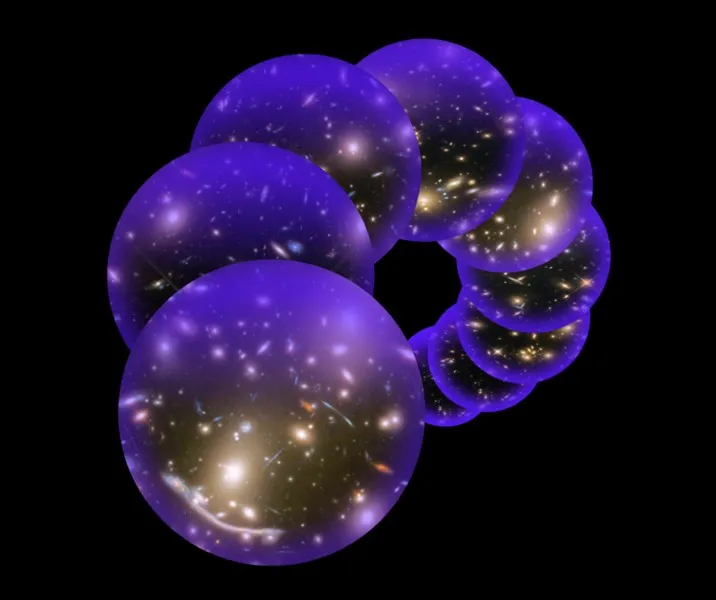
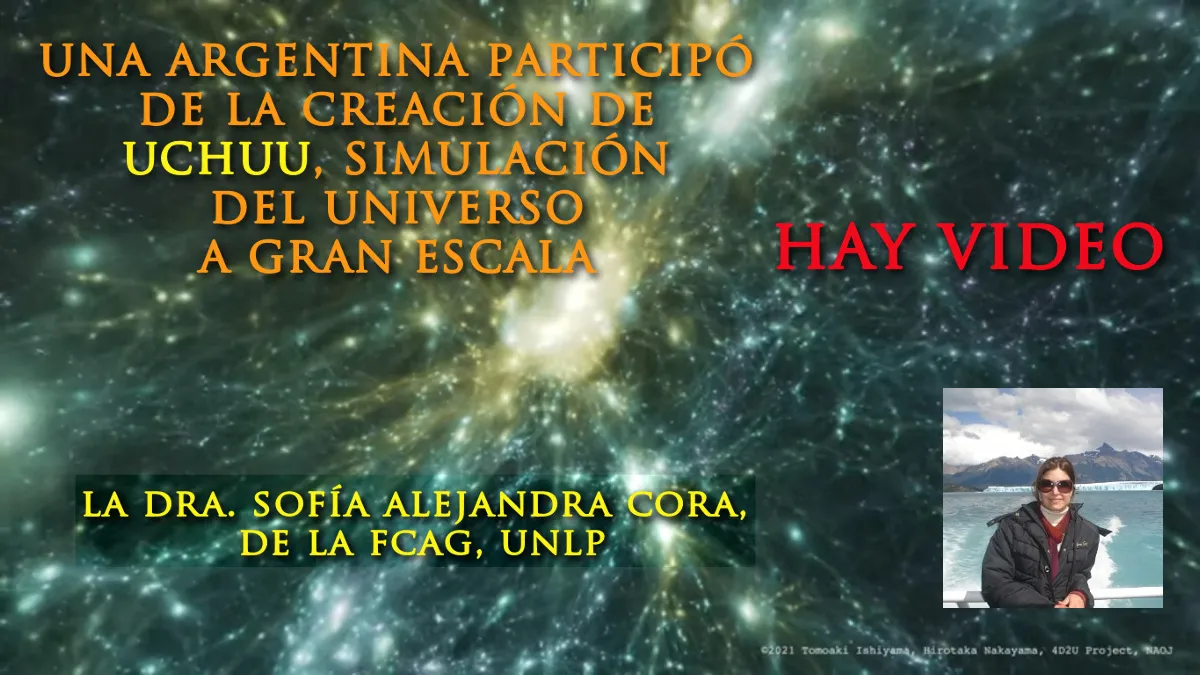
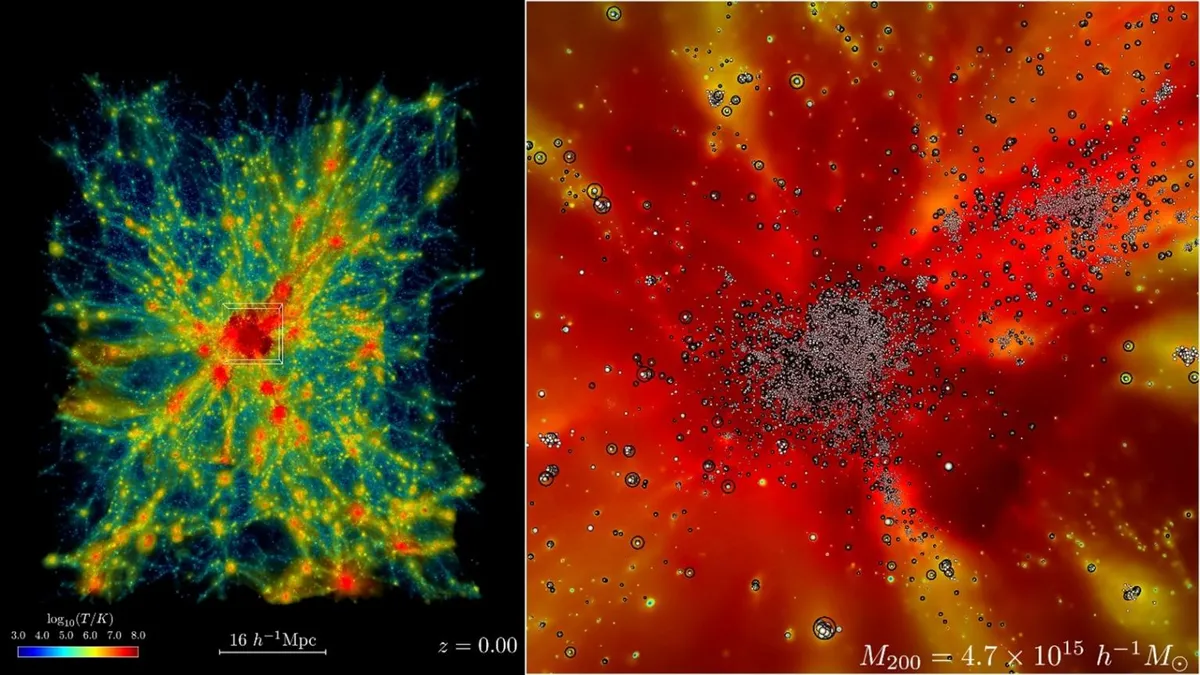
The Instituto de Astrofísica de Canarias (IAC) has produced a 4-minute video that simulates the formation and evolution of a galaxy cluster. This animation covers a time interval of 13,000 million years, almost the age of the Universe.
In astronomy, controlled experiments on cosmic objects cannot be performed, but simulations can be carried out based on known data and then the simulation can be contrasted with reality. For this, so-called HPC is required, the English acronym for High Performance Computing.
This simulation has been possible thanks to the computing capacity of the supercomputer Teide-HPC, the second most powerful in Spain and which appears on the Top 500 list of the world's most powerful supercomputers (position 202 as of November 2014, 138 as of November 2013), installed at the Instituto Tecnológico y de Energías Renovables (ITER) of the Cabildo Insular de Tenerife.
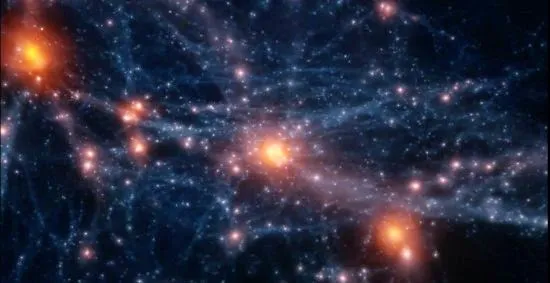
The simulation traces the evolution of a single galaxy cluster, a cosmic superstructure consisting of the grouping of galaxies held together by the force of gravity. The animation shows how, on these scales, the ordinary matter of the Universe groups into interconnected filaments over enormous cosmic voids, like the structure of a sponge, as a consequence of the motion of intergalactic gas, the gravitational attraction between galaxies, and the interaction with dark matter.
It also shows the distribution of halos, structures resulting from the intersection of several filaments in which galaxies form and evolve. In the animation, these halos are attracted by the cluster towards its center until they form the embryo of a supercluster of more than a thousand trillion solar masses.
The intensity of the brightness shows the different densities of the cosmic gas. Temperature is represented through color, with red being the highest temperature, about 10 million degrees.
The simulation was performed using a technique called “zoom in,” which allows concentrating all computing capacity on a small region within a cosmological volume or periodic cube in which the distribution of matter from a wide section of the Universe is continuously reproduced.
The cube used has a length of 1,600 million light-years on each side and covers a time interval of 13,000 million years, almost the age of the Universe. The volume includes 20,000 galaxy clusters and the distribution of mass and the amount of matter present in the halos that surround them, where galaxies form, has been estimated.
“The simulated space –explains Claudio Dalla Vecchia, a researcher at IAC and author of the simulation- is based on the standard model of Cosmology. Among the variables included in the calculations carried out in the test are gravitational attraction and the hydrodynamic motion of cosmic gas, as well as the expansion of the Universe. It includes both the evolution and distribution of ordinary matter and the abundant and enigmatic dark matter".
To carry out this simulation, two weeks of execution time and 128 CPUs working in parallel were needed, equivalent to 43,000 hours of computation. However, this is only the first step of a more complete simulation that plans to use 4,000 CPUs for 1,500 hours, that is, six million hours of computation.
In the complete simulation, it is expected that several hundred galaxies will form in each cluster, so it will be possible to simulate with unprecedented resolution several million galaxies, some of them of a size similar to those that make up the Local Group of galaxies, about 10 times smaller than the Magellanic Clouds. In addition to mass, properties such as shape, size, star formation rate, the amount of heavy elements present, and the evolution of the stars of each galaxy will also be taken into account.
“The simulation –points out the IAC astrophysicist Alfonso López Aguerri, who also participates in this project- implements a very realistic physical model of our universe. Thanks to it, astrophysicists can see, in a few seconds, the complete history of the formation of the large-scale structure of the Universe resulting from billions of years of evolution. And it is also a very valuable tool for making theoretical predictions that can then be contrasted with data collected by astronomical observations.”
The Teide supercomputer is a general-purpose high-performance computing infrastructure. It is composed of 1100 Fujitsu compute servers, with a total of 17800 compute cores and 36 TB of memory, a high-performance network, and a NetApp parallel storage system.
ARGENTINA AND HPC
This Thursday, March 12, the national government presented the brand-new supercomputer TUPAC, a computational cluster aimed at solving simulation models using high-performance computing techniques. From the Centro de Simulación Computacional para Aplicaciones Tecnológicas (CSC), dependent on the Consejo Nacional de Investigaciones Científicas y Técnicas (CONICET), located at the Polo Científico Tecnológico, the event was led by the Minister of Science, Technology and Productive Innovation, Dr. Lino Barañao; the president of CONICET, Dr. Roberto Salvarezza; the president of the Agencia Nacional de Promoción Científica y Tecnológica, Dr. Fernando Goldbaum; and the person responsible for putting TUPAC into operation, Dr. Eduardo Dvorkin.
The installation of TUPAC required an investment of 1,212,486 dollars and 2,745,785 pesos, contributed by the Agencia Nacional de Promoción Científica y Tecnológica and CONICET within the framework of the “Proyecto Ondas” managed by the Fondo Argentino Sectorial (FONARSEC) of the Agency. This initiative, presented in the call “Fondo Sectorial Tecnologías de la Información y la Comunicación 2010”, was the beneficiary of a total subsidy of 17,315,382 pesos.
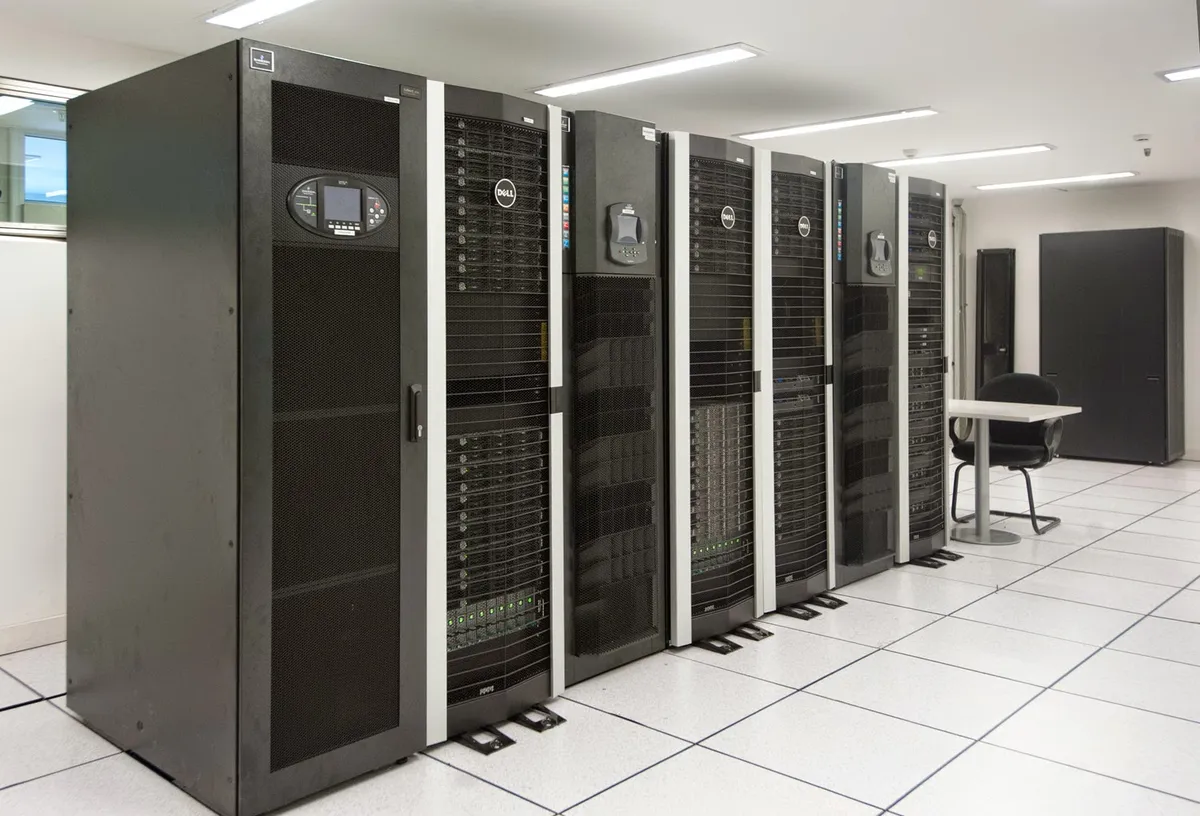
Among its capabilities, TUPAC can simulate hydraulic fracturing processes for the oil industry, specifically the technique to be used by YPF in the hydrocarbon exploitation of Vaca Muerta. In turn, it can develop weather prediction models for the Servicio Meteorológico Nacional, structural and fluid dynamic models of space vehicles (such as the Tronador II) and aircraft in general. It can also be used for radar and sonar models by the company INVAP.
It is worth noting that the computer will be open to the entire national scientific community, which thanks to the service provided by InnovaRed through advanced high-performance networks, will be able to connect to TUPAC to use it in research that requires its processing capacity.
With the installation of TUPAC, Argentina positions itself alongside Mexico and Brazil among the leading countries in Latin America to have this type of equipment. The TUPAC cluster would be equivalent to 12,000 home computers (using an average Core i5 3470 processor as the equivalence base).
Technical characteristics of TUPAC
It has:
- 4,096 AMD Opteron CPU cores.
- 16,384 NVidia GPU cores.
- 8,192 GB of RAM.
- Infiniband networks.
- Redundant 80 Kw water cooling systems.
- UPS for critical units.
Sources and related links
- IAC: The IAC simulates the formation and evolution of a galaxy cluster with the "Teide-HPC" supercomputer
- MinCyt: The President inaugurated the supercomputer of the Scientific Technological Pole
About the images
- Initial image. Credit: IAC.
- TUPAC image. Credit: MinCyT.