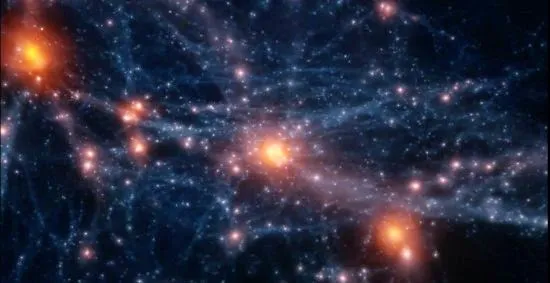
A universe virtualizer allows for a better understanding of galactic formation and evolution.
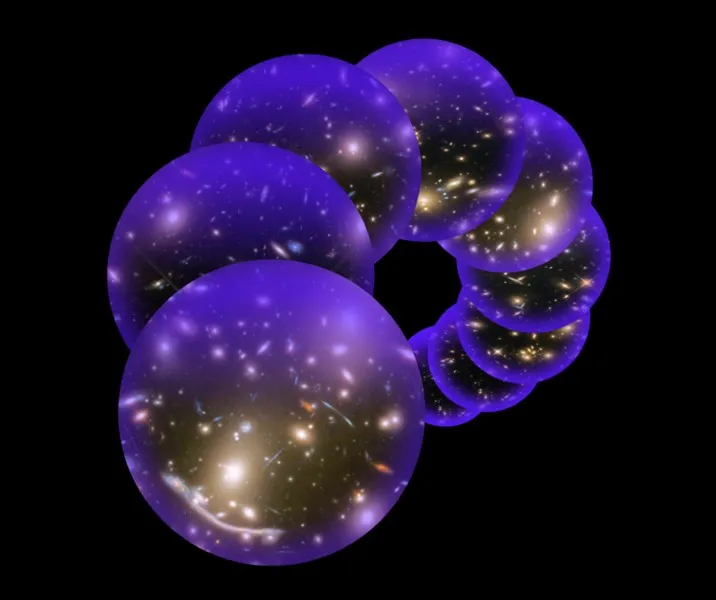
For many years, astrophysics has made use of computing which, like photography and spectra, has become an indispensable tool. With computers, simulations can be made, for example, to better understand the evolution of galaxies, which are the large-scale structures that dominate the cosmos. These simulations, until now, were done one at a time.
Peter Behroozi, a professor at the Steward Observatory of the University of Arizona, and his team took a major step: generating millions of different simulated universes on a supercomputer, each of which obeys different physical theories about galactic formation.
Their findings, published in MNRAS, challenge fundamental ideas about the role of dark matter in galaxy formation and their evolution.
"On the computer we can create many different universes and compare them with the real one and that allows us to infer what rules the observed universe follows", said Behroozi.
The study conducted is pioneering in creating simulated universes each with 12 million galaxies and extending from 400 million years after the Big Bang to the present day.
Each "Ex-Machina" universe was evaluated with a series of tests to see how similar galaxies appeared in the simulation compared to the real one. The universes most similar to ours had similar underlying physical rules, demonstrating the power of the tool.
The results of the "Universe Machine", as the authors call the approach, helped solve the old paradox of why galaxies stop forming new stars even when they retain enough hydrogen.
The prevailing ideas on the matter were that stars arise from a complex interaction between cold gas and gravity, while other processes prevent star formation.
For example, it is thought that most galaxies host a supermassive black hole in their centers. Matter falling into them emits energy that prevents the gas from cooling enough to form stellar nurseries. The same occurs with supernovae.
"Going back into the past of the universe, we expect dark matter to be denser and thus the gas to be hotter and hotter. That is bad for star formation, so we thought many galaxies in the early universe must have ceased forming stars long ago. But we found the opposite: galaxies of a certain size were more likely forming stars at a higher rate, contrary to expectations", explained the astronomer.
To compare observations of current galaxies, Behroozi explained that his team created virtual universes in which the case was the opposite, that is, universes in which galaxies continued forming stars longer. In contrast, when the researchers made universes based on current theories of galactic formation -in which galaxies stop star formation earlier- those galaxies appeared redder than the observed galaxies.
Galaxies appear red for two reasons: redshift, as they move away; and the decrease in the star formation rate, which generates fewer blue (young) stars and more old (red) stars.
"But we don't see that. If galaxies behaved as we think and stop forming stars earlier, our current universe would be poorly colored. In other words, we are forced to conclude that galaxies formed stars more efficiently in the early universe than we thought. And what that tells us is that the energy created by supermassive black holes and exploding stars is less efficient at suppressing star formation than our theories predict."
"Simulating a single galaxy requires 10 to the 48 (1048) computational operations. All the computers on Earth combined cannot do that in 100 years. So to simulate a single galaxy, let alone 12 million, it must be done another way."
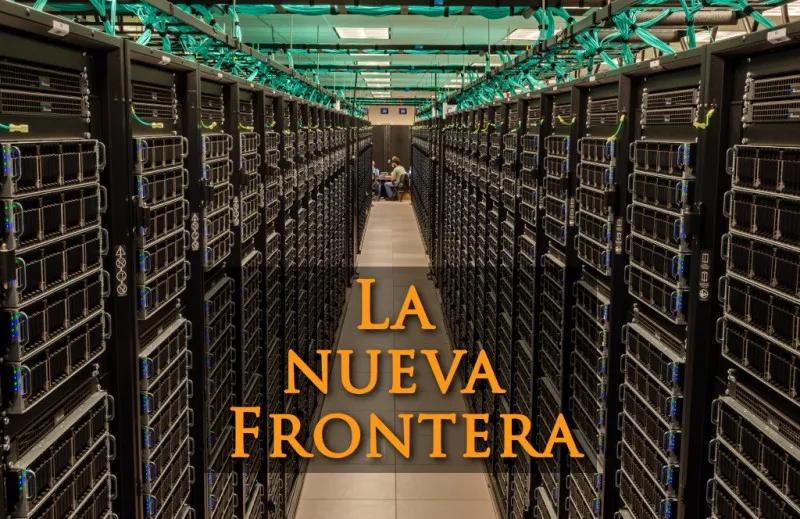
In addition to using computational resources from NASA's Ames Center, the team used "Ocelote", a cluster supercomputer at the University of Arizona. Two thousand processors performed calculations simultaneously for three weeks. In the course of their research work, the team generated more than 8 million universes.
"We took the last 20 years of astronomical observations and compared them with the millions of computer-generated universes. We put all the information together and looked at which ones matched the real universe. If they didn't match, we made modifications and looked again", he explained.
For the future, the team plans to expand the "Universe Machine" to include the morphology of individual galaxies to know how shape evolves over time.
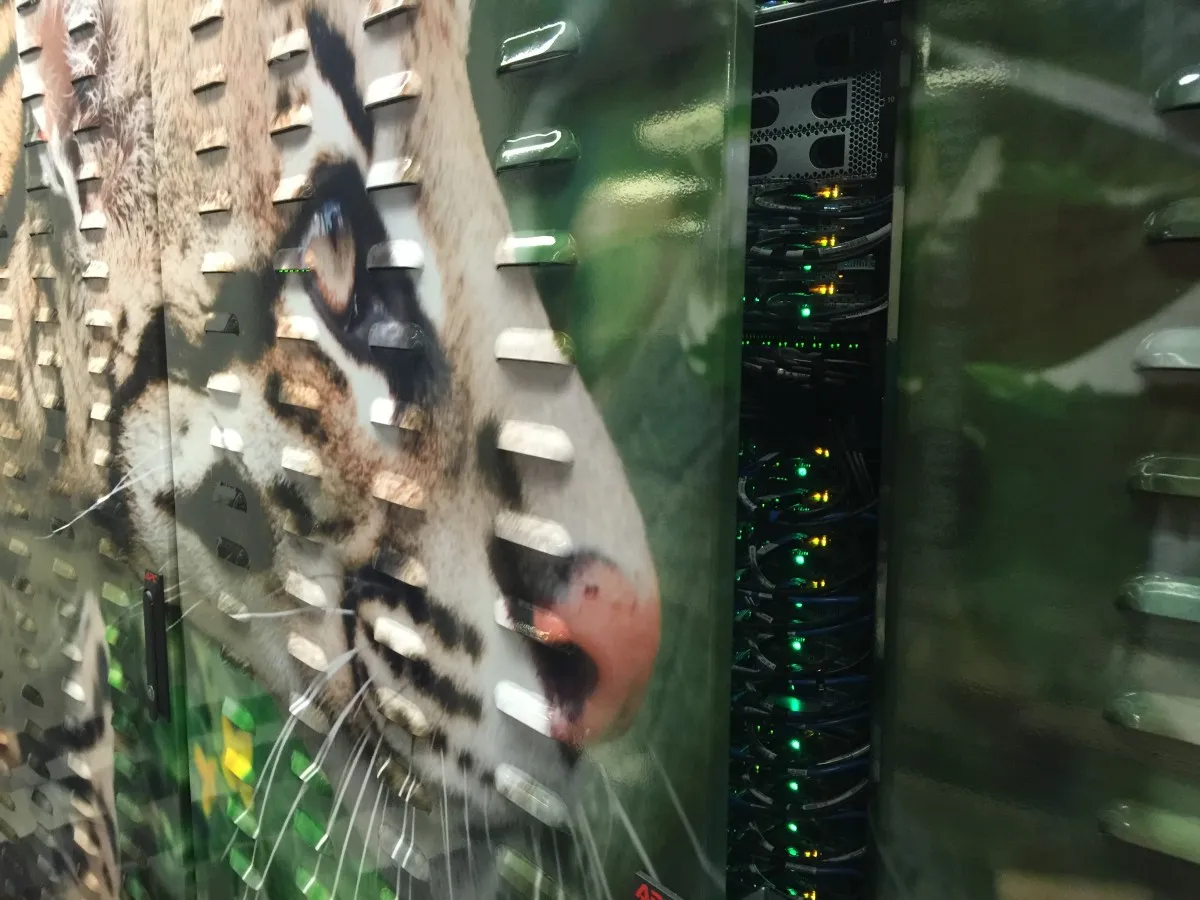
The Ocelote supercomputer has 336 nodes, each with 28-core processing units and 192 gigabytes of working memory. The tool was named and the racks were painted with a drawing of an ocelot after a contest won by Cynthia Sodari, a visual communication student. The ocelot is a feline, somewhat smaller than the jaguar and the puma. Probably, the name of a feline was sought since they are very fast and dynamic animals. These beautiful animals can reach 11 kg, but a single rack of the computational cluster weighs up to a ton. It is difficult to imitate nature, even with a supercomputer.
My cat Rey would agree with what I say, but he is very busy lying on my lap. Paraphrasing Jacquelyn Mitchard: "In the judgment of cats, people are their favorite warm-blooded furniture".
I think that if in other universes there were no cats, then there would be no computers either. For there to be computers, Alan Turing and quantum mechanics (with its Schrödinger's cat) are needed. Besides, Alan Turing IS a cat. Don't believe me? Then don't watch this video, unless curiosity gets the better of you...
Sources and related links
- Virtual 'Universe Machine' Sheds Light on Galaxy Evolution
https://uanews.arizona.edu/story/virtual-universe-machine-sheds-light-galaxy-evolution - Virtual universe machine
https://sciencenode.org/feature/Virtual%20Universe%20Machine.php - UNIVERSEMACHINE: The correlation between galaxy growth and dark matter halo assembly from z = 0−10
Peter Behroozi, Risa H Wechsler, Andrew P Hearin, Charlie Conroy
Monthly Notices of the Royal Astronomical Society, Volume 488, Issue 3, September 2019, Pages 3143–3194,
DOI: https://doi.org/10.1093/mnras/stz1182 - Meet 'Ocelote,' the Fastest Cat on Campus
https://uaatwork.arizona.edu/lqp/meet-ocelote-fastest-cat-campus - "Cats regard people as warmblooded furniture", Jacquelyn Mitchard, The Deep End of the Ocean.
A film was made based on the novel, called "The Deep End of the Sea".
https://www.imdb.com/title/tt0120646/
About the images
Initial image: NASA, ESA, J. Lotz and the HFF Team/STScI
Ocelot photo: Daniel Stolte/UANews