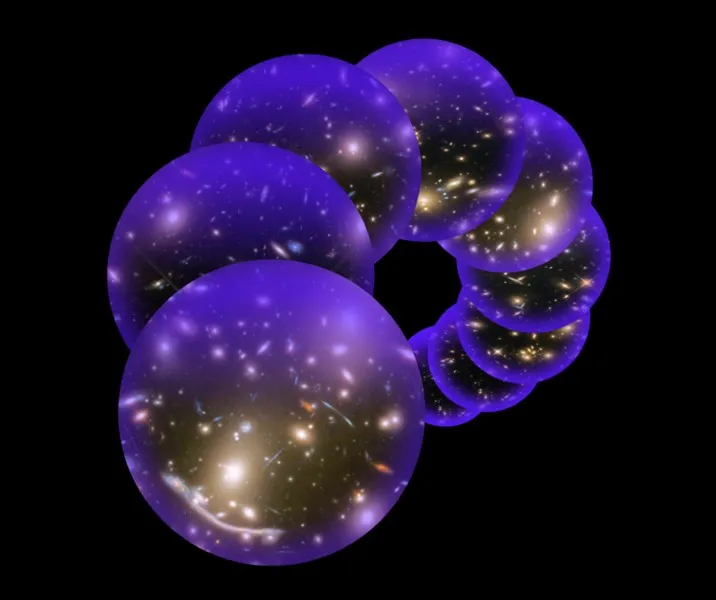
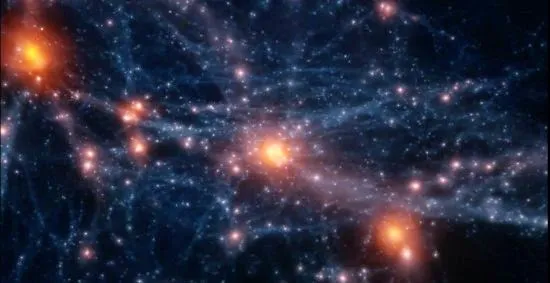
Performed with the Frontier supercomputer, from Oak Ridge Laboratory.
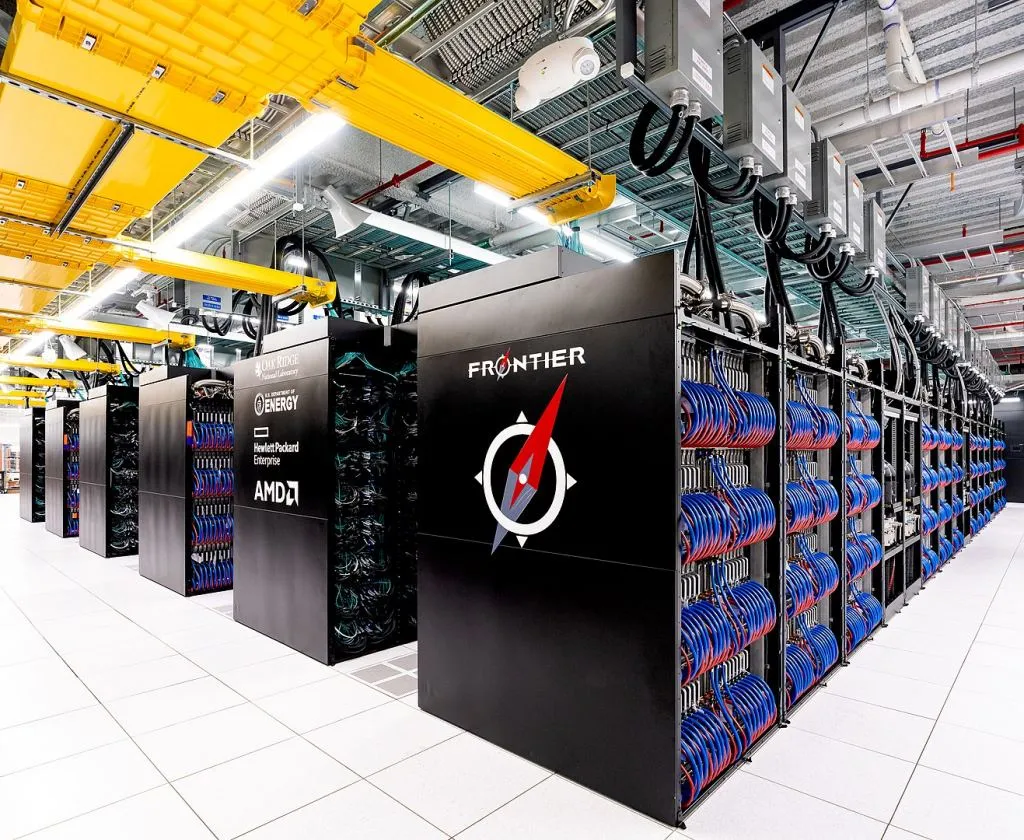
Researchers from the Department of Energy's Argonne Laboratory, in the United States, used the second fastest supercomputer to run the largest astrophysical simulation of the universe so far.
The achievement was reached using the Frontier supercomputer. The calculations set a benchmark for cosmological hydrodynamic simulations.
"There are two components in the universe: dark matter -which, as far as is known, only interacts gravitationally- and normal matter," said project leader Salman Habib. And he continued: "That's why, if we want to know what the universe is like, we need to simulate both: gravity as well as other physics that includes hot gas and star formation, black holes and galaxies."
The computer code used is called HACC: Hardware/Hybrid Accelerated Cosmology Code. It was developed about 15 years ago for petascale machines and later updated for the exascale.
Exascale computing refers to computer systems capable of calculating at least 10^18 double-precision operations per second. Frontier uses 9,472 AMD Epyc 7713 "Trento" 64-core 2 GHz CPUs (606,208 cores) and 37,888 Instinct MI250X GPUs (8,335,360 cores). Its approximate cost was USD 600 million. It consumes 21 MW of electricity, enough for 15 thousand families.
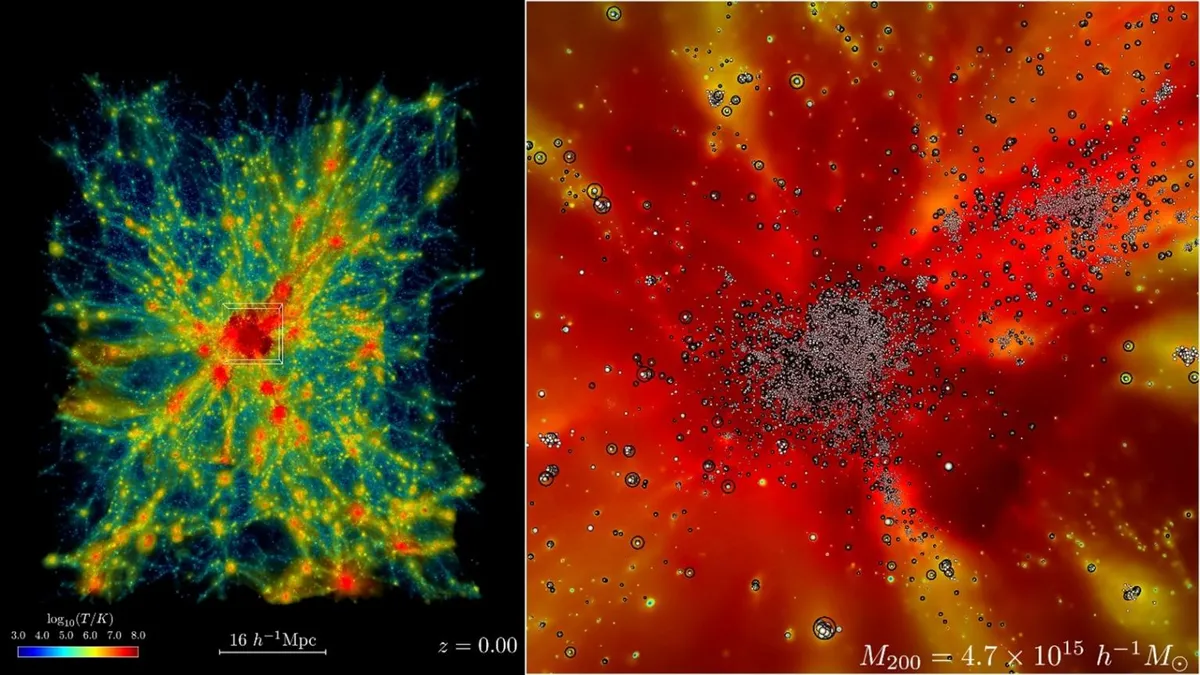
The simulation is called Frontier-E and a video was uploaded to the laboratory's Youtube channel. The left panel shows a volume of 64x64x76 Mpc/h and the right panel shows a zoom-in, with a color code for temperature, where in this case, red is hotter.
This gigantic simulation is one more example of the importance of high-performance computing (HPC) and Artificial Intelligence in contemporary astrophysics. Current astronomy generates massive amounts of data and requires powerful tools to store and manage that information. Frontier, the first exascale supercomputer, has already been surpassed by El Capitan, another computer at Lawrence Livermore Laboratory.
We could conclude that in modern astronomy, HR graphics are as important as an HP system.☉
Sources and related links
- Record-breaking run on Frontier sets new bar for simulating the universe in the exascale era
https://www.ornl.gov/news/record-breaking-run-frontier-sets-new-bar-simulating-universe-exascale-era - A Superfast Supercomputer Creates the Biggest Simulation of the Universe Yet
https://www.universetoday.com/169930/a-superfast-supercomputer-creates-the-biggest-simulation-of-the-universe-yet/ - Youtube:Record-breaking run on Frontier sets new bar for simulating the universe in the exascale era
https://www.youtube.com/watch?v=8St4ycsBoo4&t=5s&ab_channel=OakRidgeNationalLaboratory
About the images
Credit: Argonne National Laboratory, U.S Dept. of Energy