Regarding a post published on this blog in 2007, reflections on the Standard Cosmological Model.

A few years ago I published on this blog a post titled "What Happened Before the Big Bang?", following two articles published at that time, one by Penn State University and another on BadAstronomy.
The post on this blog has been one of the most read, according to web statistics, and one of the most commented.
Regarding an email I received a few days ago, it occurred to me to make some reflections on the matter.
Let's say that what is known as the Standard Cosmological Model (or Lambda-CDM Model) includes what we commonly call the Big Bang Theory. It is a model that attempts to explain the objective data obtained, the discoveries. A model is a way of explaining and interpreting such data.
A model is capable of being verified or not verified (totally or partially).
This model implies the following basic data:
-"Cosmological" redshift - recession velocity of galaxies (Hubble's Law). The astronomer in whose honor the famous space telescope was named discovered that the galaxies he observed were moving away from us and that the farther away they were, the faster they receded. The indication of such "recession" is the redshift of the galaxies.
From such objective data, two predominant interpretations were made: that the universe (space-time) expands; and the "tired light" theory.
-Law of conservation of energy. Physicists noted that if two particles, say protons, with a certain energy collide, the result will be certain particles and radiation whose energies added together are equal to that of the initial protons. That is, energy was neither created nor diminished. Through various experiments conducted, this idea has been upheld until today. It has been proposed that it is indeed possible for energy to be created, but in proportions so low that our current instruments have not detected such creation.
-Density: If we accept that space-time expands (and not that light gets "tired") and that energy is conserved (both interpretations supported by respective objective data) then, the universe in the past was more contracted, but with the same amount of energy, that is, its energy density was greater, therefore, it was hotter.
The discovery of the cosmic microwave background radiation (in 1964) fits this model.
But there are other aspects that do NOT fit. One is the expected homogeneity versus the observed one. To solve such a dilemma (the horizon problem) Alan Guth proposed cosmic inflation in the early 1980s. The concept attempts to deal with the problems of the Big Bang, but it is not grounded in evidence. It is a thesis that must be corroborated.
This is not a detail. It is important to distinguish what we know objectively from what we postulate.
Idealist science: The big bang as the first unmoved mover
But the central question is what the big bang theory means - philosophically. Does it mean that there would be a "scientific First Unmoved Mover"?
If we go back in time, under the model outlined above, we would reach a "singularity". If we understand such a term as a "zone" before which nothing can be said, it would be an ultimate (or first) limit.
Thus, before such a singularity there would be... nothing. Or, there would be "something" impossible to know (which is almost the same for us).
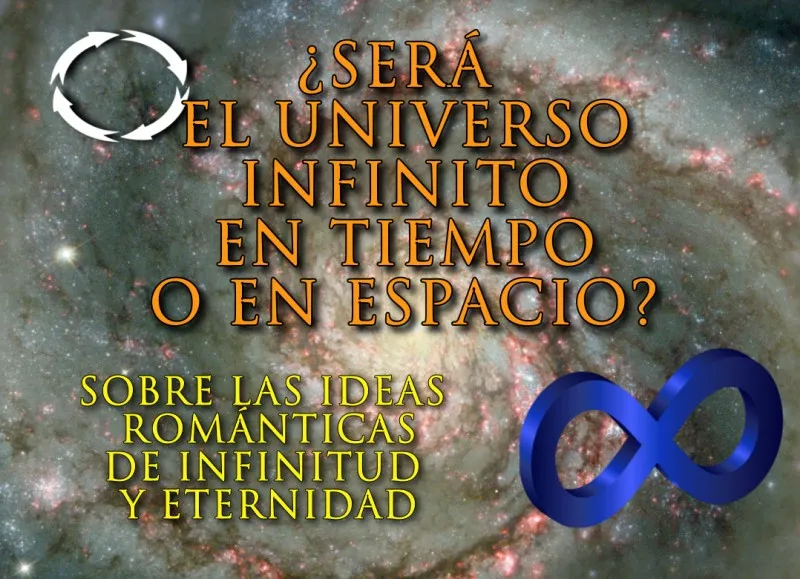
It is worth thinking the following: if that were the case, the Universe (a concept associated with the ALL) would not be infinite. An infinite should have neither beginning nor end. In nature, in human life, we find "beginnings" and "ends" necessary when rationally defining reality. A child is born (beginning) and years later the man dies (end). However, the child who in the previous statement is a "cause", is also a "consequence" of what his parents did to conceive him. And his death, which in the previous statement is a "consequence", is also a "beginning". His body, which is matter, transforms into other forms of matter.
Seen this way, there is neither a single beginning nor a single end, but a chain of causes and consequences, so to speak.
This does not mean that "everything is connected to everything" nor that reincarnation exists or anything of the sort.
A person begins a course of study. Upon finishing, they graduate. But such a beginning is actually a consequence of something prior. And the end is a cause of future consequences.
Human beings do not know of anything that has an absolute, fixed, and eternal beginning.
Aristotle and later Thomas Aquinas postulated a First Unmoved Mover (FUM) as the cause of everything.
If the singularity were a Beginning that has no antecedent (that arises from nothing), it would be a FUM. Thus, the greatest achievement of modern astronomy would be... religious.
It would also be anti-scientific. For several reasons:
1-Science is based on the possibility of knowing. The FUM destroys that possibility, by setting a limit that excludes knowledge.
2-Science is based on objective data that always need to be interpreted. Several interpretations arise that we will accept or not based on their coherence, but also their corroboration. It is impossible to corroborate that before such a singularity there existed... nothing.
3-The history of science shows that our knowledge is partial and confused. We have believed that the Earth was the center of the universe. Neither the Earth, nor the Sun, nor the Galaxy. Therefore, it is reasonable to think that the Universe we observe is just that, the part we can observe of the ALL. That is, the observed universe (currently observable) would not be the ALL.
Therefore, it is possible that one part of the universe expands, while another part contracts. It is possible that there are several "universes" as "space-time bubbles" within a Multiverse, or regions within the same universe with different density.
For this reason, the Big Bang Theory should not be interpreted as the scientific proof of a single and absolute beginning of EVERYTHING. That is not postulated because there is no way to postulate such a thing. There are those who interpret it that way, however.
As if that were not enough, such interpretations ignore or hide that this model has its enormous theoretical "black holes", like those indicated above and other more technical ones.
Infinity and eternity
If an infinite universe implies that there was a FUM, but that it has no end (in relation to the definition of the DRAE of the word as that "Which has not and cannot have an end or limit"), then, a universe without beginning or end would be "eternal" (the DRAE definition for that word is: Perpetuity without beginning, succession, or end).
If the first would be "idealistic" or quasi-religious by postulating a PMI, the second would also be so by postulating an eternal universe, since another use of the word "eternity" is also religious: "Rel. Simultaneous and perfect possession of an endless life, considered an attribute of God".
The eternal has been associated with the immutable, the absolute, that which does not change.
Language and human ideas are the fruit of our historical and social development.
In astronomy it was held that the universe is infinite, for example to resolve Olbers' Paradox (and all under the umbrella of the Cosmological Principle).
We can well say that reality as we know it so far is in permanent change and transformation. And that such reality does not have a "limit"; in any case, our knowledge of such reality does, and we are overcoming such limits by postulating theses and antitheses. Hence, a concept of infinity could be of that which has no limits (and not of that which has no end, but does have a beginning).
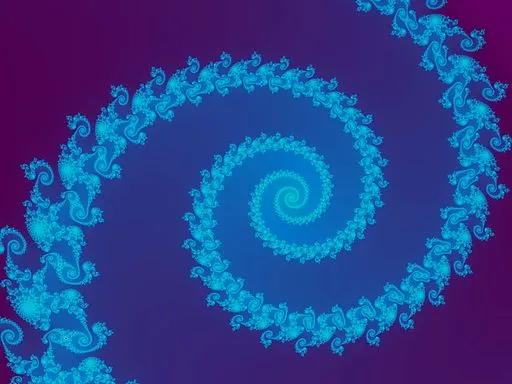
Perhaps the modern concept of fractals is the overcoming of such contradictions.
Crisis in cosmology?
Based on what has been said, there are those who postulate that cosmology is in crisis. There are different ways to understand a crisis. One of those ways is a certain form of paralysis or theoretical immobility, when a model fails to advance despite multiple investigations over decades.
To get out of such paralysis, previous theories are taken up again (like tired light or the steady-state theory). If such theories had empirical support, they could be an overcoming, but if one theoretical set with holes is merely exchanged for another that has as many or more holes, I don't think that is an overcoming.
On the other hand, if we analyze from what has been said that there is a crisis in cosmology, wouldn't it be fair to say something similar about the theory of evolution or psychology (not to mention psychoanalysis)?
Science is not made from nothing. It is made from certain premises or principles. We seek causes because we understand that there MUST be them, even if we haven't found them yet. In the same way and for the same reason, it is convenient and coherent with what is known so far that we seek origins, but not absolute beginnings. If the universe had a limit, such a limit would be a negation since it would negate what such a limit excludes. On one side of the limit there would be space-time and knowledge. On the other side, nothing, no space, no time, no light, no knowledge. The limit excludes knowledge and therefore human development.
But if such a limit is a negation of knowledge, then denying the limit is an affirmation. The greatest affirmation of all, the one that makes possible the development of human knowledge and capabilities.
Therefore, it is not capricious to assume that the Big Bang is NOT the beginning of EVERYTHING. And this is possible to maintain even with an expanding universe (without tired light) and with the law of conservation of energy.
The secret of the universe
There is a book by the great Isaac Asimov titled "El secreto del universo" which is a collection of stories that includes, as the cherry on top, a final text with the title that gives the work its name. In that essay number 31, Asimov recounts:
He said: "Do you think it is possible that someday all the questions of science will be answered and there will be nothing more to do? Or is it impossible to find all the answers?
Is there any way we can know right now which of these two situations is the correct one?"
I was the first to speak. I said: "I think we can know right now, Heinz, and without any problem."
Heinz turned to me and asked: "And how, Isaac?"
And I answered: "I believe that, essentially, the Universe presents very complex fractal properties, and that scientific activity participates in these properties. Consequently, any aspect of the Universe that is not yet understood and any aspect of scientific research that has not yet been resolved, no matter how small compared to what is already understood and resolved, is of a nature as complex as that of the original Universe. So we will never finish. No matter how far we go, the path remaining to be traveled will be as long as at the beginning; that is the secret of the Universe."
Note that the expansion of the universe is often compared to an inflating balloon. For that it is necessary to explain how it inflates. Is there someone inflating it (religion) or does it inflate as a consequence of prior causes?
What we surely know is that human knowledge is like a balloon that inflates (irregularly) and that we human beings are the ones who blow air into it or stop doing so. Sometimes we get tired, sometimes we are afraid and stop blowing. Let's take a breath again. And why do we want to know? Knowledge changes us (the heliocentric theory, the expansion of the universe, quantum theory, have changed us. And undoubtedly social theories too). But at the same time, knowledge allows us to change reality and break the limits we have imposed on ourselves. Let's do it and we will be able to say like Buzz Lightyear: To infinity... and beyond!
Sources and related links
- "What happened before the Big Bang?"
- El Secreto del Universo, Isaac Asimov. (web version)
- Fractals in astronomy, astrophysics and cosmology
- Wikipedia: Fractal cosmology
About the images
- From the blog Diabetes, by Pablo Tangelson. The photo caption is: To Susan P. Cooper for her amazing ability to inflate balloons without losing that angelic look on a cloudy afternoon in Topeka, Kansas.
- Galaxy of galaxies: by JonathanD Jonathan J. Dickau [Public domain], via Wikimedia Commons