Portrait of an astronomer who was revolutionary in socio-political terms and in transforming modern astronomy into contemporary astrophysics.
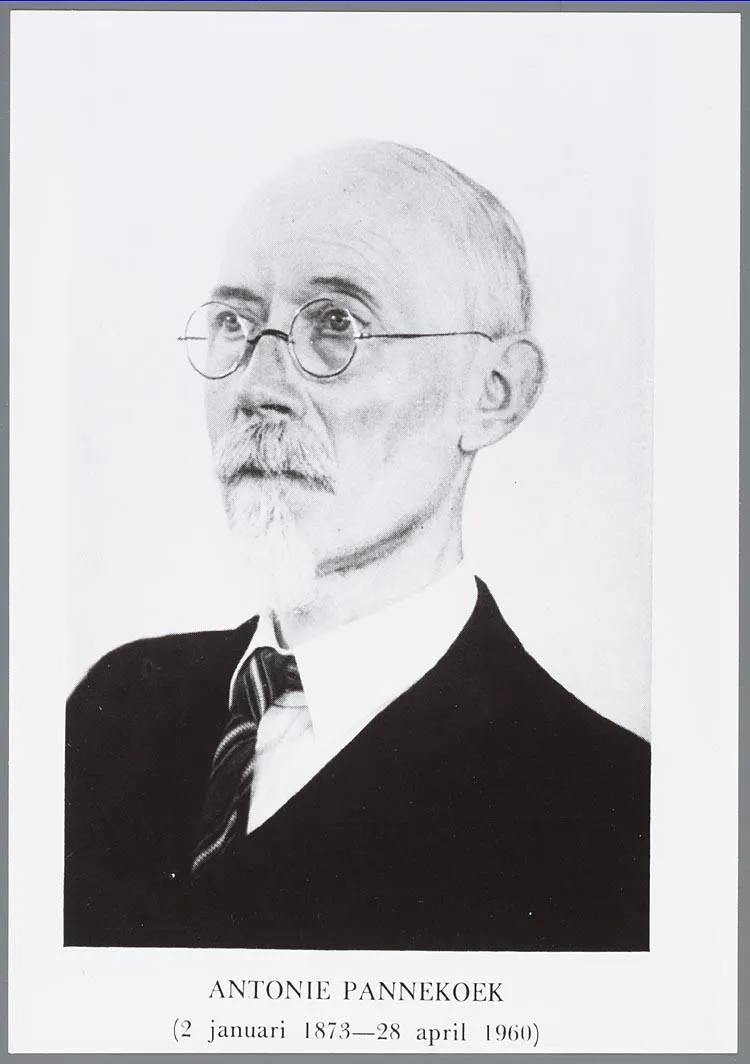
There are and have been many professional astronomers, although readers will probably know only a few. Allow me to introduce a great astronomer who, at the same time, was a political theorist and whose life is better known for the latter than the former; that is, it is easier to find his political writings than to know his contributions to astronomy. I refer to Anton Pannekoek.
In addition to highlighting some of his "socialist" works, as I will do at the end, it is worth knowing that the Dutchman was a prominent astronomer at the frontier of late modernity.
Modernity in astronomy
We could well consider that in astronomy modernity is marked by the use of the telescope, 400 years ago. However, in many texts we will find, as we shall see, that it is indicated that astronomical modernity emerged in the 20th century, with the development of astrophysics and cosmology.
In my view, if the first consideration is valid, then the processes that developed in the 20th Century are a sub-process of modernity, perhaps a late modernity or, in any case, one could say that Pannekoek and others contributed to constituting contemporary astronomy: astrophysics.
So, first I want to help fill a gap, by accounting for Pannekoek's development in astronomy and then indicating two valuable contributions of this astronomer in the socio-political field.
PANNEKOEK AS AN ASTRONOMER
For that there are several sources, such as the DWC (The Digital Web Center for the History of Science in the Netherlands) [1]. According to it, Antonie Pannekoek was born on January 2, 1873 (143 years ago) in Vassen, province of Gelderland. Son of Johannes Pannekoek and Wilhelmina Dorothea Beins, members of the rural middle class. He studied astronomy at Leiden University where he became an observer at the Astronomical Observatory in 1898. He obtained his doctorate in 1902 on the variable star Algol. The following year he married Johanna Maria Nassau Noordewier. The meridian measurement program instituted by Frederik Kaiser two decades earlier was too limited for Pannekoek, who considered those measurements of little scientific use. As a dedicated socialist he was a member of the Social Democratic Workers' Party in 1902 and in 1905 he left the observatory to accept a position at the socialist party school in Berlin, then Bremen.
According to Paul Mattick: [2]
Pannekoek, still a young student of natural sciences and specializing in astronomy, entered the Social Democratic Workers' Party of Holland and immediately found himself in its left wing, alongside Herman Gorter and Frank van der Goes.
The "anarcho-syndicalist" tendencies of which he was a representative divided the organization. From this emerged a new Socialist Party, closer to the "model" of German social democracy. However, the radical ideology of the old Party influenced the traditions of the Dutch socialist movement.
This traditional radicalism found its expression in the Party's new monthly organ, "De Nieuwe Tijd" ["The New Era"], especially in the contributions of Gorter and Pannekoek, who fought the growing opportunism of the Party leaders. In 1909 the left wing around Gorter was expelled and this group constituted a new organization, the "Social Democratic Party". Pannekoek was then in Germany. He taught at the schools of the German Social-Democratic Party and wrote for its theoretical publications and for various other newspapers, such as the "Bremer Bürgerzeitung".
The First World War forced Pannekoek to return to Holland, where he was a secondary school teacher in several places. He continued his political activities, adopting an international revolutionary position, contributing a number of articles to two important left-wing newspapers.
His political activities caused the Minister of Education to block and finally -after the communist revolution in Hungary- reject his appointment as deputy director of the Leiden Observatory. Pannekoek remained one of the most important theorists of the Socialist International and the communist movement. He is best known for his insistence on the autonomous action of workers who, after the revolution, should organize themselves independently, in the form of Workers' Councils.
If the Minister of Education could veto his appointment at the (national) University of Leiden, he did not have the power to do the same at the (municipal) University of Amsterdam, where Pannekoek had been appointed lecturer in Mathematics and Astronomy in 1918. Seven years later he was a professor. He founded the Astronomical Institute of the University of Amsterdam and his long monographs appeared in its publications between 1924 and 1949. He was dismissed by the German government of the Netherlands in 1941.
Note: Such an institute still operates and has worldwide renown, under the name Anton Pannekoek Institute for Astronomy (http://www.astro.uva.nl/)
In Amsterdam, Pannekoek became one of the founders of astrophysics in Holland. He investigated the structure of the Milky Way through detailed photometric research, publishing his results on the northern hemisphere in 1924-1929 and on the southern hemisphere in 1949. He also did important work on stellar atmospheres: the abundance of hydrogen in stellar atmospheres, the flash spectrum of the sun during an eclipse, as well as studies on the low mass of giant stars.
Early in his profession, Pannekoek was interested in the history of astronomy. His book "Wonderbouw der wereld" (The Wonderful Construction of the Universe) introduced the reader to astronomy through its history; De groei van ons wereldbeeld (The Growth of Our Worldview) was published in English as A history of astronomy and was considered the most reliable general history of astronomy for three decades.[3]
With his wife, he was active in literary and musical circles in Amsterdam. He was a member of the Academy of Arts and Sciences of the Netherlands from 1925 and received an honorary doctorate from Harvard, as well as the gold medal of the Royal Astronomical Society. He died on April 28, 1960 in Wageningen.

The Spanish version of Wikipedia adds three facts: he received the Gold Medal of the Royal Astronomical Society in 1951.[4] His name is the eponym of asteroid 2378 Pannekoek discovered in 1935 [5] and of a lunar crater.[6]
Another source to consult was The Biographical Encyclopedia of Astronomers [7]. The reference to the Dutch astronomer appears on pages 867-868 signed by Christoffel Waelkens. From this material we can add about the astronomer's life that in 1891 he independently detected the brightness variation of Polaris (alpha Ursa Minoris) and was the first to determine its approximate periodicity. Concerned about the value of this data—the amplitude of the variation is only 0.11 m—he waited until 1913, when photographic and photometric data were available, to propose the Cepheid nature of the star.
Before entering university, he also developed a light curve for beta Lyrae and began a life of visual and photographic observations of the Milky Way. He was launched into a successful career in astronomy when in 1906, independently of Ejnar Hertzprung, he observed that apparently the bright red stars include some that must be substantially brighter than others. His discovery of what later became known as red giants and red dwarfs was based on the significant differences between the parallaxes and proper motions of groups of stars. Paradoxically (the term is from the source), Pannekoek left astronomy to pursue his second passion, that is social justice. As a political activist, one described as an anti-authoritarian Marxist, he spent the years from 1906 to 1914 as a teacher in Berlin where he became one of the leaders of the anti-revisionist movement.
In 1915 he continued his work as an astronomer and was one of the first (in 1920) to recognize the relevance of Meghnad Saha's law for deriving stellar diagnostics from spectroscopic observations. [8]
With this knowledge he believed it necessary to dedicate himself to that field. Marcel Minnaert credited Pannekoek with initiating the study of astrophysics in the Netherlands after the founding of the astronomy institute.
He understood early on that certain lines in stellar spectra, which are correlated with luminosity, reveal the gravity in stellar atmospheres. One of the most incredible results of his work in the field was in 1946 when he suggested that in some pulsating stars the sound wave moving outward gradually turns into a shock wave and ejects material at the moment of maximum radius in each pulsation cycle.
Throughout his career, Pannekoek excelled in the meticulous measurement of information from photographic plates. The galactic studies he carried out during his early years in Amsterdam are characterized by a deep understanding of what the eyes can see on a plate. This knowledge allowed him to be a pioneer—with John Plaskett—in the quantitative analysis of photographic stellar spectra. Using the spectrum of Deneb (alpha Cygni) taken at an observatory in Canada in 1929 and with a technique he invented (using logarithmic tables and mechanical calculators) to numerically integrate the radiation transfer equation that arises from Arthur Eddington's approximation, Pannekoek was the first astrophysicist to develop an empirical (non-solar) stellar curve of growth, similar to those developed for the solar spectrum by Harald von Klübe and Minnaert. His 1930 chapter on ionization in stellar atmospheres in Handbuch der Astrophysik was an important contribution to the field.
In 1938 he performed the first theoretical calculation of the width of the Balmer series of hydrogen lines applying the Stark effect to demonstrate that the broadening of the wings of those lines was a function of stellar gravity. In another work he contributed to the understanding of the concentration of metals in stellar opacity, showing that at high temperatures the concentration of hydrogen was the dominant element in such opacity and color, while at low temperatures the metallicity effect dominated.
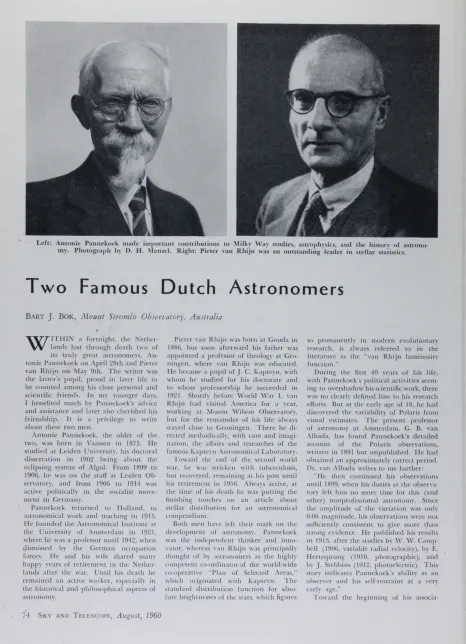
Another source consulted about his astronomical work was an article signed by Bart Bok (another great astronomer) in Sky & Telescope [9]. It indicates that more than any other astronomer he understood the importance of accurate spectrographic classification for the study of the nearest parts of the Milky Way system and his paper on the distribution of A and B stars in the Amsterdam Publications journal, Vol.2, had a profound effect on our understanding of galactic structure. In his travels, especially to the tropics (to Sumatra for the eclipse of January 14, 1926) he took every opportunity to draw, photograph and measure the brightness distribution of the Milky Way. Professionals continue to consult his papers with pleasure and benefit.
The article also reinforces what was indicated in the previous source: Pannekoek was always aware of new trends in research. After M. Saha's publication of the ionization formula in 1920, the Dutch astronomer abruptly changed his own interest and that of his collaborators to a new group of problems. These concerned stellar atmospheres and the brightness distribution in absorption lines in spectra. Here we had a man primarily trained as an observer and mathematical astronomer, changing at age 40 to a new and difficult field of theoretical and observational astrophysics.
THE IMPORTANT WORK OF PANNEKOEK
From what has been said, it follows that it is possible to dedicate oneself to the natural and exact sciences, like astronomy, and also have social and class consciousness and dedicate time to theoretical development in the political field.
And this, without his professional activity in astronomy being "minor". The value of his work is not in medals and prizes, but in the meticulous work that allowed him to make advances in stellar and galactic knowledge.
It must be said that in the two "astronomical" sources used and translated to elaborate the text above, Pannekoek's theoretical and active work in Marxist socialism is explicitly mentioned. The same occurs in the English and Spanish Wikipedia entries.
As is logical, in the two cited sources, his theoretical-political work is mentioned, but not detailed, as Mattick does.
Besides getting to know another astronomer who is generally not mentioned, the valuable thing about Pannekoek has not only been his astronomical contributions. Personally, I consider his writings on socialism to be of great value, some of which are available in Spanish. [10]
But of all his non-astronomical work, what I would like to bring to the reader is a text published in pamphlet form that I consider of utmost relevance, entitled: "Marxism and Darwinism".
Below, in the links, the reader can obtain this work in digital format and read it on their own. I would then like to convince the reader to do so for the following reasons:
1-We may have divergent points of view, but it is unquestionable that both Karl Marx and Charles Darwin, and in particular, their works, are pillars of what we call modernity.
2-If we have already had some reading, let's say superficial, of the paradigmatic texts of both authors, we may have noticed an apparent contradiction, which is precisely that: apparent.
It is possible to interpret that according to Darwin, human beings are biological beings that are part of a process of biological evolution and that, therefore, what human beings do is due to such evolution, namely: we have an economic system (capitalism) based on competition between agents seeking to adapt to survive, by any means necessary. Or that we are selfish by nature, because that is how we have better adapted to the environment. Therefore, what happens in the world is the fruit of a natural evolution, and thus, it is inevitable.
Karl Marx says almost the opposite. Without objecting to biological evolution (although perhaps with some misunderstandings about it) he maintains that what happens in the world is the product of a historical-social process, linked to the class struggle.
These are apparently contradictory diagnoses. It was Anton Pannekoek who tried to elucidate whether this is the case or not. Of course, we find a lot of bibliography on the subject. The interpretation of evolution mentioned earlier is known as biological predeterminism or Social Darwinism. The reader will find many works on the subject. Few or none written by an astronomer, except Pannekoek's.
Paul Mattick notes on this:
He knew how to reconcile his taste for social science with his passion for the natural sciences: he not only became one of the leading theorists of the radical labor movement, but also an astronomer and mathematician of worldwide reputation.
Almost all of Pannekoek's work is imbued with this attitude towards the sciences, towards the philosophy of nature and society. One of his first publications, "Marxism and Darwinism," clarifies the relationship between both theories. One of his last works, Anthropogenesis, deals with the origin of man; "the scientific importance of Marxism, as well as that of Darwinism," he wrote, "consists in developing the theory of evolution to its ultimate consequences, the first in the domain of society, the second in that of the organic world." The importance of Darwin's work lies in the demonstration that "under certain conditions, one animal species necessarily transforms into another." The process of evolution obeys a "mechanism," a "natural law." The fact that Darwin had identified this "natural law" with the struggle for existence, analogous to capitalist competition, did not affect his theory; it did not thereby make capitalist competition a "natural law."
The text in question has been digitized and translated into Spanish and the reader will find below the ways to obtain the pamphlet for subsequent reading and analysis [11].
Darwinismo y Marxismo by Andone Iñaki
THE WORKERS' COUNCILS
Another important work is "The Workers' Councils" [12] in which throughout its six chapters he addresses issues of vital importance for every person: work, law and property, factories; but also ideologies and the concept of science (particularly in chapter 3-part 5) where a critical thought is perceived:
The doctrine that the communist parties propagated under the name of Marxism was nothing more than a parody of true Marxism, for this, as a science born in an advanced capitalism where there was already significant class struggle, gave way to a caricatured deformation, which corresponded to an Asiatic capitalism. Bourgeois atheism was its center. Its confessed objective: the domination of the Party. Its first commandment: blind obedience to the dictatorship of the superiors. The purpose of propaganda was not to make workers people capable of thinking for themselves and building their own world through their own understanding, but disciples who blindly believe in the Party leaders and are willing to bring them to Power.
The importance of this work lies in the fact that we cannot be critical of the prevailing social, political-economic system (capitalism) and at the same time not be critical of the socialism that was actually carried out in history. We can discuss with Pannekoek his stance on unions, workers' councils and the leadership of the working class. What is not debatable is that the astronomer's attitude was not indifferent to class contradictions and, therefore, was a critical position, but also a self-critical one. Contradictions cannot be overcome when they are denied. In this broader sense, Pannekoek was a great observer of the astronomical and social cosmos.
Sources and related links
[1] DWC: Biography of Dutch scientists - Pannekoek http://www.dwc.knaw.nl/biografie/berkelbio/?lang=en
Taken from the book The History of Science in the Netherlands: Survey, Themes and Reference edited by Klaas Van Berkel, Albert Van Helden, L. C. Palm
[2] Paul Mattick, ANTON PANNEKOEK (1873-1960) at https://www.marxists.org/espanol/mattick/1960s/1960-pannekoek.htm
[3] A history of astronomy on Google Books https://books.google.com.ar/books?id=O7D9AyU-nLYC&lpg=PA1&hl=es&pg=PA1#v=onepage&q&f=false
A history of astronomy on Scribd https://es.scribd.com/doc/238055518/History-of-Astronomy-Anton-Pannekoek-1961
[4] The Gold Medal of the Royal Astronomical Society (Pannekoek 1951)
https://www.ras.org.uk/awards-and-grants/awards/268
[5] Asteroid 2378 Pannekoek discovered in 1935, JPL http://ssd.jpl.nasa.gov/sbdb.cgi?sstr=2378+Pannekoek
[6] Crater Pannekoek on the Moon http://planetarynames.wr.usgs.gov/Feature/4580
[7] http://link.springer.com/referencework/10.1007/978-0-387-30400-7/page/61
[8] Saha equation on Wikipedia https://es.wikipedia.org/wiki/Ecuaci%C3%B3n_de_Saha
[9] Two Famous dutch astronomers, Bart J. Bok, in Sky & Telescope, Vol. XX, No. 2, August, 1960, pp.74-75 (pages 14-15 of that issue which begins with numbering 61)
[10] Anton Pannekoek Archive in Spanish at Marxists.org https://www.marxists.org/espanol/pannekoek/index.htm
[11] A digitized version, in English, of Marxism and Darwinism, which can be downloaded in different formats, is on Archive.org (embedded on this page)
https://archive.org/details/marxismdarwinism00pannuoft
An html version in Spanish was made in 2009, 200 years after the publication of The Origin of Species by the CCI, published in two parts with annotations in Revista Internacional No. 137 and No. 138.
Darwinismo y marxismo (I) (Anton Pannekoek)
http://es.internationalism.org/node/2567
Darwinismo y Marxismo (II) - Anton Pannekoek http://es.internationalism.org/node/2631
This same version can be read and downloaded in pdf format in a single file from Scribd (embedded on this page)
[12] Los consejos obreros (1947)
https://www.marxists.org/espanol/pannekoek/1940s/consejosobreros/index.htm
About the images
Initial image
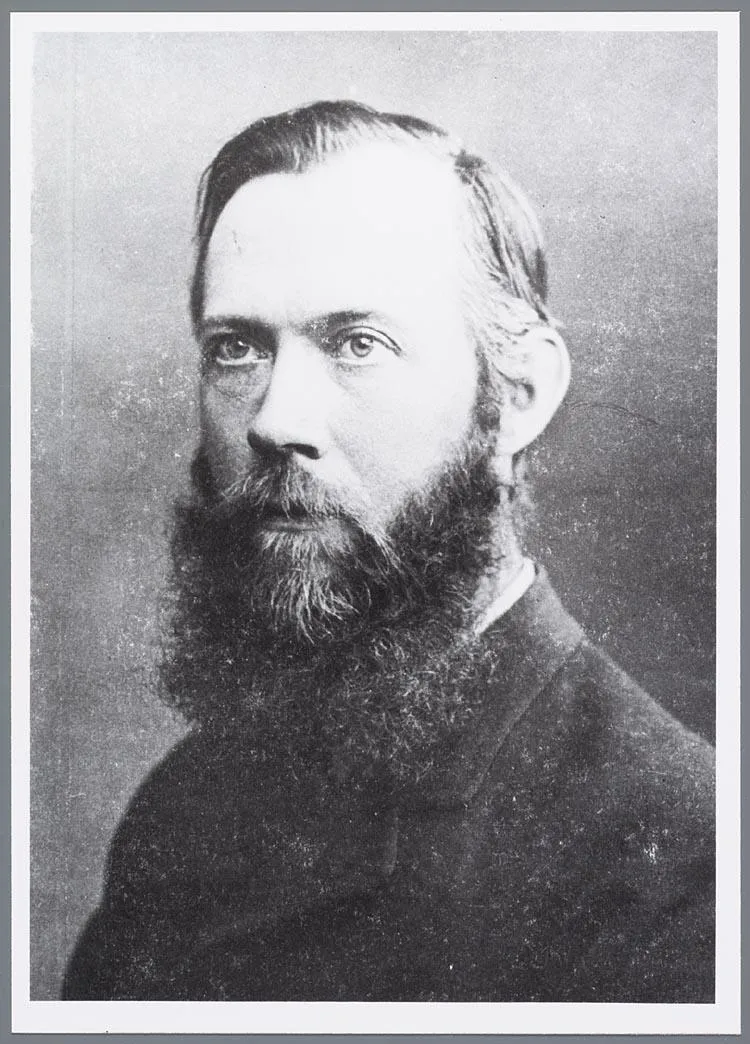
Photograph of Antonie Pannekoek from the collection The Dutch Labour Movement till 1918, of the Internationaal Instituut voor Sociale Geschiedenis http://www.geheugenvannederland.nl/?/en/items/IISG01xxCOLONxxADV10537536
Image 2: Logo of the Pannekoek Institute.
Image 3: Cover of an edition of De wonderbouw der wereld http://www.antiqbook.com/books/bookinfo.phtml?l=en&o=klo&nr=1352689776&searchform=http://www.antiqbook.com/index.php?l%20en
Image 4: Photo of a page from Sky&Telescope (see reference [9]).
Image 5: idem 2 http://www.geheugenvannederland.nl/?/en/items/IISG01:ADV10552402/