It has been proposed to commemorate Hypatia Day, for the first woman astronomer-mathematician, on March 20.
In the newsletter of the Society for the History of Astronomy [1], which is the Society for the History of Astronomy, Ari Belenkiy -a doctor of mathematics- made the proposal, which was formalized through the petition site Change.org [2].
According to Wikipedia, Daughter and disciple of the astronomer Theon, Hypatia is the first woman mathematician about whom reasonably secure and detailed knowledge exists. She wrote about geometry, algebra and astronomy, improved the design of primitive astrolabes —instruments for determining the positions of stars on the celestial vault— and invented a densimeter, for which she is considered a pioneer in the History of women and technology [3].
There are different versions about the death of this remarkable woman. Socrates Scholasticus and later sources pointed to Patriarch Cyril and the church of Alexandria.
According to Belenkiy, published in 2010 [4], after she provided her astronomical knowledge about the vernal equinox on March 16, in agreement with the Roman church, instead of March 21, the date defended by the church of Alexandria, a political problem was created. Her position would have threatened that church as the established authority for setting the dates of Easter for the entire Roman empire.
Last year the scholar revised his position in a new analysis [5].
In any case, the proposal on Change.org is to remember Hypatia annually on the day of the vernal equinox, given that her last days were dedicated to finding the exact moment of that astronomical event.
The equinoxes are the moments of the year when the Sun is located in the plane of the celestial equator. On that day and for an observer on the Earth's equator, the Sun reaches the zenith (the highest point in the sky relative to the observer, which is right overhead, that is, at 90°).
For the local time of Alexandria, the vernal equinox in the years 2016-2050 would fall on the same date as in 415 (the year of the woman's death), March 20. The date of birth is known with less certainty.
Therefore, it is proposed to remember the first woman astronomer-mathematician on Hypatia Day.
The scholar's idea is to take the petition to UNESCO but that institution informed him that it must first be approved by a national body and therefore the request on Change is for the Canadian parliament (since the mathematician now lives there), but the idea is to take the petition to the international body.
The petition can be seen at:
I add that a while ago, from this blog I proposed thinking of a date to commemorate International Astronomy Day [6], based on a historical date. My proposal (which fell on a date very similar to the one made by the scholar) was based on the publication of The Starry Messenger by Galileo, four centuries ago. The proposed date was March 12.
Albert Einstein was born on March 14. Isaac Newton died on March 20 (according to the Julian calendar) or March 31 (according to the Gregorian calendar).
There are many, then, historical reasons to consider the month of March as the month of astronomy and I would have no problem considering Hypatia Day also as International Astronomy Day.
There are plenty of reasons to vindicate Hypatia and take advantage of the date to disseminate the sciences, particularly astronomy, physics and mathematics, but also history. And, more relevant than ever, also to vindicate the role of women in society as producers of knowledge and wealth under the same natural conditions as men, but with the social burden of having been relegated to secondary roles. Despite this, there is much evidence of their talents through determination, intelligence and courage, which in several cases they paid for with their lives for having had the "nerve" to be women, and better than certain men.
There are still gender biases in scientific work. And, of course, in the religious sphere. Today they do not pay with their lives, but they do with their economic and job opportunities.
For freedom of gender, sex, ethnicity and class!
Note: Thanks to Dr. Beatriz García for informing me of this initiative.
Sources and related links
- [1] Newsletter of the Society for the History of Astronomy (Volume 9, no.1, February 2017)
https://societyforthehistoryofastronomy.com/the-e-news/ - [2] Commemorating the first female astronomer, Hypatia of Alexandria.
https://www.change.org/p/canada-s-parliament-commemorating-the-first-female-astronomer-hypatia-of-alexandria - [3] Wikipedia: Hypatia
https://es.wikipedia.org/wiki/Hipatia - [4] An astronomical murder?
Ari Belenkiy A&G (2010) 51 (2): 2.9-2.13.
DOI: https://doi.org/10.1111/j.1468-4004.2010.51209.x - [5] The Novatian ‘Indifferent Canon’ and Pascha in Alexandria in 414: Hypatia’s Murder Case Reopened
DOI:10.1163/15700720-12341264 - [6] For an international astronomy day
http://www.noticiasdelcosmos.com/2015/08/por-un-dia-internacional-de-la.html - ARI BELENKIY
http://u.math.biu.ac.il/~belenka/publ.html
About the images
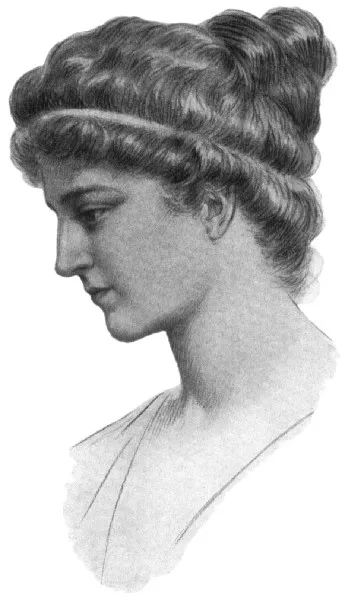
Portrait of Hypatia. (Elbert Hubbard 1908 Little Journeys to the Homes of Great Teachers 23 [4] [East Aurora, New York: The Roycrofters])