Silica and silicon are the key elements for the formation of glass and electronic circuits.
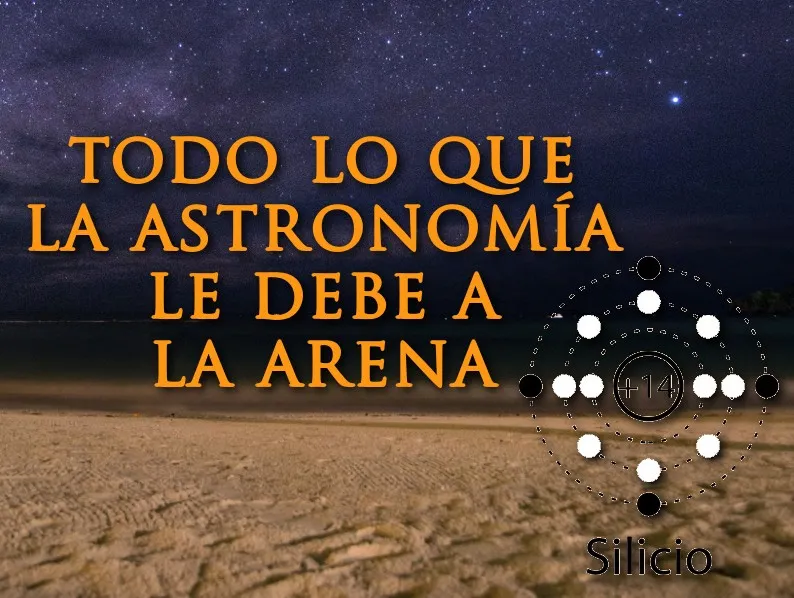
Silica is silicon oxide, composed of silicon and oxygen. Glass is obtained from silica sand and sodium carbonate. Lenses and mirrors of telescopes are made of glass.
Astronomy is one of the oldest sciences. But until the 17th century its advances or discoveries were very slow. They say there are more stars than grains of sand. But even in the darkest skies of millennia ago, it was difficult to observe much more than a few hundred stars in the night sky. Besides the Moon, the visible planets are Mercury, Venus, Mars, Jupiter and Saturn. Occasionally, the ancients could discover a nova or supernova, some comet. In such remote times, surely the grains of sand were more numerous than the known celestial objects. But, what would astronomy be without sand?!
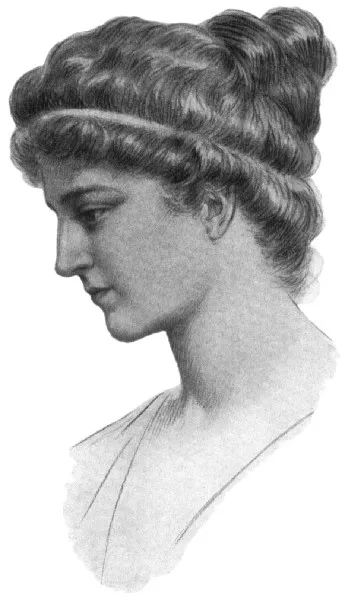
In antiquity, some instruments were used to measure angles. In his "History of the Telescope", Isaac Asimov recounts that: "From Hipparchus onward, ancient and medieval astronomers made use of graduated instruments. These were a fixed vertical or horizontal stake and a movable rod that could be adjusted until the eye, at one end, could see a star that appeared over the edge of the other end. The angle formed by the movable rod with the fixed one could be read directly on the graduated arc along which the first moved. In this way the angular distance of the star from the horizon or from the zenith could be measured".
Silicon, element with 14 protons, is the second most abundant element in the Earth's crust, after oxygen. Can other celestial objects beyond those visible to the naked eye be found? Yes, said Nature. Yes, says the periodic table.

The discovery by Hans Lippershey - apparently fortuitous - that the combination of concave and convex lenses magnified distant objects, would change astronomy drastically. Glass had been manufactured for a long time and at least since the Siglo XIII transparent glass for visual correction had been achieved.
Word spread, from the Netherlands to Venice, and Galileo decided to make his own spyglass but not only to see distant ships, but celestial objects. It was 1609.
The device was called in various ways: as compiled by Asimov, the contraption was nicknamed "optical tube", "optical glass" or "perspective glass". In 1612, a Greek mathematician - Ioannes Dimisiani - who was secretary to an Italian cardinal, suggested the word "telescope", formed from Greek words meaning "to see at a distance".
Towards the Siglo XVIII Uranus was discovered, although it had been observed a few decades earlier, mistaken for a star. In fact, Herschel, to whom the discovery is attributed, considered it a comet. Due to anomalies in Uranus's orbit, a century later, Neptune was discovered. Pluto was found in 1930.
The 20th century has undoubtedly been the golden century of astronomy in terms of discoveries. If a single catalog of all known celestial objects to date were made, most were discovered from the 20th century onward: Asteroids, comets, galaxies, black holes, nebulae, pulsars, white dwarfs, exoplanets.
Galileo's designs were replaced by Kepler's. Later, a tug-of-war broke out between refractor and reflector designs, won in all cases by polished glass, metallized or not.
But it was not only for the lenses and mirrors of telescopes that sand proved so important. Photography was key to recording observations for the first time, beyond the drawings that were made until then. The first records were made with daguerreotypes at the end of the Siglo XIX. Astronomers used analog photography through glass plates coated with photosensitive substances that they later developed.
Another instrument that would elevate astronomy to the rank of astrophysics was the spectrograph, invented at the beginning of the Siglo XIX by Fraunhofer. A spectrograph is an instrument that has a prism, that is, a piece of glass, that separates the different wavelengths of light. This allows knowing the chemical composition of stars, as well as knowing their radial velocity by the Doppler effect.
In contemporary times, silicon is a fundamental component of every electronic circuit, which includes digital cameras and computing, which are indispensable for current astronomy.
Another key element for the study of the sky has been the clock. For a long time micrometers, made of metal or threads, were used. During the 20th century much more precise designs were achieved, including quartz clocks which are a mineral composed of silica. Clocks allowed establishing the right ascension of objects and making better maps.
So it matters little whether stars are more or less numerous than grains of sand. The speed of astronomical discoveries, from the 17th century to the present, has a specific cause: glass, made of silica sand, which is silicon.
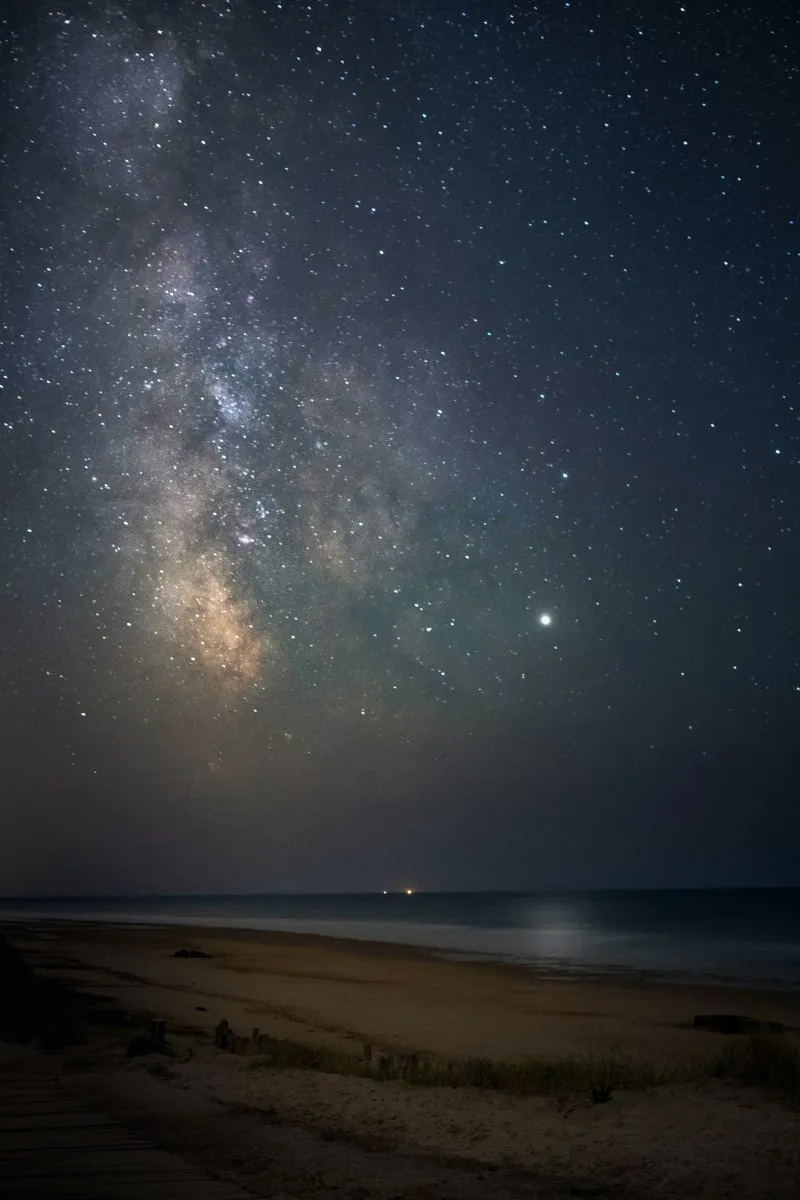
It is a fact to consider this summer, while some enjoy the beach and can, when the Sun sets, gather a little sand in their hands and look at the night sky full of glimmers reflected in the undulating sea. What a fabulous combination the couple between sand and human ingenuity has been!
The same sand with which concrete is made, has been the most significant element in the construction of modern astronomy and its maturity towards contemporary astrophysics and cosmologies.
The mastery of fire, which made it possible to shape glass, and writing, through which inventions could be shared and progress faster, have also been key in this long history. But this is already known, while the role of sand is often ignored. What a paradox that an element that allowed us to observe the frontier of the universe goes unnoticed!
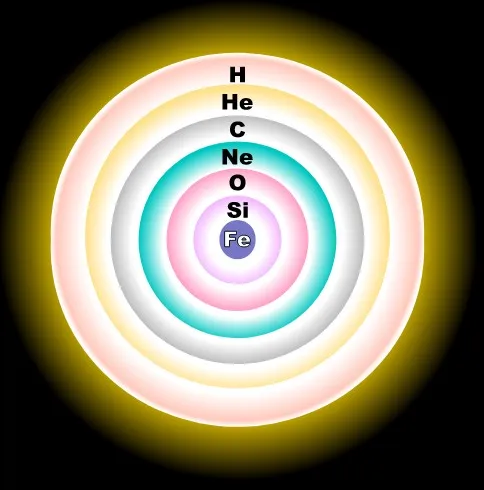
Out there, in the sea of stars, there are countless planets that will also possess this element, forged in the nuclear fusion process of stars. Theory says that silicon burns in the Alpha Process, after oxygen, when stars contract and their temperatures rise to 3 GK (giga Kelvin). Recent research found traces of silicon in Cassiopeia A, a supernova remnant.
How many other beaches there must be in the Cosmic Ocean!☉
Sources and related links
Historia del telescopio, Isaac Asimov, Alianza, Madrid, 1986.
Exploding Stars Make Key Ingredient in Sand, Glass https://www.jpl.nasa.gov/news/exploding-stars-make-key-ingredient-in-sand-glass
Silicon-burning process https://en.wikipedia.org/wiki/Silicon-burning_process
About the images
Photo by Vino Li on Unsplash https://unsplash.com/photos/4W6-mK4J4OE
Photo by Fabrice Villard on Unsplash https://unsplash.com/photos/WSEcWx3FK1o
http://hyperphysics.phy-astr.gsu.edu/hbasees/Solids/sili.html
https://es.wikipedia.org/wiki/Nucleos%C3%ADntesis_estelar
De User:Rursus - R. J. Hall, CC BY 2.5, https://commons.wikimedia.org/w/index.php?curid=2565862
https://en.wikipedia.org/wiki/Stellar_nucleosynthesis
By Cmglee - Own work, CC BY-SA 3.0, https://commons.wikimedia.org/w/index.php?curid=31761437