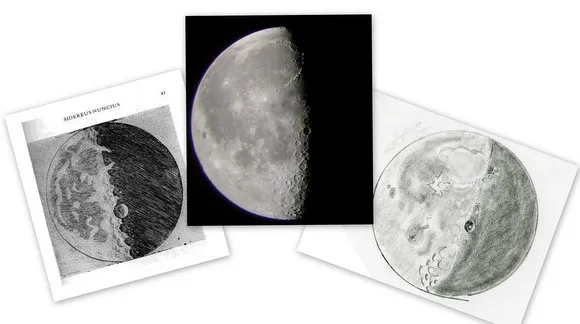
About why we see only one face of the moon despite the satellite rotating and the supposed existence of a "dark side".
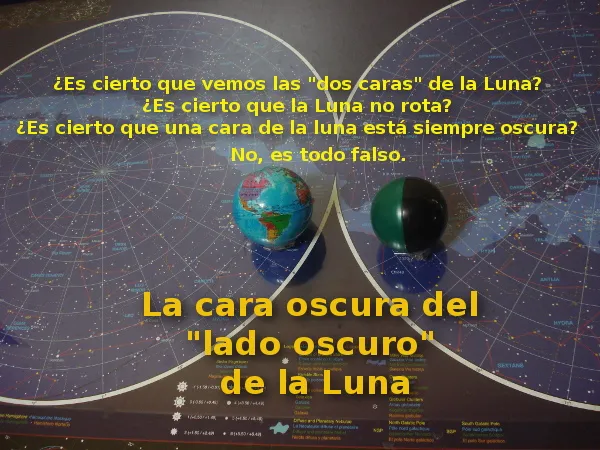
Although there are many materials on the internet and in books that address the issue, given the number and diversity of messages I have received this year on the subject (through the blog and on my social networks) I think it is appropriate to deal with the question here.
To do so, I will use photographs taken by me using two small balls commonly used to play with cats. One ball has a design like Earth and is made of rubber. The other, made of plastic with a noisy interior, I will use as the moon (despite them being similar in size) since it has one face painted black and the other green.
For all examples, I will assume Earth is static (neither rotating nor orbiting) since, although that is not the case, it is not important for the issue.
Furthermore, the Moon does not have only two movements (nor does Earth), but I will leave that topic for the end.
It seems there are still those who postulate that:
1-We see the "two faces" of the Moon
2-We see only one face and the Moon does NOT rotate
3-There exists a "dark side" of the moon, which sunlight never reaches.
All three statements are false. I will argue why below.
A-WE SEE ONLY ONE FACE OF THE MOON
Whether this is true or not is easy to corroborate. It requires neither great knowledge nor precision instruments. Using binoculars could help, but it is not necessary either. Patience is required, however. Let the reader observe the Moon. They will notice dark areas (craters with great depth). Some say they see the figure of a rabbit in those dark areas. Let the reader take note of those areas or take photos. If observing with binoculars, they can look for the crater Tycho, which they can later identify with the naked eye.
Observe the Moon frequently again (perhaps every night there is no new moon, perhaps once a week) over the course of a year. You will always see the same face. You don't need to believe anyone. It can be verified. At the end we will say something more regarding the "two faces," but for now, it is enough to say that it is true that only "one face" of the Moon is seen.
B-THE MOON ROTATES
Based on the above, whether because you blindly believe me or because the reader corroborated it (which is preferable) then perhaps you think the Moon does not rotate. It is very common to hear very self-assured people (who think the rest of us are wrong) say that this MUST be so. I will demonstrate here in a simple way that this is an erroneous arrogance. In fact, IT CANNOT BE SO.
To demonstrate this, I will start by the negative, showing what does NOT happen.
C-ASSUMPTION THAT THE MOON DOES NOT ROTATE (BUT IT DOES ORBIT)
Suppose the Moon did not rotate, but it did make one orbit around Earth. We would see something similar to what is shown in the following photographs.
To understand the photos, let's say this:
The ball used as the Moon has two colored faces, one black and one green. Let's say that if the Moon does not rotate, it is because either of the two faces always points to the "same place."
To make this clear, I have marked in the photograph four "places" in relation to Earth, using the cardinal points. If one part of the Moon always pointed to the same cardinal point, it is because it does not rotate, right?
Let's see then what would happen if the Moon did not rotate, but made one orbit around our world:
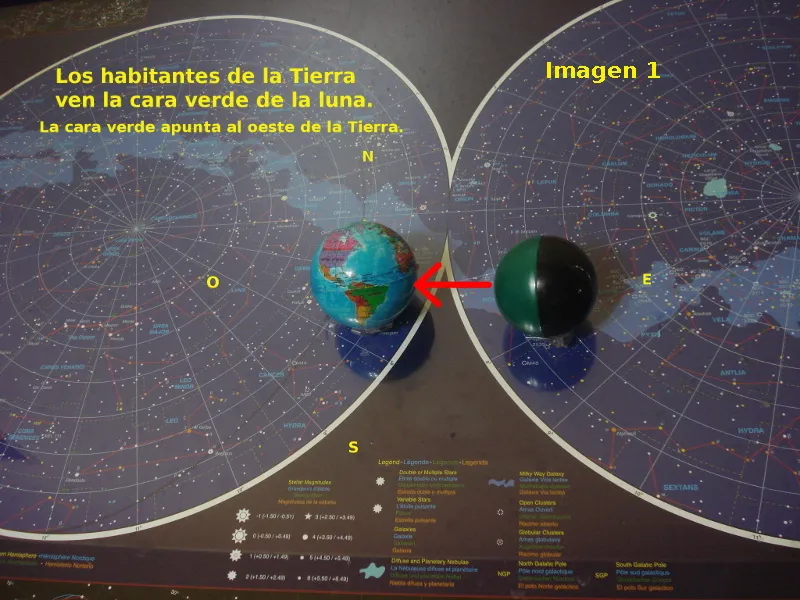
In the first image we see the green side of the Moon pointing towards the west.
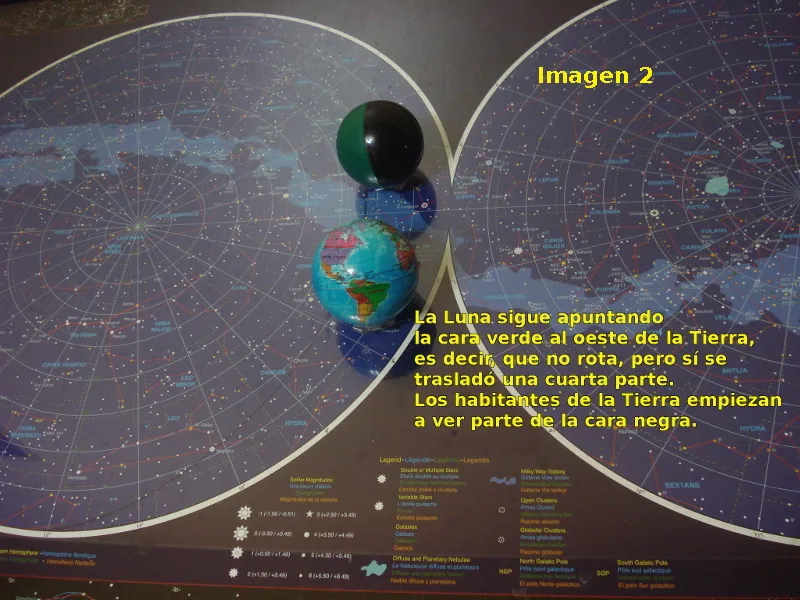
In this second image we see the green side also pointing towards the west, but now the Moon has moved one quarter around Earth.
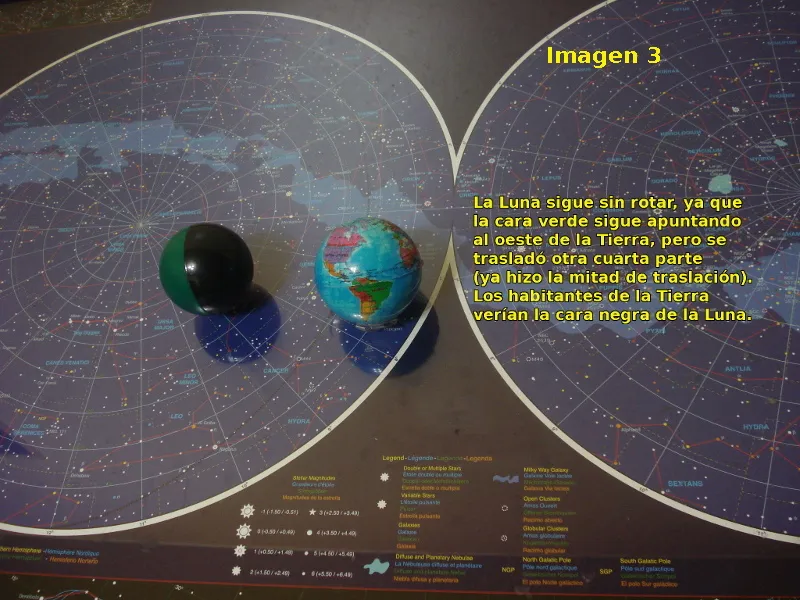
In the third image we see that the green side still points west, but the Moon has moved another quarter.
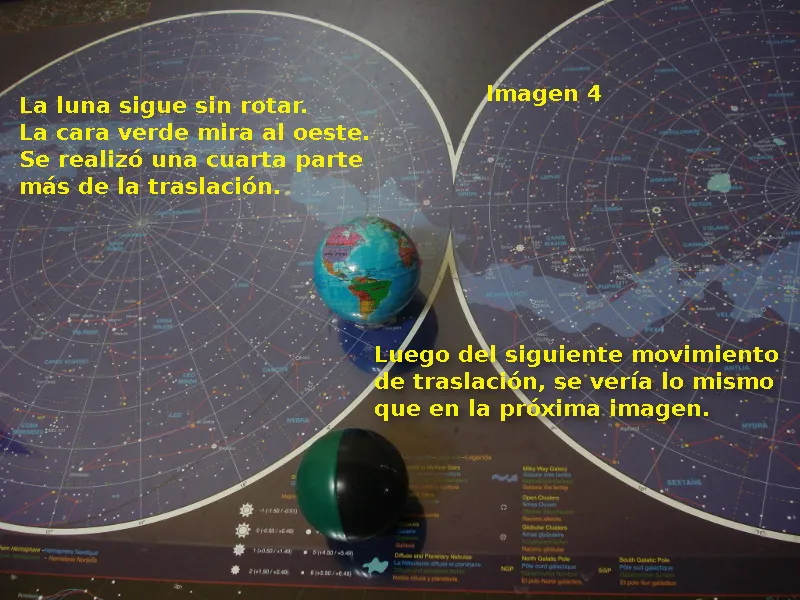
In the fourth image the same: the green side towards the west, another quarter of orbit.
Finally, I am not including the fifth image because it would be the same as the first in this series and the same as the first in the next series.
Since the green side always pointed to the same place, then the Moon did not rotate. But if we look at the photos again, from Earth we would see both sides of the Moon. In photo 1 from Earth we would see the green side and in photo 3 from Earth we would see the black side.
We said it is easy to corroborate that this does not happen, therefore things cannot be like that. THE MOON DOES ROTATE ON ITS OWN AXIS AND WE ALWAYS SEE THE SAME FACE.
C-ROTATION AND ORBITAL PERIODS
From what has been said, the following options remain:
C1-The Moon rotates in a time different from the orbital period. In this case there are two possibilities: that the rotation period is less (C1A) or greater (C1B) than the orbital period.
C2-The Moon rotates in a time equal to the time it takes to orbit.
C1A: ROTATION LESS THAN ORBIT
Let's see what would happen if the rotation period were less than the orbital period. Suppose the orbital period (to make one orbit around Earth) were 29 days. If the rotation period were half, it would be 14.5 days.
This would mean the Moon would complete one rotation halfway through the orbit.
And it would also mean that during that rotation time the green side would have to point to four different places (n,s,e,w).
Let's see how it would look in images:
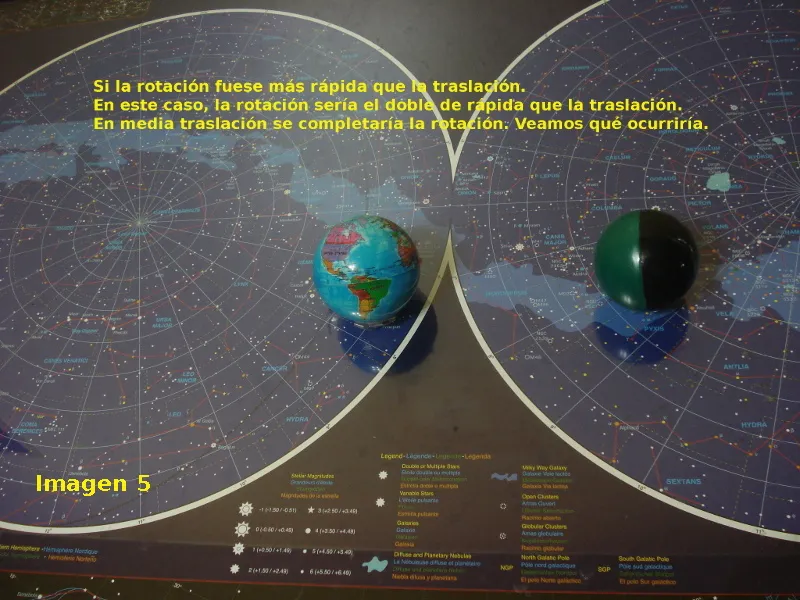
The first photo (image 5): The green side points west.
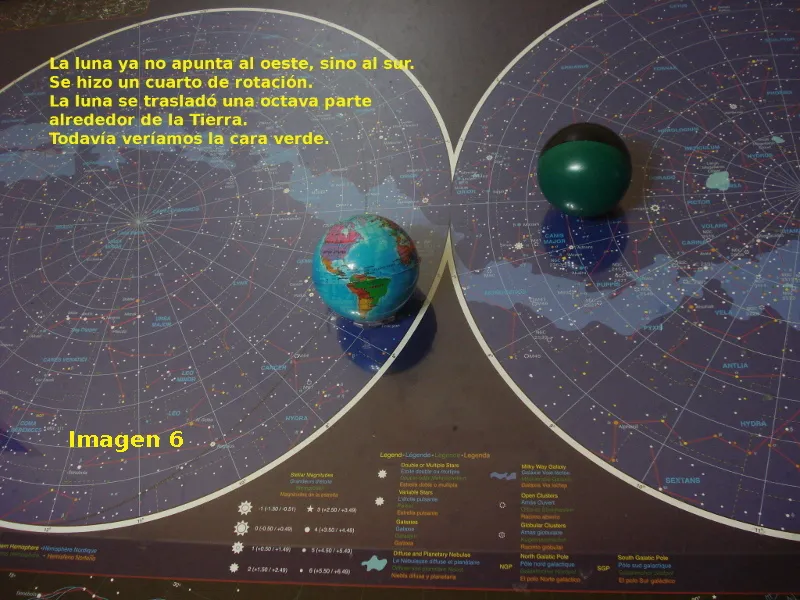
In image 6 the moon made one-eighth of an orbit (half of a quarter) and rotated one quarter: The green part points south.
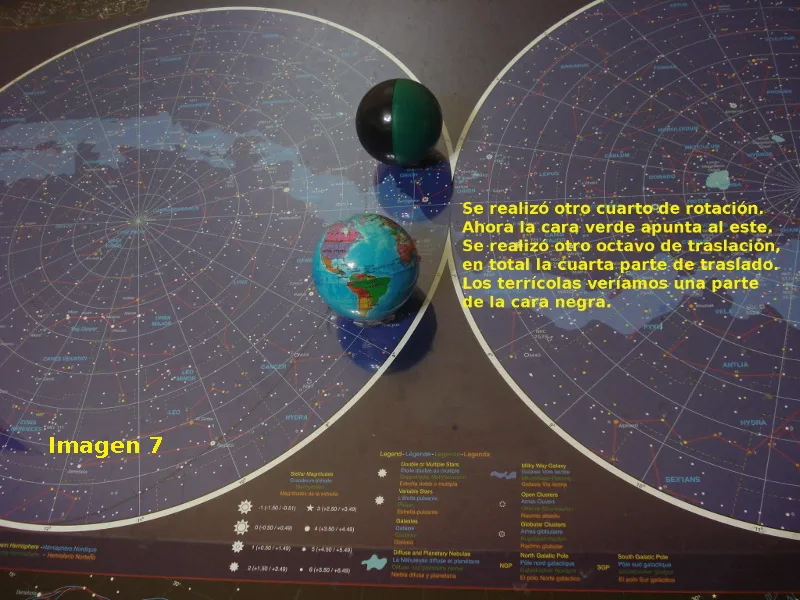
In image 7 the moon made another eighth of an orbit (one quarter accumulated) and rotated another quarter (half a rotation): the green part points east.
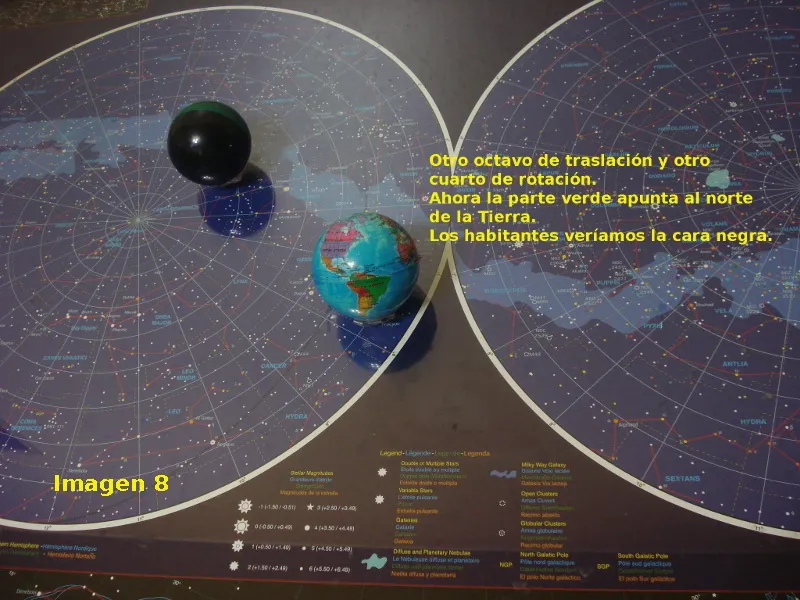
In image 8 the moon made another eighth of an orbit and rotated one more quarter: the green part points north.
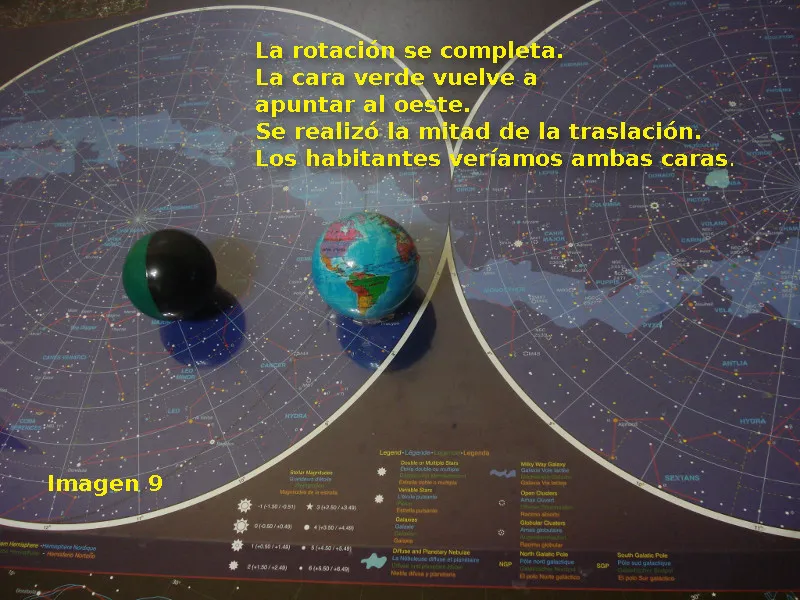
In image 9 the moon made another eighth of an orbit (half accumulated) and rotated another quarter (completed the rotation) and the green part looks west again (it is the same as the initial image).
In image 5 the inhabitants of Earth would see the green part, in image 9, they would see the black part. We said this does not happen. Therefore, reality does not work like that.
C1B: ROTATION GREATER THAN TRANSLATION
If the Moon's rotation time were greater than its translation time, what would happen? Let's say the translation takes 29 days. If the rotation time were greater, it could be double, say 60 days.
This would mean that when the Moon finished one complete revolution around the Earth (29 days, one translation) it would have completed only half of the rotation.
If only half of the rotation is completed, the green side of the moon would not point to the four places throughout the month.
Let's see in images:
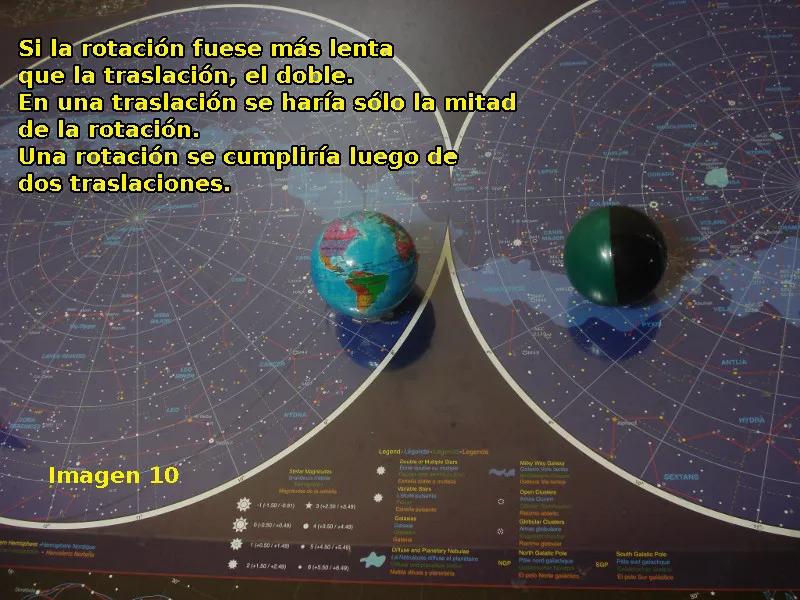
Image 10: The green part, to the west.
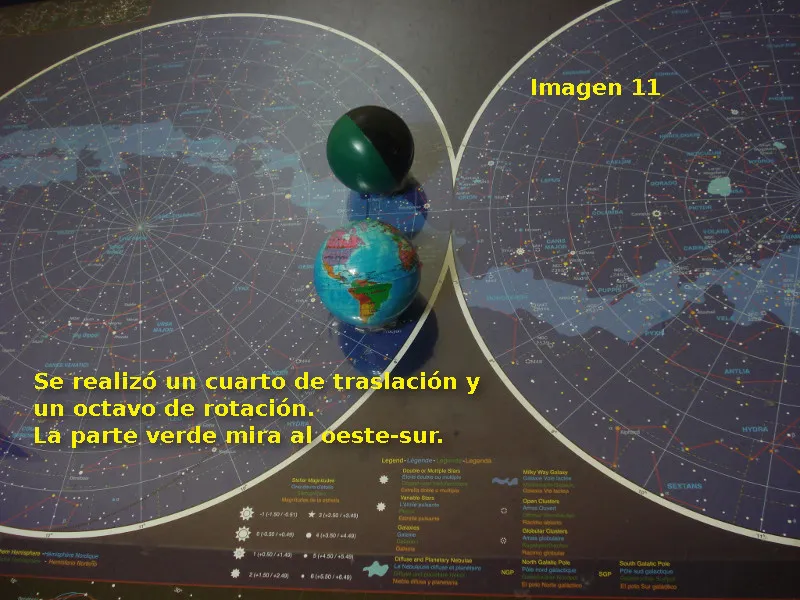
Image 11 shows the moon with a quarter of translation and the green part still looking west, but somewhat shifted to the south.
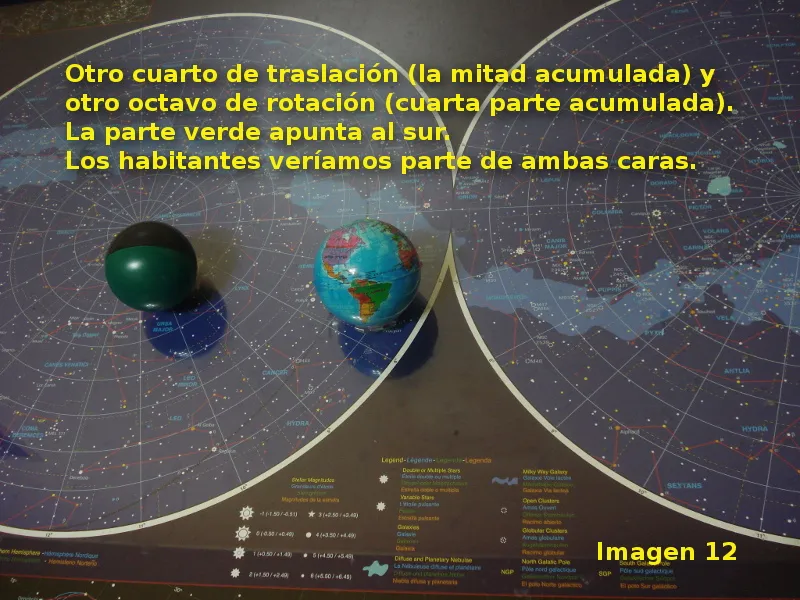
Image 12 shows the moon with another quarter of translation (half accumulated) and one eighth more of rotation (one quarter accumulated). The green part looks south.
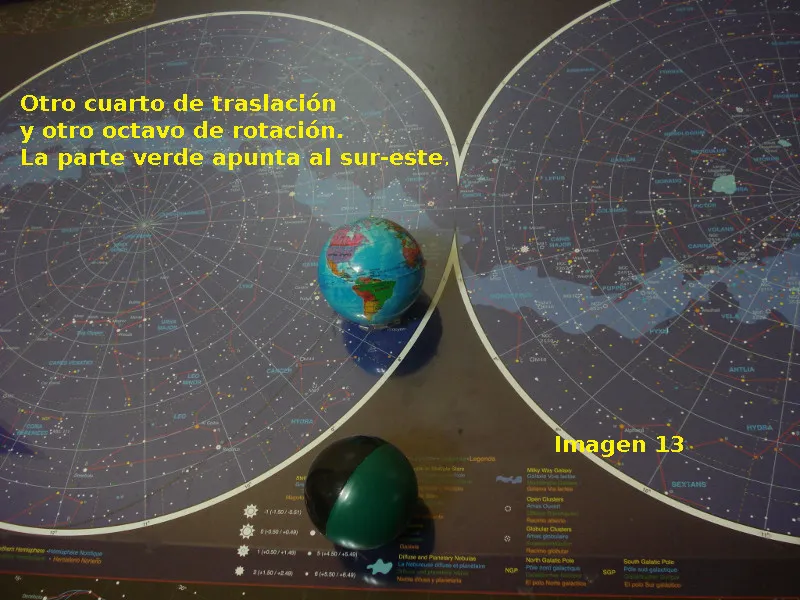
Image 13 shows the moon with another quarter of translation (3/4 accumulated) and a slight shift of the green part.
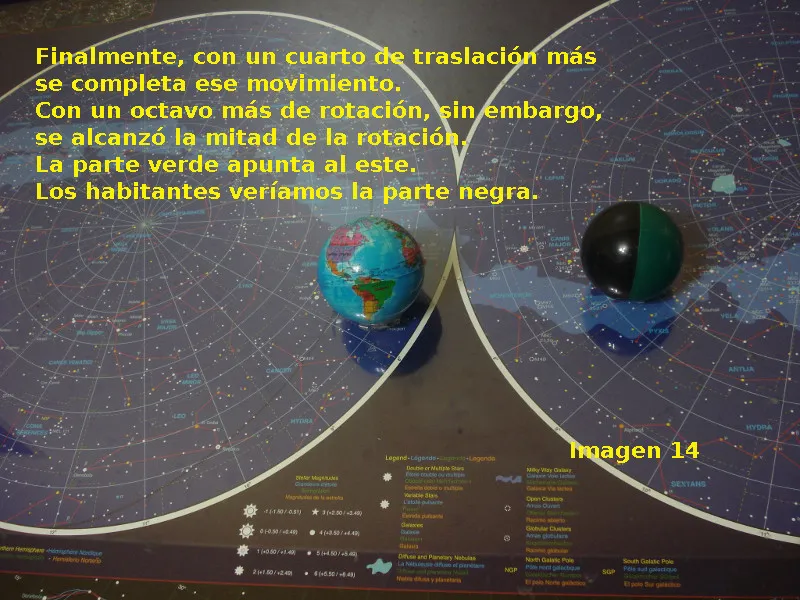
Image 14 shows the moon with another quarter of translation (1 complete orbit) and another quarter (half accumulated) of rotation. The green part looks east.
In image 10 the inhabitants of Earth would see the green part and in image 14, the black part. We said it is easy to verify this does not happen. Reality does not work like that.
C2: WHAT REALLY HAPPENS: ROTATION TIME EQUAL TO TRANSLATION TIME
What happens is that at the same time and in the same proportion the moon rotates and translates in equal times. Let's see:
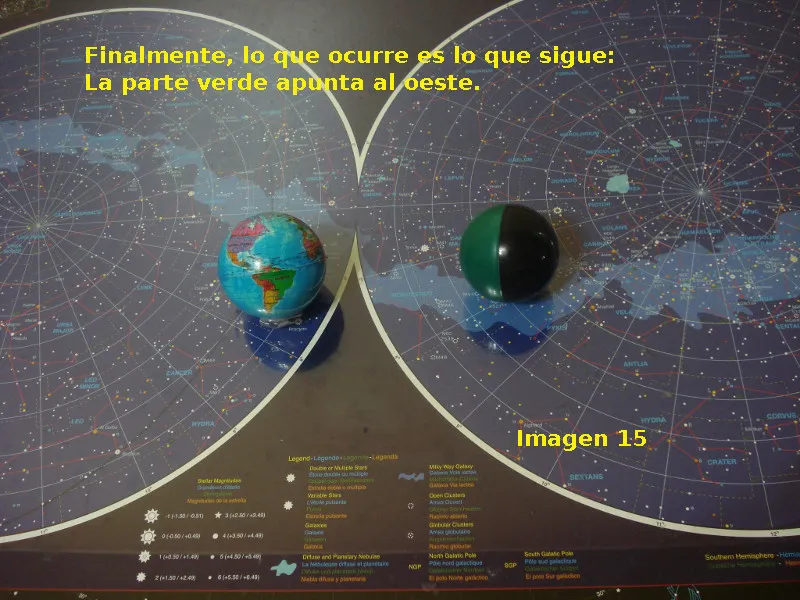
Image 15 is the same as the other initial images.
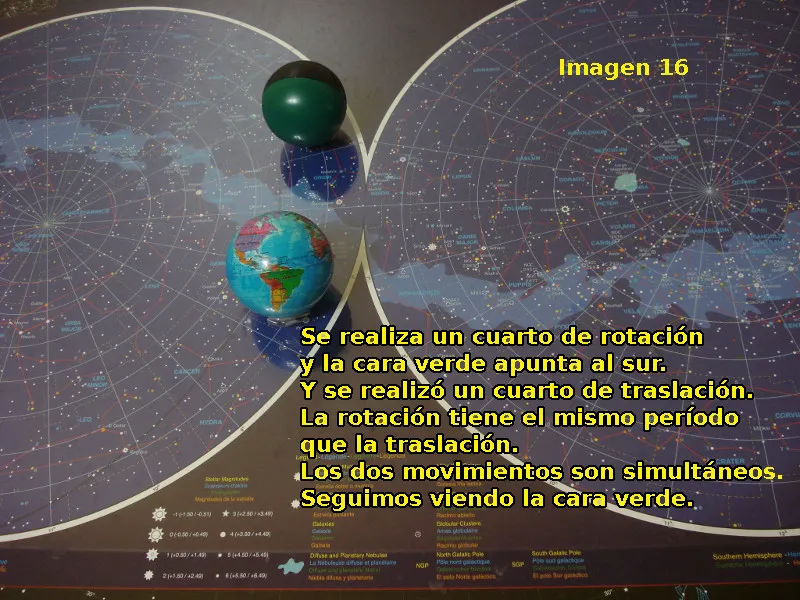
Image 16 shows a quarter of translation and a quarter of rotation. The green part points south.
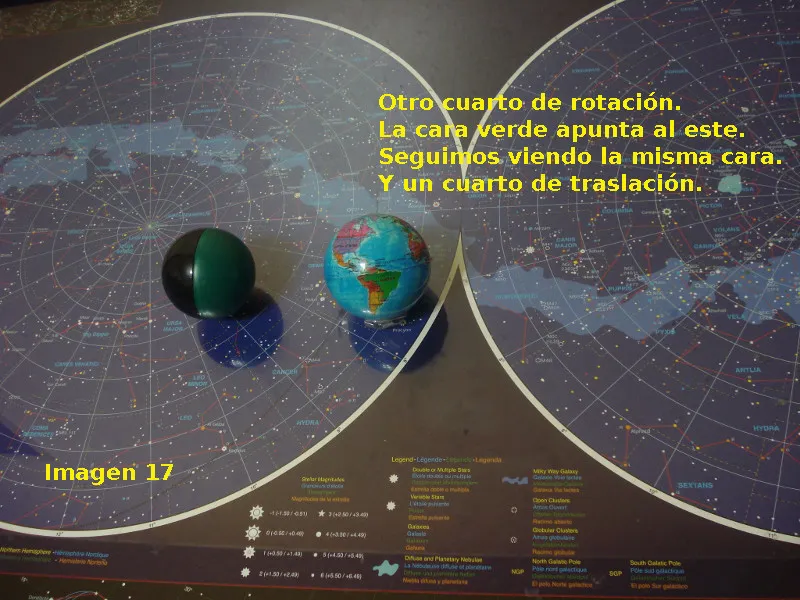
Image 17 shows another quarter of both movements (half accumulated of both). The green part points east.
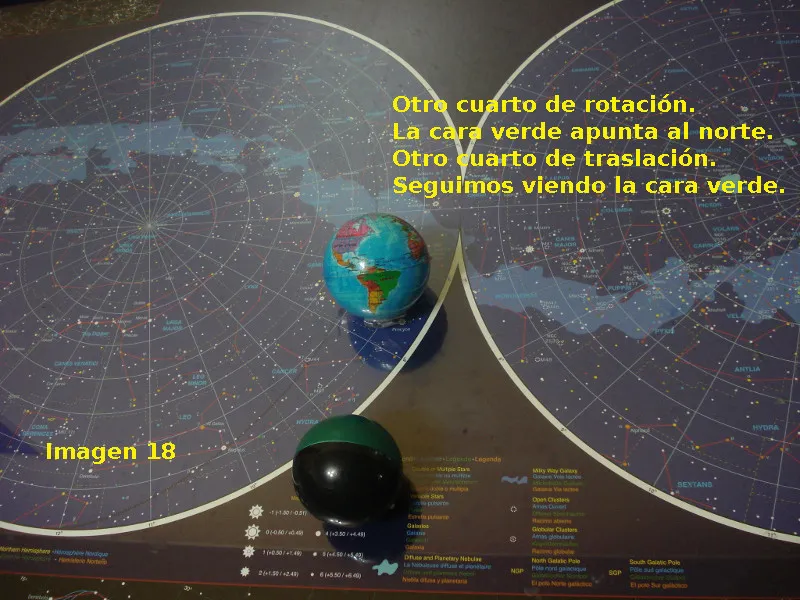
Image 18 shows another quarter of both movements (3/4 parts accumulated). The green part points north.
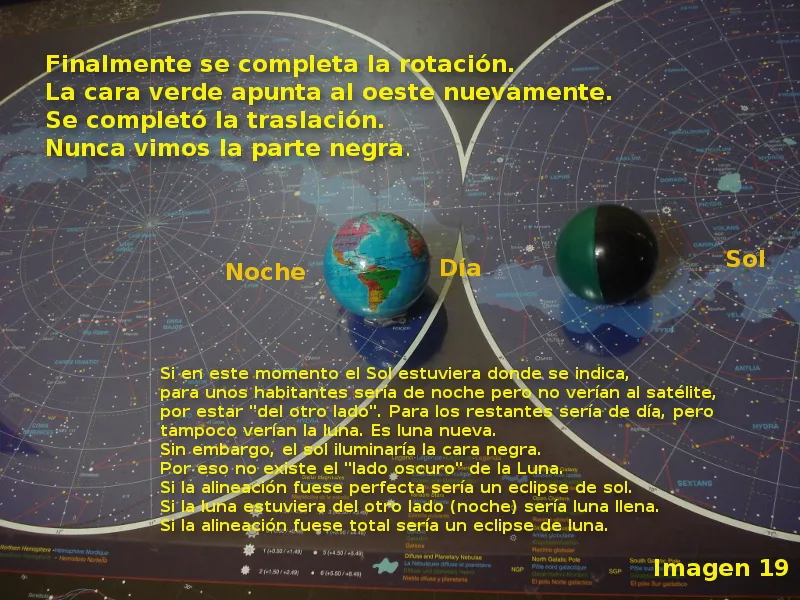
Image 19 is the same as the initial one. The translation and rotation are completed. The green part points west again.
In all images the inhabitants of Earth would see the green side and never the black side.
THIS IS OBJECTIVE REALITY. Some people become vehement affirming the opposite. There are two types of pedantry: wrong pedants and those who are right. And this is not confined to astronomy.
ADDENDUM
Two things must be added: Both the Earth and the Moon perform other movements, besides rotation and translation. The third movement of the Earth is precession. In the case of the Moon it is called libration. Thanks to this movement, if the moon is observed over a year, up to 62% (not 50%) of the lunar surface will be observed. That is why it is questionable to speak of "one face".
Secondly, the Moon rotates, therefore it does not have a "dark side". On "both sides" the Sun's light arrives, at different times. It's just that from Earth we cannot notice it, but we can with spacecraft. And with logic and observation. In fact, at New Moon the satellite is above the horizon during the day. The only "face" we can observe is not illuminated, but only the supposed "dark side" is illuminated by the Sun, which, therefore, is not such.
If there is a new moon but no eclipse it is because the alignment is not total. To simplify, Earth-Sun-Moon will not be "at the same height" or plane.
Can a solar eclipse occur at full moon? I have been told that some movies show that. I haven't verified it. The answer arises deductively from what is presented here. The reader will be able to infer it.
Thus we have demonstrated with solid arguments what is true. Now let's apply this type of reasoning to the rest of reality. We can stop being wrong pedants to be pedants with reason.
Finally, let's say that wrong pedantry did not last a short time. It lasted until the 16th century, early 17th. And from what I have commented here on other occasions (about the flat Earth), it still lasts. Evidently we are doing something wrong.
I invite readers to understand the matter and then discuss it at home with family and friends. If they have trouble explaining it, it is perhaps because they did not understand it sufficiently. Perhaps this post will help in that process.
And I insist: the same thinking process happens to us with other topics we talk about knowing very little, but with great vehemence.
If we don't know, there are two paths: admit our (provisional) ignorance and dedicate ourselves to studying the matter. We have the internet! Let it be a tool that helps us think and not an instrument to affirm beliefs.
DEDICATION
I dedicate this post to the several people who consulted me on the topic directly or by email or social media. Especially to Reinaldo from Colombia, an assiduous reader, and to Ángel, the owner of the pet food store (Pet Shop Charly) with whom I have debated the topic and whose feedback also motivated me to do this little work.
About the images
The images are my own using a compact camera with artificial lighting (from my house) without additions and without flash. The two little balls were placed on a framed glass of a sheet with constellations, stuck with tape. The images were reduced to 800px wide and text was added using Gimp for Ubuntu 14.04 64bits.