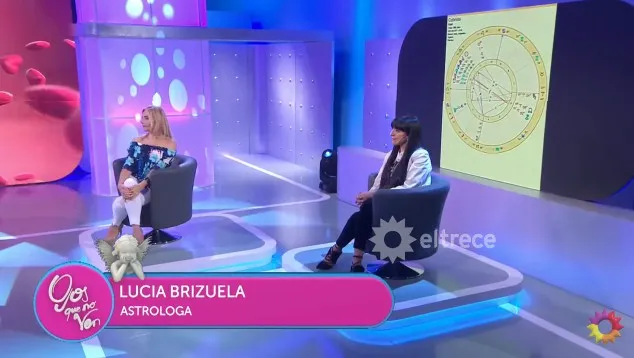
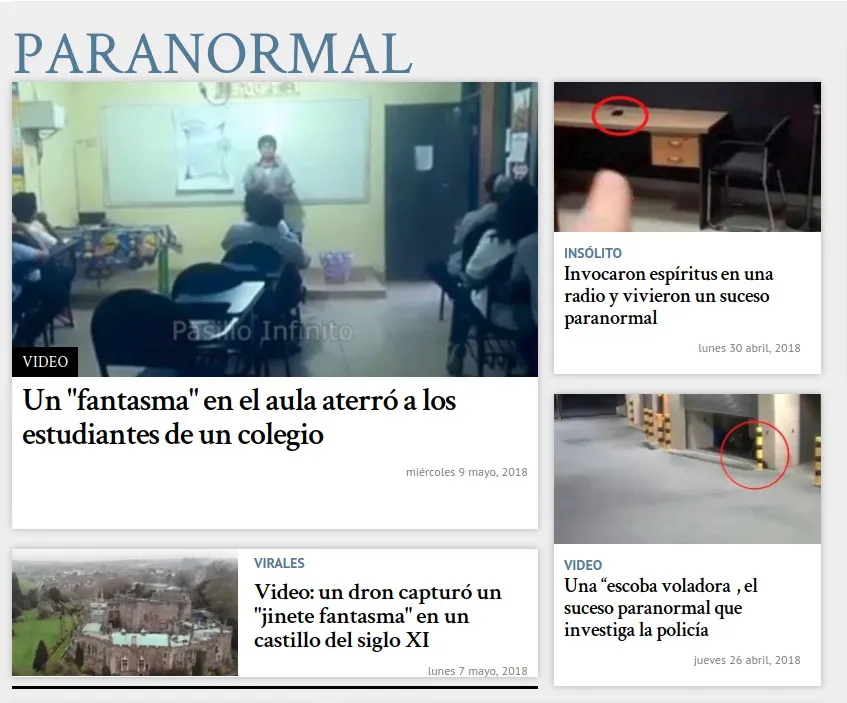
On how to validate and verify forecasts and the recurring (bad) habit of sports journalists in consulting astrologers (or octopuses, it's the same).
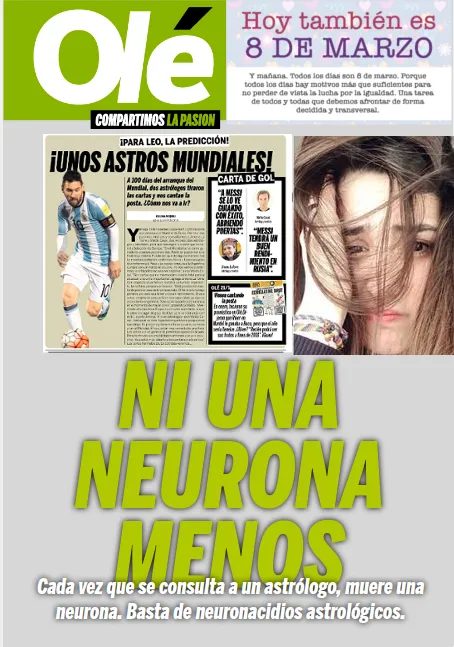
In yesterday's Olé newspaper, March 6, on page 2, a note signed by a woman, Giuliana Pasquali, is published, who despite the proximity of March 8 -International Women's Day- seems determined to demonstrate that machismo is also feminine.
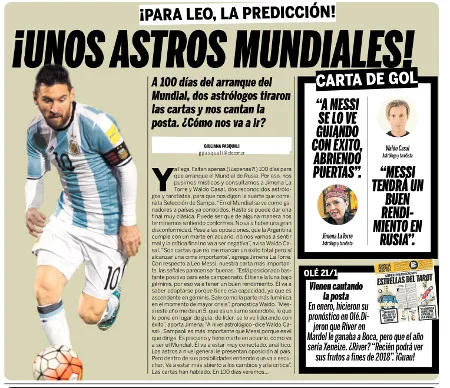
As in the January 21 edition, Pasquali consulted two astrologers to have them foretell sports results. If astrology worked, all astrologers should have won the Prode.
Objectively speaking, women are similar to men, except for some organic differences, but they have the same abilities and potential talents. Subjectively speaking, the idea and predisposition that women are weaker than men, with greater uncertainties, was historically "constructed" and that's why consulting oracles is justified. A false justification based, moreover, on the false notion that women do not think "scientifically," a place reserved for the "stronger sex." The nonsense doesn't hold up for ten seconds, but there is Pasquali to reaffirm that the subjective weighs more than the objective. Social indoctrination can be very strong.
The note, like a cliché, says what we already know: that Messi will do well, which means anything. Is that a forecast?
It's as if I said that today Lanús will have a match with many opportunities opening up. That is to say, nothing.
However, Pasquali's little note serves as an excuse to think about forecasts in general. And to contrast scientific forecasts with those that are not. For this purpose, I add two concepts: validate and verify. Surely Pasquali is unaware of these two methods because as she is a fan of San Lorenzo, she must be used to praying.
FORECAST VALIDATION
The validity of a forecast lies in the method. That the method is valid means it is logically valid, from formal logic, that is, it has coherence, and is based on known data. To put it more simply: a valid method must be able to be explained.
The weather forecast
Let's see what a meteorological forecast is like, grosso modo, with much simplification, for didactic purposes and focused on rain:
1-We start from prior knowledge, for example, the water cycle.
2-We obtain data from sensors, such as temperature, pressure, wind speed and direction.
3-We acquire radar images with cloud cover over and in the vicinity of a city.
From this data we can reason:
There is a cold front moving West and a warm front moving East, at different speeds.
If they meet, it will rain in that place.
If everything continues as it has until now, the two fronts should meet over Buenos Aires, within 8 hours.
We could wait 8 hours and verify it, but if we did that, the forecast would be useless. It is useful if it anticipates.
In the span of 8 hours, the wind can change speed or direction and cloud formation can disperse. How to know what will happen?
We can rely on probability:
There are possibilities that the cold front changes a few degrees in direction, the same with the warm front. The total of possibilities is a combinatorial calculation. Of all possible combinations, some will yield rain because the fronts meet; others will not. Among the combinations that do provide a meeting, some are mild because the fronts barely graze each other, others are head-on.
In some cases there will be torrential rains, in others sporadic rain.
We put everything into a computer to analyze those combinations and yield statistical results:
Of the total possibilities, 35% are head-on meetings: it will rain quite a bit; 30% are tangential meetings: it will rain in isolated form; 25% there is no meeting of fronts: it will not rain; and 10% mild meeting in the northern zone.
This result is not what reaches the population looking for simple, simplified information, so the probabilities are combined: "High probability of intermittent rain, with some storm cells, improving towards the afternoon".
Unfortunately it is not the most common for forecasters to explain how the result was reached. But if someone asked, it can be explained.
The astrological forecast
Astrologers also do not explain how they arrive at a result. But if someone asked, they could not answer or the answer would be invalid, for example:
Such a player was born with the Sun in Leo (let's suppose) and in antiquity the Sun was associated with leadership and Leo with passion, so that means... that this player will be a leader in the exciting game of soccer. If we asked why in the past the Sun was associated with leadership, the astrologer on duty will talk about... myths. THAT is astrology. A myth.
Therefore, it does not possess a valid predictive method, scientifically. Astrology is only a set of prejudices.
FORECAST VERIFICATION
One might think that verifying a forecast is simple: it is enough to check if there is a correlation between what was said and what was done. They predicted Lanús would win, I check the result, and if Lanús won, the forecast was correct. NO, it's not like that.
A forecast is verified statistically. A single correct result can be just coincidence. Mere coincidence tells me nothing about whether the forecast was correct or incorrect. On the other hand, if I verify the result of many forecasts, things change.
The probability of rolling a 1 on a die is 1/6 (one in six possibilities), but the probability of rolling a 1 ten times in a row is 1/6^10, one sixth to the tenth, very little.
Verification of the weather forecast
To verify the weather forecast, then, it is not enough to check one saying with one fact, but many. How many are many? That is a good question of epistemology. In general, the answer is that it depends on each case and that there are certain mathematical formulations to evaluate it. But it can also be said that the more, the better.
Let's keep a record each day of the forecast for a city and what actually happens and we will see that the percentage of accuracy of the meteorological forecast is around 70%. If someone comes up with a better method, scientists will be delighted. Of course, the method and therefore the results depend on having good and sufficient measuring instruments and equipment. Without investment it is difficult.
Astrological verification
It would be good if Pasquali asked the astrologers he summoned for the results of all the World Cup matches, at least in the qualifying phase, which is something that is known in advance which matchups will be; or what the results of all the Superliga matches for the next round will be. If they answered unambiguously, we would notice that they get it right the same as flipping a coin or playing tic-tac-toe. What is verified is that it doesn't work.
CONCLUSION
Many people seem dissatisfied with the results of weather forecasting, including those who have superstitions (which are useless) and those who disagree with investing the necessary money to acquire equipment and instruments for measurement and analysis.
It is logical to expect good results and for us to be nonconformists, trying to raise the bar so that results improve and precision increases.
But it is essential to know the method to validate it, not just the results, and even less if they are partial, isolated, and few in number.
But not so many people seem dissatisfied with the very few chance hits of astrologers. Let's remember that in 2012 Horangel said that Rosario Central would remain in the B division for two or three more years. It was promoted the following year. The problem is not that he didn't get it right that time. The problem is that the method is a myth and it almost never gets it right (added to the fact that the predictions are ambiguous).
Let's be aware: every time someone consults an astrologer, a neuron dies. Not One (neuron) Less!
Sources and related links
- Olé
https://www.ole.com.ar/tapas-ole/
Horangel predicted that Central would still be in the B division "two and a half or three more years" - https://www.lacapital.com.ar/ovacion/horangel-predijo-que-central-todavia-va-seguir-la-b-dos-anos-y-medio-o-tres-mas-n375377.html
About the images
Cover image from Olé, Olé website.
Image of Pasquali from Twitter.
Image of 8M: http://www.tudiputacion.es/2016/04/hoy-tambien-es-8-de-marzo.html