Reflections on the tribute at the Museo Sarmiento.
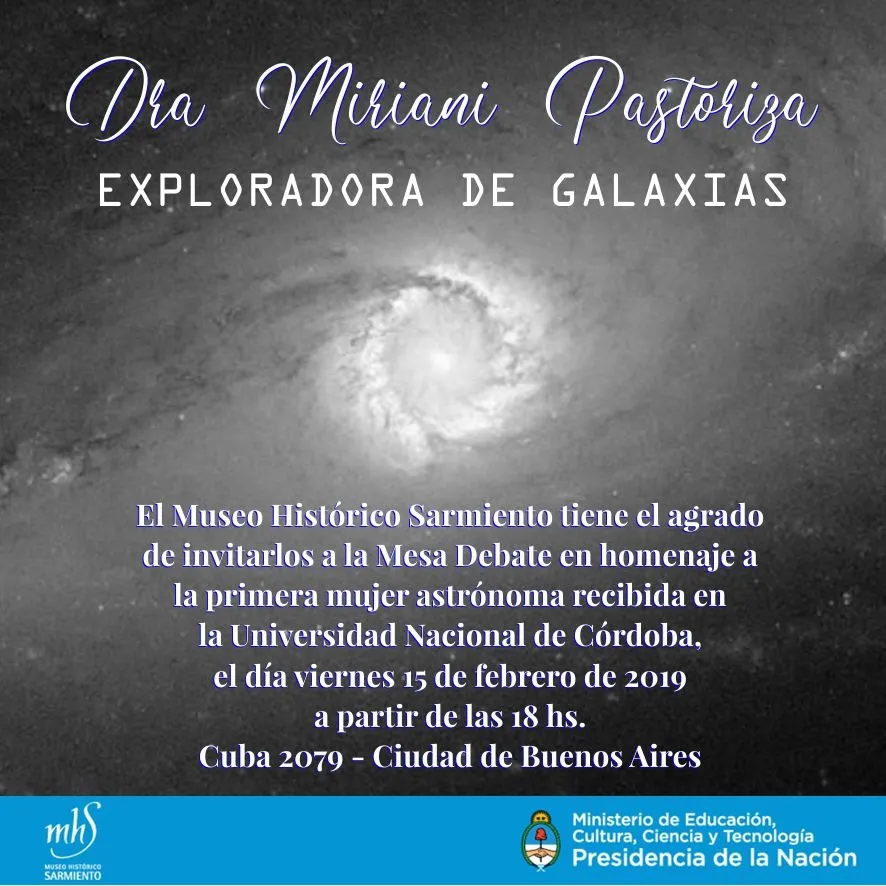
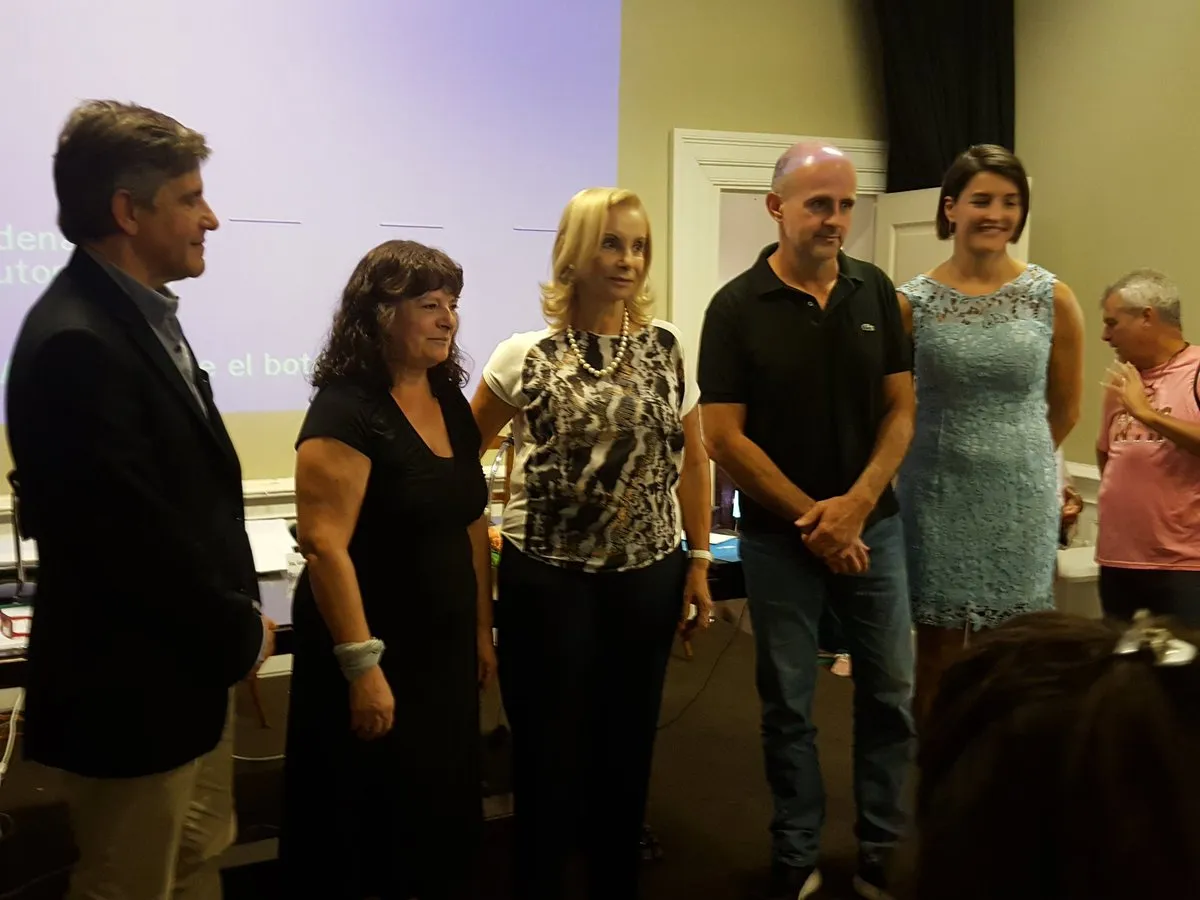
On Friday, February 15 at 18 h, the hall of the Museo Sarmiento was packed. By rough estimate, more than a hundred people gathered to attend the tribute to the first Argentine woman astronomer.
The master of ceremonies was the announcer Nora Perlé, who presented Lic. Virginia Fernanda González, director of the Museo Histórico Sarmiento. Then Franco Moccia, Minister of Urban Development and Transport, spoke, referring to Sarmiento's work and was the only one who made any reference to the gender issue, commenting on the interest of the former president of the Nation regarding the role of women in society. He referred to Sarmiento's notes from his travels, especially to the United States, from which it follows that, for Sarmiento, the role of women is an indicator of a society's level of progress.
In this regard, I recommend reading the travel accounts, which can be obtained in pdf format by doing simple searches on the web, as well as two papers by historians on Sarmiento's thinking about the role of women, which I cite at the bottom of the post.
As will be seen shortly, the gender issue in science and in astronomy especially was conspicuous by its absence, like an absorption nebula, because just as there is the Southern Cross, next to it is the Coalsack.
Next, Dr. Carlos Donzelli, astronomer (UNC), disciple of Pastoriza, took the floor, who gave a summary of the field of Argentine astronomy, reviewing basic data on the Asociación Argentina de Astronomía, the current observatories, the projects under construction (CART and LLAMA), as well as the research institutes (among which I believe the ITeDA of Mendoza was not included).
He ended briefly with a synthesis of the situation, but not in the field of astronomy itself, but of science in the country with three slides: the first showed a tweet by Mauricio Macri during the electoral campaign promising an increase in the scientific budget; the second was an excerpt from the resolution that downgraded the Ministry to a Secretariat of Science; and the third was a historical curve of the percentage of GDP allocated to science, in clear decline.
Here I pause for a minute: it is acceptable not to have a narrow focus on astronomy, that is, a merely sectoral view, to argue that the cuts affect the sciences as a whole. But it would have been better if data had been added on how the cuts already made have affected astronomy in particular.
The round table ended with the presentation of the honoree herself, Dr. Pastoriza, who focused on telling what her contribution to astronomy was, after a basic introduction on extragalactic sources. Thus, she said that with the support of her thesis director, Dr. Sérsic, she studied active galactic nuclei and detected the variability of Seyfert-type galaxies, in particular, NGC 1566, the second detection of this type that was made.
Dr. Juan Carlos Forte could not contribute with his usual wisdom as he felt unwell and left.
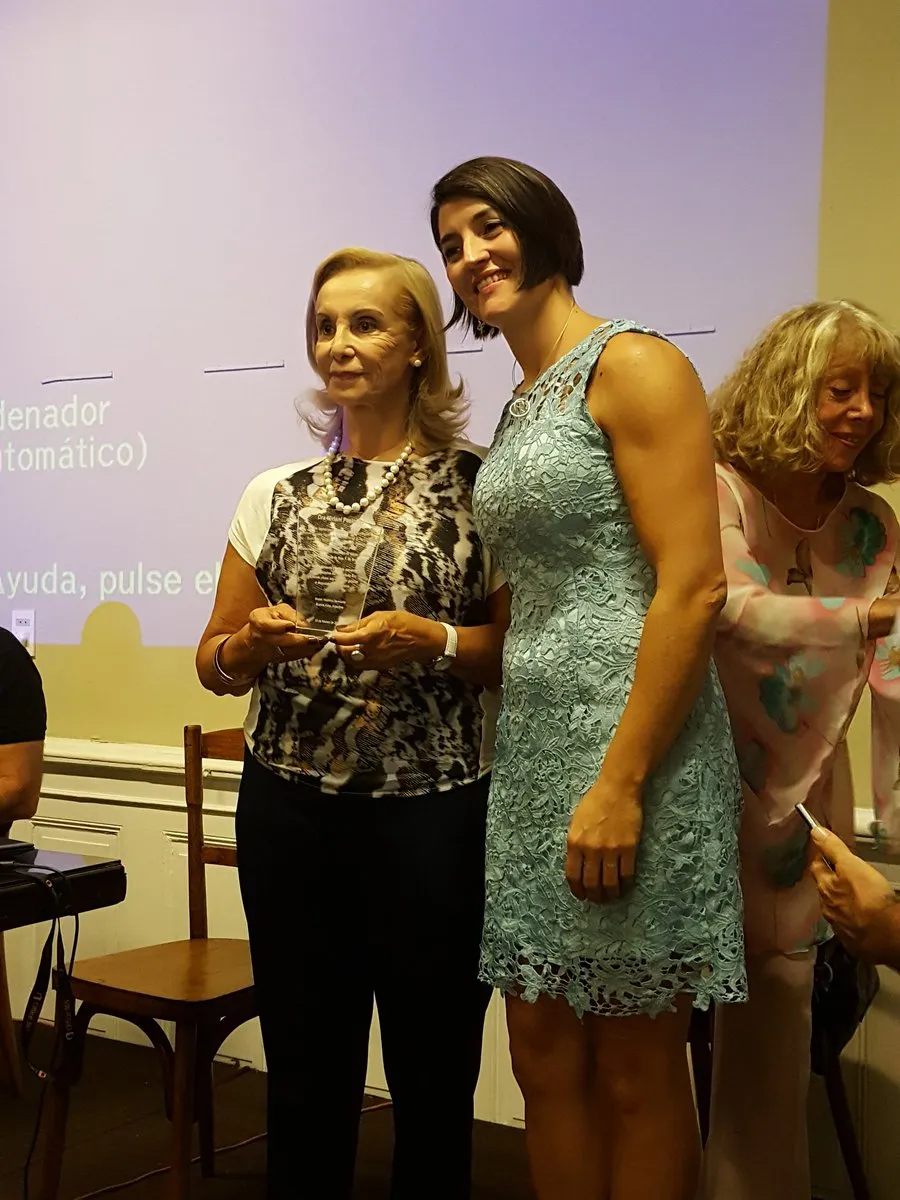
At the end, a plaque was presented to the honoree, as shown in the opening photo next to Lic. Virginia Fernanda González (behind, Nora Perlé).
NERDY DERIVATIONS
My little brain takes its liberties in making synapses without my permission and gets into a labyrinth whose exit is unknown. Let's see where it took me:
1-I can't stop wondering, over and over again, if scientists know there is life beyond PowerPoint.
2-Besides the software, it is more disturbing to know if researchers distinguish English from Spanish. In Spanish, the opening question mark is used, in addition to the closing one. And accents are also used, which are not mere unnecessary decoration, but serve, for example, so that the reader knows what meaning to give to words. In the sentence before this one, "qué sentido" and "que sentido" are not the same. That is, I have a question about the questions.
3-If, on the other hand, each one is going to use their own language, we create a cocoliche that is bigger than the Tower of Babel.
4-What is bigger than the Tower of Babel? A Tower of Babel to the nth power (Tower of Babel ^n, read "to the n").
5-What is bigger than that? A Tower of Babel to the nth power, to the nth power. How do you write it?
The mathematician Donald Knuth developed a notation to make towers of exponents like this:
2 F 4, where the F is the symbol for an up arrow, means:
2x2x2x2, meaning that the number 4 is the number of times the operation of multiplying the first number by itself is repeated.
If instead it were a double arrow, what is iterated is a power:
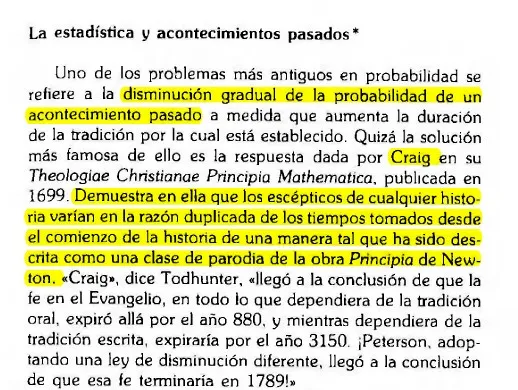
2 FF 4= 2 F (2 F (2 F 2))= 2^2^2^2.
6-If we wanted to do this same thing with an algorithm, we would have to write a function that calls itself, a self-recursive function. These functions are easy to detect once they have been written. Their difficulty lies in knowing when they are needed and how to make them.
7-And finally, after digressing, my little brain found an exit from the labyrinth: The tribute to Miriani Pastoriza was a suitable occasion for a self-recursive function: In the tribute to a woman astronomer, given the times we live in, a reflection on the status of women in the sciences and particularly in astronomy would have been fitting.
8-Perhaps, if the moderator had been able to ask questions -the telescope operator Graciela Toledo from the Planetario de BA- the topic could have been discussed.
9-What are the obstacles that women have in the sciences? And in astronomy? And in Argentina? Has anything been done about it?
These questions matter because thanks to these questions we arrive at the tribute to Pastoriza. Did Pastoriza have obstacles in her career? Beyond that, Pastoriza referred to her contributions, made decades ago. Why do we know about this now? Because we didn't know before. And why?
By the way, most of the population doesn't know male astronomers either. However, there are mass media discourses, such as astronomy documentaries on well-known channels (History, Discovery, etc.) that feature experts: Michio Kaku, Neil deGrasse Tyson, Carl Sagan [RIP], Morgan Freeman (oh, no!), [Stephen Hawking], Sean Carroll, Alex Filippenko, Brian Cox, Kip Thorne, among other astrophysicists who have screen time. I didn't name a single woman. But, wait a second, there are some mentioned or with screen time: [Vera Rubin], Laura Danly, Jocelyn Bell, [Henrietta Leavitt], Sandra Faber, Carolyn Porco, Jill Tarter.
Well, let's do the same with Argentine astronomers, of both sexes, starting now: (here goes a sound of crickets).
What does the public know about Jorge Sahade, José Luis Sérsic, Gloria Dubner, Patricia Tissera, Cristina Mandrini, Marcelo López Fuentes, Mariana Orellana and a host of professional Argentine astronomers?
A while ago I commented here on an initiative, done on a shoestring, to tell the career and life of scientists from various fields (see at the end). Santiago Paolantonio does a formidable job in telling the history of Argentine astronomy. Also Wikipedia has been favoring the creation of biographical entries for women in general and in science. There are several other valuable initiatives underway in this regard.
The history of astronomy is not just the history of the apparatuses or instruments, but the history of the people. How many women philosophers can you name? How many men? Gender bias exists. But it exists within another bias: people are made invisible (or eclipsed). That's why sometimes you read "The Hubble discovered...". Apparatuses don't discover. Discovering is work. Only people work. Discovering is a human task. Even, to discover other people.
Hence it is a self-recursive task, I tell myself, while thinking that on Friday, February 15 at 18 hours, the room of the Museo Sarmiento was packed...(F)
Sources and related links
- Sarmiento and women: Horizons of love and education, by Claudia Gabriela Curi Azar, Universidad Nacional de Cuyo
Revista Melibea Vol. 4, 2010, pp 87- 94
http://bdigital.uncu.edu.ar/objetos_digitales/8894/r-melibea-vol-4.pdf - Sarmiento and the situation of women of his time, by Karina A. Felitti (UBA - CONICET)
Cyber Humanitatis Nº 31 (Winter 2004)
https://web.uchile.cl/vignette/cyberhumanitatis/CDA/texto_simple2/0,1255,SCID%253D14077%2526ISID%253D499,00.html - Miriani Pastoriza, Galaxy Hunter
http://oac.unc.edu.ar/2018/10/17/mariani-pastoriza-cazadora-de-galaxias/ - Donald Knuth notation
https://en.wikipedia.org/wiki/Knuth%27s_up-arrow_notation - The Women of NASA's New Horizons Team Are Breaking Boundaries—in More Ways Than One
https://www.pbs.org/wgbh/nova/article/women-of-new-horizons/ - A book to discover the sciences
https://www.noticiasdelcosmos.com/2018/04/un-libro-para-descubrir-las-ciencias.html - The eclipsed astronomer
https://www.noticiasdelcosmos.com/2012/07/el-astronomo-eclipsado.html - Women in Astronomy: An Introductory Resource Guide, by Andrew Fraknoi
https://www.astrosociety.org/education/astronomy-resource-guides/women-in-astronomy-an-introductory-resource-guide/ - Spectral Variation in the Seyfert Galaxy NGC 1566
Pastoriza, M.; Gerola, H.
Astrophysical Letters, Vol. 6, p.155
1970ApL.....6..155P
http://adsabs.harvard.edu/abs/1970ApL.....6..155P
About the images
Photos from Twitter accounts @MuseoSarmiento and @viru_gonzalez.