New material on the technical applications of astronomy, from medicine to Wi-Fi.
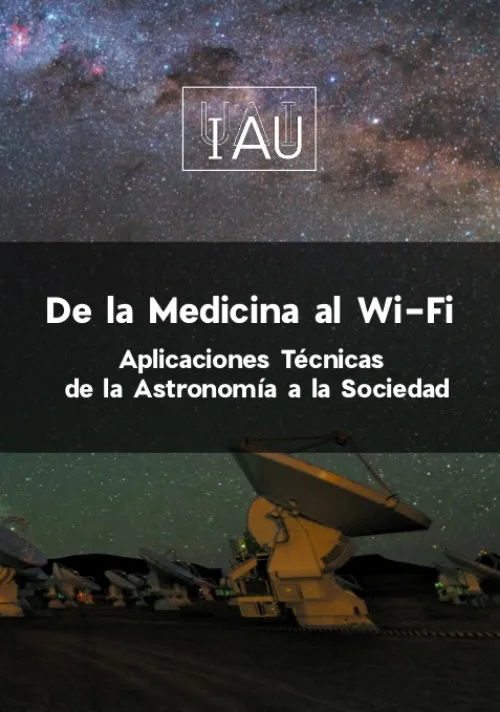
The International Astronomical Union (IAU) recently published a brochure, in PDF format, on the technical applications that have emerged from the development of astronomy and are used in other branches of human activity, by virtue of what is known as "Technology Transfer" (TdT). The brochure covers innovations applied in medicine, computing, imaging, climate change, wi-fi.
The material was published in English, but thanks to some volunteers it is being translated into Spanish. A version in our language already exists, but it lacks review by another person. Although that Spanish material has not yet been published, I think it is pertinent to inform about it for two reasons:
1-Some know English and might be interested in the original material.
2-Others will know English and Spanish and might be willing to do the missing review.
The brochure can be downloaded from the link indicated below. The person in charge of that material and its translation is Bethany Downer, whose email address appears in the IAU announcement, in case someone is willing to review the Spanish translation.
THE USEFULNESS OF ASTRONOMY
A while ago I published a post wondering what the usefulness of astronomy is. I return to the subject in case I was not clear on that occasion.
Two answers are usually given to the question, namely:
-Astronomy has no utility, it doesn't have to be useful.
-The utility of astronomy is technology transfer.
The first answer is very bad. One can start from the premise that everything we people do, we do for some reason, with some objective, and therefore, with some utility. As a consequence, it is not possible that astronomy is done, billions of dollars are used, and it serves no purpose. Perhaps the problem with this answer is that "useful" is interpreted in a certain sense, but the question is broad.
The second answer is not good either, because although it is true that technology transfer exists, as evidenced by the aforementioned IAU material, that is not and cannot be the central reason why astronomy is done. TdT is serendipitous, it arises without having been the initial objective and it arises sometimes. In all other cases, astronomy is done and there is no TdT. It is evident that it is done for another reason. Although TdT is valuable and it makes sense to tell what the applications of astronomy are to other branches of human activity that improve the quality of life, this can only be a complement to the answer.
The true reason why astronomy is done even in modern times, where we do not need to look at the stars to guide us in navigation or anticipate the seasons of the year, is that human beings are not animals, plants, or stars. We are living beings, biologically, unlike celestial bodies (although we are made of the same fundamental material). And we are living beings with brains, unlike plants. And we have a brain different from that of giraffes, turtles, dolphins, and gorillas.
People ask questions that caterpillars and octopuses do not ask. But also, we have the capabilities to answer such questions. Not doing so would be a waste of capabilities. We do it because we can. In the same way, one can explain why there are people who run the 100-meter dash or paint like Picasso.
Incidentally, with the same intellectual capacities we can also create weapons, drugs, pollution, etc.
Is it preferable to live in a society that does not ask those (inevitable) questions and does not give answers?
The main driver of the sciences is to understand reality, to know what we do not know. What for? To satisfy our appetite for knowledge, which is something that human beings have (a need) and that animals and plants do not have. The stars, neither.
To stop doing that is to stop being human. Science is done for reasons similar to art: out of necessity. The need to know, in one case, and the need to express what we think and feel, respectively.
The second driver of the sciences is to transform reality, that is, to take the acquired knowledge and use it to solve problems. There the sciences become "concrete". But, as I pointed out before, that is not always "good", or at least not the same for everyone. What may be good for some, may be bad for others. In many cases, the second driver has company: business.
The different branches of physics and mathematics have been used to produce weapons, from cannons to atomic bombs. Astronomy is, compared to other sciences, one of the least "concrete", but also one of the most "harmless". Or, as Randall Munroe brilliantly and humorously noted in his comic strip XKCD:
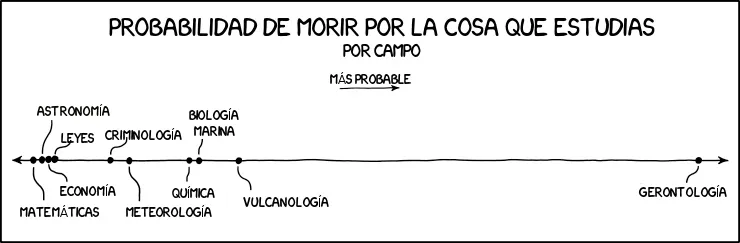
It is much less likely that while doing astronomy the object of study will kill you compared to chemistry, volcanology, or gerontology...
Sources and related links
From Medicine to Wi-Fi: Technical Applications of Astronomy to Society https://www.iau.org/news/announcements/detail/ann19022/?lang
About the images
XKCD: Dangerous Fields https://xkcd.com/2142/
The image used here is an unofficial free translation, under my responsibility.