What is astronomy good for? Part II.
I'm going to pick up a topic I started earlier and didn't finish. In a series of notes published a while ago I asked myself the question: what is astronomy good for? which I tried to answer through several posts [1].
From those notes, it is vital to recover two central ideas:
1-Instead of asking ourselves what astronomy is good for, we should ask what the modern meanings of this science are.
2-Precisely because of the above, different answers have been given. I could partially agree with many of those ways of approaching the topic, but I always find them incomplete. Certainly, every answer is incomplete, as surely the one I can give here will also be. I mean they are very partial because they consider only one or two aspects.
When questioning what something means, what are we doing? Things and signs possess multiple meanings.
It is easy to show that if several people read a book or watch a movie, each of them will form a different meaning, even though the discourse they were exposed to was the same. The meaning of something is therefore the significance we give to it, at a specific time and place. Such meaning or significance will change over time. If we watched Carl Sagan's Cosmos series when we were 13 and watch it again many years later, part of the meaning we gave it then will remain, but the significance we will give it later will not be exactly the same. Even though what the popular astronomer explained hasn't changed much, our ideas, our way of interpreting reality, have.
So even if we give that series a meaning today, it is possible that years later we will give it a somewhat different meaning. And since the meaning that other people will give it will not be the same, then the series does not have ONE meaning, but several.
If we can say that about discourses in general, we can also say it about social practices, which can also be thought of as discourses.
HISTORICAL AND SOCIOLOGICAL MEANINGS
When approaching the question, however, we could have two types of predispositions: the individual, connotative, personal one, that is, what meanings something has for me now; and the collective one, which involves asking ourselves what meaning something has for today's society.
The latter is difficult, precisely because different meanings coexist in society.
But it is possible that we find a preferential meaning in society. Let's give an example:
I wear glasses. Many other people do too. The form and purpose of wearing glasses can be thought of as meaning, the meaning of use of such an object. In that sense, personal, I wear the glasses mounted on my ears and I use them to see distant objects better.
Many other people use glasses with similar meanings, in a similar way.
However, glasses can be used for other things and not necessarily to see better. For example, it is possible to use the temple tips of the glasses frame to scratch one's ears.
But when we inquire, most people seem to give glasses a similar meaning: to see better, and mounted on the ears, although they could give them other meanings. That can be called a preferential meaning.
Preferential meanings arise for several reasons. In the case of glasses, we could say they were designed to be given that meaning: the structure of the frame and the geometry of the lenses were thought out to give them the aforementioned use. This does not preclude us from giving them other meanings, but certainly, if we want to scratch our ears there are other elements better designed for that: cotton swabs.
Nevertheless, there must be people who currently give glasses other meanings, different from the preferential one.
THE HISTORICAL-SOCIAL MEANINGS OF ASTRONOMY
A historical sense of astronomy has been practical, linked to daily life: the regularity of astronomical phenomena, for example, the rising of the stars and particularly of the Sun and the Moon, have been used to determine practical situations like sowing and harvesting, tides, navigation.
This historical sense has changed today. We don't need to know the regularity of celestial motions to determine the cardinal points, how to get to a place, or the times for sowing and harvesting. Currently we have GPS, maps, and other resources that don't require us to be looking at the sky and understanding astronomical patterns.
Ancient astronomy, intermingled with what we now call astrology, had other senses, for example a mystical-religious sense that in some cases also functioned as an element of social cohesion: if the planets and stars were made by the gods and they govern the universe, we would be their "children" and therefore we would be "brothers". At the same time, the same idea was used to divide people: some are in contact with the gods, they are superior people: the priest, the pharaoh, the monarch. Which led to establishing a political-economic ideology.
This political sense entered into crisis a few centuries ago, with the scientific revolution and the French Revolution.
If the senses we gave to astronomy were related to historical-social periods and political and economic transformations, then it's possible that the same is happening in the present.
CAPITALIST SCIENCE
If the previous regime was feudalism and conservative monarchy, the idea previously indicated as the meaning of astronomy was consistent and convenient for the ruling classes.
Does the same thing happen today? If the same thing happens, then there should be a compatibility between science and democratic forms of government and the capitalist economic system. Is science capitalist?
There are those who reason like this: capitalism would imply economic profit. If by doing science one obtains knowledge with which it is possible to create products and services that are then offered in different markets in exchange for money, then those sciences would be capitalist. We can give millions of examples that this indeed happens.
But with astronomy something apparently different happens: What is the benefit of studying black holes? Beyond the knowledge generated by science, is it possible to transform that knowledge into products and services that are bought and sold in markets?
A possible answer is that in part yes: the modern scientific product is the paper, the published scientific work that is transmitted to the scientific community through journals that are usually paid (one even pays to publish).
But simple mathematical calculations help us understand that this cannot be entirely the case: the amount of money invested in creating large observatories is far greater than the benefit of selling papers in journals.
As a consequence, many consider astronomy to be a non-capitalist science, since it does not produce products and services, but "pure" knowledge with the sole objective of satisfying our appetite for knowledge and our curiosity. The latter is something we could also say about the sciences in antiquity, with which the meaning of astronomy would have remained almost untouched.
Astronomy produces very large and very expensive observatories. The money for such initiatives usually comes from States, and therefore from citizens, and goes to the entrepreneurs who own the companies through which the necessary parts are produced to create the instruments and facilities. Such entrepreneurs do not do this for free, but in exchange for a profit. With which, clearly modern astronomy is capitalist.
MODERN SCIENCES AND PHILOSOPHICAL MEANING
Modern astronomy possesses meanings similar to the past, effectively: the desire to know, just for the sake of knowing, is still present, but in a less idealistic way than before. First, because (except for pseudoscience enthusiasts) we no longer associate planets with gods. And second, because we want that "pure" knowledge to be useful for something, not just for collecting. We want knowledge to be useful, practical, to solve problems.
Knowledge is usually divided into basic sciences (knowing for the sake of knowing), practical sciences (knowing to solve a problem scientifically, theoretically), and technologies (applying practical knowledge so that it can be used effectively).
Just as in the past and also during modernity astronomy has changed our way of thinking about ourselves and interpreting reality (so it can be understood that a "philosophical" sense lies there), for example, our place in the universe, we can say that currently astronomy and other sciences also fulfill this sense. Modern astronomy removed us from the supposedly privileged place we believed we had as the center of the cosmos; quantum physics has also helped in asking us what we are. Deep down, this scientific knowledge has pushed us to keep questioning what the meaning of all this is.
IN SEARCH OF A SYNTHESIS
Given what has been said, we could find several modern senses of astronomy:
1-A sense linked to curiosity and the search for knowledge tied to wonder that allows us to understand what all that out there is and how it works.
2-A scientific-practical sense that allows us to use that knowledge to solve problems. This sometimes occurs as a byproduct of research, through so-called "technology transfer". For example, a university in Australia recently reported that a group of researchers who worked with the LIGO collaboration that directly discovered gravitational waves developed very precise sensor instruments for that purpose. Such instruments, however, could be used for other things, for example in certain industries, whereby those objects created to obtain data with the aim of knowing more could now become objects of economic exchange through which new or better things are produced (and which will be a business when marketed) [2].
3-An economic sense, as indicated in the previous point, which in modernity is carried out through companies that have owners and workers who obtain profits and salary, respectively. Scientists are also workers, in many cases, of National States and in others of private companies.
4-A philosophical sense, related to trying to interpret what meaning the universe and life have based on the data obtained by the sciences.
5-A recreational sense, for example, visual and photographic astronomy among amateurs.
6-An ideological sense: the need for change in our interpretation of the world, from magical ideas to scientific interpretations as a model of improvement that is certainly realistic, that is, trying to understand reality (point 1) as it really is and not as we wish it to be.
These senses are not given separately; generally, they are intermingled with each other. For example, in scientific outreach we can more often find points 1, 2, and 5, also 6, sometimes 4, other times 3.
Let's say that in order to do things we need resources and that one of those resources is money. Not to save as profit in a bank, but to use it, to exchange it for things we need. That's why amateurs buy instruments, take courses that are sometimes paid because those who give them need to live. This is always the case, although in different ways, sometimes in the form of civil societies, cooperatives, but to do things you have to have resources. It is advisable to distinguish these modalities from those who do things with the primary objective of obtaining a profit.
Among amateurs we find rather horizontal organizations and generally there is no economic exploitation of one by another. However, it is possible to find modes of 'competition' (in the sense of contest).
The sense of competition occurs in all work activities: workers are forced to compete among ourselves, and since professional astronomers are workers, they then compete among themselves to obtain fellowships and grants, for example. It is, again, an economic characteristic linked to the mode of functioning of modern society from which the sciences do not escape.
THE REASON FOR THIS NOTE
UTILITY AND NECESSITY
The trigger for this post was a message from a reader via Facebook. I posted on that social network a video -made by an amateur- of the Moon, with a DSLR camera. Then someone asked me what was the point of doing that. It was a reason, then, to revisit the topic I had addressed before [3].
In addition to what was previously stated about the senses, two notions should be added: we say that something has value, insofar as it is useful. And we can also say that something is useful insofar as it is necessary.
There are different needs: feeding ourselves is a priority need because if we don't do it, we die.
On the other hand, communicating, for example, making art, is not essential to be alive, but it is to have a dignified life, a "human" life. Perhaps that is a good example of what separates us from plants and animals.
The same with science. But all this has relationships. Let's see:
To eat, we need to obtain food. One way is to gather fruits, a very exhausting, nomadic and inefficient activity. Instead, we get more with agriculture. To sow and harvest it was necessary, in ancient times, to know the movement of objects in the sky, particularly the Sun. Therefore, in the past astronomy was clearly useful in an "instrumental" sense: it was a mechanism through which food could be obtained.
In the present it is difficult to say the same, which indicates that the senses of astronomy have changed.
But let's go back to the amateur's video: what good is writing a novel? What good is reading a novel? What good is doing philosophy? What good is listening to or making music?
Some consider these things "useless." I think the opposite: they are useful insofar as they are ways to satisfy needs.
SCIENCE AND ART
One can think that the sciences allow us to acquire data (it would be a process from outside to inside the individual), while the arts allow us to communicate what we feel through signs (which would be an inverse process, from inside to outside). But what we acquire are sensory data that form ideas in us. And it is the ideas that drive us to want to express ourselves.
One can appeal to the allegory of the cave. When we discover how marvelous the moon is, we feel the need to share that knowledge and those sensations or feelings.
Therefore, one cannot think of utilities that are only pragmatic "in themselves," but rather the needs and utilities of things are intertwined. Moreover, what good is asking the question the reader asked on Facebook? I could well answer that the question is useless. Instead, it is not. It arises from the need to know and the contradiction of not knowing.
Needs and utilities can be related to the aforementioned senses. We have priority needs, which are problems to solve, for which we design ways to obtain what is necessary.
We have a need to answer questions that arise from our contact with reality due to the contradiction between that need and the lack of answers.
We have a need to share knowledge with others because we are gregarious beings and we also have a need for recreation, for play. The latter is not solely related to childhood. When we watch a movie, read a novel, in part, we establish a game, a playful form, although there are also other needs and utilities of reading and the arts in general.
If I were to say that the amateur who made that video sells it and obtains an economic profit, perhaps someone would say, "that is useful." It is, however, one of many utilities. In that case, it will be an economic utility, which is not the only one we human beings have. And we also cannot say that it is necessarily wrong, as is sometimes proclaimed. Do we not receive a salary in exchange for work?
Therefore, astronomy has as many utilities as meanings and is linked to multiple needs.
Perhaps it would be useful to make a conceptual map to better address the topic: there are certain preferential meanings in professional-labor astronomy; others in amateur astronomy; others in the teaching of astronomy.
An astronomy conceived as a social practice, in which the State plays a leading role, is possible. It would be doing an "astronomical sociology," that is, thinking, from a sociological point of view, of astronomy as a social practice.
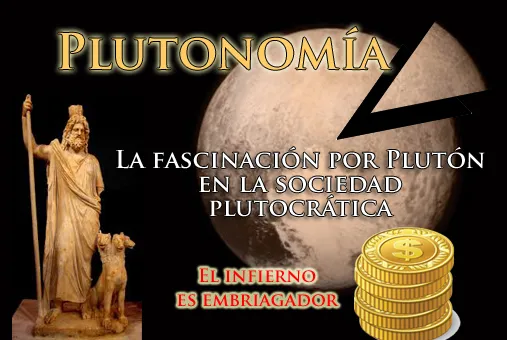
That approach must also be economic because in a society, individuals, through their work, pay taxes that States use for many things. What use is it for society and the State to send a probe to Pluto?
Does it make sense to do it when people are dying of hunger?
In my view, no, it makes no logical sense. It is irrational. But this does not mean we should stop doing astronomy. It means we must do something so that people are not hungry. For that, science is needed. This is indisputable, but is astronomy needed so that people are not hungry?
No, it is not needed for that. In the past, on the other hand, it was possible to say so, but nowadays it is more difficult. However, food is not the only thing we need. Since it is a priority, wouldn't it be better to first satisfy those basic needs and then others?
There is no need to do it that way. The resources for no person to be hungry exist. There is no need to stop doing astronomy. What is needed is to end the exploitation of some people by others, an economic exploitation, because of which there are few very rich and many very poor.
What was the use of the Periodic Table of the elements? When Mendeleev set out to study, to investigate a possible ordering of the chemical elements, what would it be useful for? I think the Russian chemist was not clear about its later "practical utility." Today, no one would doubt how useful it has been.
USELESS SCIENTIFIC RESEARCH
Does the useless, the absurd, not exist? Every year in September the Ig Nobel Prizes are awarded for "research that makes people laugh, and then think," as indicated on the website of the Annals of Improbable Research [4].
Every research project has some kind of justification. In many cases it is possible to question the usefulness of such work. For example:
In 2007, the Ig Nobel Peace Prize was awarded for the "gay bomb": the idea was to create a mechanism to make soldiers in an army become irresistible to each other, "turning them" homosexual, which according to the authors "would undermine their morale and discipline." The uselessness of this work can be easily demonstrated by doing the opposite, that is, by showing how undisciplined we heterosexuals can be.
Therefore, it is useless, and also discriminatory. One could argue that thanks to such research, the discussion about whether sexual tendencies are innate or acquired, the result of personal choice, the socialization process, or genetic conditions, is brought to the table.
However, no supposed research was needed for that debate to exist. If that was the goal, it was unnecessary.
Another example: Suicide rates are related to the amount of country music played on the radio (Ig Nobel Prize in Medicine, 2004). This is a mere correlation, just as we could correlate any other variables; for example, one could look for a correlation between people who write about the harmful effects of country music and high rates of stupidity. That would indeed be useful to put an end to such absurd, anti-scientific reductionism. The same goes for astrology, which attempts to correlate planetary positions with human predispositions, another form of reductionism that takes into account one variable with another, and falsely at that.
THE NEED FOR ASTRONOMICAL RESEARCH
Astronomy is necessary in modern times for many reasons, linked to what we know and to what we know we do not know:
1-Vera Rubin detected that stars in galaxies do not move as Newton's Laws postulate. From this, three hypotheses basically emerged: Newton's laws require a modification; there is common matter, but we don't see it, in those galaxies (black holes, planets); there is non-common matter. The latter is the dark matter hypothesis. If a matter different from the known one exists, we could consider a scenario as or more revolutionary than Mendeleev's.
2-The dark energy hypothesis goes in the same direction.
3-Only in the last two decades have thousands of exoplanets been discovered, mostly giants like Jupiter, but closer to their host stars. Could there be a planet in a habitable zone where some kind of life has developed?
4-How will the variable star that illuminates us daily change? How will that affect life on Earth?
5-Where do cosmic rays come from?
6-How is gravity related to quantum mechanics, indispensable for understanding some processes?
7-Is spacetime composed of point particles or strings?
8-Will spacetime be able to contract or will it expand indefinitely or a bit of both processes?
9-How and when will Earth's magnetic poles change and what consequences will it have?
10-Are there other planets in the Solar System, what is the Oort cloud like and how does it work?
These and other topics can have concrete consequences for our human life, beyond the desire to know driven by wonder.
THE NEED FOR OUTREACH IN ASTRONOMY
A while ago I wrote a post on this blog for the Carnival of Physics about How to calculate the diameter of the Earth using a watch [5]. As I was recently told, the matter was tackled by a group of students from Peru as a school project.
What use could there be in calculating something we already know -the Earth's radius/diameter-?
The utility is multiple: it allows us to realize that with certain types of knowledge, in this case geometric and calculation, we can apply them to things we hadn't imagined.
The utility of that process is given by the use of our cognitive abilities. It's not enough to know we have them; we must put them into practice. The example can motivate us to use those abilities to solve real problems, which is why it is a pedagogical, abstract activity, "in itself" useless (since we are trying to answer something already known), but which as a process has the utility of knowing in a practical way something we perhaps only knew in theory: our rational capacities.
Second, it gives rise to inventiveness or creativity: from the example, we can think, analyze, and design in what other ways we can interweave the knowledge we have to solve other problems. It also demonstrates that certain knowledge we thought was useless, is not. In this case, through a set of reasonings, we come to establish an equation with one unknown, even though at the start we did not have that equation. Upon reaching it, it is necessary to solve for a variable. That mathematical method taught in high school might seem useless to us. However, the same type of reasoning we can apply (once we become aware of its potential) to practical everyday matters, in any profession.
To achieve something, anything, it is often necessary to perform several steps thought out in advance in what we call a "strategy." Those steps, ordered in some way and related logically, allow us to achieve what we had in mind, if the strategy was correct.
We will make mistakes, and we will correct them. But it is better to have a strategy than to have none. And, certainly, it is advisable that this strategy be logical and not dependent on the whims of the gods because in that case we would have nothing to do, except wait. A great excuse to do nothing. Scientific thinking is the only way to change reality, although it is sometimes used to make it worse or to leave things as they are. Scientific thinking is an indispensable instrument, but its results will depend on the use we make of it. And if we use it, it is because it is useful. But it has multiple uses, complementary and contradictory.
Sources and related links
- [1] What is astronomy good for?
http://www.noticiasdelcosmos.com/2013/11/para-que-sirve-la-astronomia.html This note is part of the AstroModerna Series. - [2] Sensors used to unlock secrets of the universe to be commercialised
http://www.theleadsouthaustralia.com.au/industries/research-development/sensors-used-to-unlock-secrets-of-the-universe-to-be-commercialised/ - [3] https://www.facebook.com/noticiasdelcosmos
- [4a] ABC.es: The ten most absurd scientific studies of recent years
http://www.abc.es/20090928/ciencia-tecnologia-biologia/estudios-cientificos-estupidos-ultimos-200909281200.html - Ig Nobel Prizes
[4b] http://www.improbable.com/ig/
http://www.improbable.com/ig/ig-pastwinners.html#ig2004
[4c] http://www.improbable.com/ig/ig-pastwinners.html#ig2007 - [5] Calculate the radius of the Earth with your watch
www.noticiasdelcosmos.com/2011/08/calcule-el-radio-de-la-tierra-con-su.html
About the images
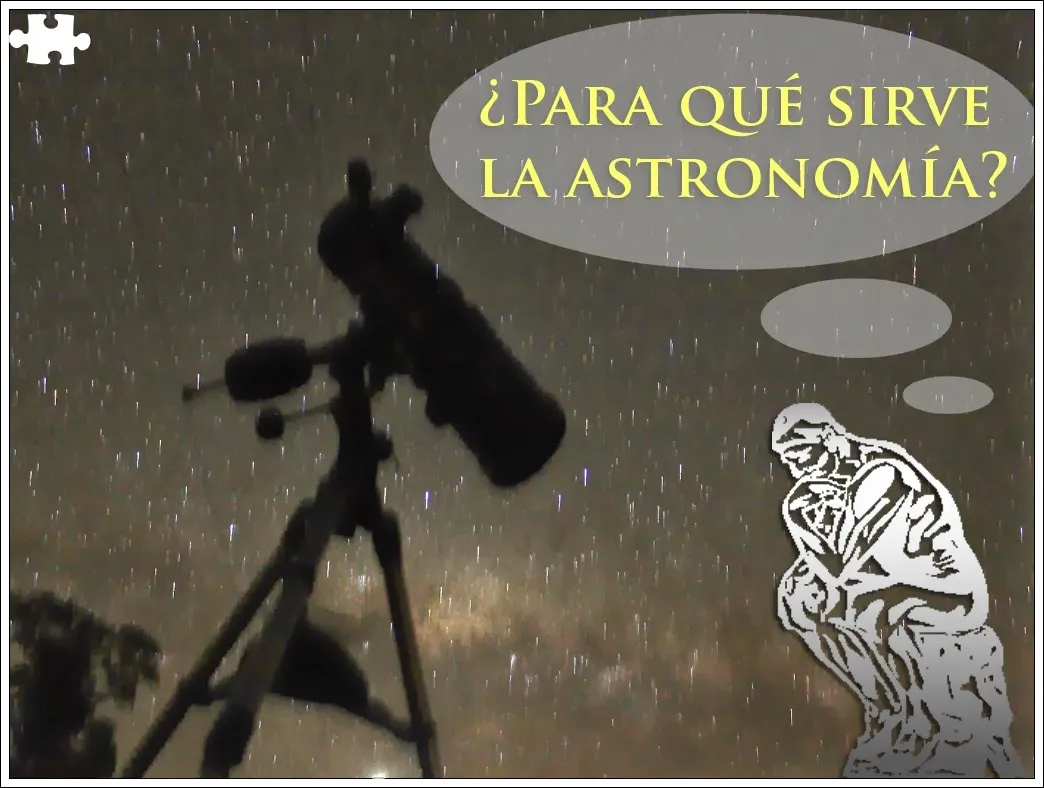
The initial image is a combination of a photograph taken by me this year, with the silhouette of my telescope, together with a clipart image of Rodin's Thinker, which I used from the Takiwall site.