Comments following a video.
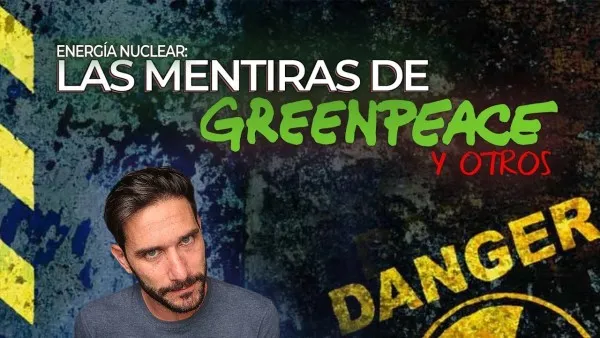
A reader emailed me a question about my opinion on a video by a well-known YouTuber. It's the video "Energía NUCLEAR: las MENTIRAS de Greenpeace (y otros)" from the channel Date un Vlog made by Javier Santaolalla, published on July 27.
After watching the video (I'm subscribed to the channel), I answered plainly: "I agree 100% with everything said there".
However, I later thought it appropriate to add some supplementary ideas.
1-I will use here the concept of dose, so used in medicine, but also in other cases. It implies that the same substance can be harmless, beneficial, or harmful in different quantities. More generally, it implies a quantitative relationship with the quality of a result. This characteristic of the concept is also its Achilles' heel, since in some cases, like temperature, it may be enough to establish a dependent and exclusive relationship between two variables, but in other cases, things are more complex. This greater complexity can arise from the concurrence of multiple variables and/or because the analysis of each one or the whole requires thinking about something more than a quantitative measure. Any tool can be used well if we know its limitations. The concept of dose, therefore, will be useful if we know its scope.
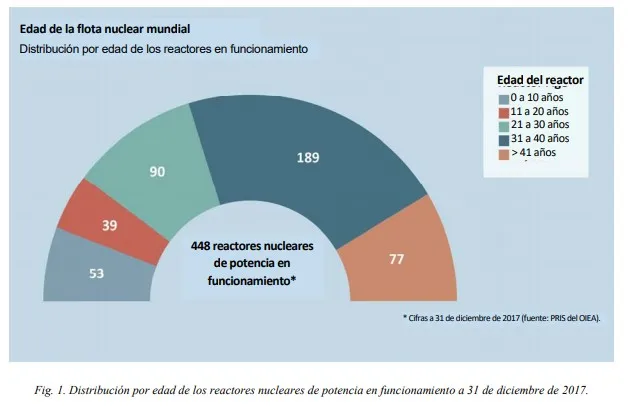
2-Nuclear energy can be thought of almost exclusively from a technical point of view, but concrete reality demands thinking about the political and economic situation because we don't live in Disneyland. The "dose" of technical safety, audited by international organizations, is a good measure to evaluate the construction and operation of safe nuclear power plants. But, like everything, it requires an economic investment and maintenance. Evaluating the safety level, as well as the generation number of the construction or the number of years a plant has been operational, are useful parameters. But permanent maintenance requires funds. If we have the first, but not the second, there will be problems. On the other hand, some active plants are somewhat old, so it would be better to update them or, failing that, close them and build new ones with the technology available today.
As a consequence of these two ideas, then it can be added that:
A-In a transition process that goes from energy production in a polluting and harmful way for the environment and therefore for human health, towards a more sustainable scenario in the long term, it is not possible to think of a "definitive alternative". Nuclear energy is not an alternative, in the sense that it is not possible to change all current electricity production for total production based on nuclear.
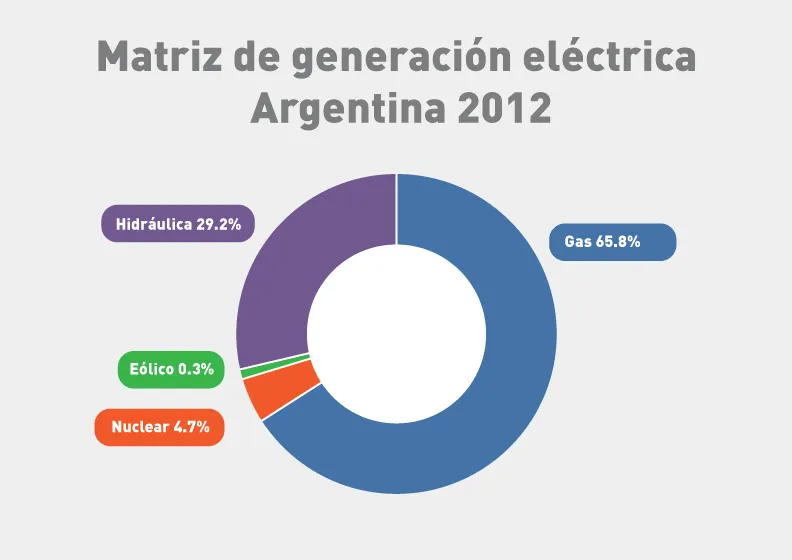
In Argentina, nuclear energy contributes about 5% to total electricity production. If we wanted to replace all sources of electricity production with nuclear energy, it would imply building a bunch of plants in many places across the country. Keep in mind that Japan has almost 50 and the U.S. has about 100.
In the Date un Vlog video, Fukushima is barely mentioned. Japan is a seismic zone, which raises the degree of safety required. Argentina is not Japan, but some areas of the country, like San Juan, are much more unstable than others.
In this context, nuclear energy as COMPLEMENTARY to other forms of electricity production is appropriate, even to partially substitute other more polluting forms, like coal.
However, the risk of nuclear energy would increase proportionally with the number of plants created and their consequent power or capacity, along with the installation zone.
B-On one hand, the risk of an accident decreases substantially with technical measures standardized internationally and audited by organizations like IAEA. However, since that level of safety requires a large economic investment, it is always good to be vigilant that countries make the appropriate investment. At this point, I want to stop to reflect on economics and risk:
I view with alarm what for others has become "normal": the "low cost", that is, low-cost goods and services. It is logical that if low-cost goods and services are produced, their origin is of lower quality, either because the materials used are less good, or because personnel and control mechanisms are reduced, etc. That this happens when producing watches or t-shirts doesn't cause me any panic. But that it be done with the aeronautical industry, yes. Contrary to what is thought, States favor this type of "low cost" in services that can indeed endanger people's lives.
Exercising also has risks, like everything when a certain limit is exceeded (the "dose"). If the gym equipment is well secured and there is staff to control the use of the facilities and safety rules like the requirement for clients to have medical coverage of their condition, the risks are minimized. "Low-cost" gyms are also appearing now, which raises the question of whether the risk in those cases will not be greater to the health of the clients.
There is no talk of "low-cost" nuclear power plants, but there were layoffs at Atucha. When energy production is in the hands of the State and the government of the day has economic pressures and requires fiscal adjustment, we citizens must be vigilant about what, how, and how much is "cut". Nuclear power plants, in addition to the technical and economic requirements for their creation, also require adequate maintenance. If that maintenance is compromised due to budget cuts, its risk level increases.
C-Nuclear energy pollutes little, not zero, and has a risk that must be properly evaluated. That radioactive waste is a problem is stated by IAEA itself (OIEA in Spanish for International Atomic Energy Agency) in a note whose link I leave at the end.
CONCLUSIONS
From these comments, the following conclusions emerge. One can never justify lies or great exaggerations that end up also being lies, as well as the opposite which is minimization. In that sense, whatever the origin of false information, we should be against it, and to avoid falling into it, two things are needed: cross-check data from different reliable sources; and always be vigilant.
Those things, like nuclear energy or air travel, which are risky but safe, achieve the latter thanks to technical innovation, standard safety controls, and initial and maintenance economic investment. They will remain that safe if all that is maintained. No one assures us that it will always be that way. Hence the need for us to always be on high alert, particularly when the economic situation is bad and the scissors cut anything that is not so noticeable.
That reduction in investment can affect the construction of the plants, their maintenance, or the handling of waste. Therefore, aside from state controls, it is not a bad idea for other organizations outside the State to also carry out controls.
The level of public awareness about environmental issues would hardly be what it is today, if it weren't for "green" organizations. When the public is unaware of these issues, the possibility that States and the private sector do things wrong increases. With this statement I am not justifying any lie, but I do intend to show a flip side of the issue that I believe is convenient. Compliance with safety standards must be a demand from citizens, but that demand does not arise spontaneously. In my view, green organizations have contributed in that regard.
We must be clear that everything has a risk. Even renewable energies like wind or solar. Consider that for those forms of electricity production, electronic circuits are needed that contain minerals like silicon, copper, silver, gold, tin, which are not renewable. And also, depending exclusively on the weather might not be a good idea. This does not mean that such forms of energy production are not valuable. They are, but they also have their limits. In that sense, nuclear electricity production makes sense, in its proper measure and safely. It is worth adding that nuclear energy is also used for other purposes, not only producing electricity, as in medicine. And I always refer here to peaceful uses.
To conclude, given that my comment has a central economic ingredient, it is worth saying that with "green" there is also a spurious economic use. Today many goods and services are offered and advertised as "green" even though many are not. The same happens with apparently more "healthy" foods, perhaps because they have a lower "dose" of sodium or sugar, among other substances. But be careful because the "dose" in each food says something, but not everything. If we ingest such substances in excess, the limit is breached anyway. In short: there is no magic.
Sources and related links
- Chequeado: Nuclear energy: Argentina and the world
https://chequeado.com/el-explicador/la-energia-nuclear-la-argentina-y-el-mundo/ - In search of a solution for radioactive waste in Argentina
https://www.iaea.org/es/newscenter/news/en-busca-de-una-solucion-para-los-desechos-radiactivos-en-la-argentina - Energías de mi país: What is the energy matrix?
http://energiasdemipais.educ.ar/la-matriz-energetica-argentina-y-su-evolucion-en-las-ultimas-decadas/ - NUCLEAR Energy: the LIES of Greenpeace (and others)
https://www.youtube.com/watch?v=YNPvBU43oYg - IAEA Annual Report for 2017
https://www.iaea.org/node/51764 - Atucha, again in crisis and with layoffs
https://canalabierto.com.ar/2019/06/06/atucha-nuevamente-con-crisis-y-despidos/
About the images
Graphic from the site Energías de mi país (linked above).
Graphic from the IAEA Annual Report of 2017.
Screenshot from a Youtube video.