Space mission launches, eclipses, conjunctions and more.
SPACE MISSIONS
Solar Orbiter: Scheduled for February 5, it is a cooperation between NASA and ESA.
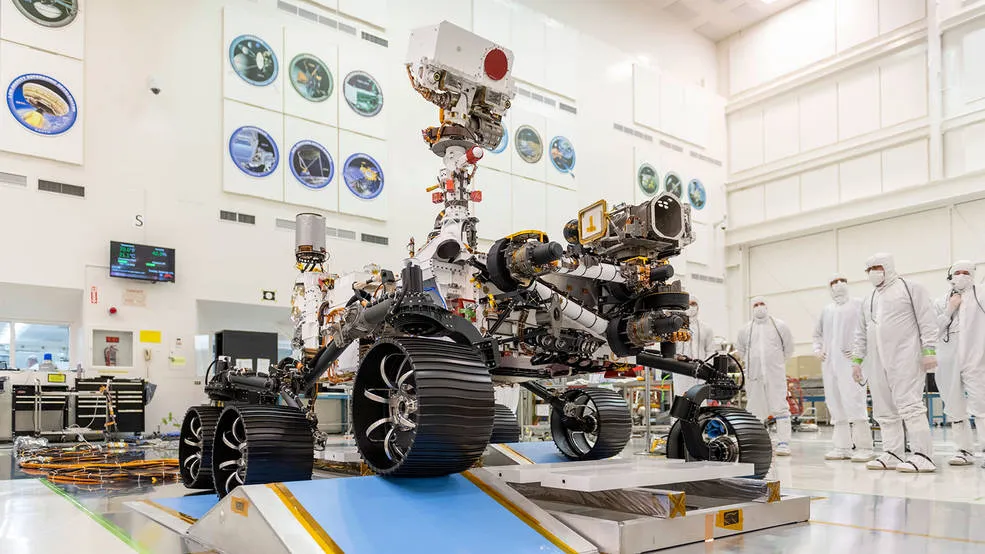
Mars 2020 Rover: This robot would launch to Mars in July.
Expedition 61 will return home on February 6 and Expedition 62 to the Space Station will launch in April.
Towards the end of the year, Artemis 1 (formerly known as SLS-1) would launch, the first attempt of the Space Launch System and the Artemis Program and the second for NASA's Orion spacecraft.
Chang'e 5 will be China's first sample return mission, aiming to return at least 2 kilograms of lunar soil and rock samples to Earth.
The Mars Global Remote Sensing Orbiter, Lander and Small Rover is a mission planned by China to bring a satellite, a lander and a rover to the planet Mars. The mission launch is expected to be ready for July or August 2020.
Mars Terahertz Microsatellite is a Japanese mission equipped with a terahertz sensor intended to be taken to the surface of Mars to measure the amount of oxygen isotopes in various molecules in the Martian atmosphere. Launch is planned for July.
MoonLIGHT, also known as Lunar Laser Ranging Retroreflector Array for the 21st Century (LLRRA-21), is a laser retroreflector that will be deployed near the Moon's south pole. The reflector is scheduled to launch in 2020 as a secondary payload of the MX-1E lunar lander built by the private company Moon Express.
Hope Mars Mission is a United Arab Emirates mission to Mars and its launch is planned for mid-year for arrival in 2021.
The Orbiting Binary Black Hole Investigation Satellite (ORBIS) is a small space telescope still under development in Japan that will study binary black holes in the X-ray region.
ExoMars is a second part of an ESA mission. The first was in 2016. Scheduled for July-August.
In July, OSIRIS-REx, a probe launched in 2016 that reached asteroid Bennu in 2018 to map it, will begin sample collection via a robotic arm.
SOLAR ECLIPSES
June 21: Annular solar eclipse. Visible in Africa, Asia.
The event of the year
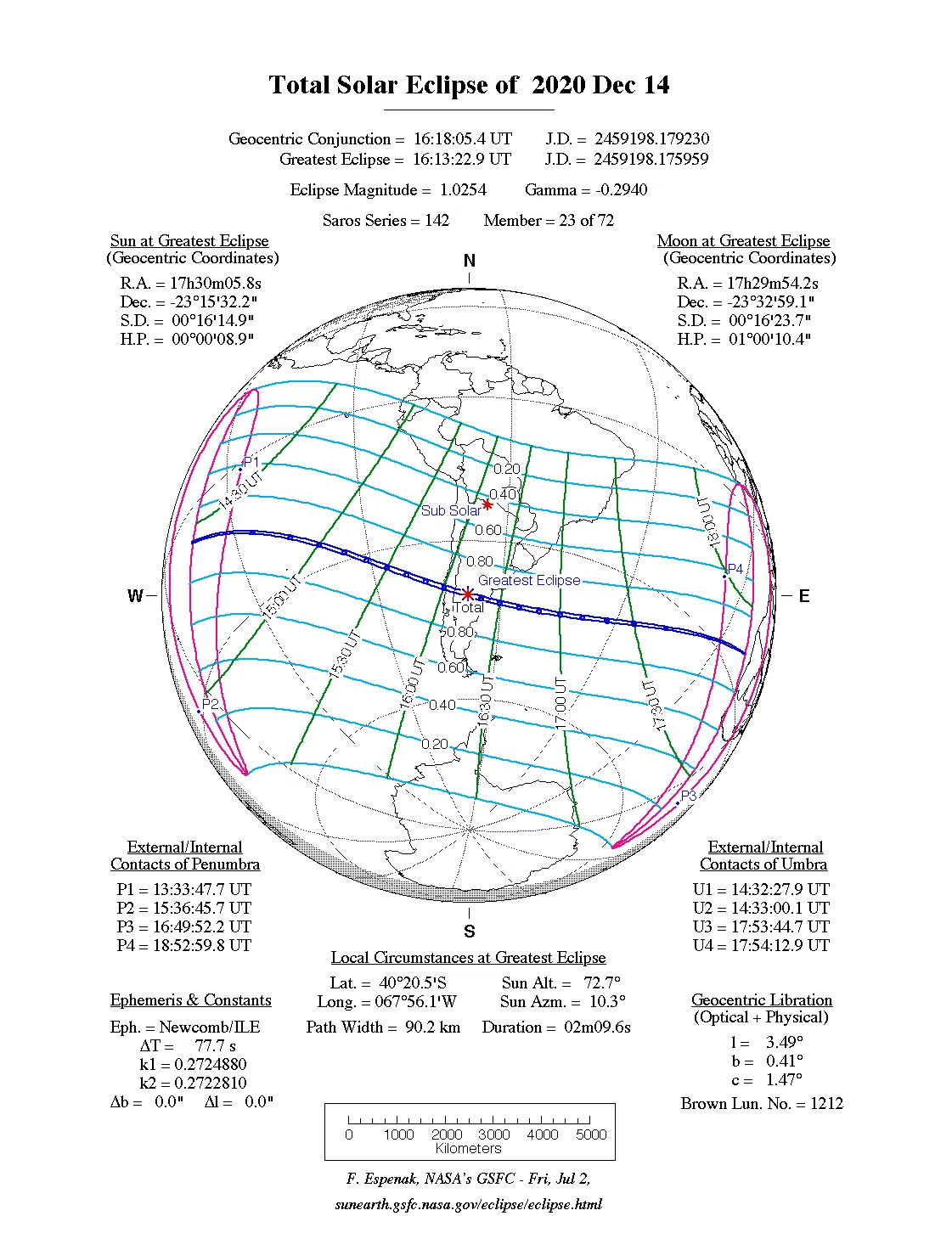
December 14: Total solar eclipse. Visible in its totality in Chile and Argentina. It will be at 16:13 UTC.
LUNAR ECLIPSES
January 10: Penumbral. Visible in Europe, Africa, Asia.
June 5: Similar to the previous one.
July 5: Penumbral. Visible from South America.
November 30: Similar to the previous one.
PLANETS
July 14: Jupiter at opposition. Maximum approach of the gas giant to Earth.
July 20: Saturn at opposition.
September 11: Neptune at opposition.
October 13: Mars at opposition.
October 31: Uranus at opposition.
October 31: Blue Moon: there will be two full moons, on the 1st and the 31st.
December 21: Great Jupiter-Saturn Conjunction, very close to each other.
ANNIVERSARIES
In April, the 30th anniversary of the launch of the Hubble Space Telescope and the 20th anniversary of human presence in space, thanks to the International Space Station, will be celebrated.
https://www.youtube.com/watch?v=mB1nAzriqRQ
Sources and related links
- Marspedia
http://marspedia.org/Future_Mars_Missions - NASA Launches
https://www.nasa.gov/launchschedule/ - Wikipedia
Category:Space exploration in 2020
https://es.wikipedia.org/wiki/Categor%C3%ADa:Exploraci%C3%B3n_espacial_en_2020 - NASA ECLIPSE
Fred Espenak, NASA's GSFC
https://eclipse.gsfc.nasa.gov/eclipse.html - Astronomy Calendar of Celestial Events for Calendar Year 2020
http://www.seasky.org/astronomy/astronomy-calendar-2020.html