Notable syzygies and space missions.
Lunar Eclipses
Total Lunar Eclipse May 26 and Partial Eclipse November 19.
The first will be partially visible in South America, not in Europe.
The second will be partially visible in the Americas and Europe.
Solar Eclipses
June 10: Annular eclipse, observable as such in Canada and Russia, partial in North America and Europe.
December 4: Total eclipse, not observable in the Americas and Europe, only Antarctica and South Africa.
Seasons
The planet will be at perihelion on January 2, its closest approach to the Sun; and at aphelion on July 5.
Equinoxes: March 20 and September 22
Solstices: June 21 and December 21
Supermoons
Full Moons near perigee: we consider "near" to be when the difference between the phase and perigee is less than a day. Additionally, distance can be considered, using a maximum separation of 360 thousand km as the limit.
Dates: April 27, May 26
The full moons of 3/28 and 6/24 have a difference greater than a day with perigee.
Notable planetary alignments
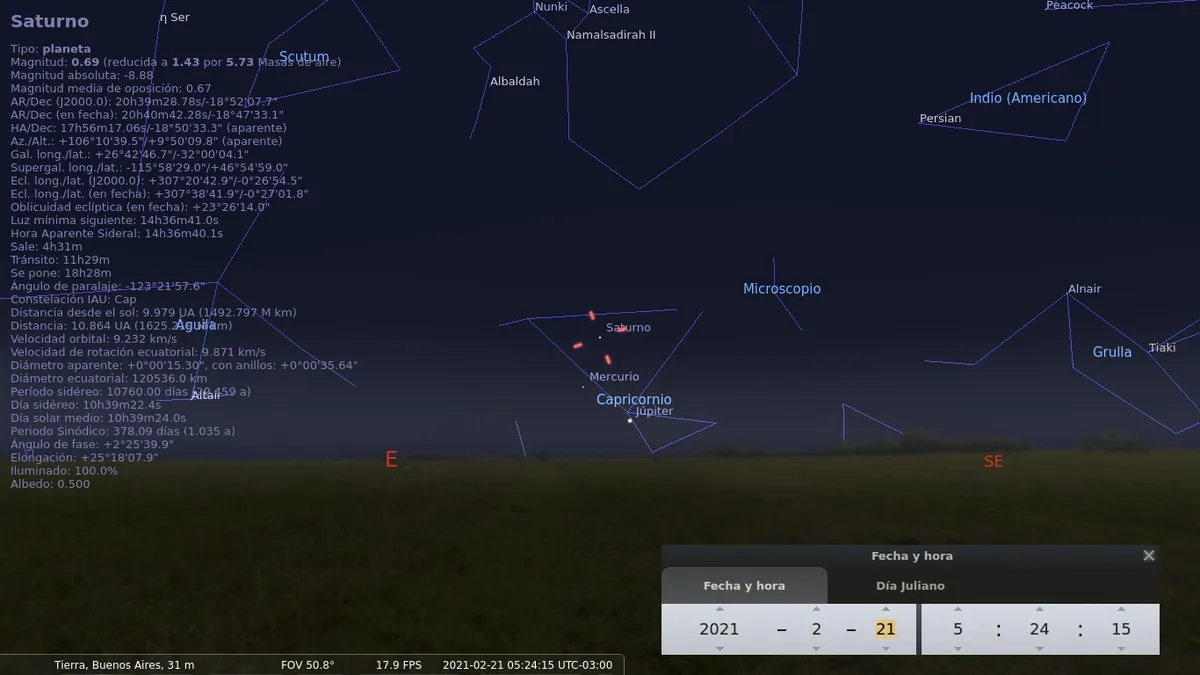
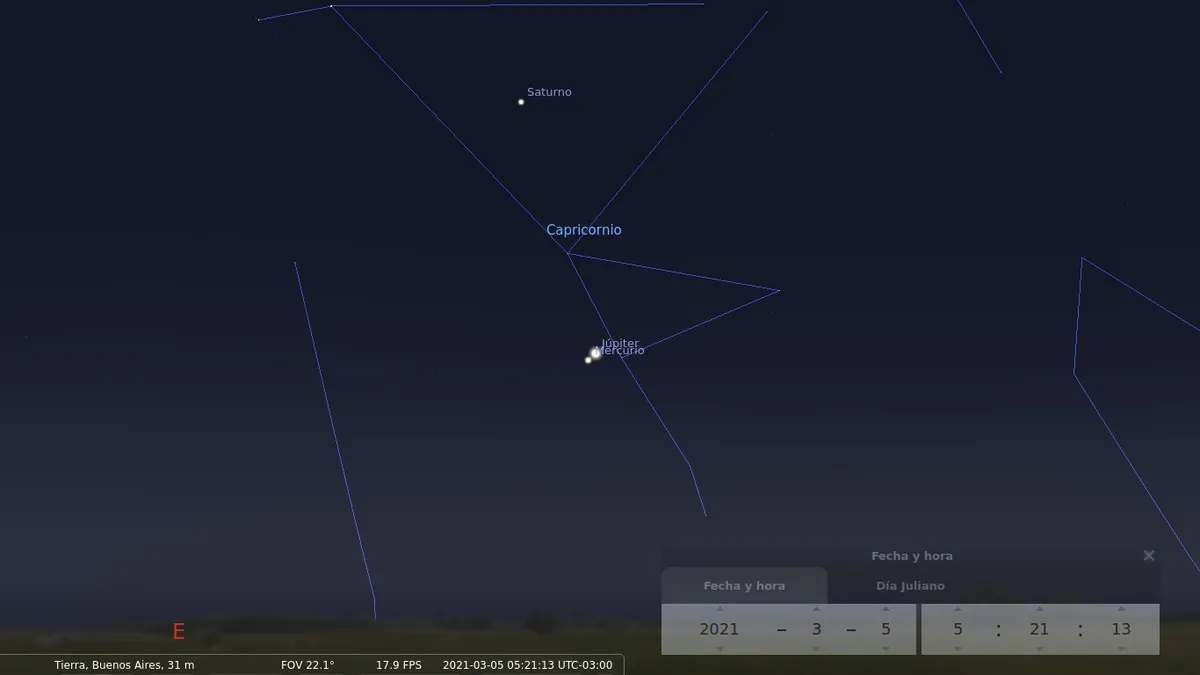
From February 21: Saturn, Jupiter and Mercury: the planet closest to the Sun will approach Jupiter until 3/4.
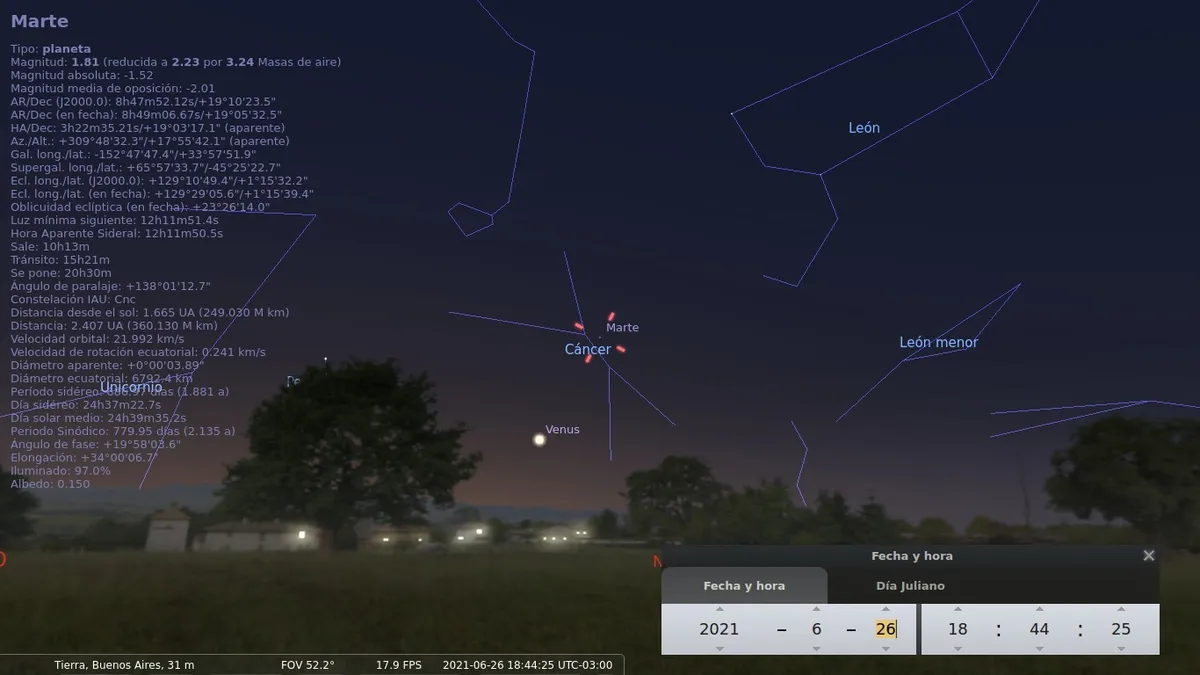
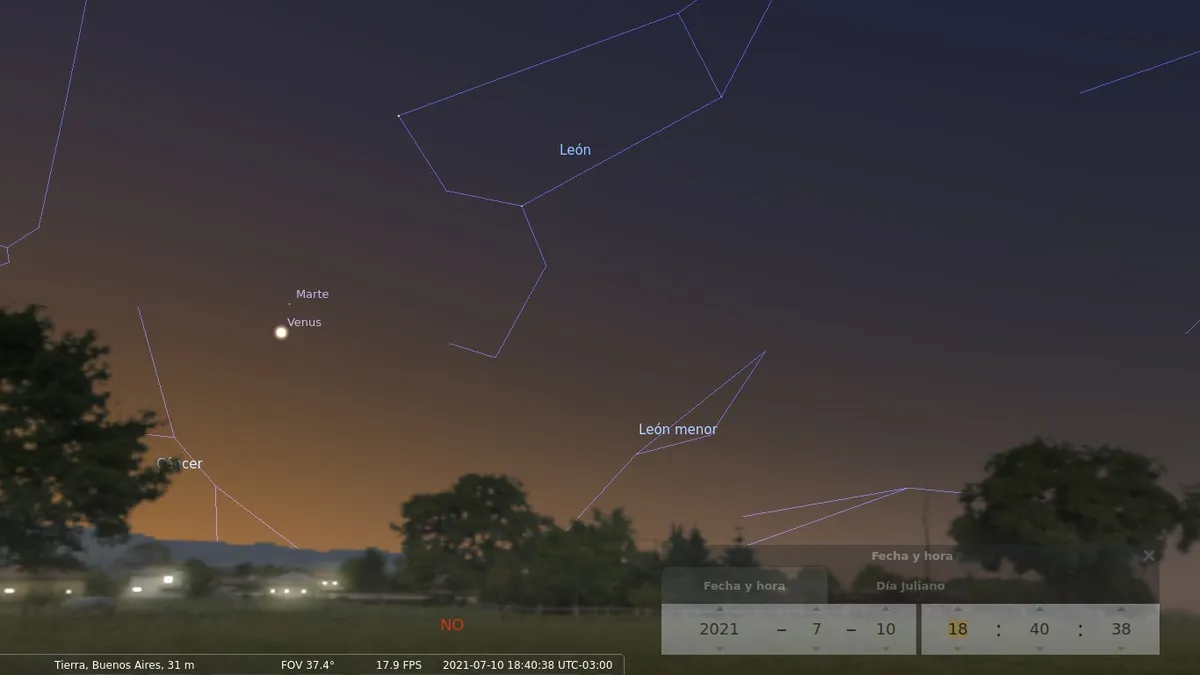
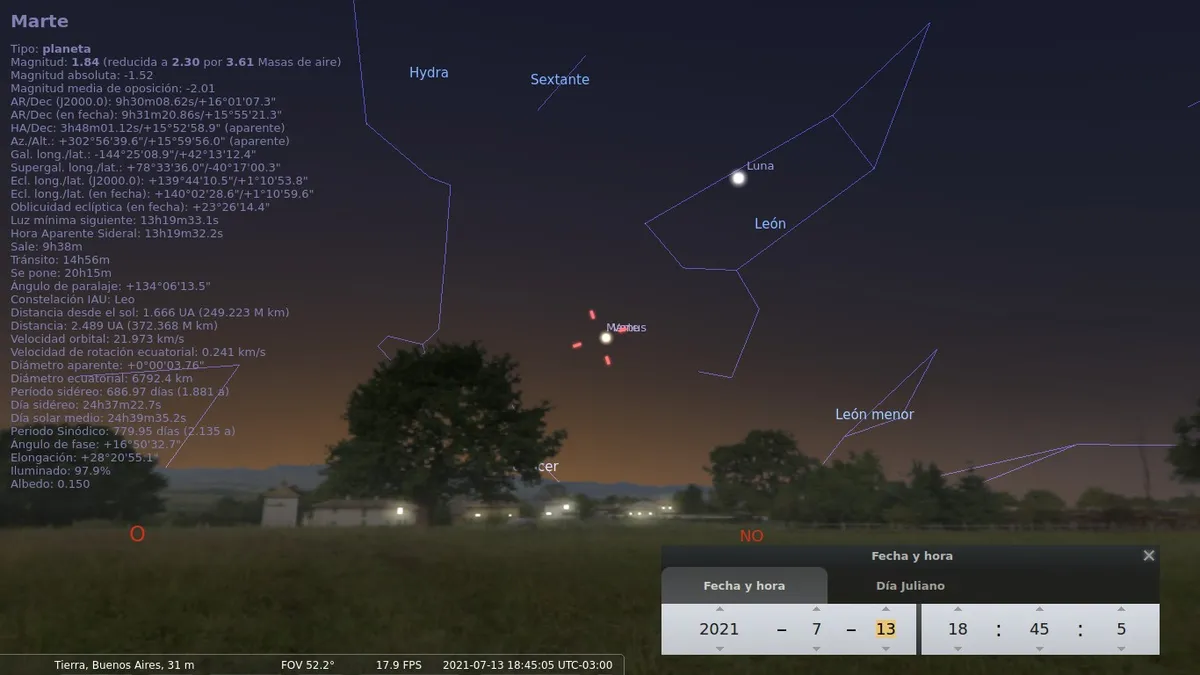
From late June, Venus near Mars at sunset. They will get closer in the following days until July 13, then move apart again.
SPACE MISSIONS
Three of the four most important are already underway, heading to Mars: The Perseverance, Hope and Tianwen 1 spacecraft will arrive at the red planet in February.
The launch of the James Webb Space Telescope, postponed several times, is scheduled for October 31. NASA will continue development of the Artemis program and will launch two missions to study asteroids: Lucy, which will visit eight asteroids, one from the main belt and 7 Trojans. Its launch is scheduled for October. Aboard Artemis I -which will be the first uncrewed flight of the SLS system and the Orion spacecraft- will be a CubeSat called NEA Scout to study a near-Earth asteroid smaller than 100 meters. In July, the DART mission to deflect an asteroid is expected to launch.
India will again attempt its Moon landing with Chandrayaan-3 and Russia will do the same to return to the natural satellite with its Luna 25 spacecraft.
China will begin construction of its Space Station, the CSS.
To summarize the space year, NASA published a video a few days ago with Spanish text:
Let's hope this time is the charm and the long-awaited James Webb Telescope is successfully launched☉
Sources and related links
- Astronomy 2021: Top Events for the Coming Year
https://www.universetoday.com/149259/astronomy-2021-top-events-for-the-coming-year/ - NASA Eclipse
https://eclipse.gsfc.nasa.gov/
"Eclipse Predictions by Fred Espenak, NASA/GSFC Emeritus" - Lucy: The First Mission to the Trojan Asteroids
https://www.nasa.gov/mission_pages/lucy/overview/index - The 10 most notable space missions of 2021
https://www.elmundo.es/ciencia-y-salud/ciencia/2020/12/31/5fe9e4f0fc6c8370398b45d6.html - http://astropixels.com/ephemeris/moon/fullperigee2001.html
"Full Moon Perigee (Super Moon) Table Courtesy of Fred Espenak, www.Astropixels.com".
About the images
NASA 2021: We're Going to the Moon https://youtu.be/7KVF9KaIQmI