According to a new report, the gender gap persists, but has narrowed, in scientific research.
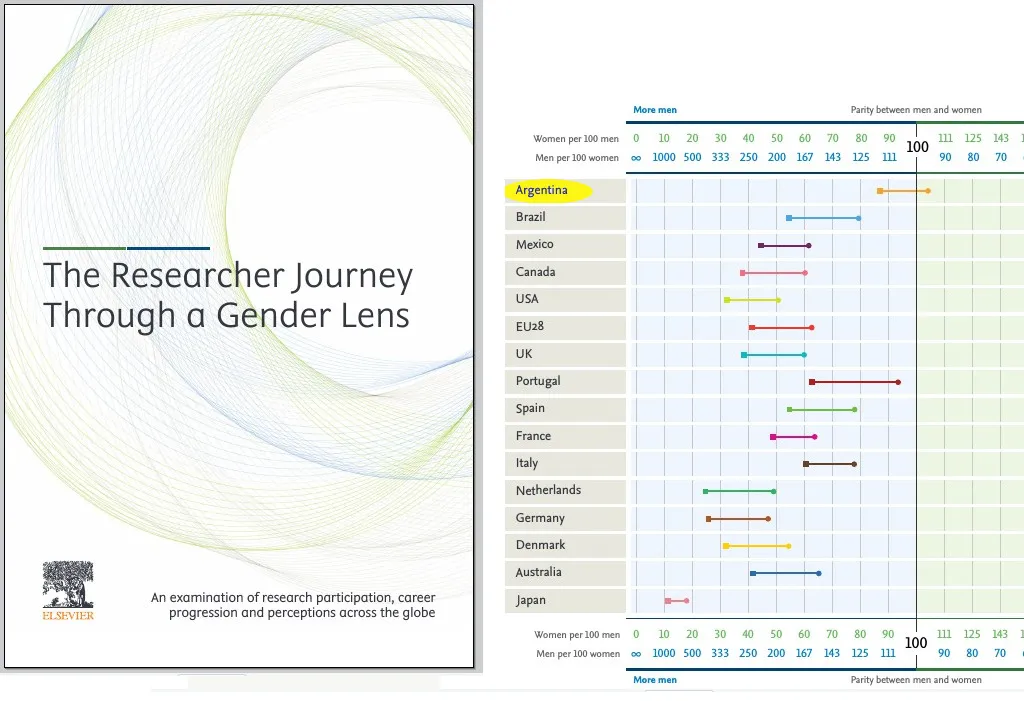
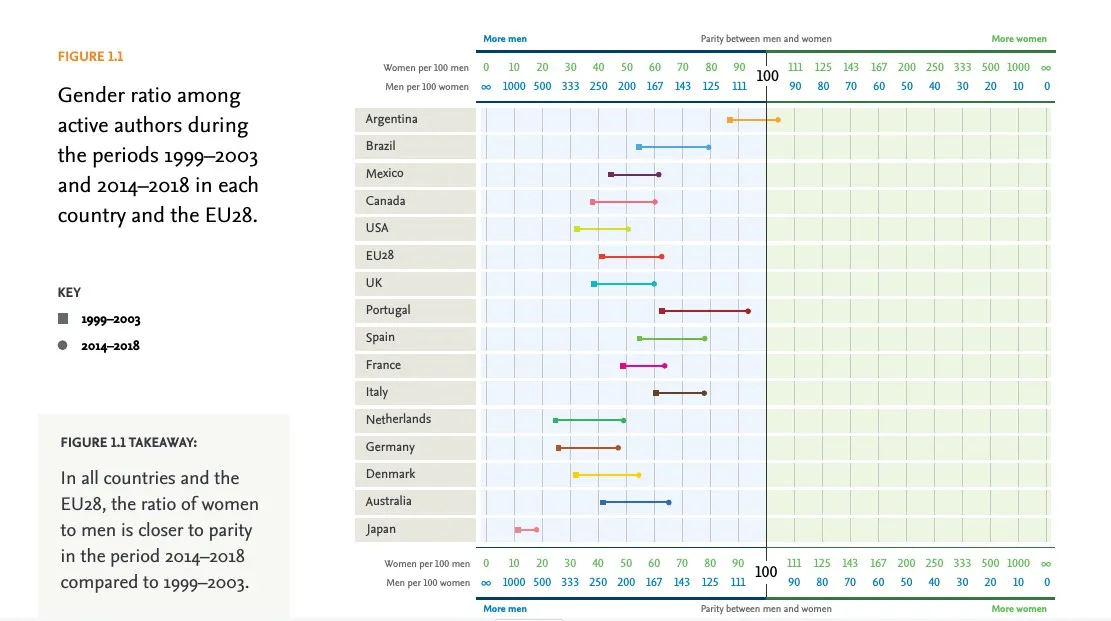
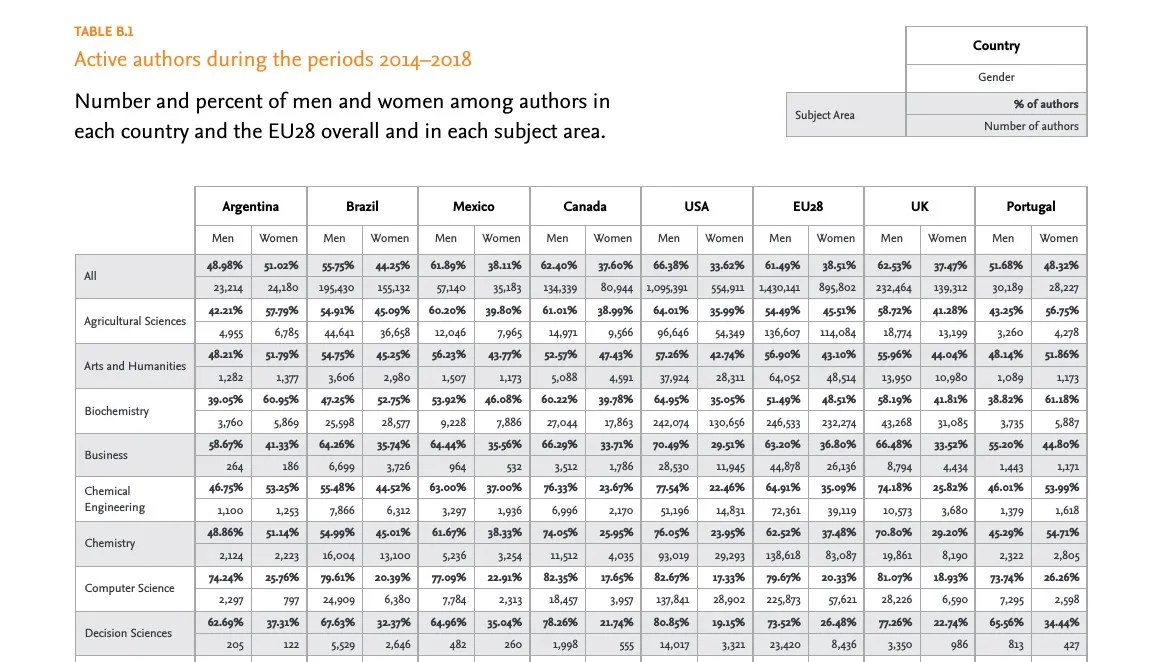
The new report, titled "The Researcher Journey Through a Gender Lens", was produced by Elsevier, so it should come as no surprise that it is based on publications. They analyzed active authors in the periods 1999-2003 and 2014-2018. They found that in almost all the countries analyzed (15 countries + EU28) the men/women ratio is closer to parity in the last period than in the first, although the pace of progress in each country is different. Among the analyzed countries are Argentina, Brazil and Mexico. The case of Argentina is particular, since considering all sciences, Argentina's parity is greater than 100, which means there are more women than men (104 women for every 100 men). In Brazil and Mexico, although progress is seen over time, the rate is 80 and 60, respectively.
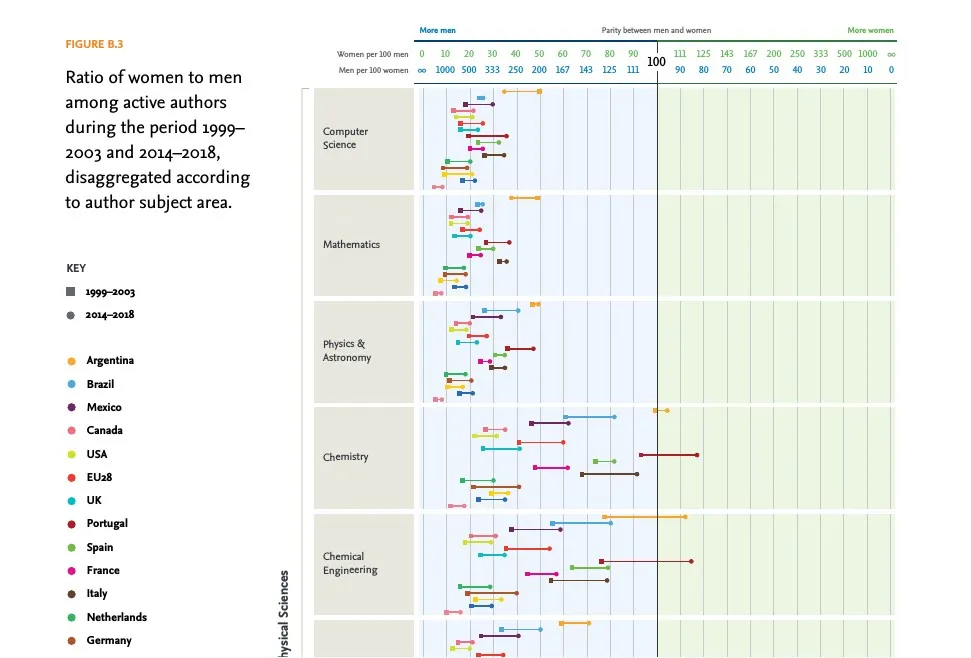
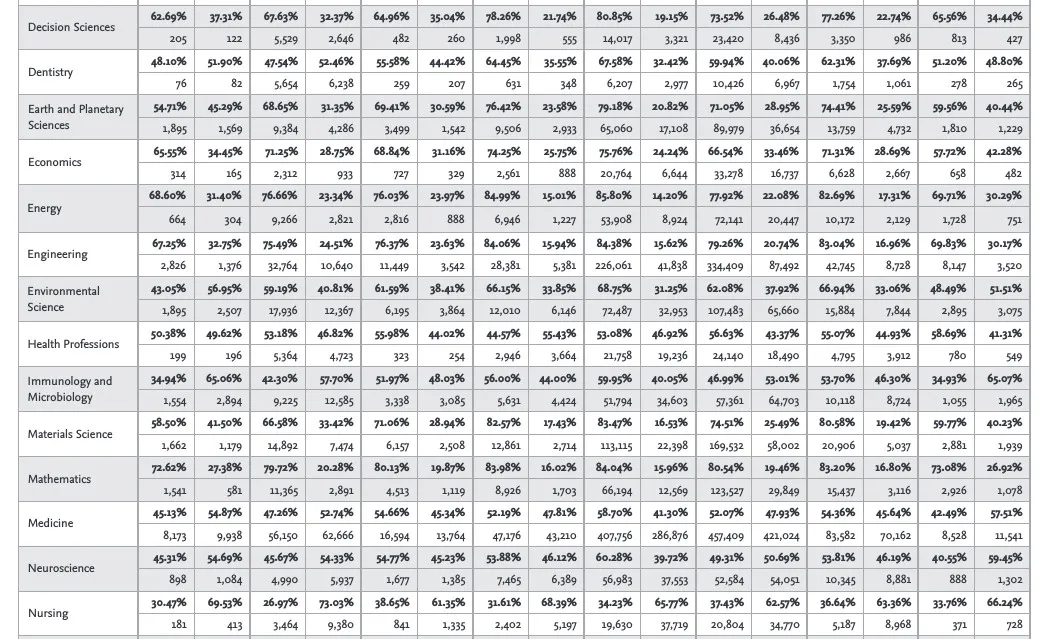
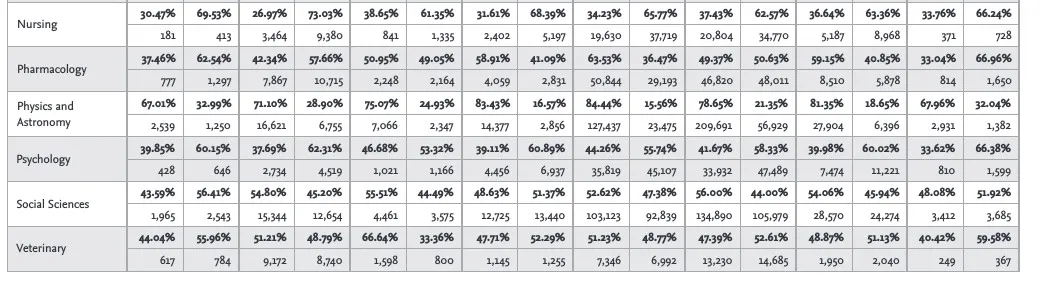
On the other hand, they grouped the data by sciences. In that case it is seen, not only in Argentina, that the proportion of women to men is equal or much higher in medical sciences, chemistry and social sciences; while that same relationship is lower in physical and exact sciences.
Below I will show some of the graphs from the report. They are easy to understand: the first line shows the proportion of women for every 100 men (in green). Below, in light blue, the proportion of men for every 100 women.
The proportion for the first period (1999-2003) is shown with a circle and the rate for the second period (2014-2018) with a square.
As seen in the first case, Computer Science, the current rate is 50 women for every 100 men, which is the same as 200 men for every 100 women.
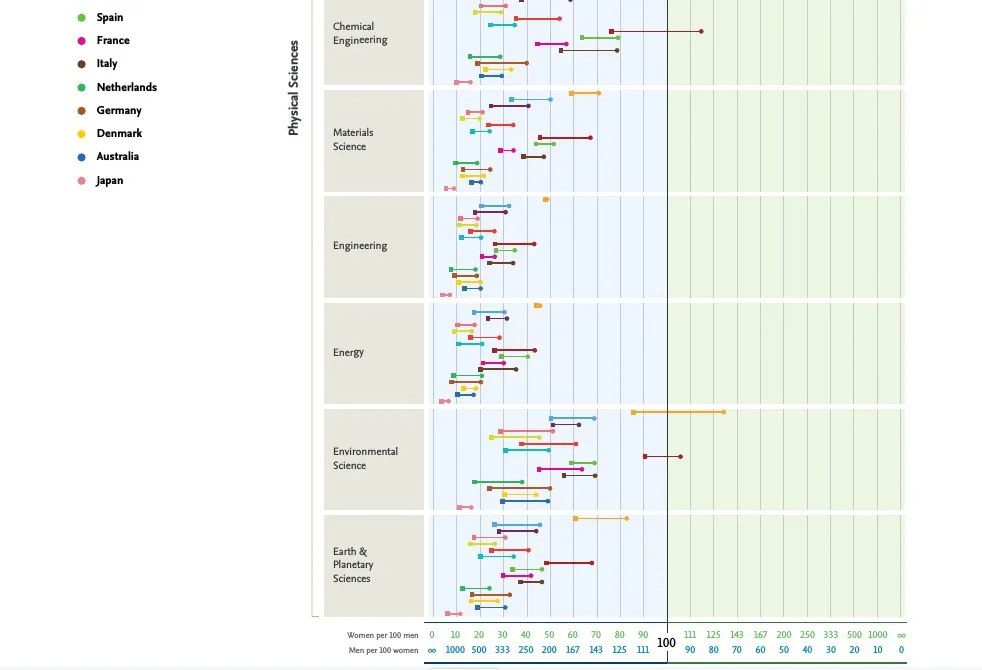
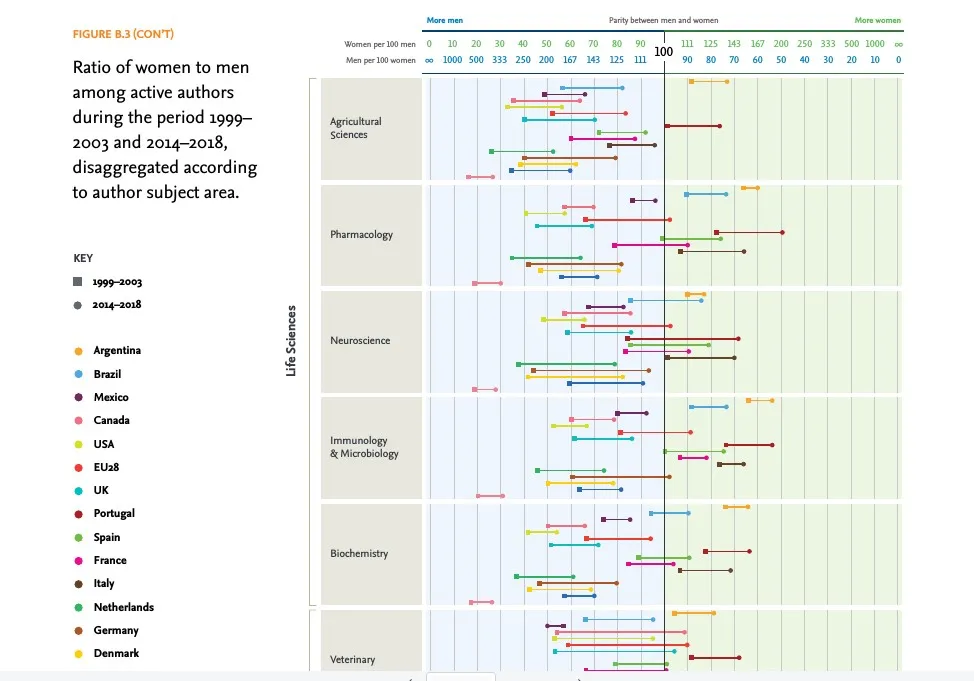
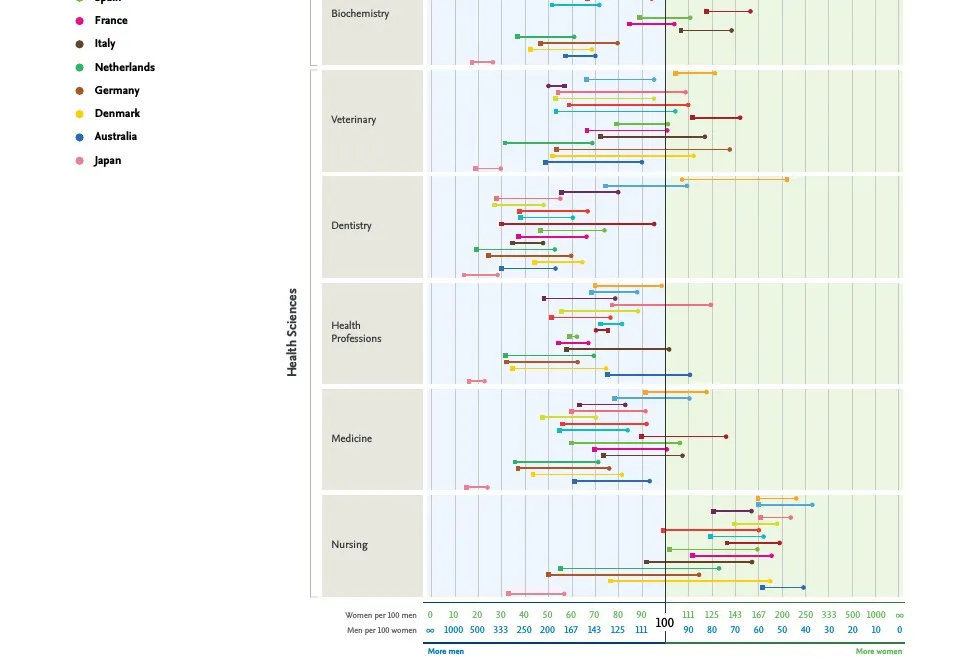
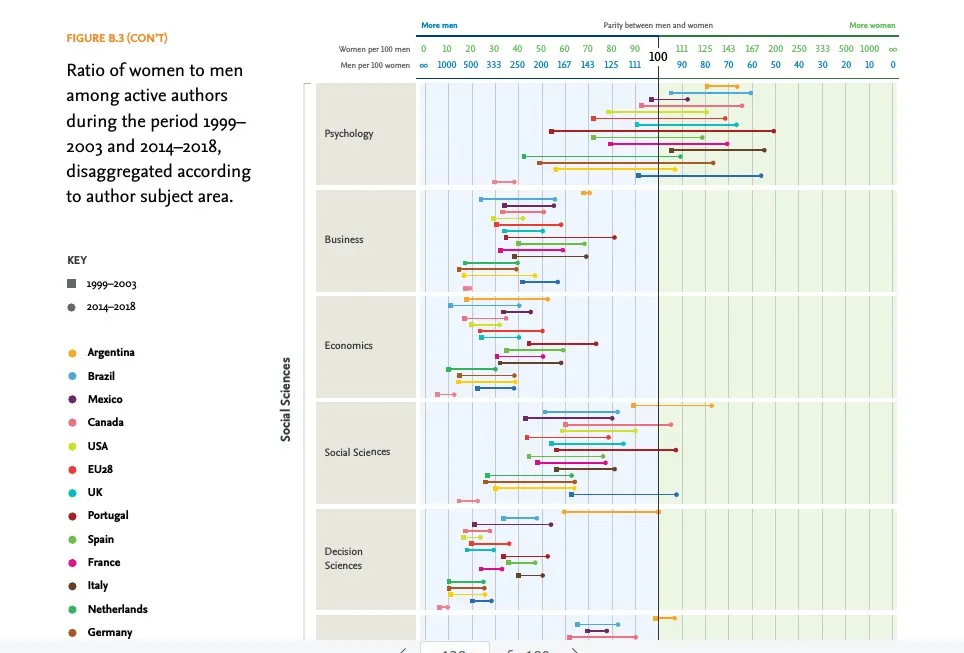
Active authors
Grouped by research field, for the second period:
Survey
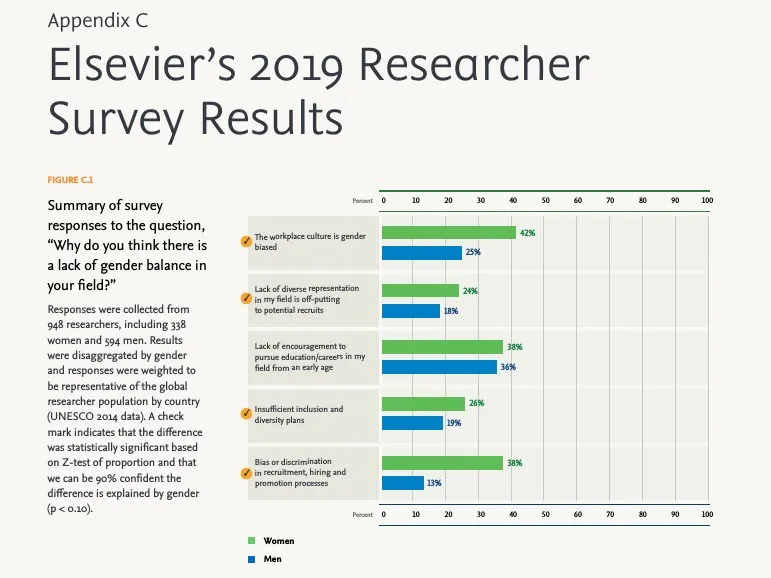
An appendix contains the results of a survey. The first question was: "Why do you think there is a lack of gender parity in your field?".
There seems to be some consensus (36-38%) on the lack of motivation to pursue a career in their field from an early age.
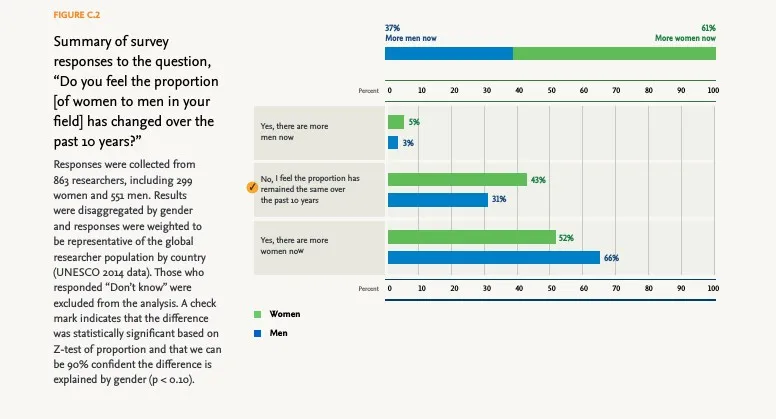
The second question was: "Do you feel that the proportion of women to men in your field has changed in the last 10 years?"
43% of women think not, as do 31% of men; while 52% of women think there are more women now, as do 66% of men. The survey was conducted with more men than women.
EU-28 is the abbreviation for European Union, a group that includes 28 countries that function as a bloc on that continent.
The full report is a 104-page pdf (10Mb) that can be downloaded from the publisher's page listed in the links, below, after filling out a data form.
Sources and related links
- Is there still a gender gap in research?, by Jessica May Hislop
https://astrobites.org/2020/03/13/is-there-still-a-gender-gap-in-research/ - Elsevier: Gender gap narrows in research and innovation but inequality persists, report shows
https://www.elsevier.com/connect/gender-report
About the images
de Kleijn, M, Jayabalasingham, B, Falk-Krzesinski, HJ, Collins, T, Kuiper-Hoyng, L, Cingolani, I, Zhang, J, Roberge, G, et al: “The Researcher Journey Through a Gender Lens: An Examination of Research Participation, Career Progression and Perceptions Across the Globe.” (March 2020) Retrieved from www.elsevier.com/gender-report