One week to the eclipse of the year.
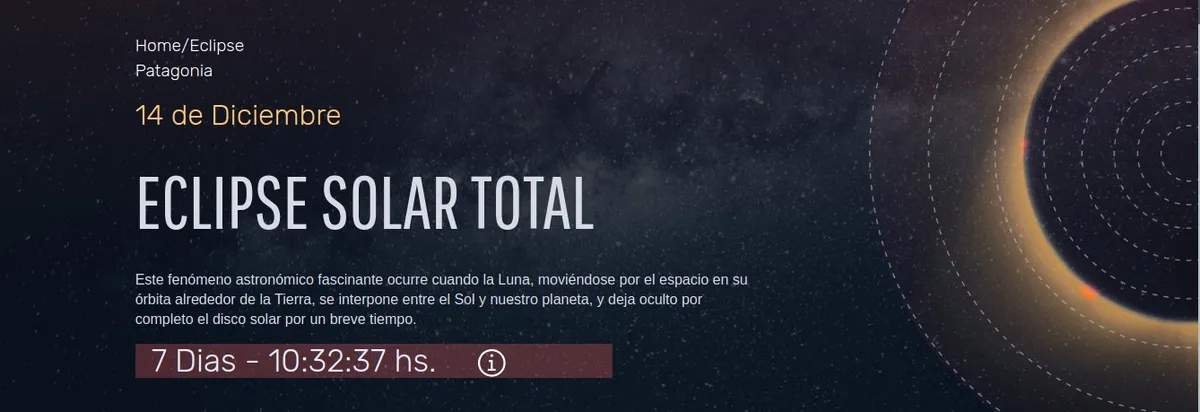
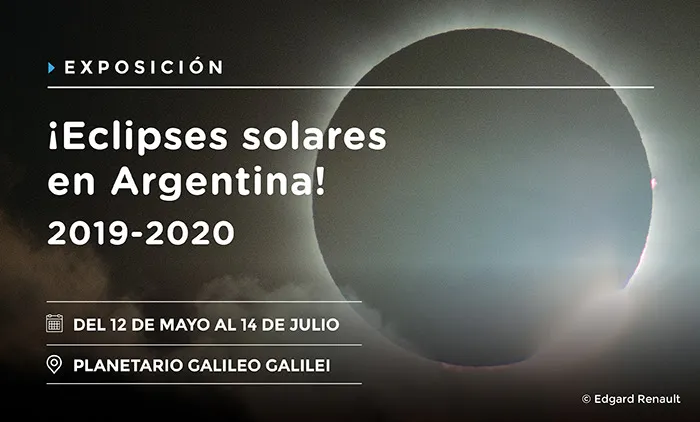
Next December 14, a total solar eclipse will be visible from South America, below the Equator line, where it will be seen as partial in most countries, except in a narrow strip that crosses Chile and Argentina. The maximum will occur at 16:13 UT.
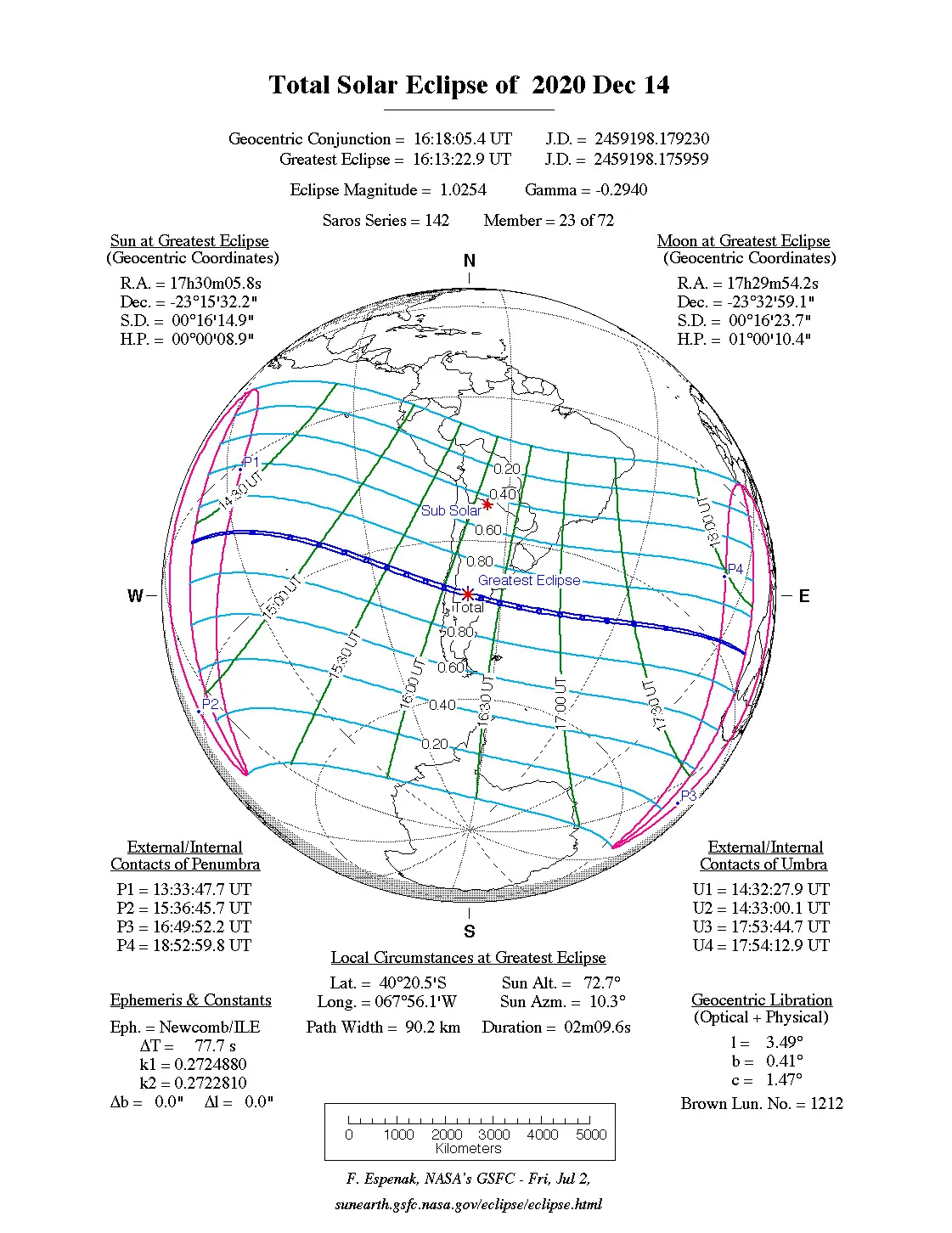
It will be eclipse number 23 of the 72 in Saros series 142. The periodicity or recurrence of solar eclipses is governed by the Saros cycle, a period of 6585 days (18 years, 11 days). When two eclipses are separated by a Saros, they share a similar geometry: they occur at the same node, with the Moon almost at the same distance from Earth and at the same time of year. Thus, the Saros is useful for organizing eclipses into families or series. About the node: The lunar orbit is inclined about 5 degrees relative to Earth's orbit around the Sun. The points where the lunar orbit intersects the plane of Earth's orbit are called nodes. The previous eclipse of the same Saros cycle was on December 4, 2002.
Saros series 142 began on April 17, 1624 and will end on June 5, 2904, after 1280 years.
For Argentina and Chile it is a special eclipse, as it will be the zone of greatest visibility and we will have to wait several decades until the phenomenon can be observed again from the same place: on December 5, 2048, with the difference that then, the maximum of the eclipse will occur over the Atlantic Ocean.
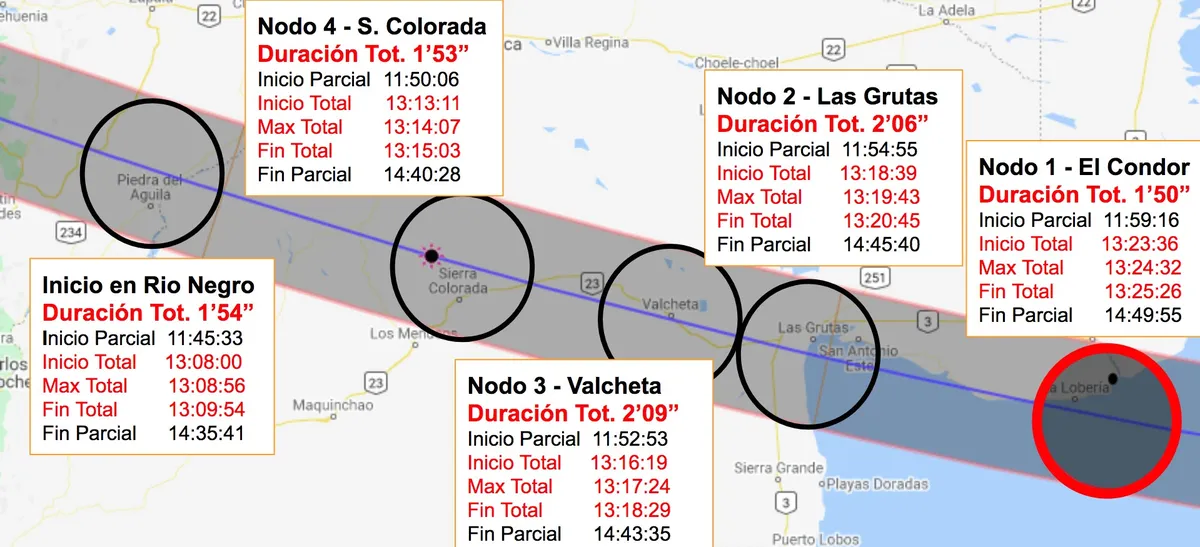
That is why this eclipse has an "Argentine flavor," and we could include it in the list of "La argentinidad al palo," as sung by Bersuit:
♫The longest street, the widest river, the prettiest girls in the world...
Dulce de leche, the great colectivo, alpargatas, soda and alfajores...
Fingerprints, cartoons, disposable syringes, the ballpoint pen...
Blood transfusion, the six to zero against Peru, and many other things...♫
TOTALITY, VERY ARGENTINE
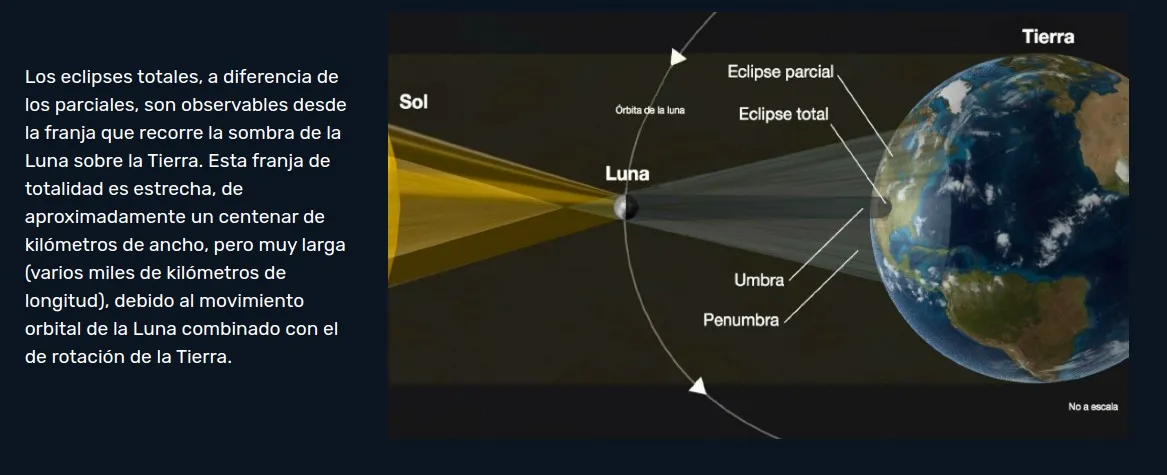
The Asociación Argentina de Astronomía created the website totalidad.org with a lot of information about the upcoming phenomenon, as well as the previous one. It is a great outreach initiative by the country's professional astronomers so the general public knows what, where and how to observe the eclipse. It is worth noting that totality, in the visible zone, will last only a couple of minutes, although the partial phase, which before and after totality will last about an hour and a half in each case, is also part of the observation. Therefore, if the observation takes about three hours, with the Sun, almost in summer, it is worth taking some precautions.
ECLIPSE OF THE COVID-19 SERIES
When we learned about the pandemic, at the beginning of the year, we soon realized it would be long-lasting. Social confinement, whether more or less strict, is the only preventive measure and for that reason many social activities were suspended during the year. But the Sun and the Moon do not recognize the authorities of countries and their behavior only obeys natural laws. This led us to suppose that observation from Southern Argentina would be very difficult, but isolation measures were relaxed in tune with the decline in recorded daily cases and several activities resumed.
Astronomical tourism generates economic movement in hotel bookings and gastronomy, very important for businesses in the Patagonian region and even more so in this context. But it is necessary to respect the protocols, which in each province are somewhat different (which is undoubtedly a mess).
But we will be able to enjoy observing the phenomenon even if we don't travel to the zone of totality: from our location we will be able to see the partial phase and complete the panorama with the internet broadcasts being scheduled for that day and also through television channels.
JUPITER AND SATURN (AND THE MOON)
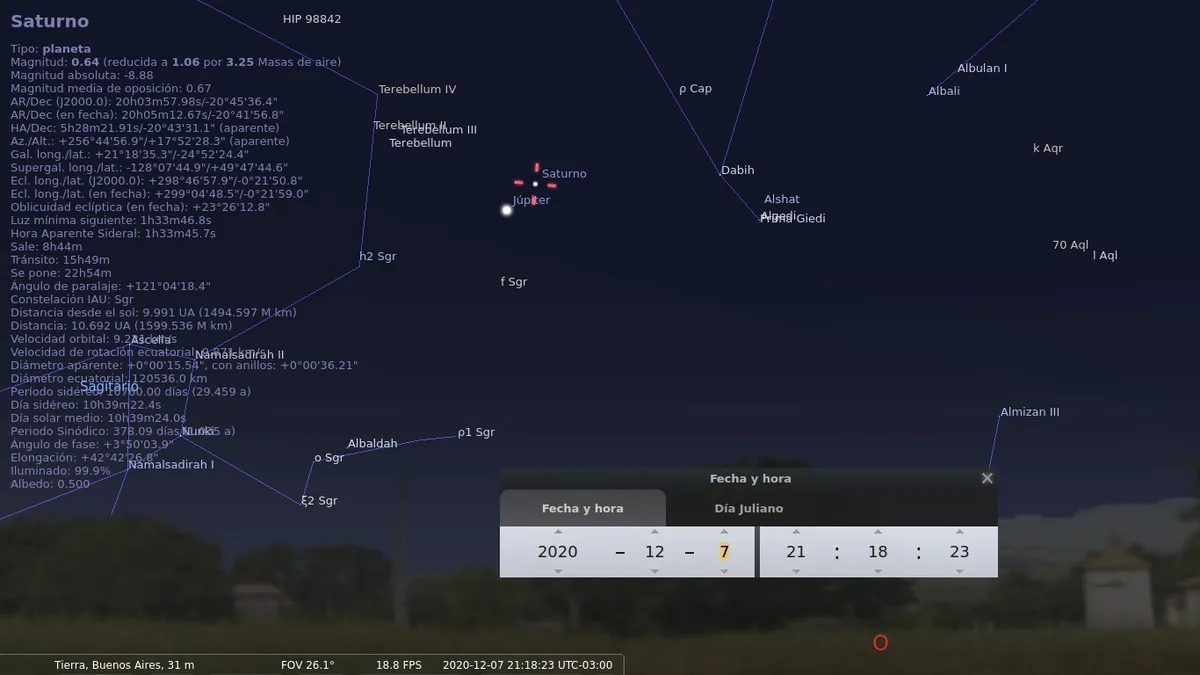
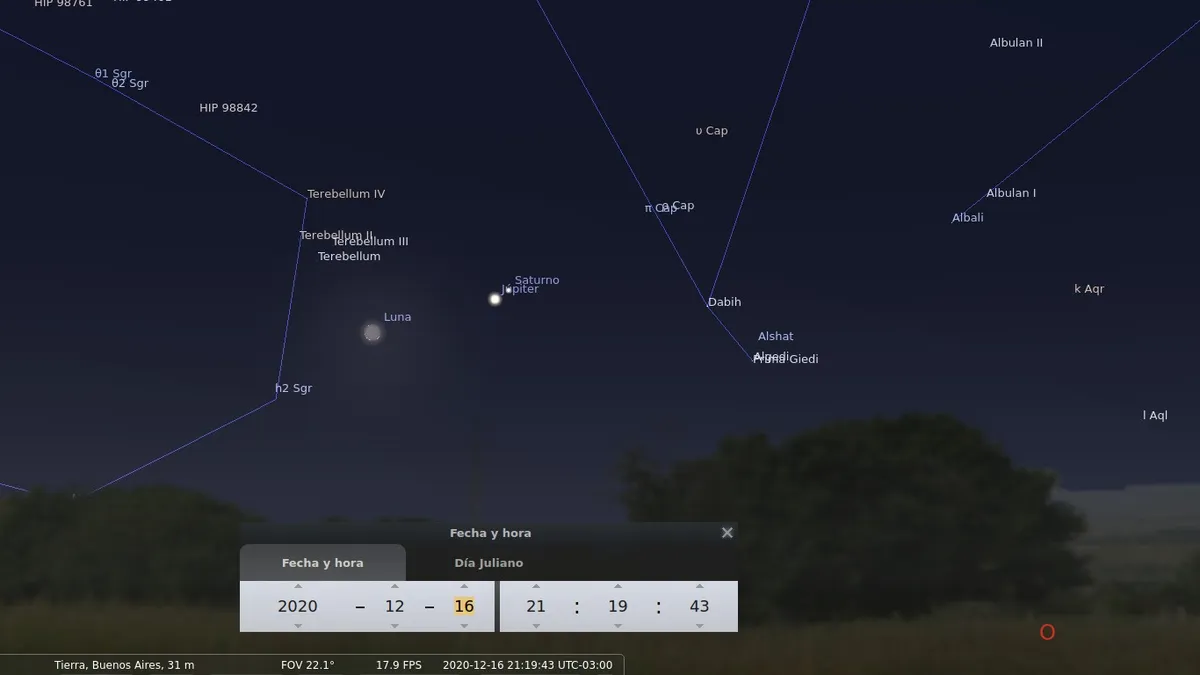
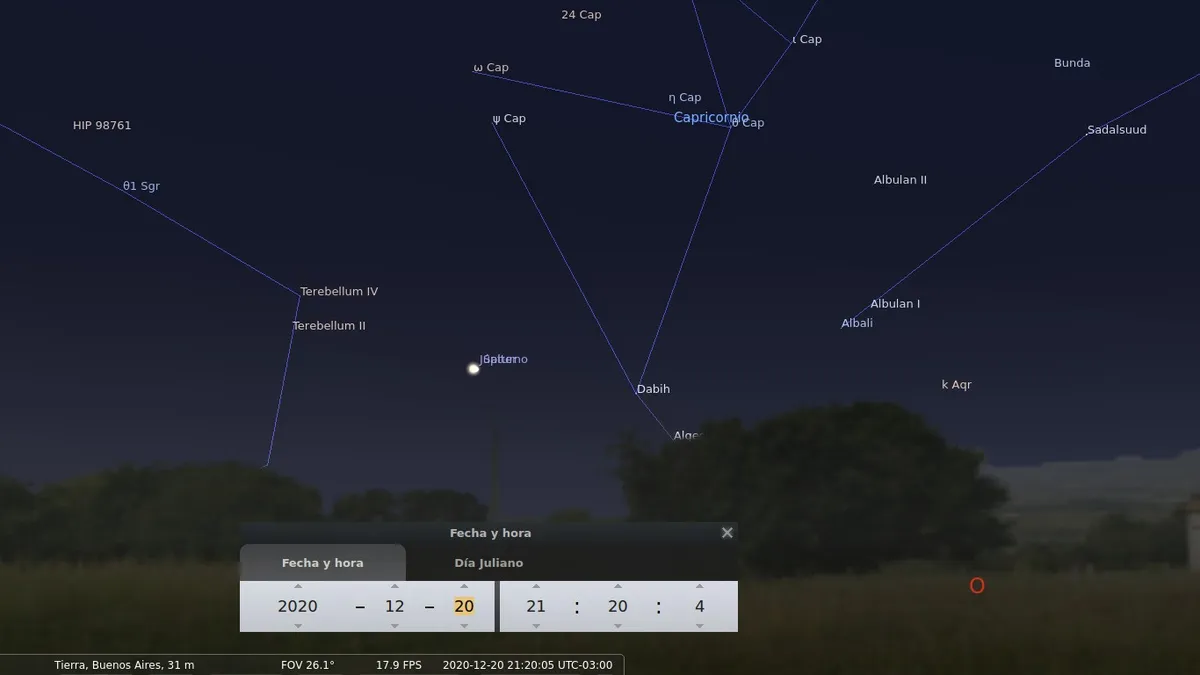
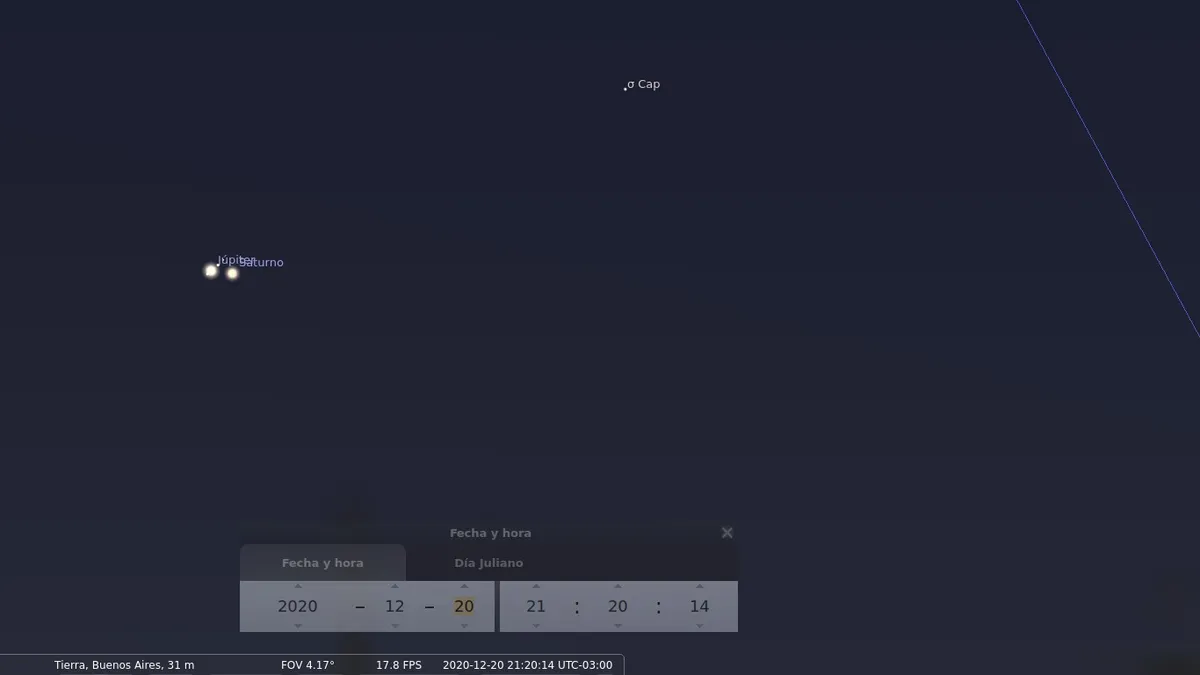
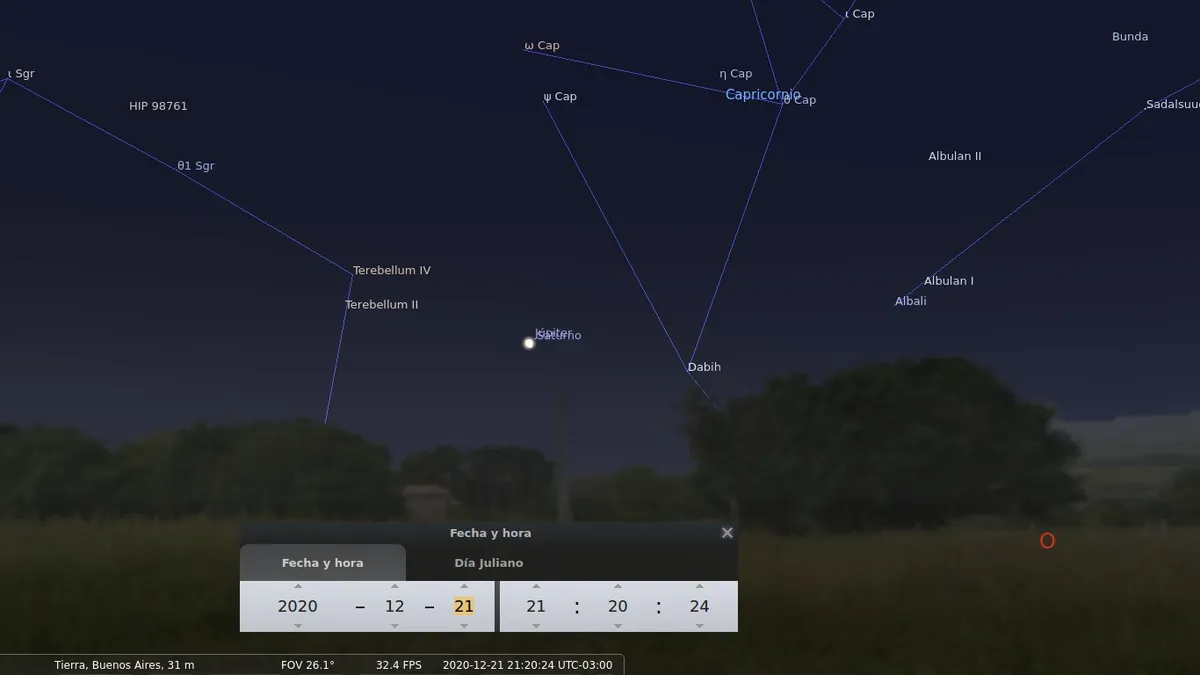
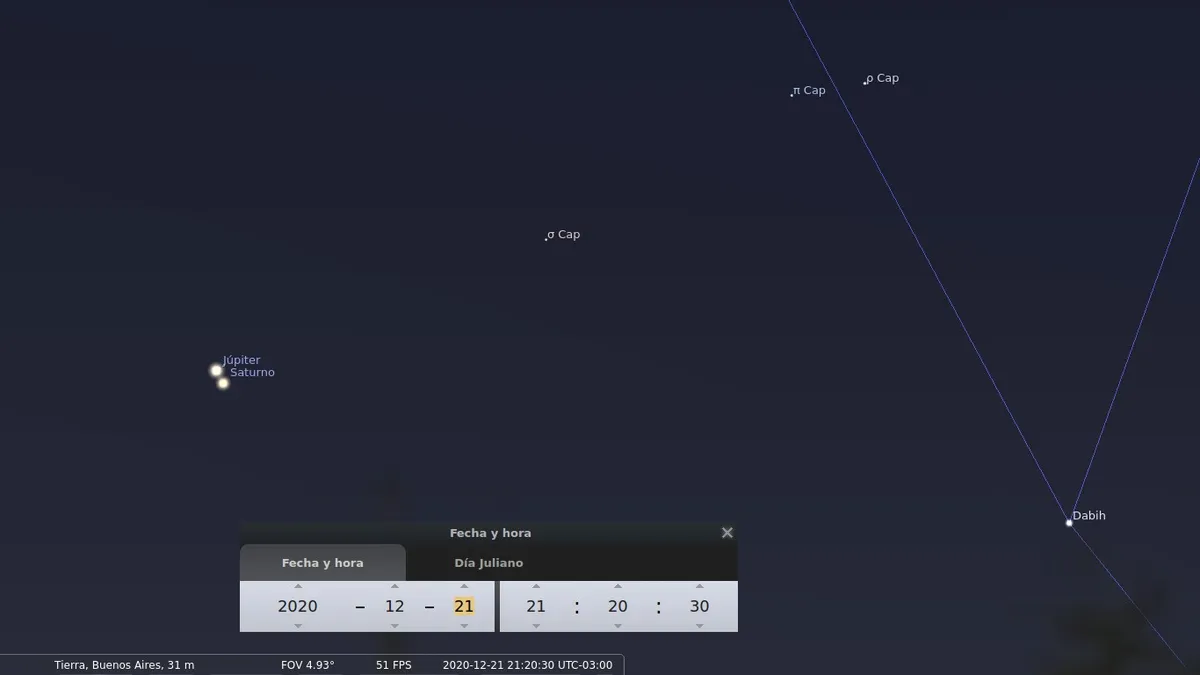
Today, December 7, we can see in the sky, about 20º above the horizon, Jupiter and Saturn, very close to each other. In the following days they will get closer, but they will also be seen lower, which will make their observation difficult. On the 16th, the Moon will approach them, almost imperceptible (since in solar eclipses the Moon is in its new phase) and by the 20th-21st it will be difficult to differentiate the two giant planets from how close they will be, about 12º above the horizon, difficult to see in urban centers, but not so much in rural areas. As with all observations, we depend on weather conditions.
Final with humor
They asked the 2020 solar eclipse: -"Is it total or partial?" and it replied: -"Me, Argentine"☉
Sources and related links
- Totalidad.org (AAA)
https://totalidad.org/ - https://eclipse.gsfc.nasa.gov/
Fred Espenak - Una fiesta en el cielo, By Silvina Alonso
https://www.pagina12.com.ar/309471-una-fiesta-en-el-cielo - La Argentinidad al Palo - Bersuit Vergarabat
https://www.youtube.com/watch?v=M4G6nzGrJMo
About the images
Screenshots from Totalidad.org and Stellarium.