On the Moon, Mars, Mercury or on Earth, craters are almost perfectly circular. Or are they?
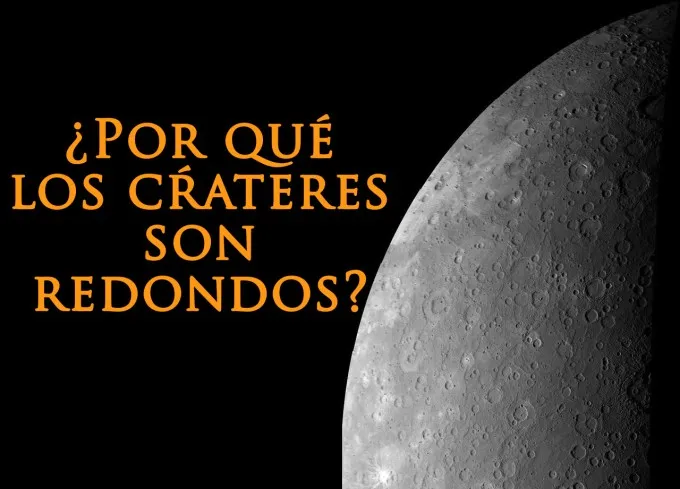
Scientific American magazine asked why impact craters are always round considering that they must have different angles, most should be elongated or teardrop-shaped.
The answer was given by physics professor Gregory A. Lyzenga in the October 1999 print edition, which can be read online (see link below). The translation of the answer that follows is mine:
When geologists and astronomers recognized that lunar and terrestrial craters were produced by impacts, they conjectured that the impacting object should be buried beneath the surface of the crater floor. (Much effort was made to locate a huge nickel-iron meteorite believed to lie beneath the famous Barringer Crater in Arizona).
Later, however, scientists realized that at typical solar system velocities, several tens of kilometers per second, any impacting body would vaporize upon collision.
At the moment an asteroid collides with a planet, there is an explosive release of the asteroid's kinetic energy. The energy is brutally deposited in a focused zone of the planetary crust. This abrupt and focused release resembles more than anything the powerful detonation of a bomb. As in the case of a bomb explosion, the shape of the resulting crater is round: the ejecta is released in all directions equally, regardless of the bomb's direction of arrival.
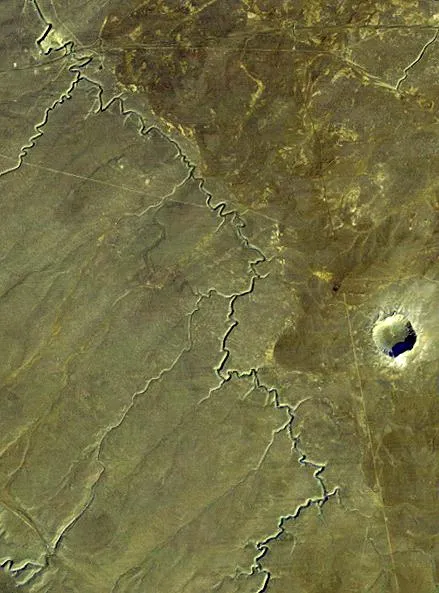
Barringer Crater in Arizona
This behavior may seem strange in our everyday experience of throwing a rock into a bed of sand or mud, because in those cases the shape and size of the "crater" is dominated by the physical dimensions of the rigid object. In the case of astronomical impacts, however, the physical shape and direction of approach of the meteorite is insignificant compared to the tremendous kinetic energy it carries.
An exception to this rule occurs only if the impact occurs at a very low angle. If the impact angle is almost horizontal, the lower, middle, and upper parts of the impacting asteroid will strike the surface at different points scattered along a line. In that case, instead of depositing the energy at a focal point, it will be released in an elongated zone, as if our "bomb" had the shape of a long rod.
Thus, a crater will have an elliptical shape only if the impact angle is so low that different parts of the object strike the surface over a range of distances that is appreciable compared to the final size of the crater. Since the final crater can be up to 100 times larger than the diameter of the impacting object, this requires an impact at an angle of no more than a few degrees above the horizontal. For this reason, most impacts produce round or nearly round craters, as observed.
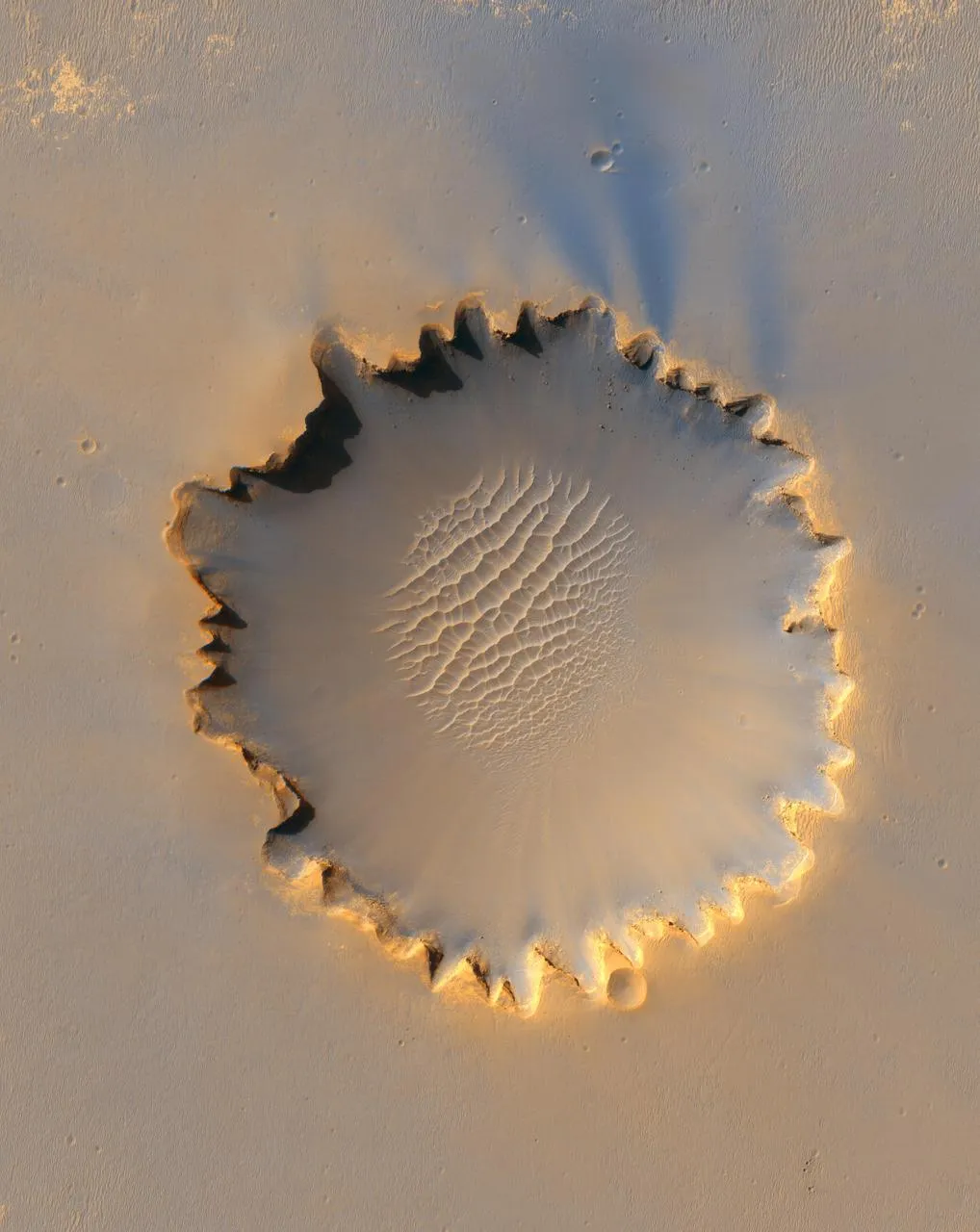
Victoria Crater on Mars
THE ORIGIN OF CRATERS
We will complete this answer a bit. On the one hand, from a historical point of view, it is worth clarifying that at first it was considered that lunar craters were not produced by impacts, but by volcanoes. The dark areas of the Moon (maria or seas) are lava zones. As Neil deGrasse Tyson narrates in a recent video, these were the zones chosen in NASA's Apollo Program to land on the lunar surface, as they are very flat.
Lunar craters had been known for several centuries, thanks to Galileo, but everything changed after 1960 with the human exploration of the satellite. Several craters do not have any "sea" of lava around them, so it was difficult to explain them solely through eruptions.
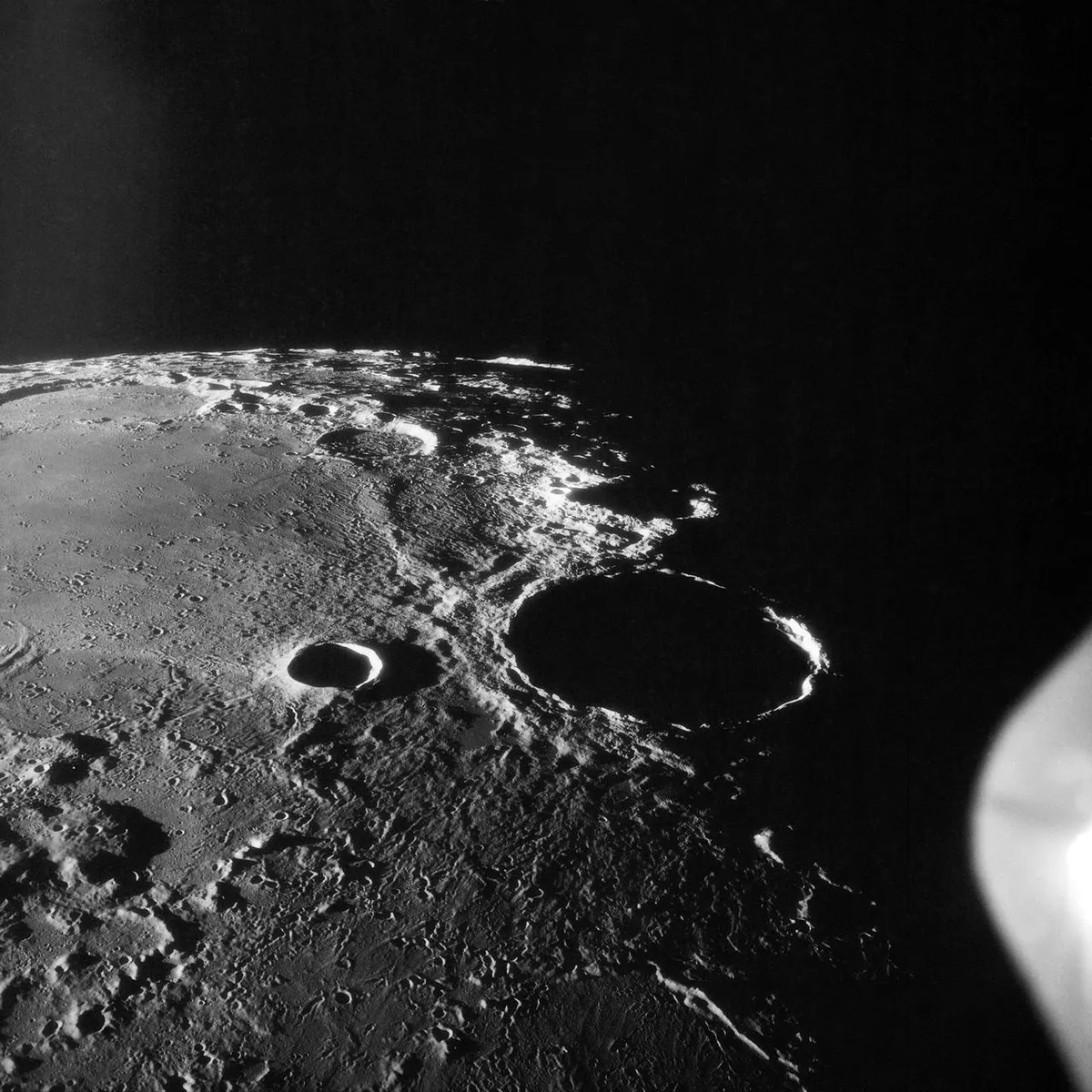
Theophilus Crater on the Moon
In that same video, the American astronomer and science communicator adds that one must consider that objects are held together by internal energy. If the kinetic energy is much greater, upon impact, that much greater energy compared to the internal energy makes the object explode in all directions. This can be seen simply if we throw snowballs (or mud) at a wall. We compress the material a bit with our hands and then throw it hard. At the astronomical level, the energies are, obviously, much greater.
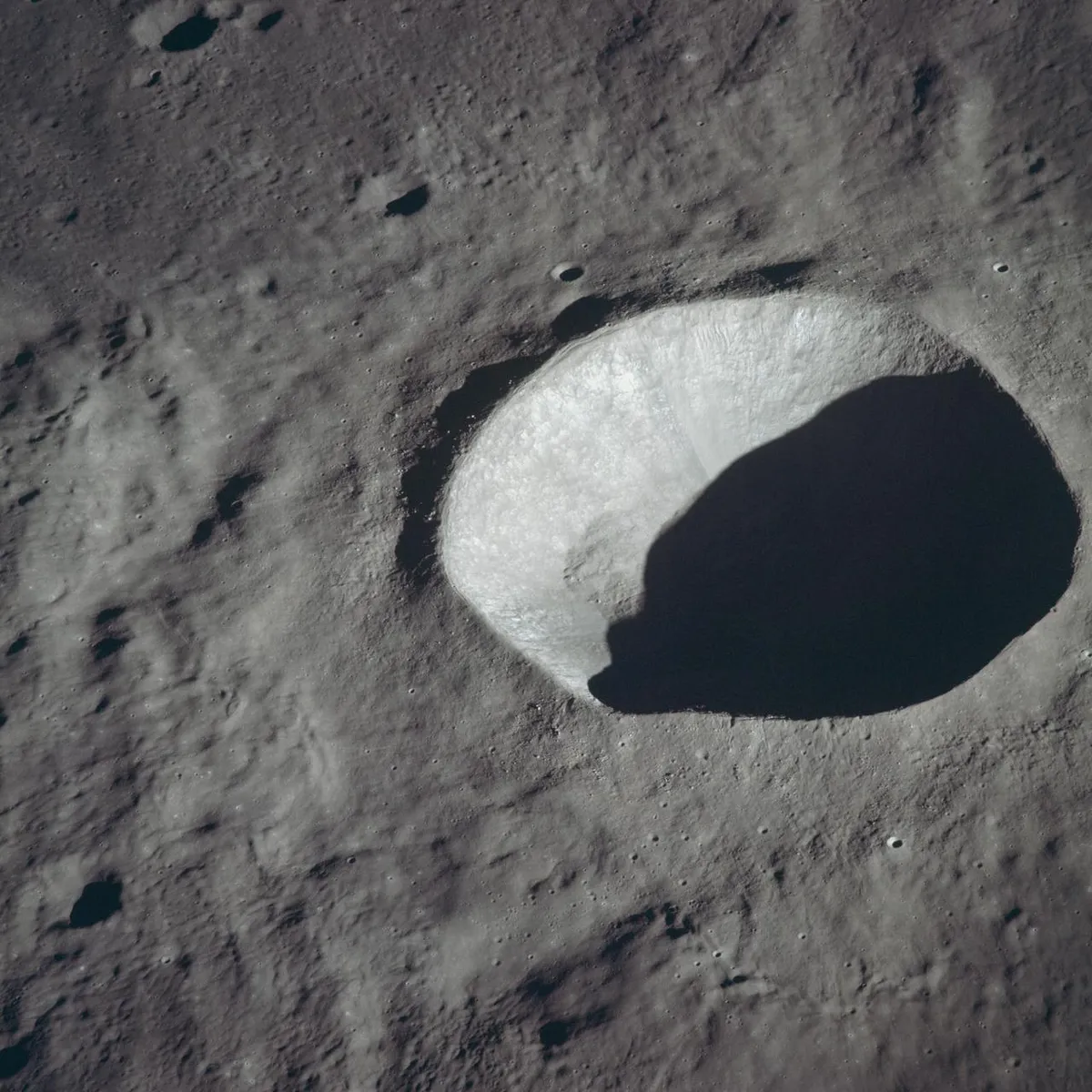
Schmidt Crater on the Moon
OBLIQUE IMPACTS
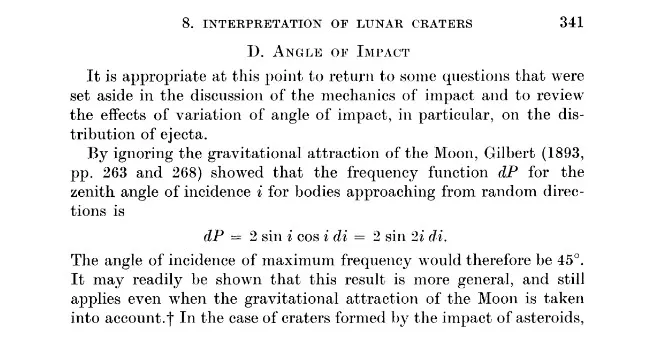
It is also known that most impacts do not occur vertically (90º), but at 45º half the time, at 30º a quarter of the time, and at 10º 3% of the time. A formula suggested by Shoemaker in 1962 (and Gilbert before) is used for this.
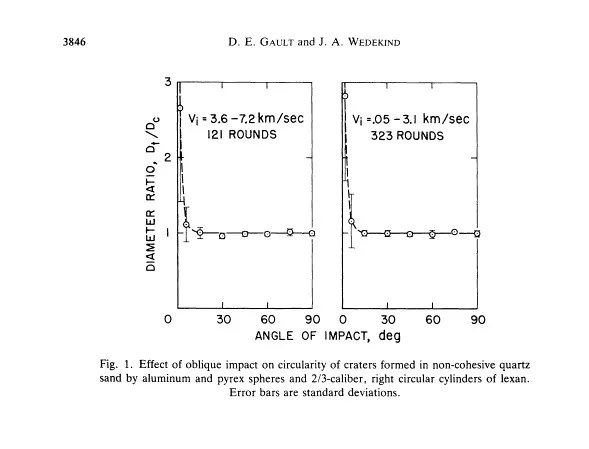
Laboratory tests have been conducted by launching objects of different materials at various surfaces, with various speeds and angles.
Here we see some results where the graphs show the "circularity" of the craters on the vertical axis, where 1 is circular, and the different angles from 0 to 90 on the horizontal axis. As can be seen, in most cases, the result is circular (Gault, 1978).
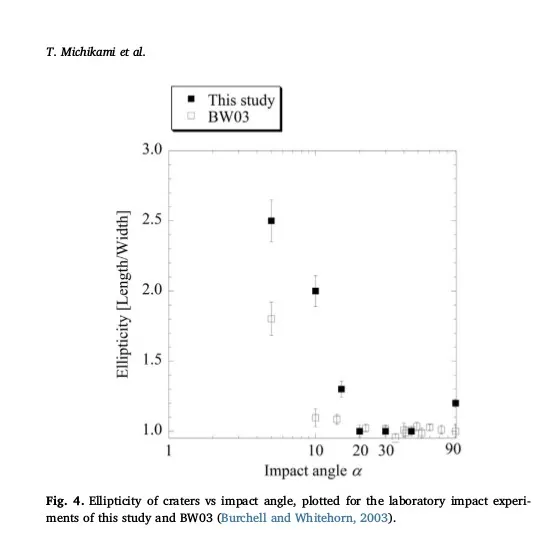
This type of study continued to be conducted. A more recent case (Michikami 2016) shows something similar:
OTHER VARIABLES
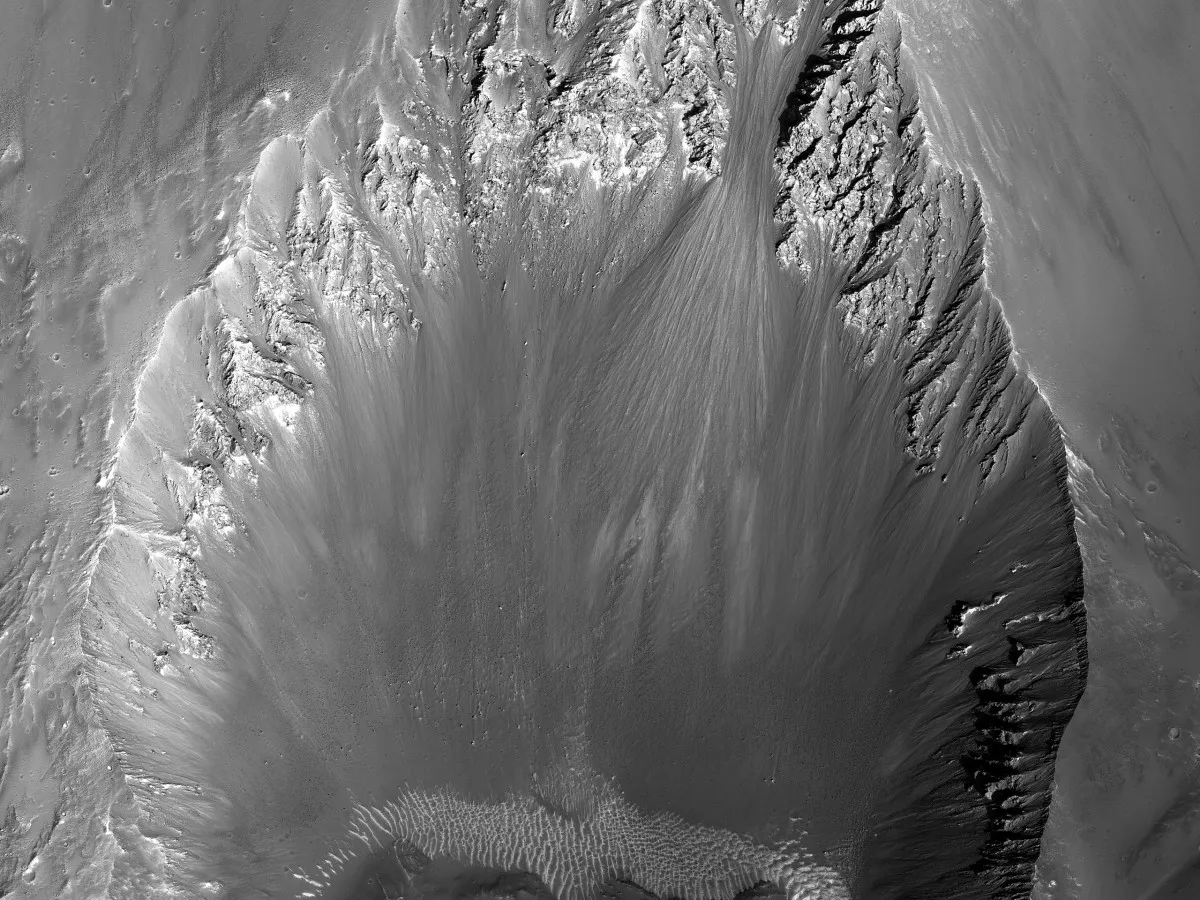
NASA published an image in 2016 of a Martian crater that is not circular. It shows the impact crater of almost 3 kilometers formed on the steep walls of Tithonium Chasma. The ejection of material would be homogeneous in all directions if the surface before the impact were flat and the impact angle not very low. However, given the natural slope of the surface here, the ejected material gathered downhill, generating a tongue-shaped deposit.
Now we could ask ourselves why eruption craters are circular and thus we would return to the place from which we started, to end...roundly☉
Sources and related links
- Why are impact craters always round? Most incoming objects must strike at some angle from vertical, so why don't the majority of impact sites have elongated, teardrop shapes?
https://www.scientificamerican.com/article/why-are-impact-craters-al/ - Neil deGrasse Tyson Explains Why Craters Are Round
https://www.youtube.com/watch?v=xRnr79Fa554&ab_channel=StarTalk - On the Shape of Impact Craters
https://www.nasa.gov/image-feature/on-the-shape-of-impact-craters - Shaping the Planets: Impact Cratering
https://www.lpi.usra.edu/education/explore/shaping_the_planets/impact-cratering/ - Experimental studies of oblique impact
Gault, D. E. & Wedekind, J. A.
http://adsabs.harvard.edu/full/1978LPSC....9.3843G
E.M. Shoemaker
Interpretation of lunar craters
Z. Kopal (Ed.), Physics and Astronomy of the Moon, Academic, New York (1962), pp. 283-359
Tatsuhiro Michikami, Axel Hagermann, Tomokatsu Morota, Junichi Haruyama, Sunao Hasegawa,
Oblique impact cratering experiments in brittle targets: Implications for elliptical craters on the Moon,
Planetary and Space Science, Volume 135, 2017, Pages 27-36, https://doi.org/10.1016/j.pss.2016.11.004
About the images
Oblique view of crater Theophilus at northwest edge of Sea of Nectar https://images.nasa.gov/details-as11-42-6237
Apollo 10 Mission image - Crater Schmidt https://images.nasa.gov/details-as10-34-5162
Victoria Crater at Meridiani Planum https://images.nasa.gov/details-PIA08813
Mercury Craters from a New Perspective https://images.nasa.gov/details-PIA10938
Barringer Meteor Crater, Arizona https://images.nasa.gov/details-PIA03212