An experiment conducted with NASA's New Horizons probe, and the collaboration of Brian May (Queen).
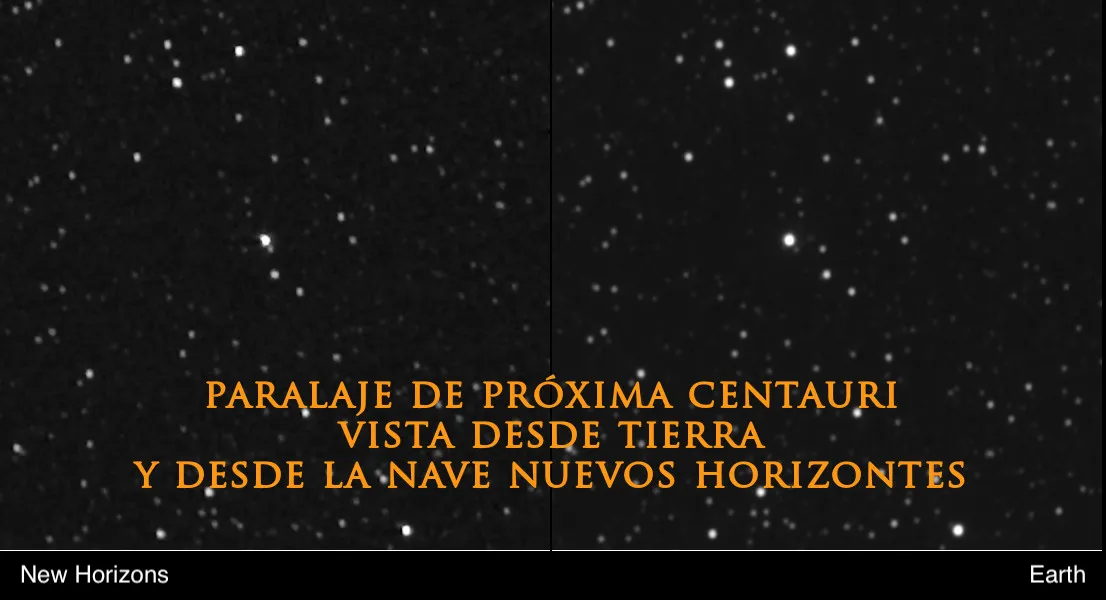
Almost 7 billion kilometers from home, the New Horizons probe was used by astronomers to take images of a sky different from the one seen from the planet. "It's fair to say that New Horizons is observing an alien sky, different from what we see from Earth", said Alan Stern, principal investigator for New Horizons at the Southwest Research Institute (SwRI). "And that allowed us to do something for the first time: observe the nearest stars displaced in the sky from the positions we see from here".
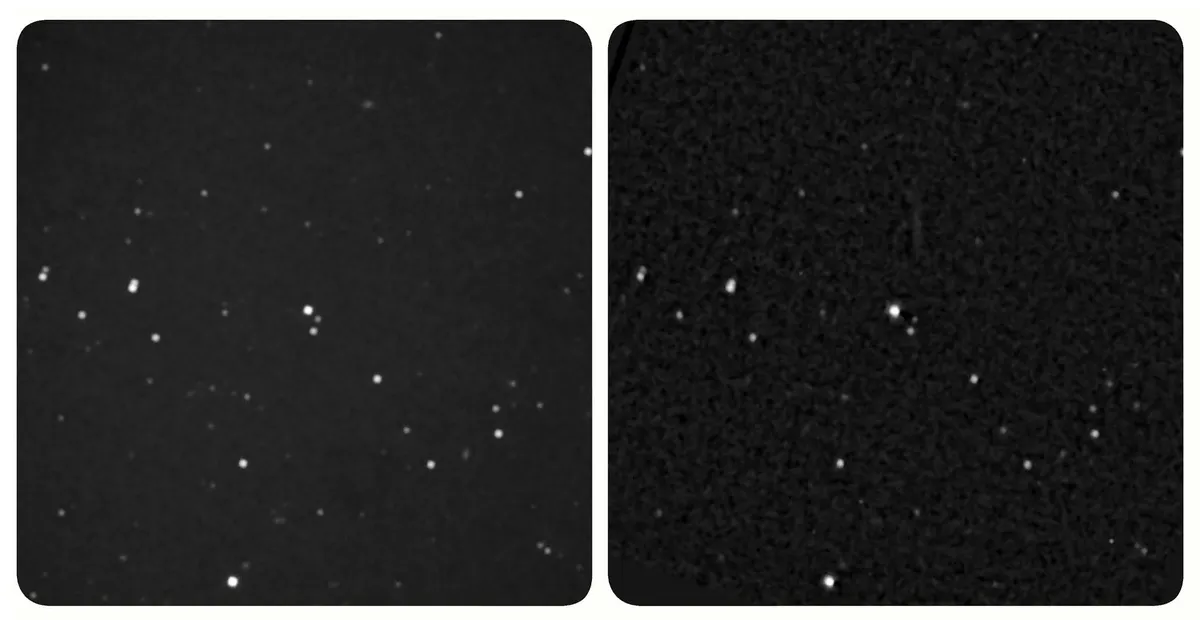
Between April 22 and 23, the spacecraft pointed its telescopic camera at a pair of nearby stars, Proxima Centauri and Wolf 359, showing that they appear in different places than what we see here. The method called "Parallax" has been used since antiquity to calculate the distance to nearby stars.
A similar phenomenon occurs when we observe a finger of the hand with the arm outstretched. When looking with one eye, alternately, the right and the left, the finger appears to be in different places. Similarly, as the Earth moves around the Sun, we see the stars in different positions. It's an effect of perspective. But since the nearest stars are actually very far away, hundreds of thousands of times the diameter of the planet, the apparent change in position is very small and is not detected with the naked eye.
But when astronomers used the spacecraft's instruments to take images and then compared them with others made with ground-based observatories, on the same date, the change in position became visible.
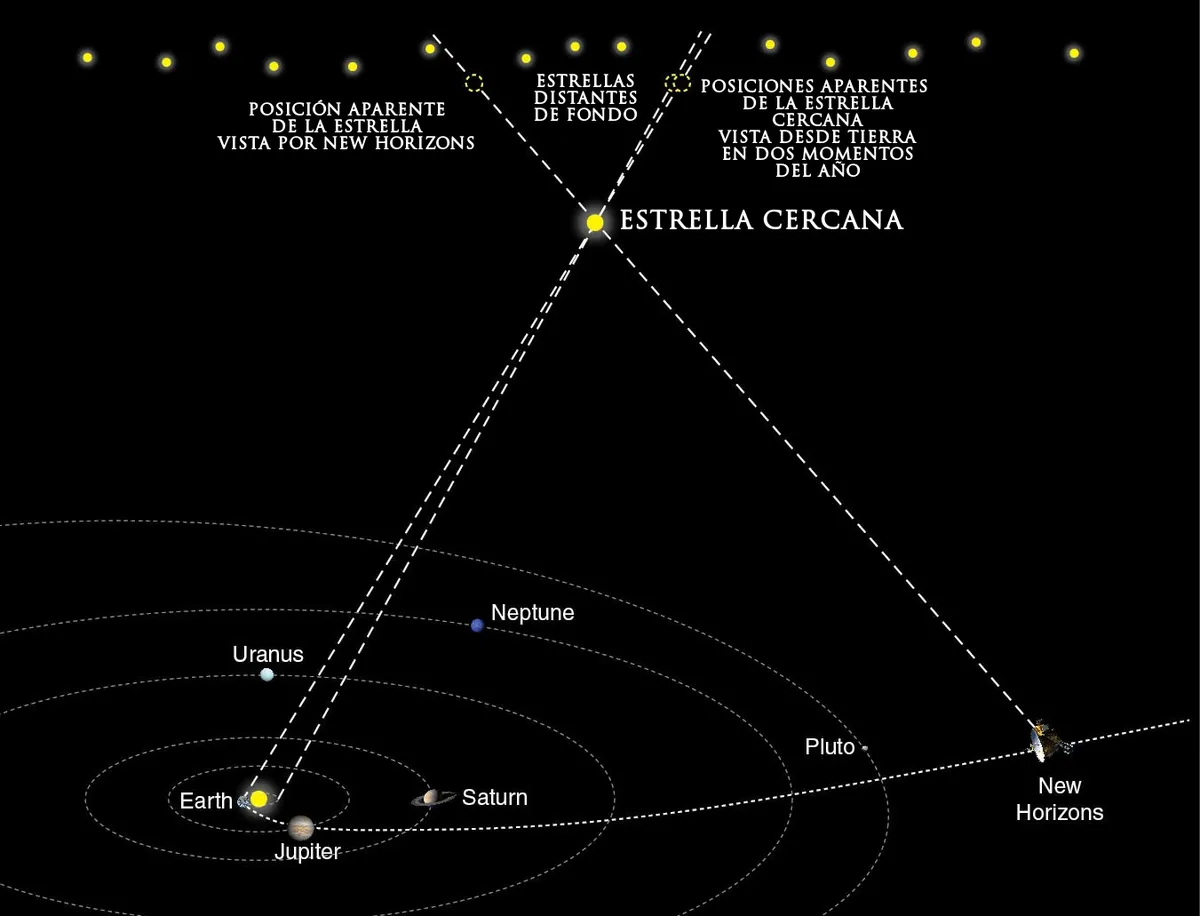
"The New Horizons experiment provides the longest baseline ever made for a parallax: more than 6 billion kilometers", commented Tod Lauer, a member of the team that coordinated the demonstration.
WORKING IN STEREO
Lauer together with John Spencer of SwRI and collaborator Brian May, the very guitarist of Queen, created the images that show the effect clearly.
"It can be said that in astro-stereoscopy - 3D images of astronomical objects - the New Horizons team leads the field, providing incredible stereoscopic images of Pluto and the Kuiper Belt object Arrokoth", commented May. "But the latest experiment breaks all records. These images of Proxima Centauri and Wolf 359 - which are known to astronomy and science fiction enthusiasts - use the greatest distance between viewpoints ever achieved in 180 years of stereoscopy", he added.
The comparison images were provided by the Las Cumbres Observatory, operating a remote telescope in Australia, and astronomers John Kielkopf and Karen Collins operated another telescope in Arizona.
To achieve the experiment, NASA's Deep Space Network was used. The signal sent by the New Horizons spacecraft, almost 7 billion km away, traveling at the speed of light, took 6 and a half hours to arrive.
The New Horizons mission was launched in 2006 with Pluto as its target and the Kuiper Belt. It managed to explore the dwarf planet and its moons in 2015 and last year reached the object Arrokoth. On its journey it will eventually leave the Solar System, joining the select group of NASA's interstellar spacecraft, along with the Voyager and Pioneer.
Image 1: Stereo for 3D glasses: this anaglyph can be viewed with red-blue glasses to see the distance of the stars from the background. On the left is Proxima Centauri and on the right is Wolf 359.
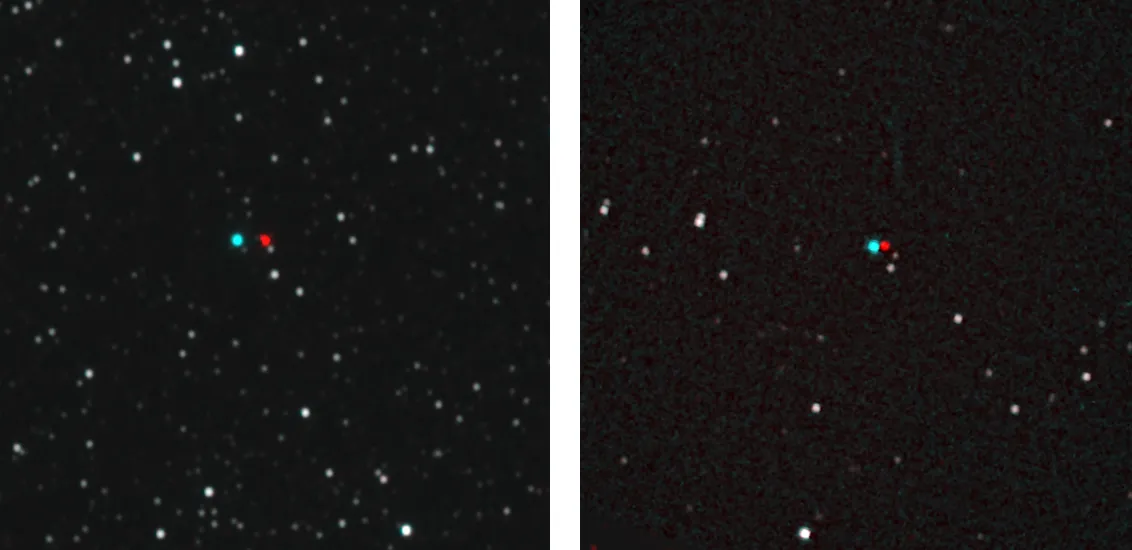
Image 2: Parallel of Proxima Centauri: If you don't have glasses, change your focus point by looking "through" it and into the distance. That creates the effect of a third image in the center. The New Horizons image is the one on the left.
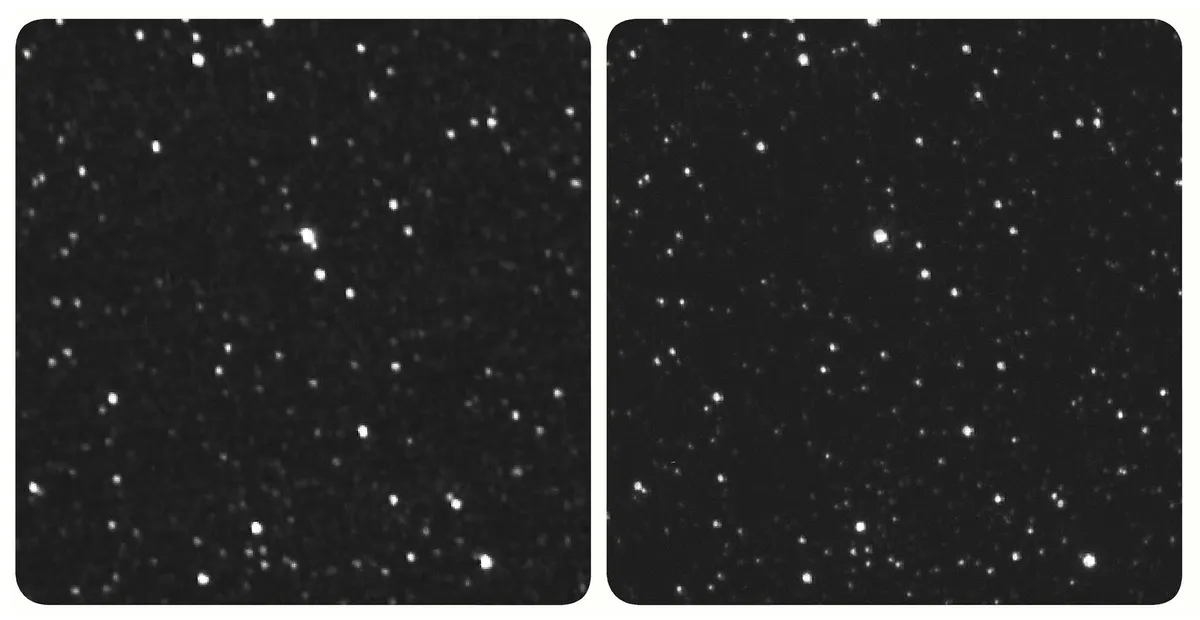
Image 3: Parallel of Wolf 359.
These images can be downloaded in larger size on the NASA site indicated below.
Sources and related links
- NASA’s New Horizons Conducts the First Interstellar Parallax Experiment
https://www.nasa.gov/feature/nasa-s-new-horizons-conducts-the-first-interstellar-parallax-experiment - Parallax images
http://pluto.jhuapl.edu/Learn/Parallax/Parallax-Images.php
About the images
Credit: NASA. The illustration was made by Brian May.