No matter how advanced a civilization may be, the "travelable sphere" will be small. The Cosmic Village is a fantasy.
There is a deeply ingrained idea in society: intelligent civilizations exist that travel through the universe. The idea is implicit in the usual meaning of the UFO concept. Science fiction novels and movies have helped form this idea, in sagas like Star Trek or Star Wars, among others. It may then seem that for intelligent beings, with advanced technologies, it is common to travel from one side of the universe to the other, jumping from galaxy to galaxy, traveling billions of parsecs as if it were nothing. It may seem possible to "connect" the universe with communications and transportation as we have done on our planet.
However, it is easy to demonstrate that the relationship between intelligence and travel is incompatible for the vast majority of cases.
First, let's examine what happens to us here on our planet:
For tourism, shopping, going to work, walking can be a good option if we are making short trips. For long trips it is not a good choice, since with means of transportation we can do it faster. It doesn't seem like a good idea to walk 2000 km to go on vacation. It isn't because there are better options, like traveling by car, bus, train, etc. To communicate with someone over long distances, there are better options than traveling.
ASTRONOMICAL SCALES
On an astronomical scale, traveling can be a good option when distances are not very large, considering that if the trip is manned, water, food, energy will be needed and that human life does not exceed 100 years.
To travel to the Moon, Mars and other destinations within the Solar System, traveling with or without a crew, can be a viable option.
Beyond the Sun, on an interstellar scale, the situation becomes complicated.
With current human propulsion technologies, traveling to the nearest star system is impracticable, as it would require thousands of years.
Sending unmanned probes to Proxima Centauri B would be difficult, but possible, although we would have to deal with technological obsolescence:
30 years ago we used floppy disks. What will we use in 4000 years?
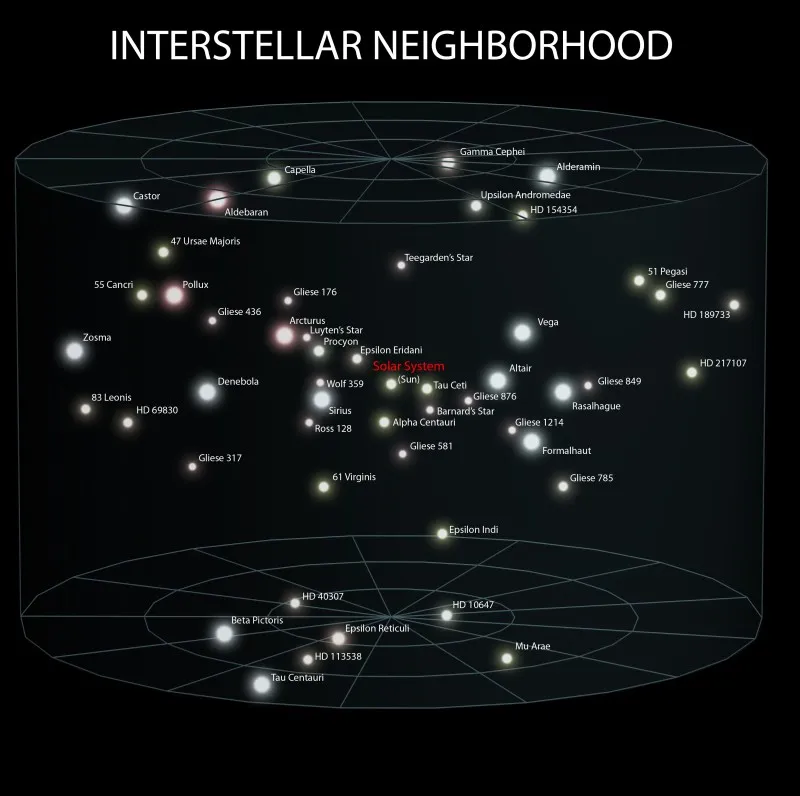
In the long term, we will surely manage to propel ships with greater acceleration so that it is possible to send humans to the nearest exoplanet, 4 light-years away. At greater distances, 50, 100, 500 light-years, it ceases to be practicable no matter how much better future technology comes, since in no case will it be equal to the speed of light. Unless the universe is full of large and stable wormholes, traveling beyond 100 light-years with a crew seems a utopia: it is desirable, but impossible.
It will be said to me that it would be possible with some kind of cryogenic hibernation. Some movies are based on a certain cryonic procedure along with the use of a machine or robot that is in charge of "waking up" the crew upon arrival at the destination. However, a trip of 500 light-years at speeds below 50% of the speed of light would imply more than a millennium of journey. To do it, moreover, large amounts of energy would have to be used.
If you insist on the feasibility of such fantasies, would it be equally practicable for any distance? What if it were 5000 light-years or 170 thousand, on a hypothetical trip to the Magellanic Clouds?
THE TRAVELABLE SPHERE
A technologically advanced civilization will develop spacecraft, but will use them to explore its neighborhood.
No matter how prolific our fantastic engineering may be, no matter how advanced the speed that can be reached, cosmic distances are too great.
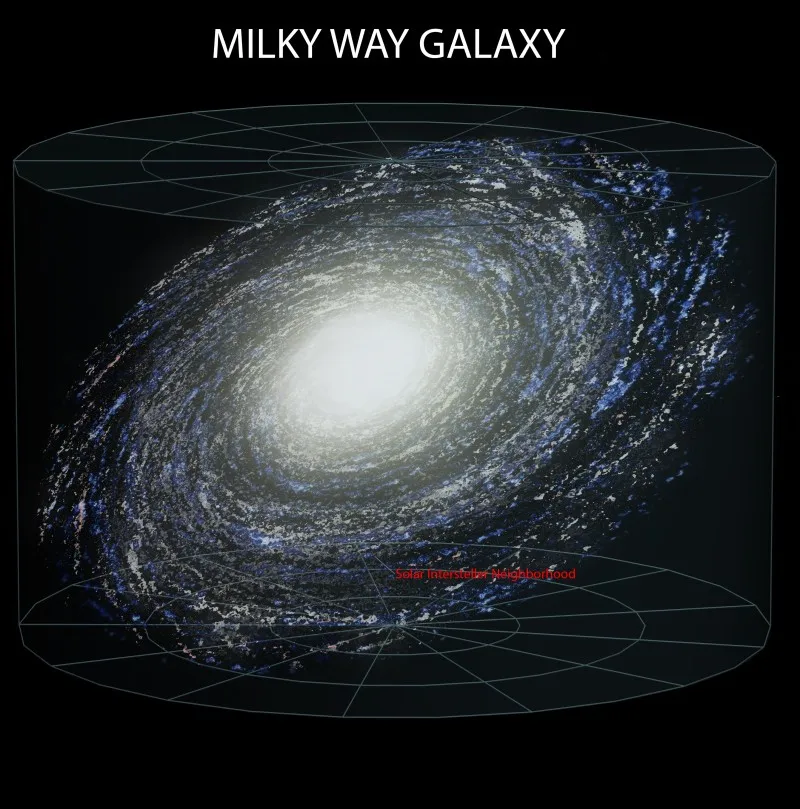
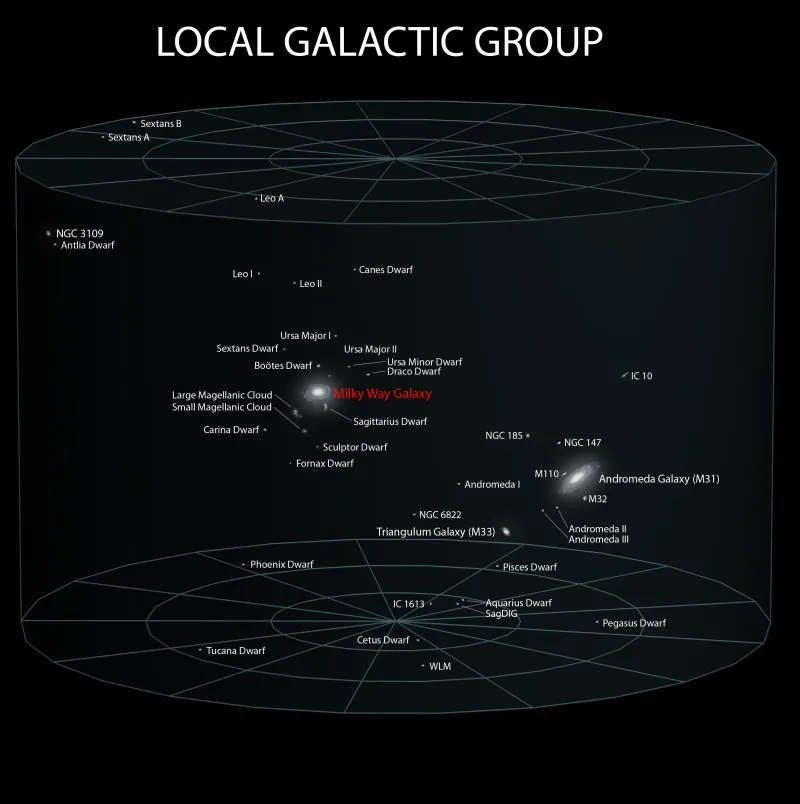
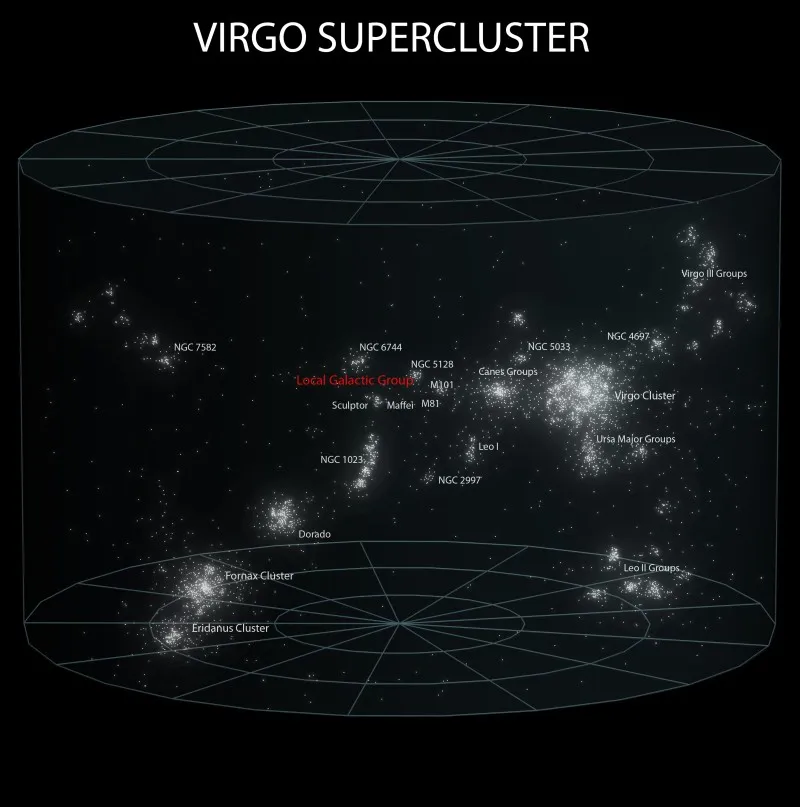
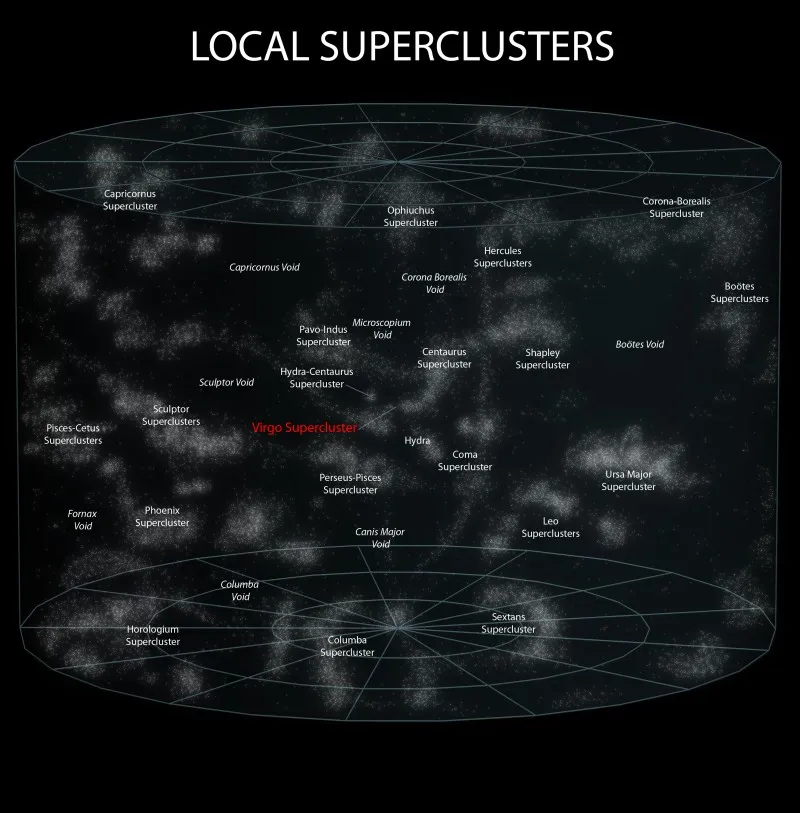
It is evident that traveling to M31, the Andromeda Galaxy, more than 2 million light-years away, is an impossible dream. But let's be generous, since thinking is free: let's say that in the distant future we can send unmanned probes to all the galaxies in the Local Group. And let's say that sending ships without humans we accept as "traveling". Well, the Solar System is like the backyard of the Local Group. On the scale of the Universe, it is a tiny distance. The Local Group is part of the Virgo Supercluster which, in turn, is part of the Local Superclusters, which are only a fraction of the cosmos.
The reason traveling is not an option for most cases is the same reason communicating isn't either. Although radio signals travel at the speed of light, for scales larger than 100 light-years, communication becomes impracticable. The reason is that the universe is too big. That is why the intellectual density of the universe is very low.
The possibility of traveling faster than light is not a solution either. Beyond the causality paradoxes, if one could travel at twice the speed of light, we would still take a million years to reach Andromeda. The problem with this statement is that if when traveling at the speed of light time stops, when going faster it should go backwards...
It is evident, then, that traveling through the universe is only feasible for a certain scale of distance. Let's draw the Earth at the center and then a circle marking the sphere or volume of possible travels. That will be our "Travelable Sphere". We can discuss the diameter of such a circle: 500 light-years, 50 thousand, 2 million.
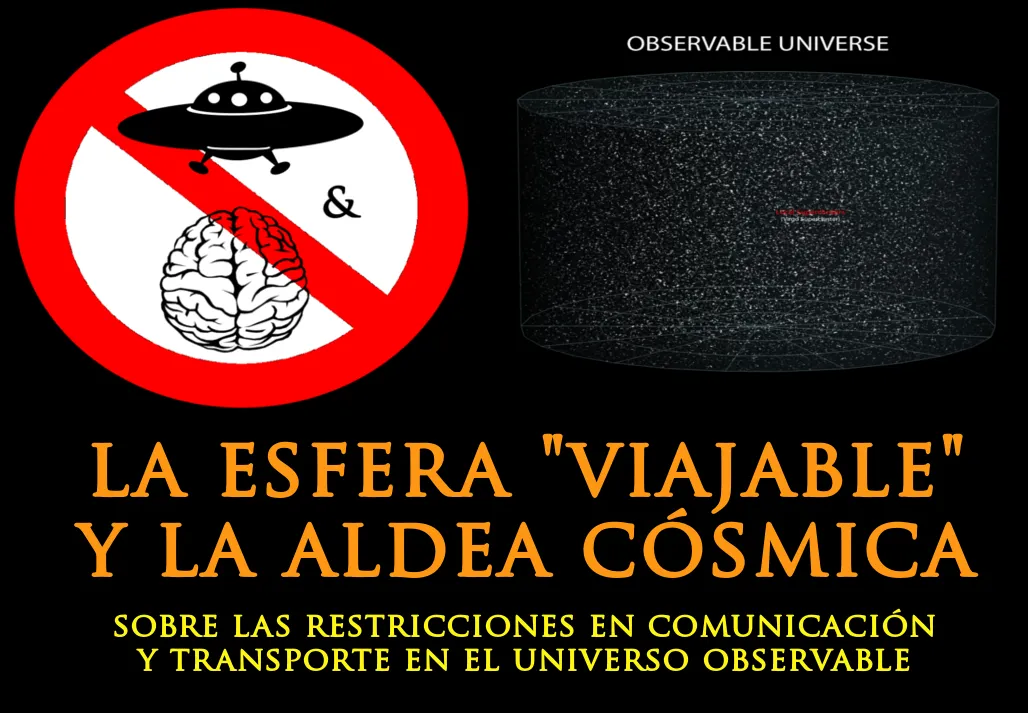
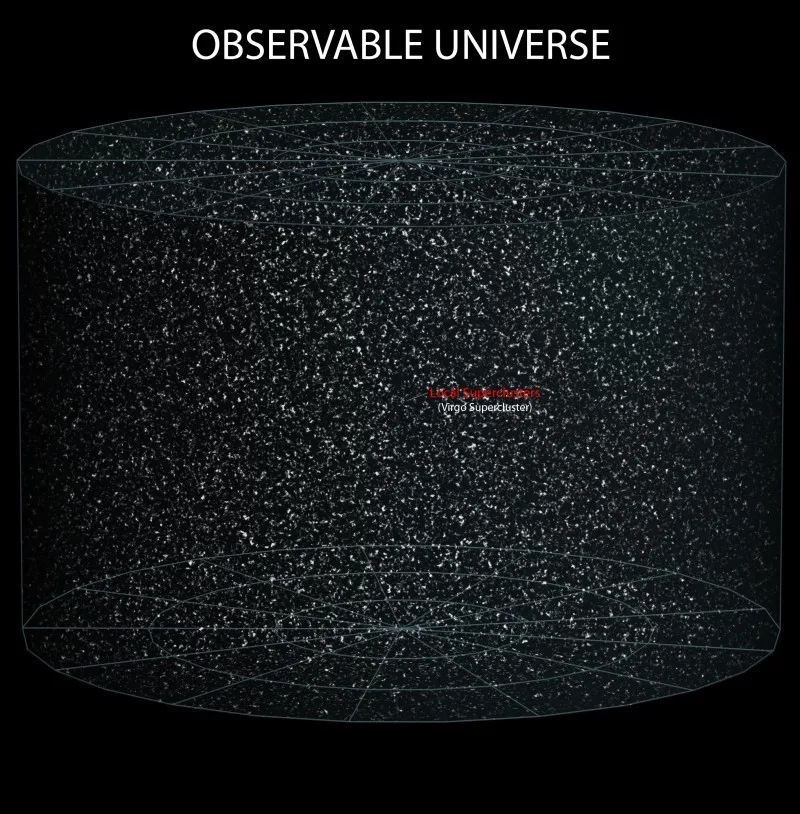
The observable Universe is 93 billion light-years in diameter. If our sphere had a diameter of 2 million light-years (an absurdity), the "travelable" proportion of the universe would be 2/93 thousand or 1/46 thousand=0.000021=0.002% of the universe.
THE PARADOX OF THE UNIVERSE
Advanced civilizations will explore the surrounding space with spacecraft. That includes their star system and then the nearest stars. The concrete possibility of traversing an entire galaxy is impracticable, even for dwarf galaxies. Intergalactic space is even greater than interstellar space. If one could travel at the speed of light, a ship would take more than 2 million years for the one-way trip. Although time does not pass for the instruments and eventual astronauts, it does for the rest of humanity. On the other hand, if traveling at that speed, infinite energy would be needed to decelerate the ship.
We live in the Global Village, according to Marshall McLuhan, because despite geographical distances, we are interconnected by communication and transportation. It might seem, then, that we have started a path of "universalization," a unification of ideas and discourses: a global mathematics, a global language. Perhaps in the future, a global government.
But the Universe's "joke" is that it is not at all "universal." Expansion separates things to the point of no return: there is no plausible form of communication or transportation for a Cosmic Village. What we can easily communicate with is the past. And I'm not referring to any charlatanism, like "The Dodleston Messages."
Are we free to travel wherever we want? No, it's an illusion. We live in a dark desert that expands at 70 km/s, and we are bearers of flashlights. It's easier to send pulses of light than to travel. Astronomers constantly receive information from the distant universe. But it's optical communication that takes billions of years to arrive. And there are parts of the universe that expand faster than light.
Is this a pessimistic view? Wait. First, let's think: how would things be if they were exactly the opposite?
That is, if it were possible to communicate instantly with any civilization, at any distance. If we truly lived in a "cosmic village." And if the rest of the civilizations were like us. I'm not sure that's desirable. On the Universal Facebook, we would have messages from all galaxies. For example: "Hello Earthlings: we detected a Gamma-Ray Burst 1 parsec from your world, 3 years ago. Good luck with that."
Rick Astley would have become fashionable across the entire universe in the 80s and rickrolls would be cosmic memes.
In any case, to achieve it, we don't need another Einstein, but a Harry Potter. It's not science fiction, it's just fantasy.
The Universe is a great nerd joke: it's like a giant, free parking lot, where there are no no-parking signs, but most of the available spaces are too far away to reach. Worse: it's a parking lot where all the spaces are moving, so in reality, nothing is parked.
Space travel over great distances, enough to transform the cosmos into a village, is incompatible with science and intelligence. At least, until someone invents a magic beanstalk.☉
Sources and related links
The intellectual density of the Universe https://www.noticiasdelcosmos.com/2020/06/densidad-intelectual-del-universo.html
About the images
https://es.wikipedia.org/wiki/Grupo_Local
By Andrew Z. Colvin - Own work, CC BY-SA 3.0, https://commons.wikimedia.org/w/index.php?curid=14358437