The role of Argentine astronomers in the investigation.
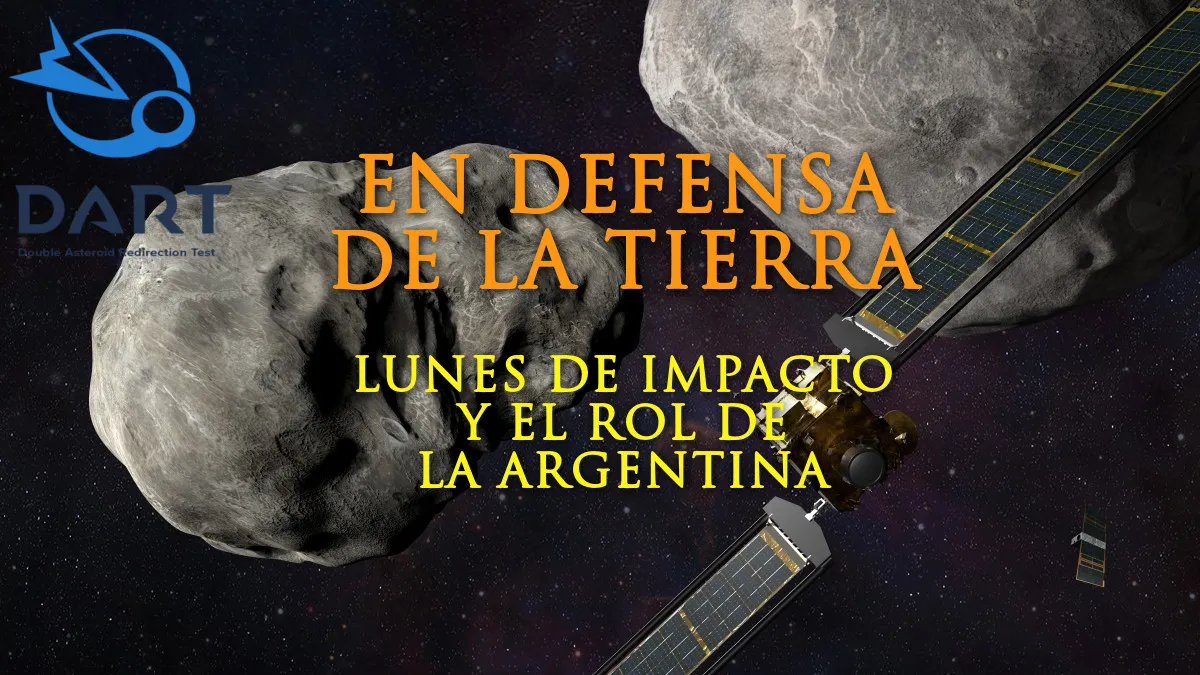
NASA's DART mission gets its name from the acronym for Double Asteroid Redirection Test. The name is self-explanatory: the main objective is to deflect a double or binary asteroid, using the kinetic energy of the impact.
The collision between the spacecraft and the asteroid is scheduled for this Monday, 09-26, at 7:14 p.m. EDT. (20:14 Buenos Aires time).
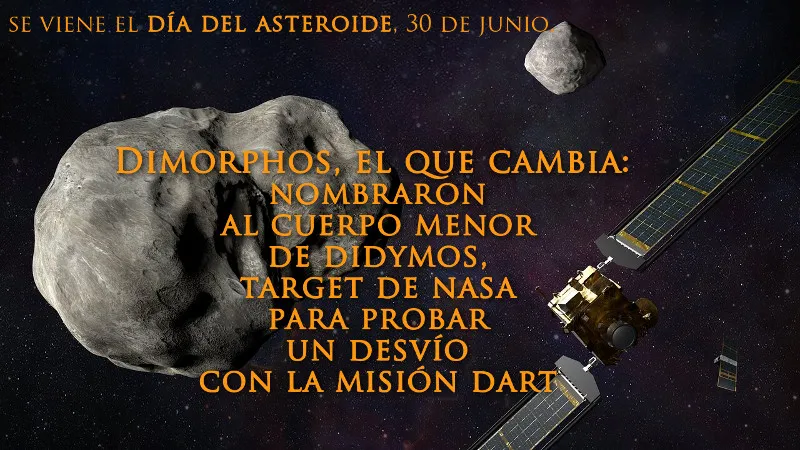
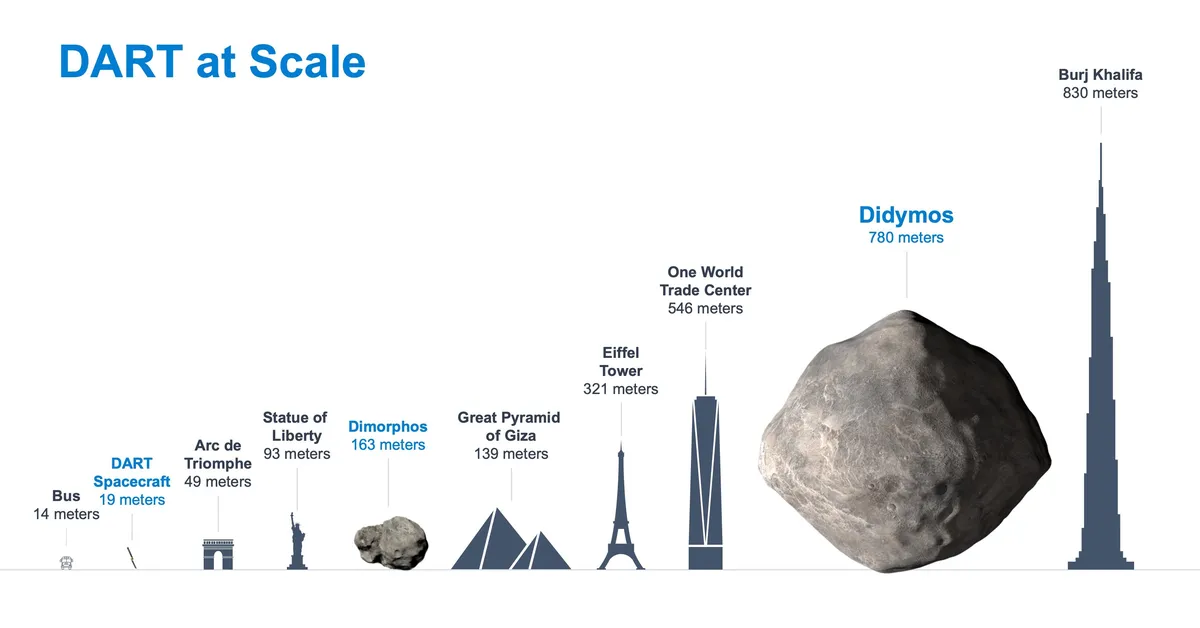
The target of the impact will be the Didymos system, which is named after the Greek word for "twin". It is a binary asteroid: the main component called Didymos has a diameter of 780 meters and the smaller component, Dimorphos, is only 160 meters in diameter and orbits the first one and will be the target of the collision. The system is eclipsing, meaning that from Earth one object passes in front of the other, which allows scientists to measure the change in light and thus determine the object's orbit.
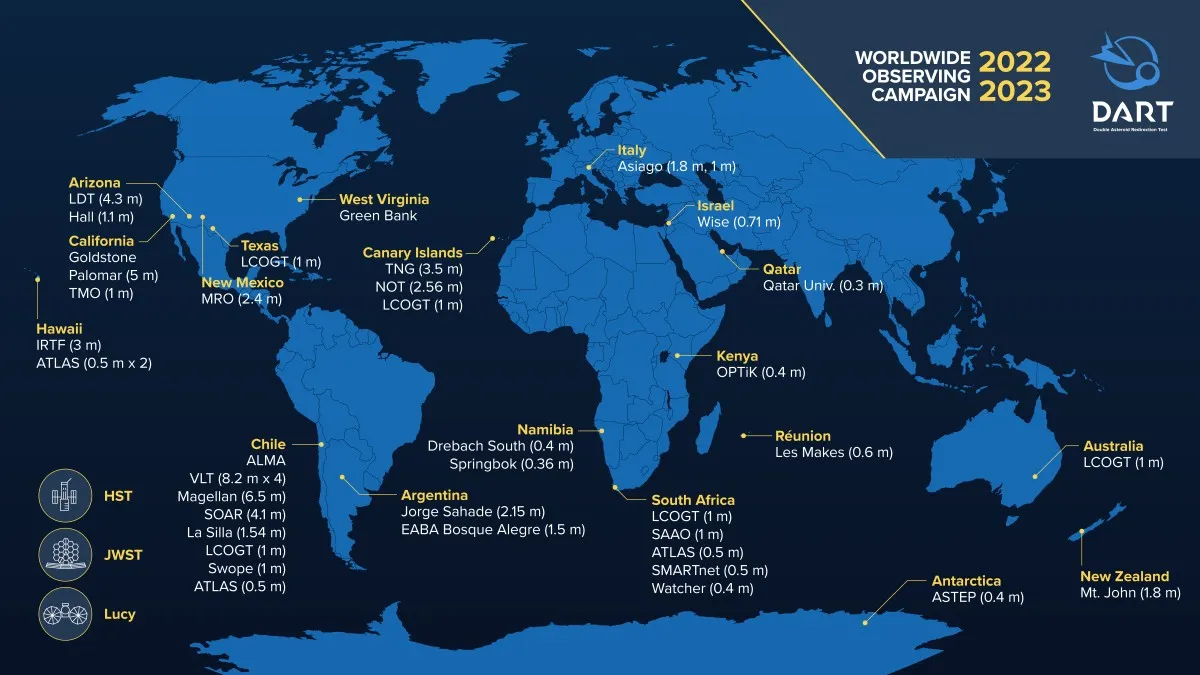
At the chosen impact time, the Earth-asteroid distance will be the smallest, even though they will be 11 million km apart. To measure the change from the impact, a network of observatories around the world will collaborate with their observations.
From Argentina, two observatories are part of that campaign: the Bosque Alegre Astrophysical Station, in Córdoba; and with the Jorge Sahade telescope (2.15m) at CASLEO, San Juan.
The asteroid Didymos is NOT on a collision course with Earth, so if the impact did not occur or if it were successful, but slight, there would be no danger. This asteroid was chosen precisely for that reason. It is a test to measure how much energy generates how much orbital change.
Additionally, the mission will also serve to test an autonomous navigation system that the spacecraft will use to impact the asteroid.
The spacecraft
DART is a small spacecraft measuring 1.2 × 1.3 × 1.3 meters that, when extended, is 1.8 × 1.9 × 2.6 m. It will reach a speed of 6 km/s. At impact, the mass of the spacecraft will be 570 kilograms. On board, it carries the instrument Didymos Reconnaissance and Asteroid Camera for Optical navigation (DRACO). It is a telescope with a 208 mm aperture and a field of view of 0.29 degrees. It has a CMOS detector to process the asteroid's location. In addition, the spacecraft carries LICIACube, a cubesat deployed 15 days earlier to collect data on the collision.
Cosmic dangers
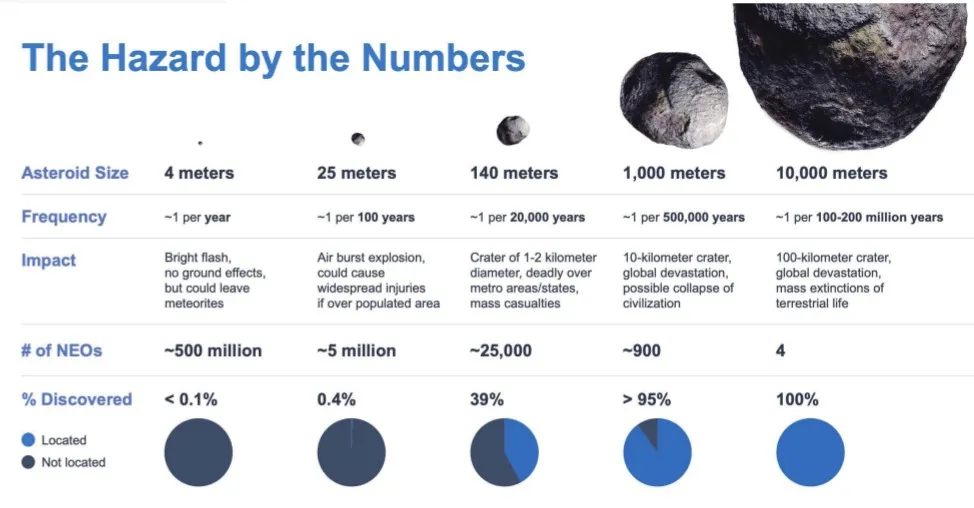
No near-Earth object larger than 140 meters in diameter is known to have a high probability of colliding with the world in the next 100 years. However, only a fraction of all near-Earth objects of that size are known. By the year 2016, 15,000 near-Earth asteroids had been discovered. Each year, nearly 500 objects larger than 140 meters are discovered.
Every year, a large number of small asteroids enter Earth's atmosphere, most of which disintegrate before reaching the surface (meteors).
Mitigation
Given the possibility of an asteroid collision with the world, some theoretical mitigation methods have been developed: besides generating a kinetic impulse like the one NASA will test this Monday, the possibility of "gravitational traction" has been evaluated, which involves placing a spacecraft near an asteroid so that the gravitational attraction (which is always mutual) slightly changes the object's orbit.
It is worth noting that with objects seen from a distance, angles are measured. The greater the distance, the smaller the angles. As a consequence, a small orbital change can be enough to change an object's trajectory to avoid a collision. The closer the object is, the larger the angle and therefore, the more effort is required to change its course.
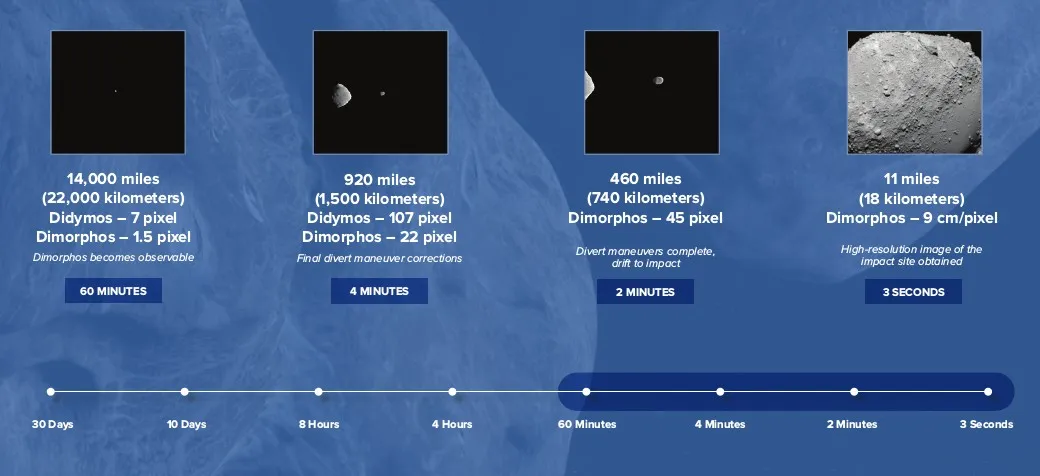
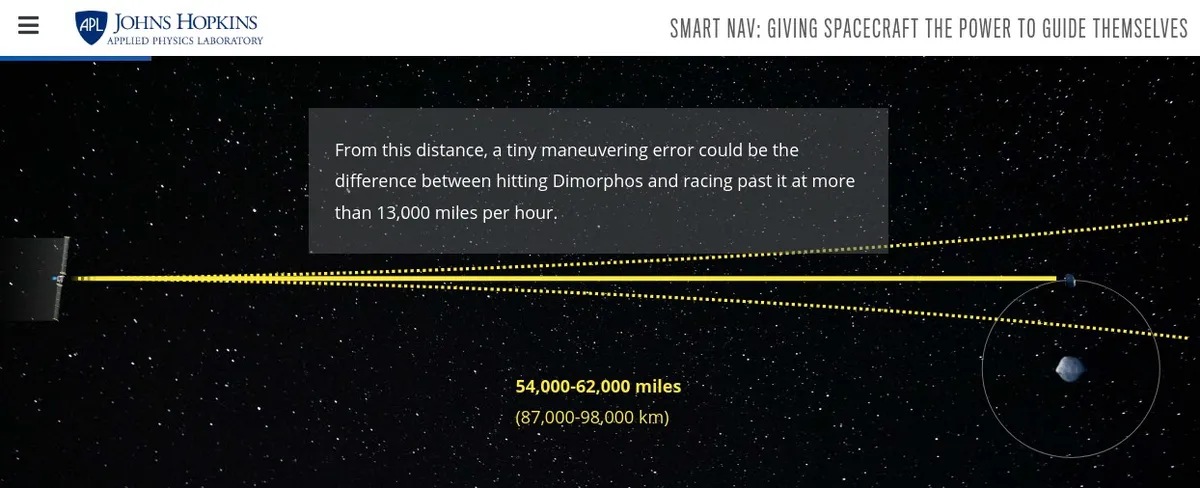
This is important in relation to the possible success of the DART mission: the spacecraft will have to impact the asteroid without seeing it, since the sunlight reflected by the object is very faint. Hence the need for the autonomous navigation system. A small error could be enough for the spacecraft to miss and pass by without colliding. The automatic system will not see the asteroid until one hour before and will obtain high-resolution images when it is 18 km away, 3 seconds before impact.
In the cosmic lottery, the probability of an asteroid impact with the world is low. But not zero. A single collision with an object larger than 100 meters could generate a mass extinction event. Given that possibility, it is necessary to develop ways to prevent the collision course of objects. It is a way of defending Earth from natural cosmic dangers. There are those who prefer to cross their fingers, which is the same as crossing their arms. Hopefully on Monday, we can applaud.☉
Sources and related links
- DART
https://www.nasa.gov/dartmission - DART JPL
https://dart.jhuapl.edu/ - DART Interactive
https://www.jhuapl.edu/interactive/navigating-double-asteroid-redirection-test-on-its-own
About the images
NASA/Johns Hopkins APL/Nancy Chabot/Mike Halstad