Reasons for a tourist visit to the Solar System.
Nihil sapientis odiosus acumine nimio
Quote attributed to Seneca by Edgar Allan Poe in "The Purloined Letter".
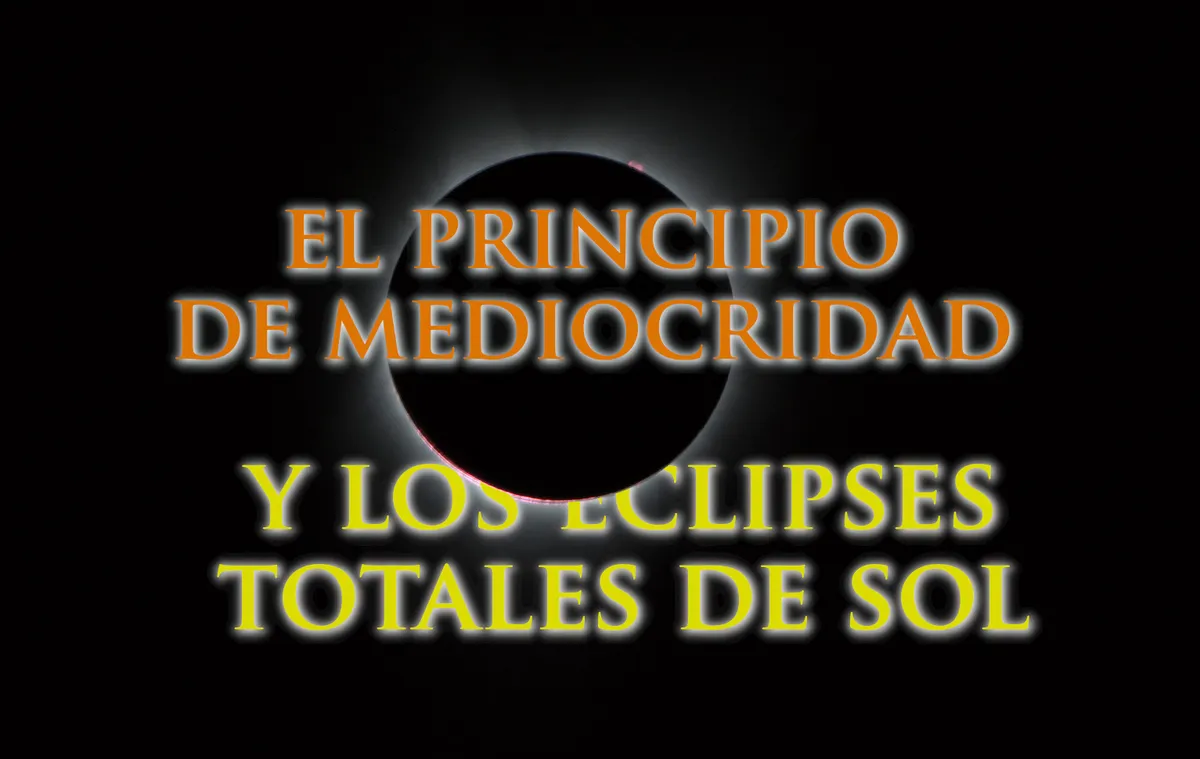
The Copernican Principle, also known as the Principle of Mediocrity, implies that Earth does not occupy a special place in the Universe. The ideas of Nicolaus Copernicus changed the cosmological paradigm starting in the 17th century. In 1952, the astrophysicist Hermann Bondi stated this idea as a "Principle" in his book Cosmology:
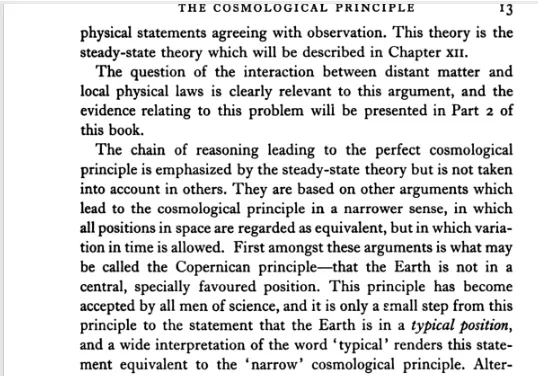
The idea has proven very important in astronomy, since a postulate of the Theory of Relativity is the Cosmological Principle, which suggests that the Universe does not have a "special place," but is homogeneous and isotropic.
Philosophy professor André Kukla stated the Principle of mediocrity this way: if an item is chosen at random from one of several sets, it is more likely to come from the most numerous set than from any of the less numerous sets. The author, however, while accepting the idea in some cases, also criticizes it when used as a fallacy. Valid example: if there are three red balls and one green ball in a bag, when drawing a ball at random, we are more likely to draw a red ball (because it belongs to the most numerous set). However, it is not reversible: if I do not know how many balls of each color are in the bag, and I randomly draw a red ball, does that mean there are more red balls in the bag? No.
Astronomer J. Richard Gott has used the Principle of Mediocrity, which is an extrapolation of the Copernican Principle. It implies that not only does Earth not have a special place, but the situations we experience are not "special." In this way, he predicted how much time Humanity had left before the End of the World in a scientific article published in Nature in the 1990s. A note using the same idea was published in New Scientist in 1997, where he tells how he predicted the fall of the Berlin Wall.
The reasoning in this last case is as follows:
In 1969 Richard Gott visited Germany, with its famous Wall, which had been built 8 years earlier. He reasoned that there was nothing special about his visit, so there was a 50% chance that he was seeing the wall in the middle of an interval of quarters. That is, if we think that the total existence of the wall can be divided into 4 equal parts, he would be seeing the wall in one of the two middle quarters. If he were in the first of those two middle quarters, one quarter of the Wall's life would have already passed, so the wall would have 3/4 left. That is, he could predict, if that were the case, that the wall would remain standing for a total number of years equal to what had already passed multiplied by 3. Since 8 years had already passed, according to Gott, at most it would have 24 years left.
On the other hand, if he were at the end of the second of the middle quarters, it would imply that 3/4 of the wall's age had already passed and only 1/4 would remain standing. If that were the case, given that 8 years had passed, if that were equivalent to 3/4, each part should last 8/3=2.6 years. Thus Gott predicted in 1969 that the Wall would last at least 2.6 more years and at most 24 more years. It lasted 20 years from then, falling in 1989.
To make it clearer, a visual aid:
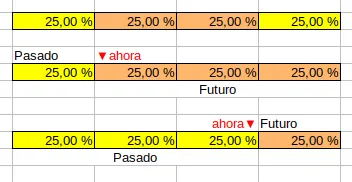
Even if we don't know how long the wall will last, we could think that its total existence can be divided into 4 parts. There is a 50% chance that our visit coincides with one of the 2 middle parts, as glimpsed in the first case. If when we make the visit the first quarter of life has already passed, then 3/4 will still remain, as in the second graph. In the other case, we will be at the end of the third quarter and only one will remain ahead.
Thus, the Principle of Mediocrity seems very powerful, being right in predictions of this kind, isn't it?
But, wait a second, let's think a little, for Newton's sake!: What would Richard Gott have said if he had visited the Wall in 1988? Well, for him nothing would have changed, so he should have made the same reasoning. In which case, 27 years would have already passed since its construction. If his visit were at the end of the first quarter, three more would remain: 81 more years from 1988. If his visit were at the end of the third quarter, then each quarter would last 9 years (27/3), so the wall should have remained standing for 9 more years.
On the other hand, if he had visited the wall in 1963, following his reasoning, he would have thought that if those two years standing were equivalent to 25% of the wall's "life," then at most it would have 75% of the time left, that is, 2 years multiplied by 3, meaning that at most it should last 6 more years from 1963, in which case it should have fallen in 1969. (*See Addendum, below)
This is important because it marks the usefulness and limitation of this type of probabilistic reasoning. They are valuable and valid when you DO NOT HAVE any timely information on a particular topic. That which some call "details."
If I have no idea what the weather situation is in city X, then I can predict that the probability of rain within 10 minutes is 50% because, in the absence of data, for me, the probability of rain or no rain are equal. But perhaps in city X the sky is completely clear. If I knew this, my prediction would be different. That piece of information is NOT "a trifle," even if the state of the weather is... ephemeral.
THE PRINCIPLE OF MEDIOCRITY AND THE SOLAR SYSTEM: THE EARTH-MOON CASE
It is evident that, in our Solar System, Earth IS NOT just another planet. It is the only one with so much liquid water on the surface. It is the only one that possesses intelligent life with developed technology and that is with 100% certainty. There could be some form of life on Mars, Venus, moons of Jupiter and Saturn. But if there were technologically developed intelligent life, we would already know. We would notice spacecraft or artificially illuminated surfaces.
Earth is indeed special in our cosmic neighborhood. Besides the amount of water and intelligent life, our planet has another characteristic hidden in plain sight, like in "The Purloined Letter". Anton Pozdnyakov wrote in UniverseToday last year, an English note with a striking title (translated by me): "The Most Outstanding Feature of the Solar System. It's Not What You Think".
Thus the author invites us to think as if we were salespeople for a tourism agency and had to attract aliens to visit us. What would be the greatest tourist attraction of the Solar System? Then he proposes possible notable features, such as biological life on Earth, Saturn's rings, Jupiter's Great Red Spot...But he leaves for the end what for the author is the great outstanding feature: solar eclipses.
It's because for the phenomenon to occur, the Moon and the Sun must have the same angular size. This happens because the Moon is 400 times smaller than the Sun, but lies 400 times closer to Earth than the star. If the Moon were a different size and were at the same distance; or if it had the same size, but its location were more distant, there would be no total solar eclipses.
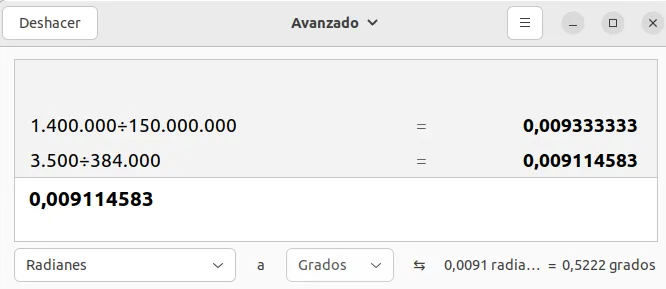
The solar diameter is 1.4 million km and it lies at 150 million km (approx). The lunar diameter is 3500 km and is located at 384 thousand km. Angular size is size over distance: doing the math gives us the angular diameter in radians. We convert to degrees (multiply by 57, approx) and it results in 1/2 degree of angular size for both the Sun and the Moon.
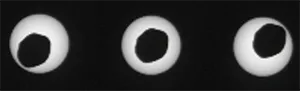
Certainly on Mercury and Venus total solar eclipses do not occur, as they have no moons. Mars has two tiny moons, so small they do not produce total eclipses.
As if that weren't enough, it wasn't always like this nor will it be. The Moon is moving away from the planet, so -in a very long time- total eclipses will cease to be seen. We could conclude and agree with Pozdnyakov that Earth is not a mediocre place in the Solar System, but a very special one because of solar eclipses.
But, wait a second, let's think a bit, for the love of Galileo!...
SOME DETAILS
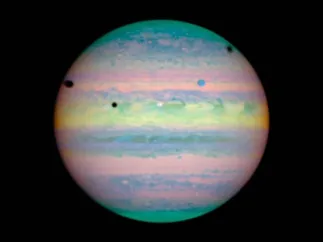
The Earth-Moon case is not as unique as it seems. It's true that neither Mercury nor Venus nor Mars can have total eclipses. But Jupiter can, with its 4 large Galilean moons. It's that the Sun, at Jupiter's distance, has an angular diameter of only 0.1 degrees.
In the case of Saturn, as the system is 10 times farther than Earth, double the Jupiter-Sun distance, the star has an angular size of 0.05 degrees. Seven of its more than 60 moons manage to eclipse the Sun.
From Uranus, the star appears 0.03 degrees in the sky. 12 of its 27 natural satellites achieve total eclipses.
The size of the Sun from Neptune is 0.018 degrees. Half of its moons can produce total solar eclipses. As with the other giant planets, given their inclination and the time they take to revolve, total eclipses, although they can occur, are not very frequent. It's because the "year" on the other planets, which is the time they take to go around the Sun, is much longer (in Earth years).
CONCLUSION
Current data do not allow us to say whether our solar system is equal to or different from the average. If our cosmic home were a universal yardstick, we should conclude that only 12% of planets will have intelligent life, since that is what happens here: 1 planet with intelligent life among 8.
Our Moon is disproportionately large: almost 25% of Earth's size. Will that be the norm or the exception? What data reveal reality and which ones eclipse it?
In some sense, the Solar System will always be special for us, like the plaza of childhood.
There are those who have said that "Nothing is more hateful to wisdom than excessive sharpness". Or, to put it more simply: wisdom consists in not getting lost in trivialities. The problem is what we call "details".☉
ADDENDUM: THE MEDIOCRE CALCULATOR
There is an online calculator based on R. Gott's Principle of Mediocrity, on the site: http://pthbb.org/manual/services/grim/laster.html
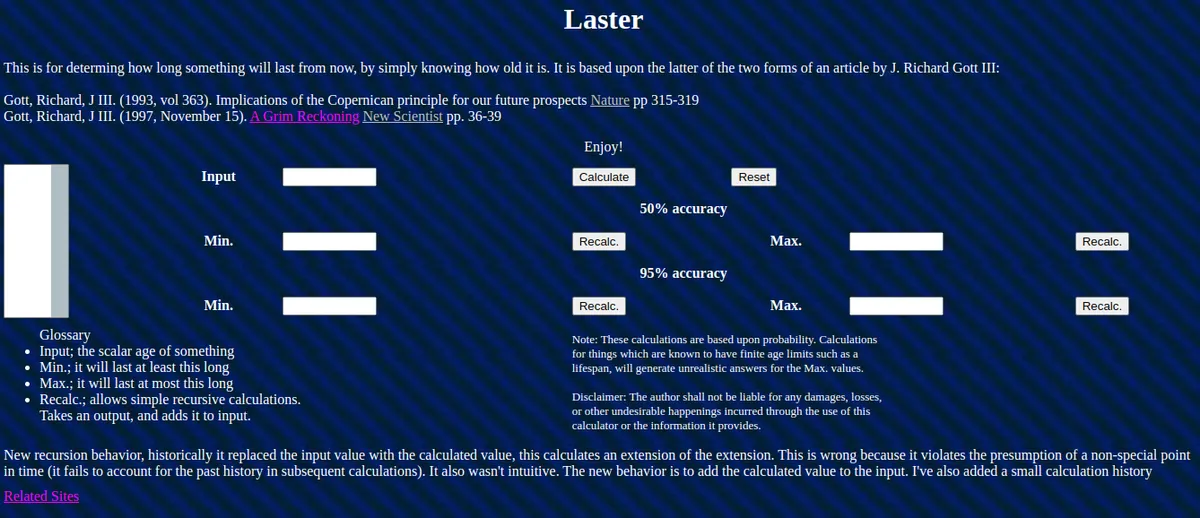
To use it, simply enter a value in years in the "Imput" field. That value should be the number of years something has existed. For example, a wall.
Pressing "Calculate" will show you the predicted minimum and maximum using the reasoning explained before. With an addition: besides the calculation for 50% probability, other minimum and maximum are added for 95% probability. For the first case (50%) you multiply and divide by 3; for the second case (95%) you multiply and divide by 39.
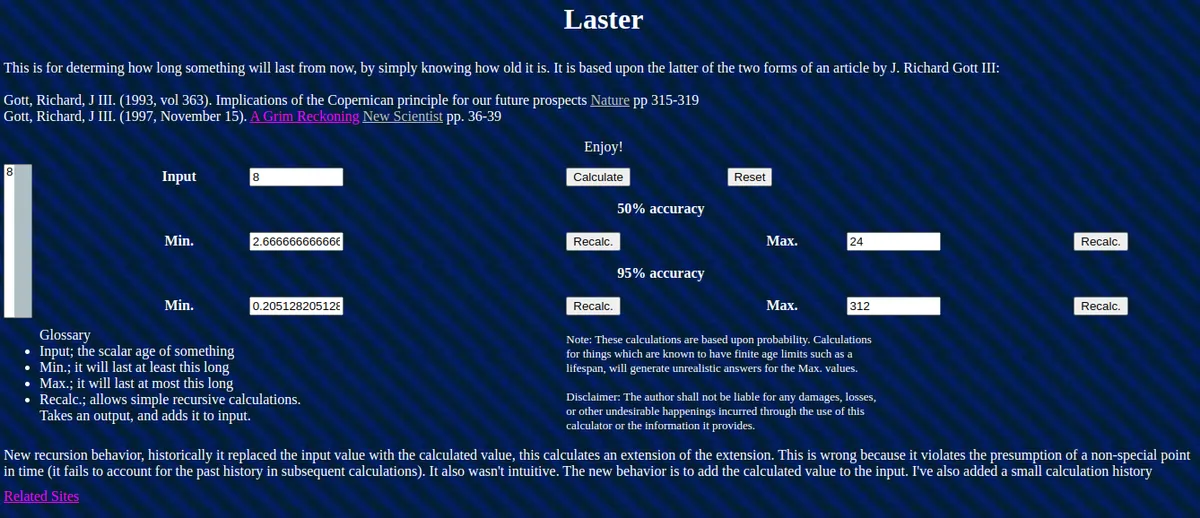
Let's see: If a wall has existed for 8 years (as in the initial example, above), then it yields as a result:
Min: 2.6 Max: 24, just as I pointed out before, for the 50% probability calculation.
And it adds: Min: 0.2 Max: 312 for the 95% probability calculation, since 8/39 and 8*39 yield those numbers.
WHY IS THE CALCULATION DONE THIS WAY?
If you don't know and are an adult, I warn you: It's about adding fractions, for the love of Pythagoras!
I explain:
If you divide something into 4 EQUAL parts, each part is 25%=25/100=1/4. Fractions can be reduced to other equivalent ones by dividing numerator and denominator by the same amount. 25/25=1; 100/25=4.
If the first quarter has already passed, what remains, the rest, is three more parts, therefore, the maximum is calculated by multiplying by 3.
If you divide something into 4 NOT EQUAL parts: 2.5% the first, 95% the next two combined, 2.5% the last. In this case, according to R.Gott, for any event you can think that since you are not "special", you will be living in the middle part with 95% probability.
To calculate the maximum you do this:
2.5%=2.5/100=1/40, since 2.5/2.5=1; 100/2.5=40. If one part has already passed, 39 remain, since 1/40+39/40=1.
That's why the maximum is the first part times 39.
For the minimums the reasoning is the same, but you divide.
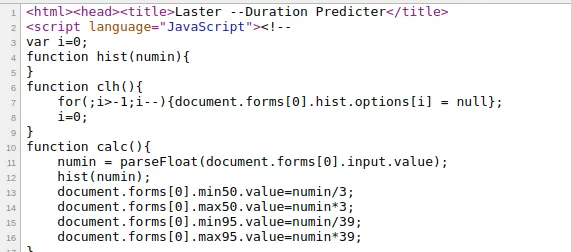
PS: The source code of that page makes this evident:
Sources and related links
Cosmology, Hermann Bondi, Cambridge University Press, Apr 14, 2011 https://books.google.com.ar/books?id=xGsFQHK9shAC&lpg=PP1&hl=es&pg=PP1#v=onepage&q&f=false
Gott, J. Implications of the Copernican principle for our future prospects.
Nature 363, 315–319 (1993). https://doi.org/10.1038/363315a0
A grim reckoning - What has a 16th-century astronomer got to do with the defeat of governments and the possible extinction of the human race? Answers in fractions please, says J. Richard Gott III https://www.newscientist.com/article/mg15621085-100/
http://pthbb.org/manual/services/grim/
Extraterrestrials: A Philosophical Perspective, by André Kukla https://books.google.com.ar/books?id=ZkdqTFVNwmgC&pg=PA20&redir_esc=y#v=onepage&q&f=false
Most Outstanding Feature of the Solar System. It’s Not What You Think https://www.universetoday.com/156643/most-outstanding-feature-of-the-solar-system-its-not-what-you-think/
EDGAR ALLAN POE AND LATIN: NIHIL SAPIENTIAE ODIOSIUS ACUMINE NIMIO (FIRST PART)
https://lectoresaudaces.blogspot.com/2009/01/edgar-allan-poe-y-el-latin-nihil.html
WHAT’S UP Many Moons https://eclipse2017.nasa.gov/what's-many-moons
Sun's Corona Seen During the 2017 Solar Eclipse https://www.nasa.gov/image-feature/suns-corona-seen-during-the-2017-solar-eclipse
NASA/Carla Thomas
About the images
A rare triple eclipse seen in Jupiter's clouds with the Hubble Space Telescope on March 28, 2004. The three dark circles are the shadows of Ganymede, Io, and Callisto.
Eclipse on Jupiter: NASA, ESA, and E. Karkoschka (University of Arizona)
Partial solar eclipse from the surface of Mars: the natural satellite Phobos in front of the Sun seen through the Curiosity rover's Mastcam on August 20, 2013.
Eclipse on Mars: NASA/JPL-Caltech/Malin Space Science Systems/Texas A&M Univ.