Do the criticisms of the cosmological model imply an imminent paradigm shift?
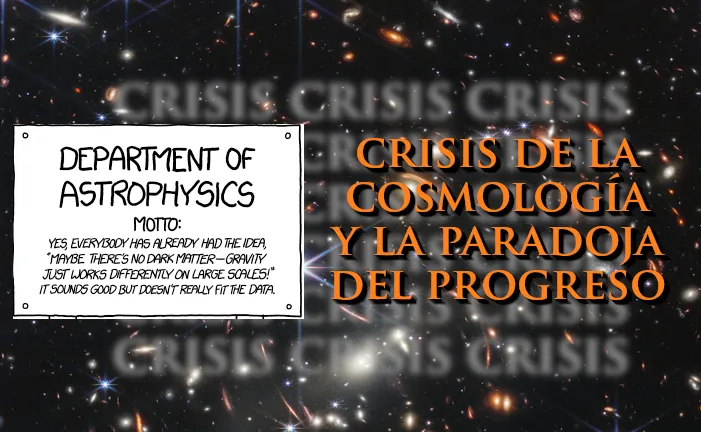
The phrase "crisis in cosmology" has been used in recent decades to refer to a specific aspect or to the standard cosmological model in its entirety. In the first case, it is used in relation to the stagnation of calculations about the expansion rate of the Universe. There are two techniques that are used most and yield results that differ by 10%: the analysis of the CMB (the cosmic microwave background) gives a value of 67, while the distance ladder technique yields a value of 74 (km/s/mpc). This aspect is known as "the Hubble tension".
On the other hand, there are those who argue that the model as a whole has entered a crisis: the model is called Lambda CDM (ΛCDM). The first word is a letter of the Greek alphabet used to refer to the acceleration of expansion, linked to dark energy. The acronym CDM stands for "cold dark matter". The model includes Inflation theory, Relativity, and quantum theory. Critics have pointed out that: inflation has not been verified (and perhaps it can never be verified or falsified), dark matter has also not been identified (so perhaps it does not exist), we have no idea what dark energy is, the Cosmological Principle might not be true (here they bring in the topic of quasars), and there is no theory of quantum gravity. The model would not only lack sufficient empirical evidence, but it would also not allow explaining some observational aspects, such as quasars and dwarf galaxies that do not seem to require dark matter.
Recently, the debate was reignited based on an analysis of data obtained with the JWST. Last December, Fulvio Melia published a paper whose translated title is "An honest assessment of standard cosmology". In March, Ethan R. Siegel published a commentary on Melia's work, synthesizing the former's criticisms of the Standard Model into 8 points, which include: the power spectrum of the CMB does not match the theory; no explanation for the quantum-classical transition between inflation and the hot big bang; value of the Higgs field; lithium abundance does not agree with nucleosynthesis; low entropy configuration unlikely; observations of galaxies formed earlier than theoretically predicted; the Hubble tension; inconsistency with Einstein's Equivalence Principle.
Although these are technical issues, to understand the situation I think a more philosophical or epistemic approach is needed.
SCIENTIFIC MODELS
First, we should be clear that every scientific model will ALWAYS have problems. Perfect theories do not exist. They never will. If cosmologists were to throw ΛCDM in the trash, then it would have to be replaced by another model. In no way would a model be set aside and that's it; rather, schemes are changed for others. And the idea is that the alternatives are better. Therefore, we will always go from a model with problems to another model with problems. Even though both theories may have their holes, one can be better than the other, either because it has greater or better evidence in its favor or because it better explains what it aims to understand.
On the other hand, as in the Ship of Theseus paradox, models change gradually. Not all the problems indicated before require new models; they could be corrected. A theory of quantum gravity will surely change the game more radically, as if many planks of the ship were changed at the same time.
Therefore, scientific models will always enter into crisis. Science is an open system. Open to continue contrasting data from reality (through observations and experiments) with theories. And there will always be black swans. Empirical sciences are not mathematics. If mathematics is incomplete, empirical sciences must also be incomplete.
Scientific thinking is more Heraclitean than Parmenidean.
THE PARADOX OF PROGRESS
I have told before about this paradox, based on an episode of Seinfeld (T5.E13, The Dinner Party) in which this dialogue occurs (text from IMDB translated by Deepl):
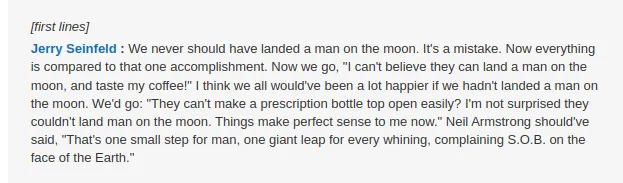
We should never have taken a man to the Moon. It was a mistake. Now everything is compared to that achievement. Now we say: "I can't believe they can get a man to the Moon and test my coffee!". I think we'd all be much happier if we hadn't gone to the moon. We'd say: "Can't they make a prescription jar lid open easily? I'm not surprised they couldn't get a man to the Moon. Now everything makes sense". Neil Armstrong should have said: "That's one small step for man, one giant leap for all the whining, complaining little sons of bitches on the face of the Earth".
Translation made with the free version of the translator www.DeepL.com/Translator
In summary: it seems contradictory that difficult things can be done and, at the same time, simpler things are done poorly or not done.
We cannot solve police cases that happened 1 day, 1 month, 1 year, 10 years ago. We do not know exactly how the pyramids were built, whether Atlantis existed or was an invention of Plato. We do not know if PI is a "normal" number, we do not know (nor will we be able to know) who the first human being was, but... we want to know what day of the week the Big Bang fell on. Please!
A VAR FOR COSMOLOGY
It's good that science reviews its theories. It is not religion. The scientific narrative is subject to change. It must coincide with reality, knowing that this will never happen exactly. Science is like a map: it is not an exact faithful representation of reality, because otherwise, as in that story by Borges ("On Exactitude in Science"), the map would have to be as large as the territory represented, which would make the map exact, but useless.
Science is condemned to success (an Argentine former president would say), but every scientific success is inexact, incomplete, fallible. "Definitive proofs" do not exist.
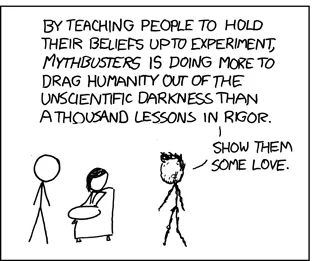
Arthur Clarke and Stephen Baxter wrote the novel "Light of Other Days". The science-fiction story tells of a technologist who invents a camera that, for a brief period, allows seeing what happened in any place and time. In such a society, crimes no longer exist, because for any event, the authorities can look at the camera and know exactly what happened. A VAR of history. For fiction, it's a good idea. But we are not going to find a video to prove the Big Bang (or the eternal universe).
Nature's Game is rigged: the house reserves the right to erase evidence: on Earth, earthquakes, floods, erosion, asteroid impacts, tomb raiders. On a cosmological level too: if an inflationary period existed, it would function as an "eraser" of prior history.
The loss of many papyrus scrolls from the Library of Alexandria is an exaggeration, according to historians. But we can still use the idea: how many parchments created throughout history have been destroyed before we could know them? There will always be a part of history that we cannot know directly and perhaps not even indirectly.
Nature imposes "horizons" of knowledge on humanity. Let's admit it once and for all like the great Rubén Darío.
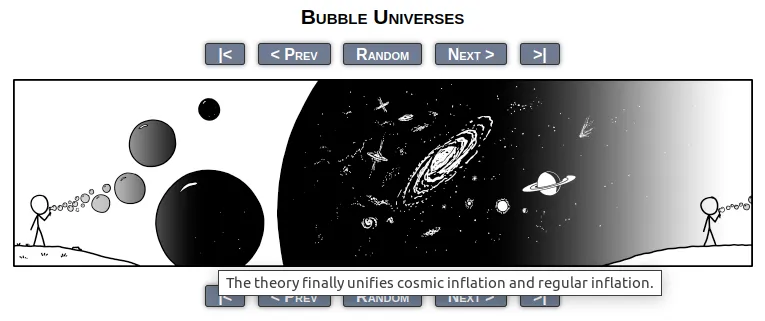
Astronomy is, to some extent, like that worm-camera in Clarke's novel, since it is a science that studies light from other times.
It is curious that the current Model is based on the idea that a large part of reality cannot be known by what shines, but by what does not shine. In that sense, using the camera obscura seems like a good idea: we make a small hole in a dark sector of the Universe and observe the projected light.
¡ɐqıɹɹɐ sɐʇɐd soɯɐǝʌ sou sɐzınb!☉
Sources and related links
- Eight Significant Shortcomings of the Standard Model of Cosmology
https://new-ground.com/en/articles/eight-significant-shortcomings-of-the-standard-model-of-cosmology/new-ground.2023.77033 - 6 major cracks have appeared in the standard model of cosmology. Is it wrong?
https://bigthink.com/13-8/6-cracks-standard-model-cosmology-wrong/ - A Candid Assessment of Standard Cosmology
Fulvio Melia 2022 PASP 134 121001
DOI 10.1088/1538-3873/aca51f
https://iopscience.iop.org/article/10.1088/1538-3873/aca51f - Zoomable Image: Deep Field SMACS 0723 (NIRCam)
https://webbtelescope.org/news/first-images/gallery/zoomable-image-deep-field-smacs-0723 - Panic! At the Disks: First Rest-frame Optical Observations of Galaxy Structure at z>3 with JWST in the SMACS 0723 Field
https://arxiv.org/abs/2207.09428 - Webb Reveals Early-Universe Prequel to Huge Galaxy Cluster
https://www.nasa.gov/feature/goddard/2023/webb-reveals-early-universe-prequel-to-huge-galaxy-cluster - The Dinner Party (1994)
Jerry Seinfeld: Jerry Seinfeld
https://www.imdb.com/title/tt0697684/characters/nm0000632 - Unscientific
https://xkcd.com/397/ - Bubble Universes
https://xkcd.com/2688/ - Astrophysics
https://xkcd.com/1758/ - Read and write text backwards
https://es.fliptext.net/
About the images
NASA, ESA, CSA, STScI xkcd.com