The future of astronomical observations.
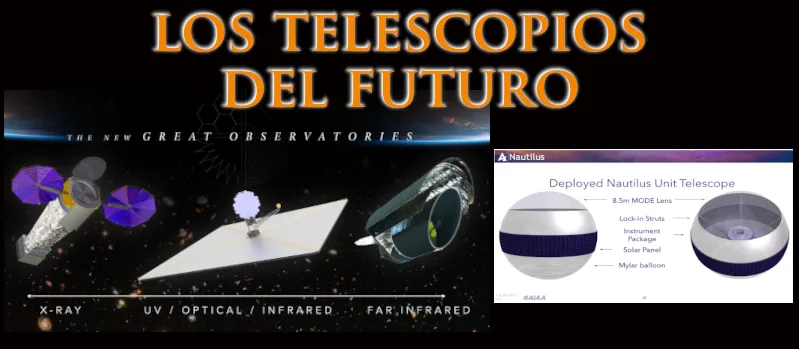
There are some observatories under construction. They will be the next telescopes, conceived more than a decade ago. But the next observatories are already being thought about, those that will see first light during the 2040s. Ultimately, telescopes are for looking far away. But instead of observing the past, as is usually the case, here we will take a look at the future.
THE NEW GREAT OBSERVATORIES
At the beginning of the year, as is customary, the American Astronomical Society (AAS) meets. The Science magazine website published a report on the future telescopes planned at that meeting.
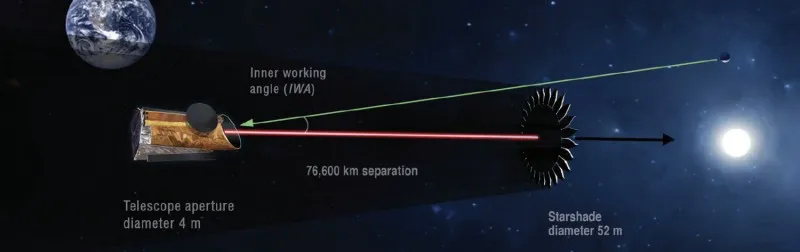
The successor telescope to James Webb, also to be at L2 and with a provisional name: Habitable Worlds Observatory (HWO). As its name indicates, the goal is to search for habitable worlds.
In the decadal survey, American astronomers advocated for resurrecting the Great Observatories Program: a project that would achieve it would cost USD 11 billion, would be 6 meters, and would be sensitive to ultraviolet, optical, and near-infrared, ideal for searching for habitable worlds.
Among the proposals made in the decadal survey is HabEx, a telescope with a monolithic 4-meter mirror, as well as a shield to block starlight (coronagraph), to be able to detect small planets around stars. The LUVOIR project would be 15 meters, with segmented mirrors. The HWO is an intermediate project between those two proposals. In July 2023, the Space Telescope Science Institute (STScI) held a webcast about HWO, available on Youtube.
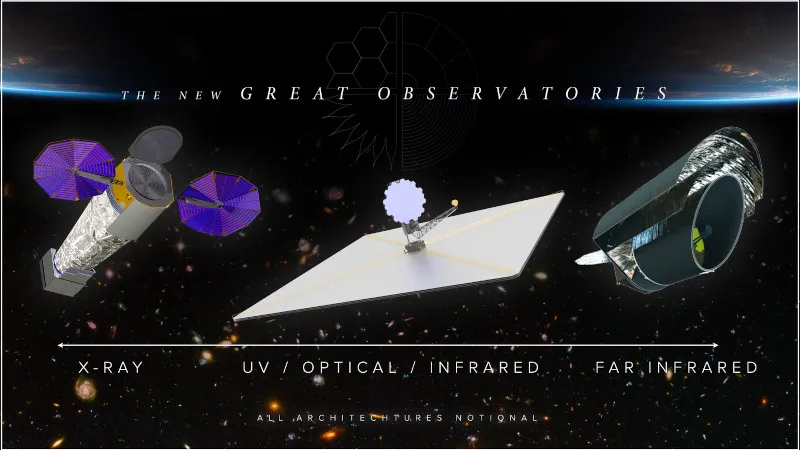
Meanwhile, NASA continues with its project for the Nancy Grace Roman Space Observatory, 2.4 meters. And it launched a website about the new Great Observatories, where it indicates it has planned two other projects: a new X-ray observatory, and one for far-infrared (FIR).
NASA had its Great Observatories with the Hubble, Spitzer, Chandra, and Compton telescopes. Now it seeks to replicate that fleet, with the JWST, Nancy Roman, HWO, Lynx (X-ray) and Origins (FIR) telescopes.
DIFFRACTION TELESCOPES: Nautilus
Diffraction is a phenomenon by which light (electromagnetic waves) is deviated and creates interference patterns when passing through obstacles and slits. This phenomenon is not desirable in astronomy, although Newtonian telescopes, with a "spider" or structure that holds the secondary mirror inside the tube, generate diffraction, resulting in the "spikes" of stars.
Astronomer Daniel Apai thought that diffraction lenses could be made good enough for astronomy, with an advantage: they are much lighter than refractive ones and mirrors. He recently told this in an article published in The Conversation.
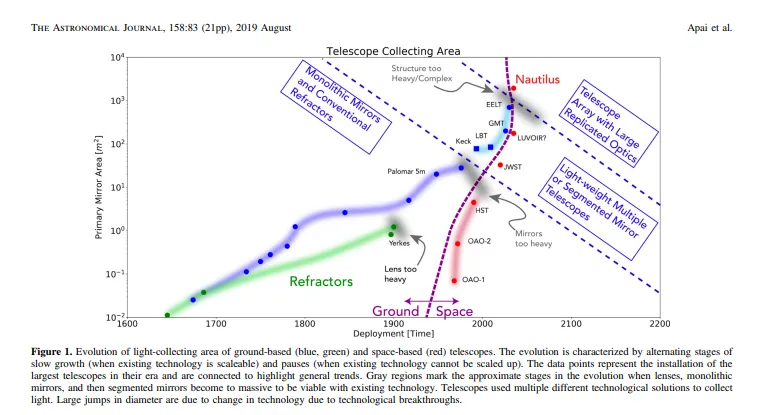
His proposal is not to make one telescope, but a fleet of at least 35, called NAUTILUS. The goal? To search for exoplanets, as seen, one of the "hottest" topics in current astrophysics.
In the cited article, Apai recounts that at a 2016 meeting about the future of telescopes, the bottleneck of continuing to make ever larger instruments and putting them into orbit was addressed. Thus arose an idea that seemed unthinkable: redesign diffractive lenses, much lighter, but which generally produce blurry images. Could the latter be avoided?
Refraction and diffraction are similar phenomena in which light is deviated. In the first case, it occurs when light changes medium; in the second when light reaches corners and slits. Diffractive lenses are known by their inventor: Fresnel Lenses.
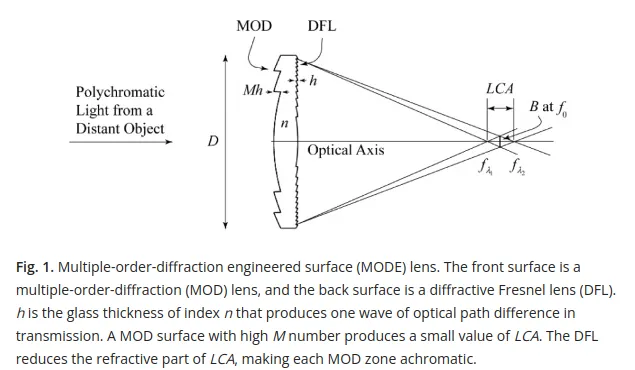
Through research, new lenses called Multiple-order-diffraction engineered surface (MODE) were developed. Apai proposes to continue building this type of lens, ever larger, up to 8 meters. In small-scale prototypes they seem to work well. The scientist says that for now they are focusing on building a 1-meter lens. It is evident that there is still a long way to go. However, achieving a network of 35 telescopes of 8 meters in space that can work in unison would imply multiplying the collected light area exponentially.
SPHEREx
Among the planned space projects, one of the most interesting is the Spectro-Photometer for the History of the Universe, Epoch of Reionization and Ices Explorer (SPHEREx) which will create a spectral map of the sky.
From what has been presented here, it is clear that the observational future of astronomy is something never seen before.☉
Sources and related links
- NASA unveils initial plan for multibillion-dollar telescope to find life on alien worlds
https://www.science.org/content/article/nasa-unveils-initial-plan-multibillion-dollar-telescope-find-life-alien-worlds - Science with the Habitable Worlds Observatory and Beyond
https://www.stsci.edu/contents/events/stsci/2023/july/science-with-the-habitable-worlds-observatory-and-beyond - Lynx
https://www.lynxobservatory.com/ - Great Observatories
https://www.greatobservatories.org/ - Origins
https://origins.ipac.caltech.edu/ - A new, thin-lensed telescope design could far surpass James Webb – goodbye mirrors, hello diffractive lenses
https://theconversation.com/a-new-thin-lensed-telescope-design-could-far-surpass-james-webb-goodbye-mirrors-hello-diffractive-lenses-206055 - Nautilus
https://nautilus-array.space/ - A Thousand Earths: A Very Large Aperture, Ultralight Space Telescope Array for Atmospheric Biosignature Surveys
Dániel Apai et al 2019 AJ 158 83
DOI 10.3847/1538-3881/ab2631
https://iopscience.iop.org/article/10.3847/1538-3881/ab2631 - Design aspects of large-aperture MODE lenses
Tom D. Milster, Zichan Wang, and Young Sik Kim
https://opg.optica.org/osac/fulltext.cfm?uri=osac-4-1-171&id=446612 - JPL MISSIONS
https://www.jpl.nasa.gov/missions?mission_status=future&page=1
About the images
Credit: NASA/D.Apai.