Information on the current phenomenon and the next lunar and solar eclipses of 2024.
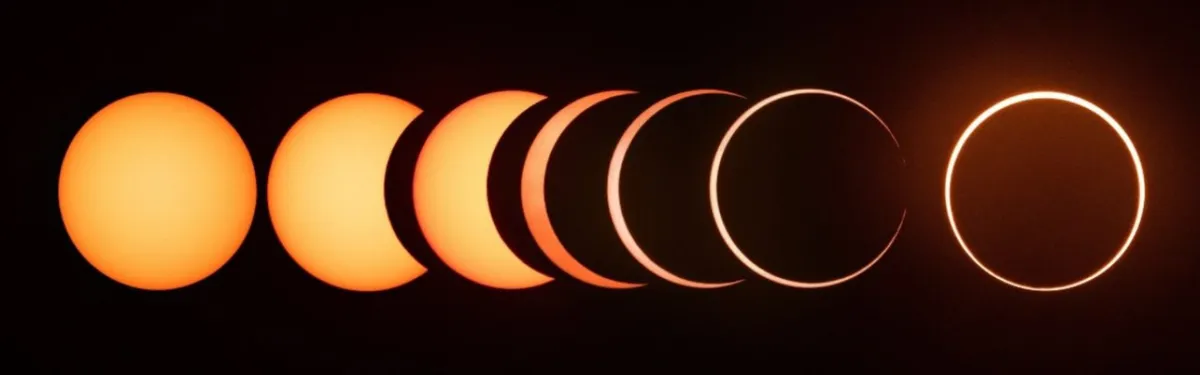
This Saturday there will be an annular solar eclipse, which will be possible to observe from the U.S., Central America and the northernmost part of South America.
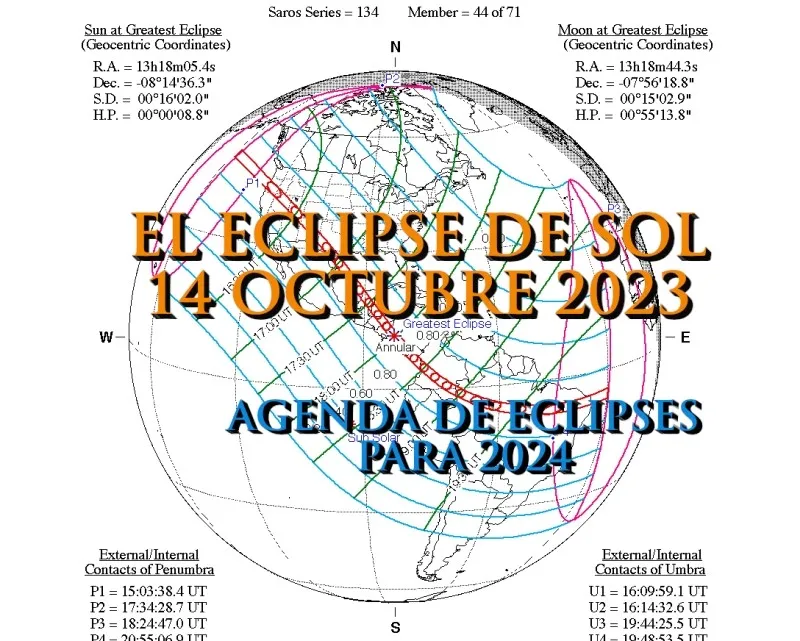
The conjunction will occur around 18:00 hours (UT). It will be 100% visible as annular in the strip marked in red in the image we see below, made by Fred Espenak. The parallel blue lines indicate the percentage of visibility of the phenomenon in each area.
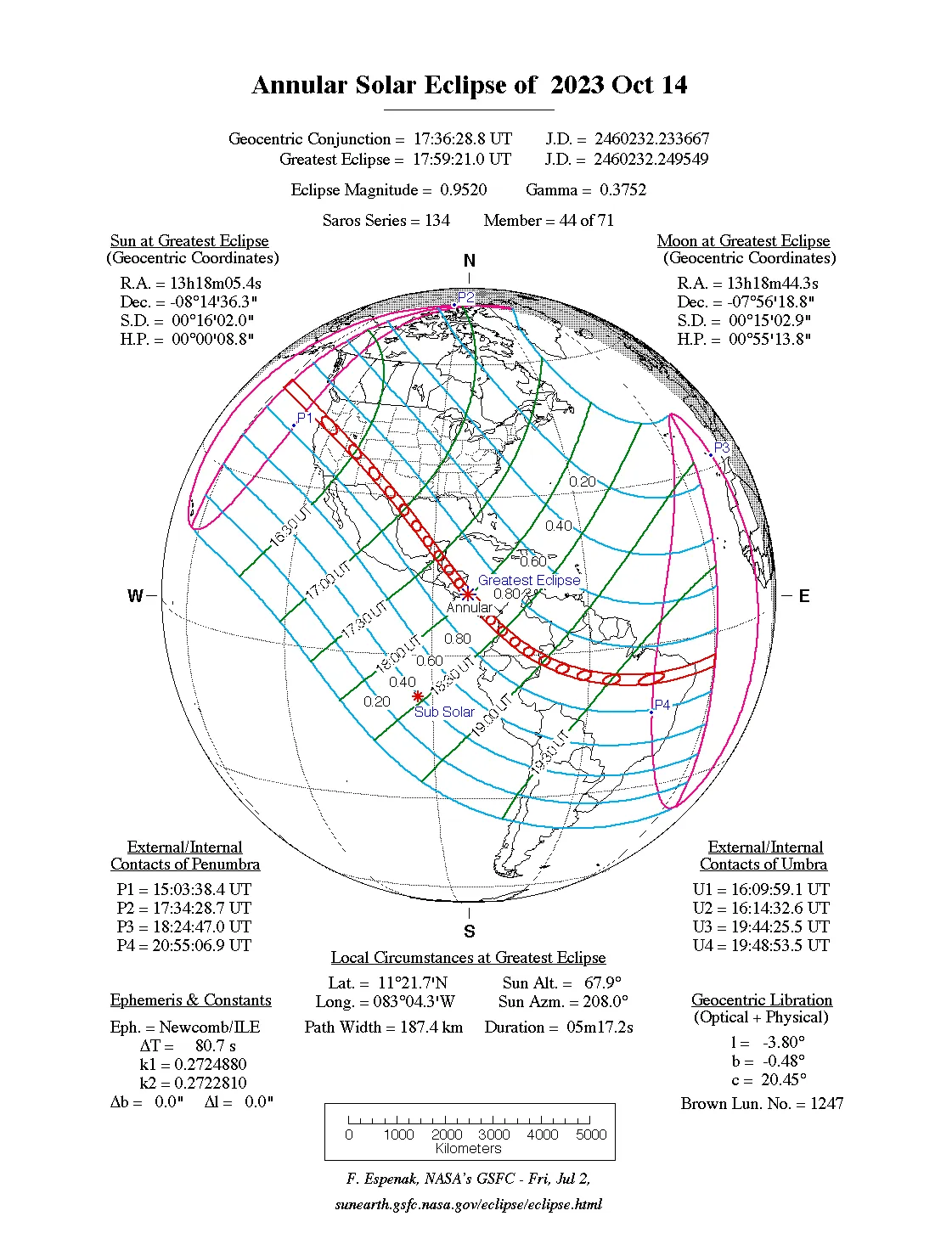
In Argentina, the northern provinces will be able to observe a partial eclipse of 40-30%. North of Buenos Aires, 30-20% will be seen.
WHAT'S COMING
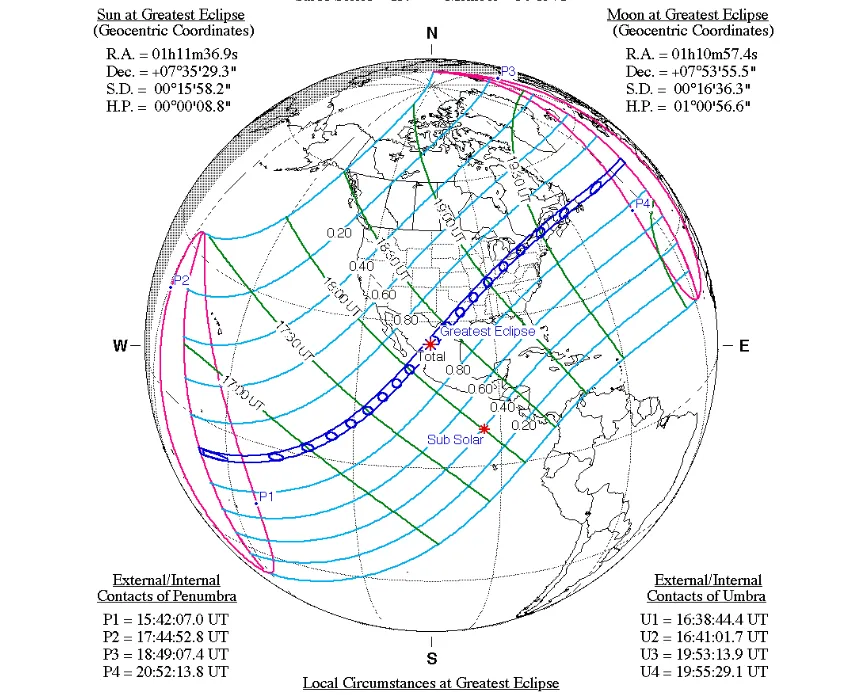
The next solar eclipse will be on April 8, 2024, with a configuration similar to tomorrow's, only it will cross the U.S. in the opposite direction and will not be visible from South America.
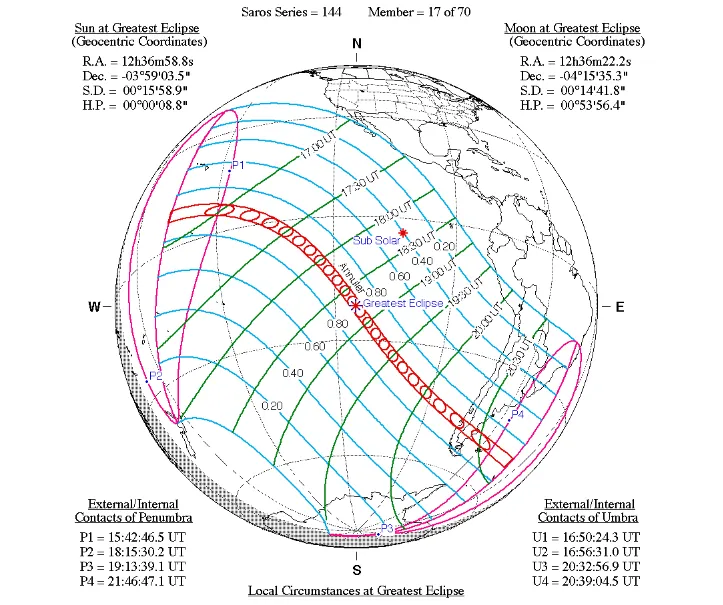
But on October 2 of next year, another annular solar eclipse will give us the opportunity to enjoy it from Argentina, particularly the southern provinces.
It will be visible throughout the country, as well as in Chile, Uruguay and Paraguay, part of Bolivia, Brazil and Peru.
LUNAR ECLIPSES
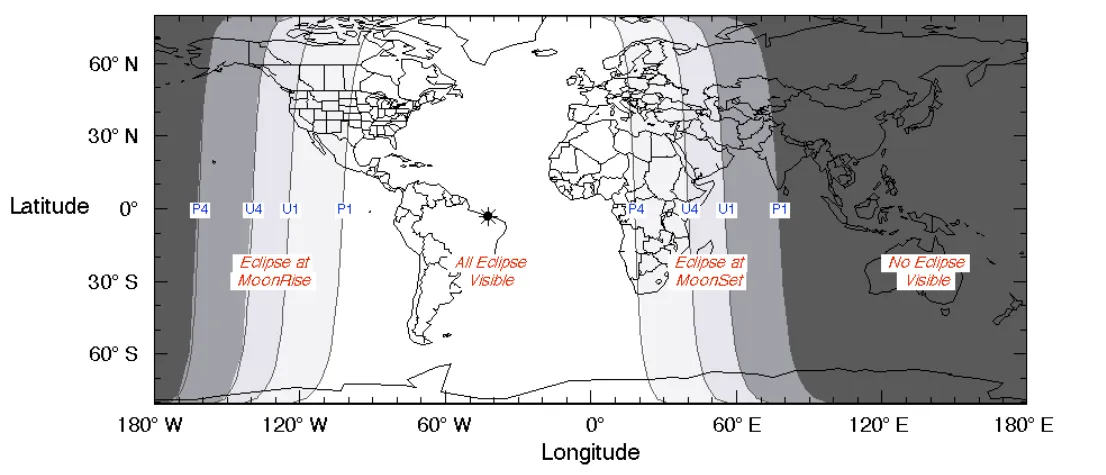
As we know, two weeks apart from a solar eclipse, there is another lunar one. In this case, on October 28 the Earth's shadow will darken the natural satellite, but in Argentina it will only be visible in the northeastern part of the country. On the other hand, it will be seen in Europe and Africa.
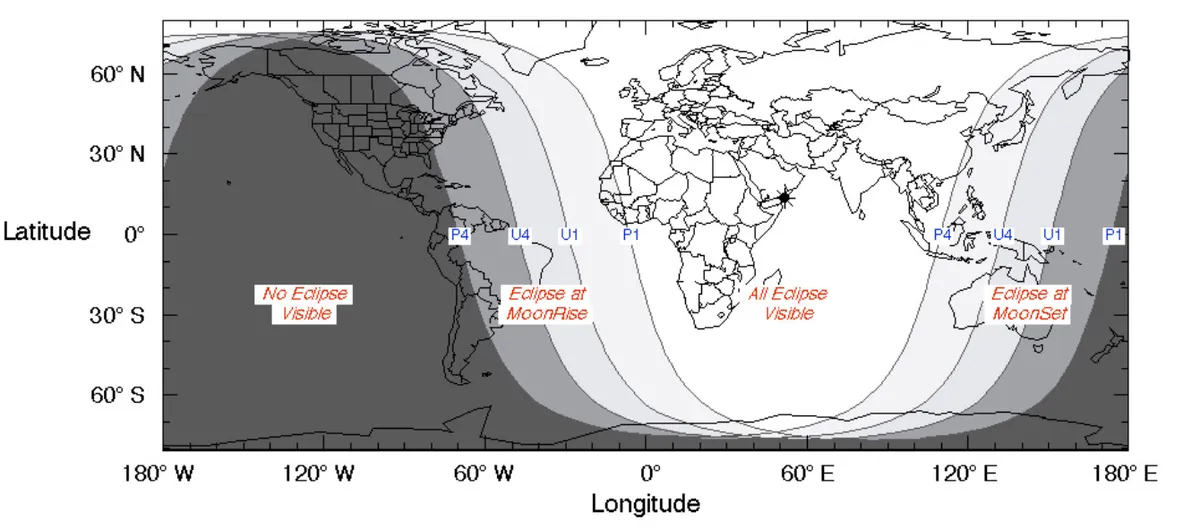
Next year the phenomenon can be experienced as penumbral on March 25, around 7 (UT) visible throughout the continent and much of Europe.
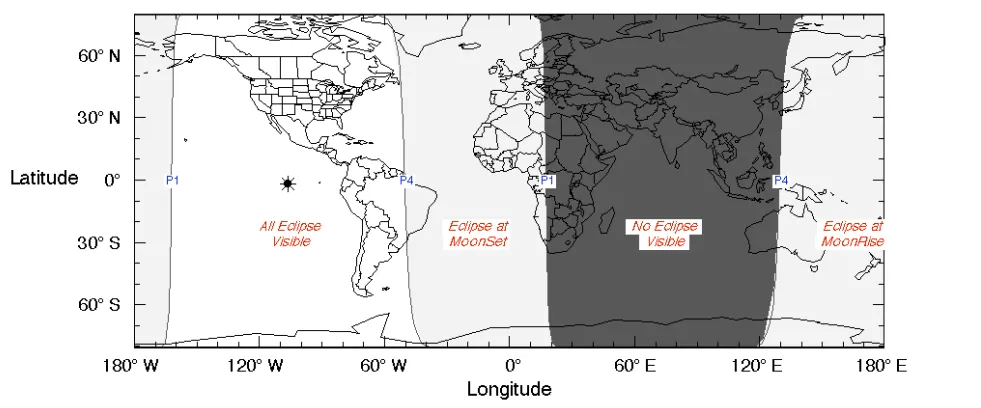
Also on September 18, at 02:30 (UT) there will be a partial lunar eclipse visible from almost all of America, Europe and Africa.
As we have said before, eclipses give a second chance. The frequency of the unrepeatable in astronomy is greater than one.☉
Sources and related links
NASA ECLIPSE https://eclipse.gsfc.nasa.gov/
"Eclipse Predictions by Fred Espenak, NASA/GSFC Emeritus".
About the images
Fred Espenak, NASA/GSFC