Due to the explorer's actions against the indigenous peoples he encountered in America, they are calling for a change in the name of the Milky Way's satellite galaxies.
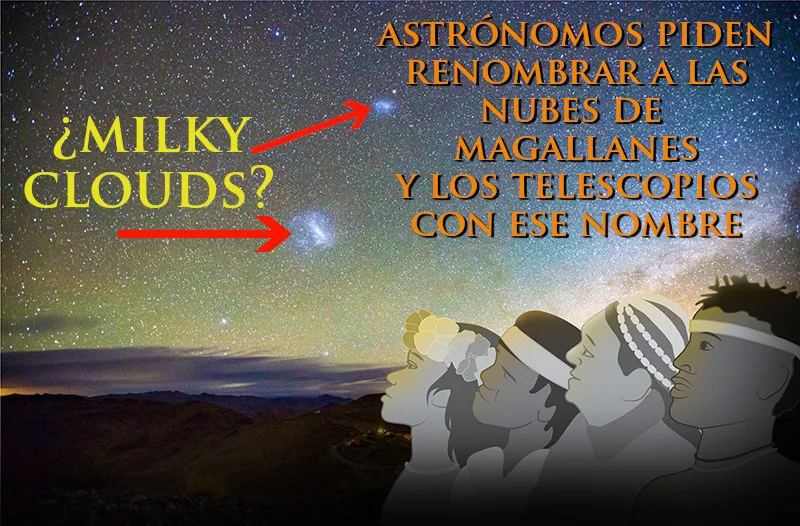
In a letter published in Physics, Mia de los Reyes says that the two galaxies near the Milky Way were named after Ferdinand Magellan because a crew member of his expedition wrote about a group of stars that looked like clouds in the southern sky, but none of them were astronomers and they were not the first to document the existence of these nebulous objects.
Mia de los Reyes is an assistant professor at Amherst College, Massachusetts. She studies dwarf galaxies in the nearby universe. To her knowledge, she is the first Filipino-American astronomy professor.
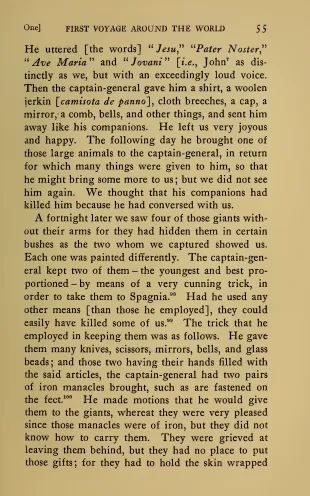
De los Reyes cites the book "Magellan's voyage around the world" which describes how, in what is now Argentina, Magellan enslaved the native Tehuelches. He put iron handcuffs (shackles) on the "youngest and best proportioned" men, telling them they were gifts. In what would later be Guam and the Philippines, Magellan and his men burned villages and killed their inhabitants.
Despite this, the navigator's surname has been used to honor him in craters on the Moon and Mars, a NASA spacecraft, the Magellan telescopes and the extremely large telescope (GMT), under construction in Chile.
She and other astronomers believe that astronomical objects and facilities should not be named after anyone with a legacy of colonialist violence. They ask the IAU to rename the dwarf galaxies. And they hope other institutions, such as the one that operates the Magellan telescopes, the Las Campanas Observatory of the Carnegie Institution, will review the name in use.
De los Reyes recalls that this is not the first case. The name of the James Webb telescope was objected to, although the name change did not succeed. It did, however, in a non-unanimous vote, rename Hubble's Law as the Hubble-Lemaître Law.
A note published in ScienceNews indicates that more than 100 astronomers have expressed interest in the campaign, led by a core group of about 50, according to the astronomer. It adds that they are looking for new names. One suggestion was to call the galaxies "Milky Clouds", which would keep the commonly used acronyms in English: LMC and SMC (Large and Small Magellanic Clouds). And it would reflect the objects' connection to something much larger than a person: our galaxy.
The name change wouldn't work the same in Spanish: ¿Nubes Lácteas? Perhaps the M could be "Marinas or de los marineros": Large Marine Cloud, la Gran Nube de los Marinos.
According to Wikipedia, in Johann Bayer's Uranometria (1603) they are called Nubecula Maior and Nubecula Minor. The Large Cloud is in Dorado and the Small one in Tucana, so they could be renamed based on the constellations in the same part of the sky.
Both galaxies have other astronomical designations: the small one is also NGC 292; the large one is PGC 17223.
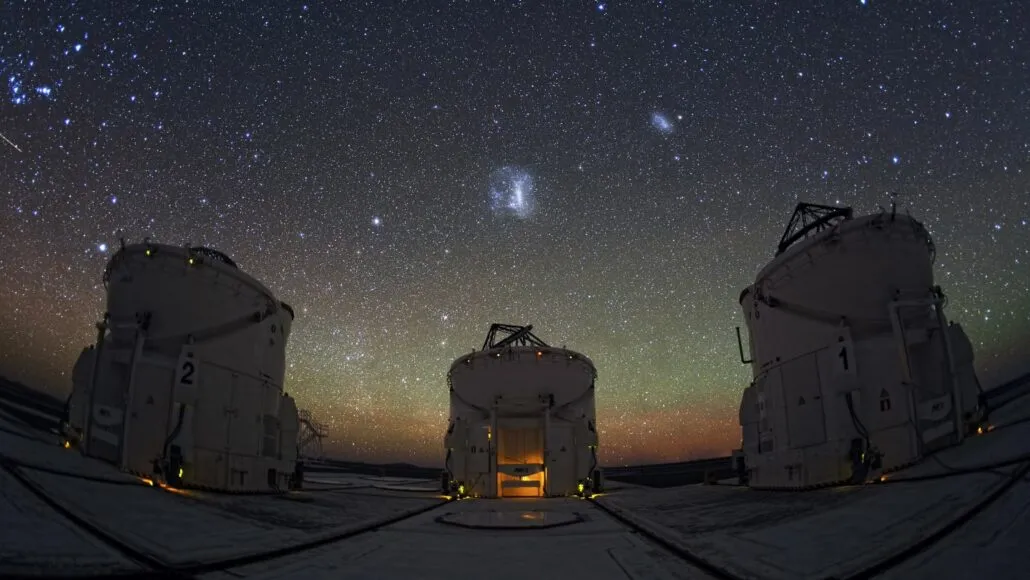
A mnemonic rule used by amateur astronomers is: the large one, with the Tarantula (30 Doradus, NGC 2070); the small one with the Toucan (47 Tucanae-NGC 104).
The Magellanic Clouds are located about 170 thousand light-years away from Earth, with about 20º of separation between them (about 70 thousand light-years distance between them). There is some discussion about whether they should be considered satellite galaxies of ours or not. In any case, they are among the closest and are part of the Local Group.
In her letter, she concludes by urging change: Astronomers like to say that “the night sky is for everyone". If we truly believe that, shouldn’t we honor that ideal when we name the objects in this shared space? Shouldn’t we debate the words we use to describe the cosmos? After all, our job is to tell the story of the Universe and, as with all stories, the way we tell it matters.☉
Sources and related links
- Astronomers call for renaming the Magellanic Clouds
https://www.sciencenews.org/article/astronomers-renaming-magellanic-clouds - Astronomers Need to Rename the Magellanic Clouds
https://physics.aps.org/articles/v16/152 - Magellan's voyage around the world
https://archive.org/details/magellansvoyagea01piga/page/n5/mode/2up
About the images
Y. BELETSKY/LCO, ESO
APS/Carin Cain/Ryan Trainor