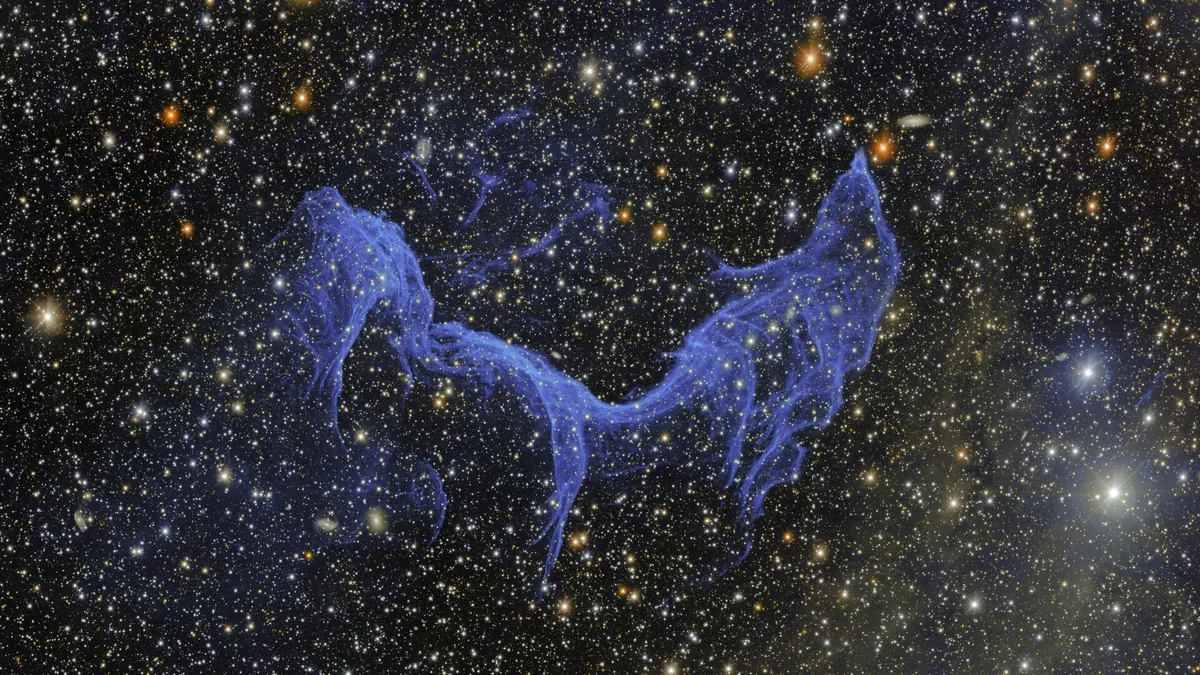
The Dark Energy Camera (DECam), installed on the 4-meter Victor M. Blanco Telescope at the Cerro Tololo Inter-American Observatory in Chile, has obtained the most detailed view to date of the supernova remnant SNR G295.5+09.7, nicknamed the Betta Fish Nebula for its resemblance to the Siamese fighting fish. The image, which shows bluish ribbons of stellar matter floating in deep space, was taken as part of the NOIRLab Legacy Imaging Program. This object, located about 6,800 light-years from Earth in the constellation Centaurus, may not have been photographed before by a professional observatory, according to NSF NOIRLab, making this image the first of its kind. As its technical name suggests, SNR G295.5+09.7 was formed by a supernova, the explosive death of a star many times more massive than our Sun.
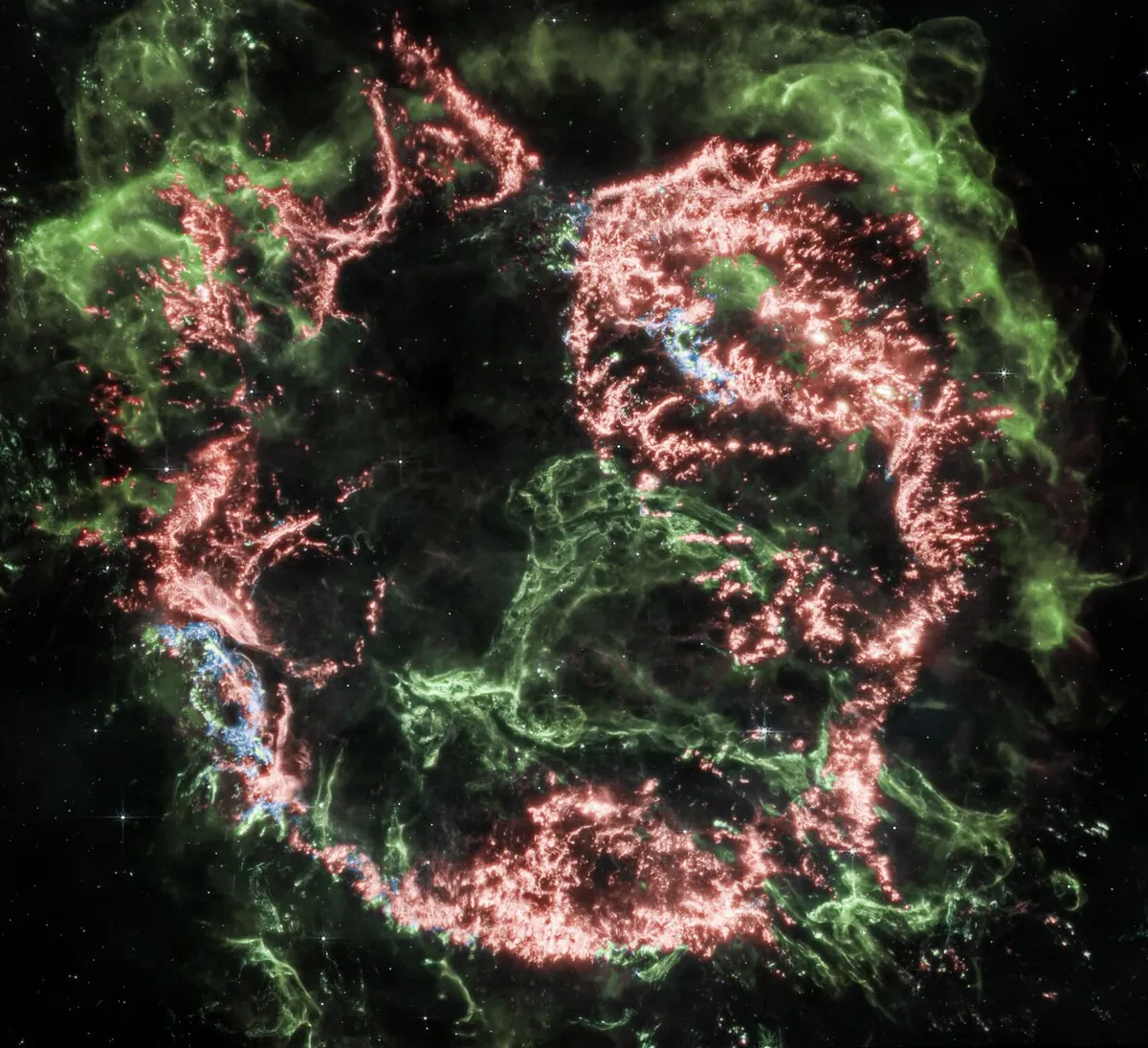
During the explosion, the star's outer layers of material were expelled. The cast-off material expanded into the interstellar medium, crashing into the surrounding gas and causing it to glow, creating the blue ribbons we see today. The rest of the massive star collapsed in on itself, unable to resist gravity. Total collapse was avoided through the formation of a neutron star, which sits in this image encircled by the outer shell of the nebula.
Neutron stars are incredibly small and dense. They pack about 1.4 times the mass of our Sun into a sphere 20 kilometers in diameter. In fact, a whole neutron star could fit inside the city of Tucson, Arizona, where NOIRLab Headquarters resides. If total collapse had occurred, a black hole would have formed instead.
DECam was designed specifically for the Dark Energy Survey, an investigation into the mysterious force accelerating the expansion of the universe. This instrument has allowed scientists to collect observations of hundreds of millions of galaxies and thousands of supernovas. While the survey has ambitious scientific goals, the camera can also capture images of great beauty like this one. The scientific community honors the opportunity to conduct research in places like Cerro Tololo in Chile, recognizing their cultural significance for local communities.
The image was captured by DECam, a 570-megapixel camera fabricated by the U.S. Department of Energy and designed specifically for the Dark Energy Survey (DES). It was funded by the Department of Energy and built and tested at DOE's Fermilab. With its unparalleled wide-field imaging capabilities, DECam gives astronomers highly detailed views of nebulae and their surrounding cosmic environment. The camera is used as part of the Dark Energy Survey, a six-year international collaboration. This past January, researchers revealed the initial result of this six-year survey. Scientists continue to explore the possibilities of dark energy with DECam alongside instruments like the recently launched Nancy Grace Roman Space Telescope.
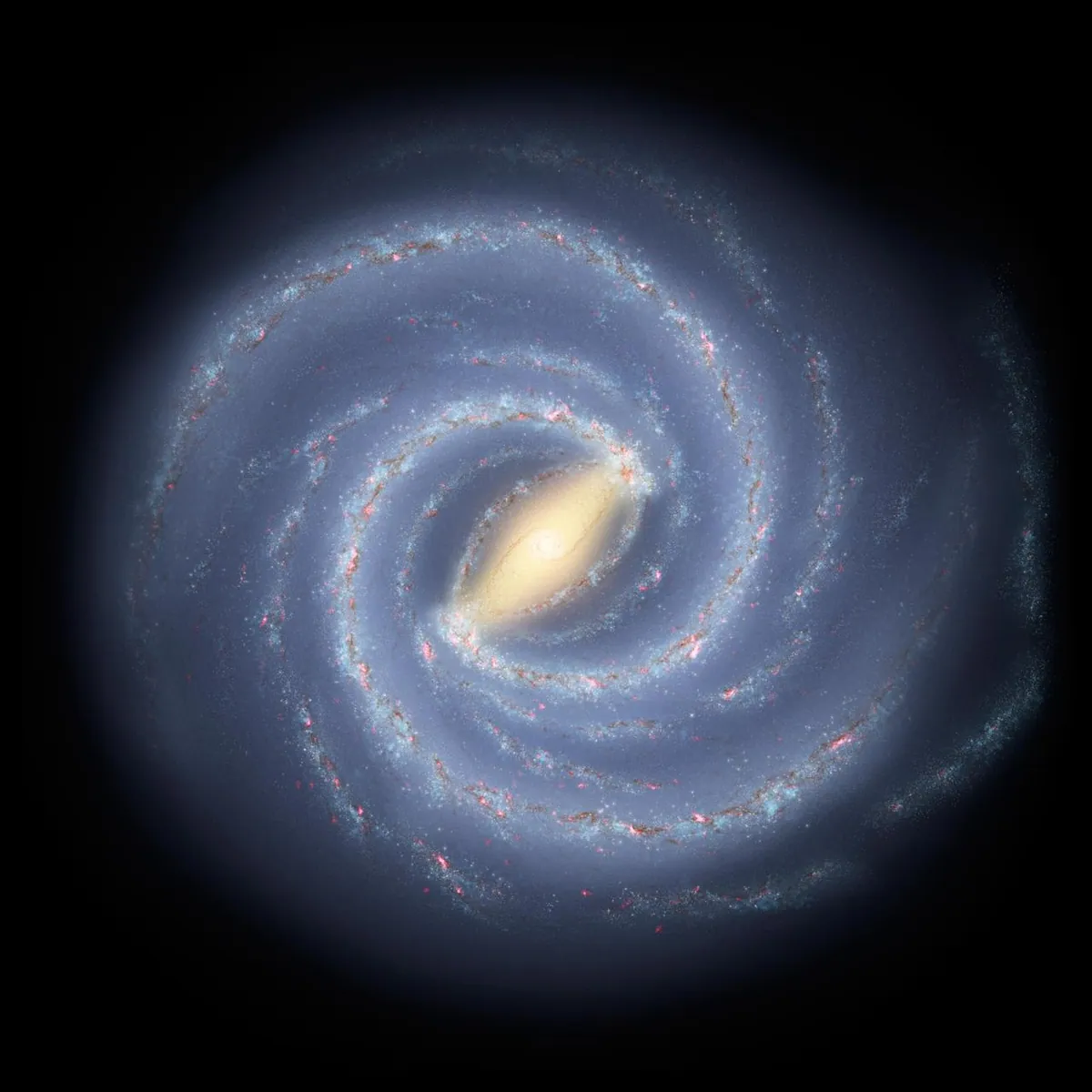
Zooming out, the Betta Fish Nebula is located in the Carina-Sagittarius arm of our galaxy, the Milky Way. In this image, thousands of stars from this arm rest in the background of the nebula. Hidden within the stellar multitude are galaxies outside of our own. Additionally, the background of this nebula includes hazy, brown patches: interstellar clouds within our Milky Way.
Interstellar clouds are similar to nebulae, but are vastly more dispersed regions. Our Solar System actually exists within one of these structures known as the Local Interstellar Cloud. This image was taken as part of the NOIRLab Legacy Imaging Program, a continuation of the program started at the International Gemini Observatory in 2002, called the Gemini Legacy Imaging Program. Its aim is to use dedicated observing time on NOIRLab telescopes to acquire data specifically for color images to share with the public. NSF NOIRLab, the U.S. National Science Foundation center for ground-based optical-infrared astronomy, operates the International Gemini Observatory, Kitt Peak National Observatory (KPNO), Cerro Tololo Inter-American Observatory (CTIO), the Community Science and Data Center (CSDC), and the Vera C. Rubin Observatory (in cooperation with DOE's SLAC National Accelerator Laboratory).