Venus, the second planet in the Solar System, will reach its greatest apparent brightness in the morning sky on November 29, 2026, offering a spectacle visible to the naked eye before dawn. The astronomical phenomenon, known as Greatest Brilliancy, occurs when Venus reaches its maximum apparent brightness as seen from Earth. According to the National Astronomical Research Institute of Thailand (NARIT), the planet will be visible in the eastern sky from approximately 03:50 local time until sunrise, depending on weather conditions. This event marks the final greatest brilliancy episode for Venus in 2026.
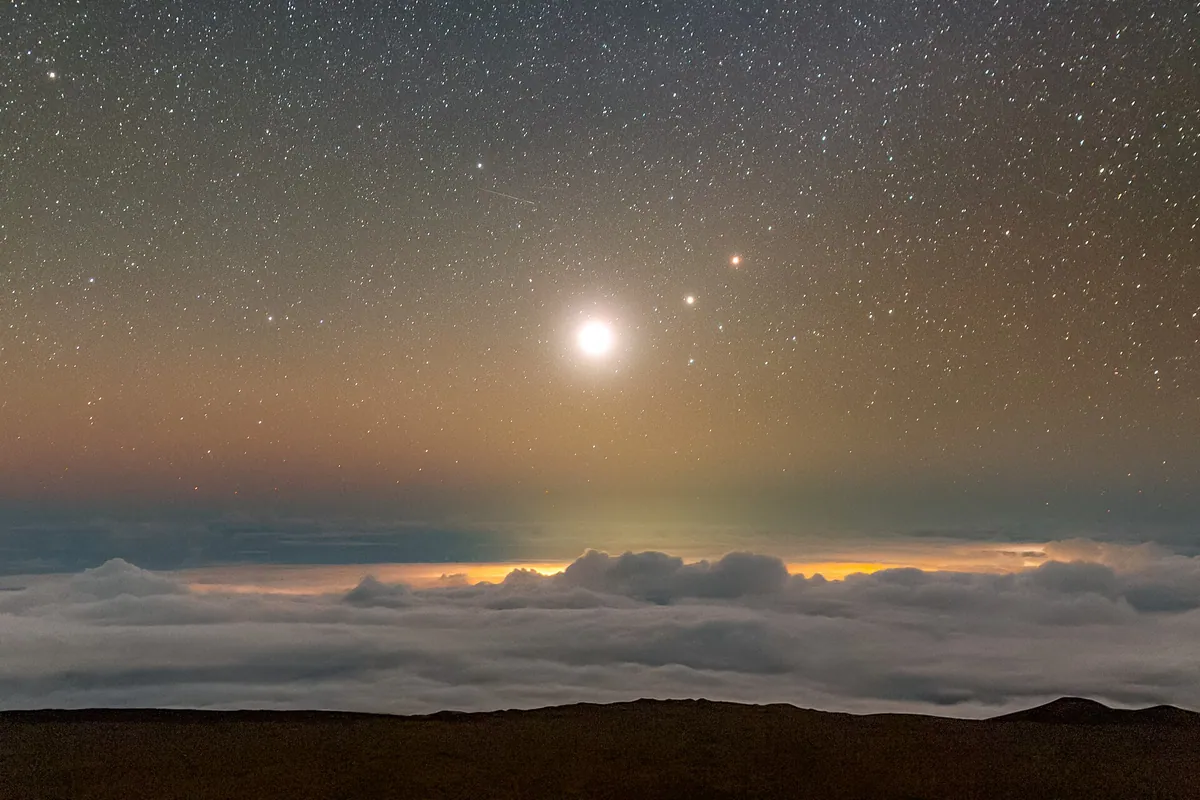
The planet will reach its peak luminosity at 14:00 UTC on November 29, shining at magnitude -4.4. Venus is always the brightest planet, but it is especially radiant around this date. Its magnitude of -4.4 is much brighter than that of any star. According to the National Astronomical Research Institute of Thailand, Venus will be bright enough to be observed with the naked eye from locations across Thailand, provided weather and sky conditions are favorable.
This exceptional brightness is the result of Venus's orbital geometry. The planet passed between Earth and the Sun, an event called inferior conjunction, on October 23-24. Approximately five weeks after that alignment, Venus reaches its greatest brightness in the morning sky. At that time, its disk appears relatively large in the sky because it is still close to Earth, while its crescent phase shows a significant illuminated portion. To the naked eye, Venus will look like an intensely bright point of light. However, observers with telescopes will be able to distinguish its crescent shape, similar to that of the Moon.
For observers in the northern hemisphere, the steep angle of the ecliptic in the morning sky has propelled Venus well above the eastern horizon, making it impossible to miss before sunrise. Venus always outshines all other objects in the sky, except the Sun and the Moon. It will not appear this bright in the evening sky again until April 2028, and in the morning sky until July 2028. During this period, another celestial object visible near Venus will be Spica, the brightest star in the constellation Virgo, known in Thailand as Dao Ruang Khao or the Rice Ear Star. Spica will appear above and to the right of Venus in the sky before dawn, offering a reference point for observers. NARIT said that favorable sky conditions would allow observers to enjoy clear views of Venus and other celestial objects before sunrise.
Venus is so bright that, if you look carefully, you can see it during the day. The greatest brilliancy phenomenon is sometimes called greatest illuminated extent, as it is the optimal combination of the planet's apparent disk size and the fraction of that disk illuminated by the Sun. According to Supharerk, this happens when the planet is at a favorable distance from Earth while its illuminated crescent still appears relatively large. At other points in its orbit, Venus may display a thicker illuminated phase, but its greater distance from Earth makes it appear less bright.
Venus had already reached a peak brightness in the evening sky on September 18, 2026, with a magnitude of -4.8, slightly brighter than the current event. But perhaps not noticeably brighter. The fact is that Venus always shines with great intensity at its greatest brilliancy. Sometimes it is also low in the sky, giving it an eerie appearance. That is the case this month for observers in Earth's Southern Hemisphere.
Venus is the second planet from the Sun, after Mercury, and orbits closer to the Sun than Earth does. As its position changes relative to Earth and the Sun, the illuminated portion visible through a telescope also changes. These phases resemble the waxing and waning phases of the Moon. The Thai institute NARIT encourages people interested in astronomy to observe the phenomenon on the morning of November 27, when Venus will be particularly prominent in the eastern sky.
For all of us around the world, UFO reports are likely to increase in late November and early December 2026. But you will know better. It is not a UFO in the eastern morning twilight. It is Venus, the second planet from the Sun.