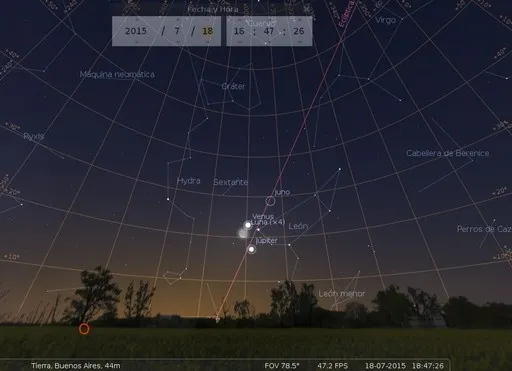
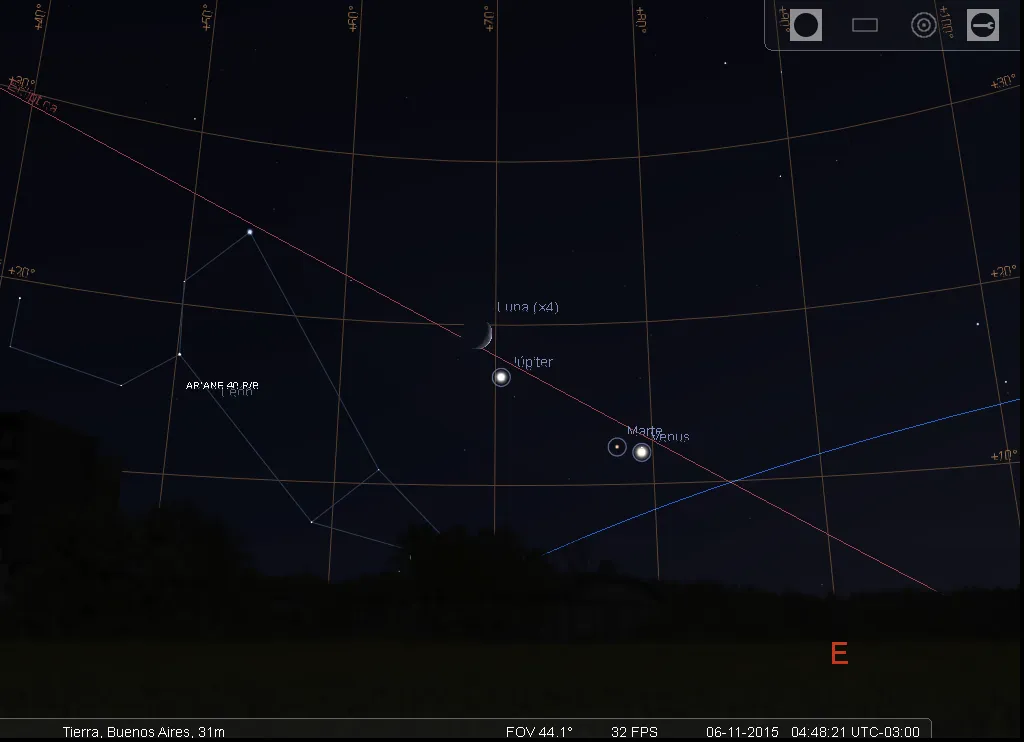
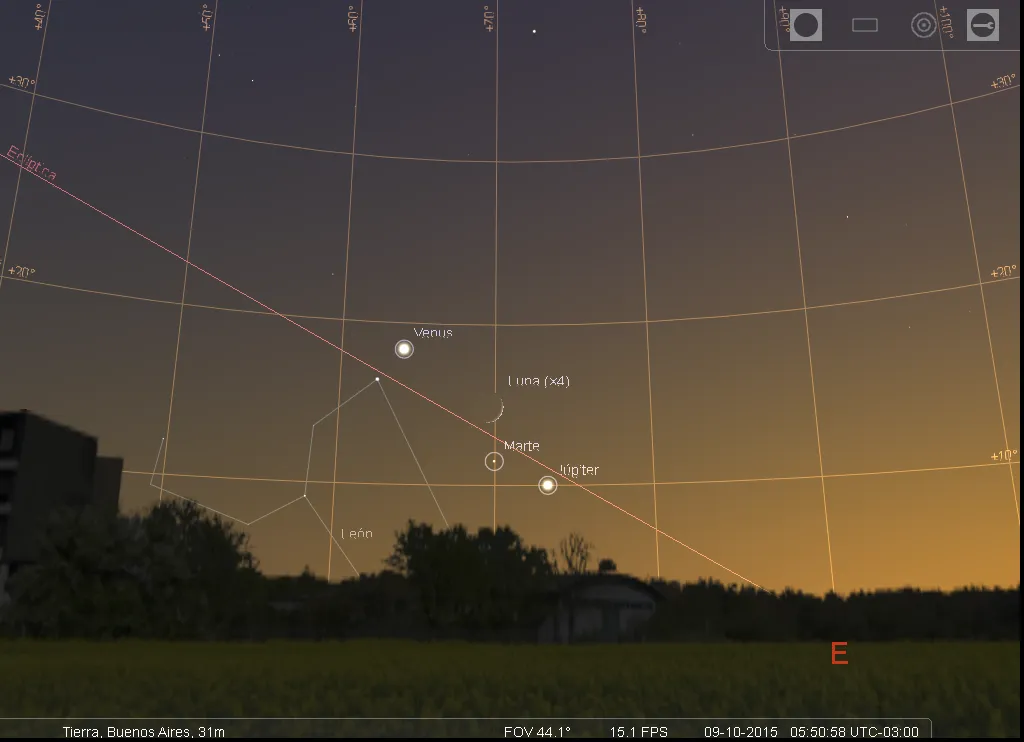
During October-November these planets and the moon will be seen in an apparently close arrangement to each other, near dawn. On October 9, a "megaconjunction" with Regulus, in Leo.
Despite the confusing information usual on sites like Infobae.com [1], these conjunctions have no "special" meaning nor are they related to the birth of any supernatural being.
Furthermore, unlike what the fallacious site "misinforms", the phenomenon will not be so easy to observe, since it will occur near dawn and not "at 2.30 GMT", as the mentioned site stipulates.
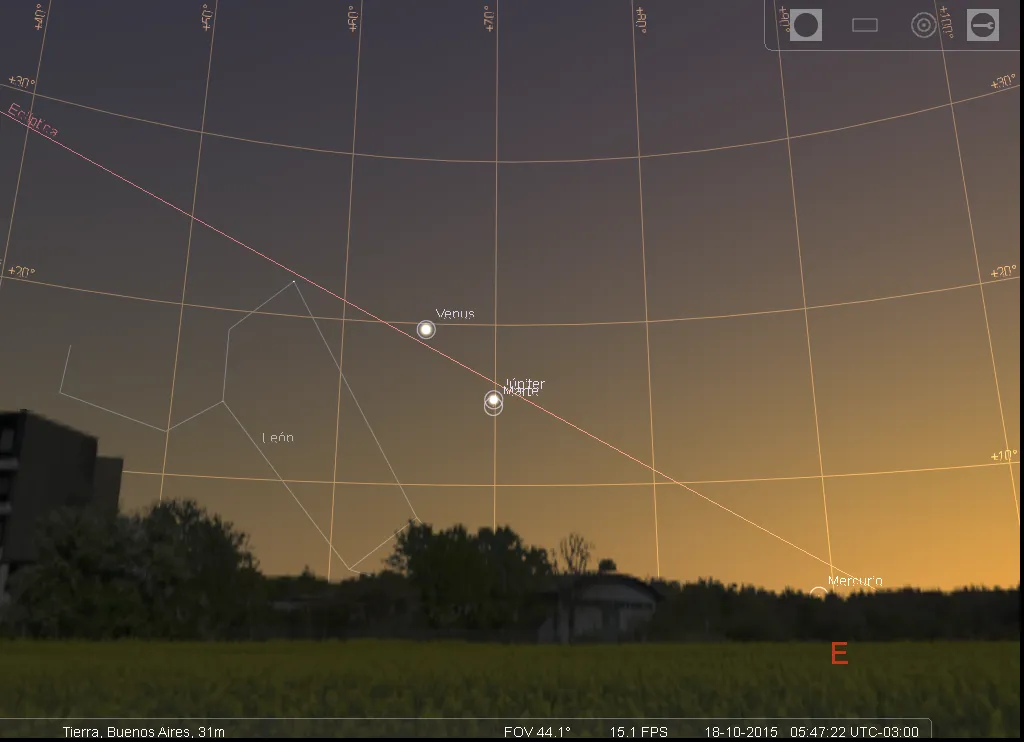
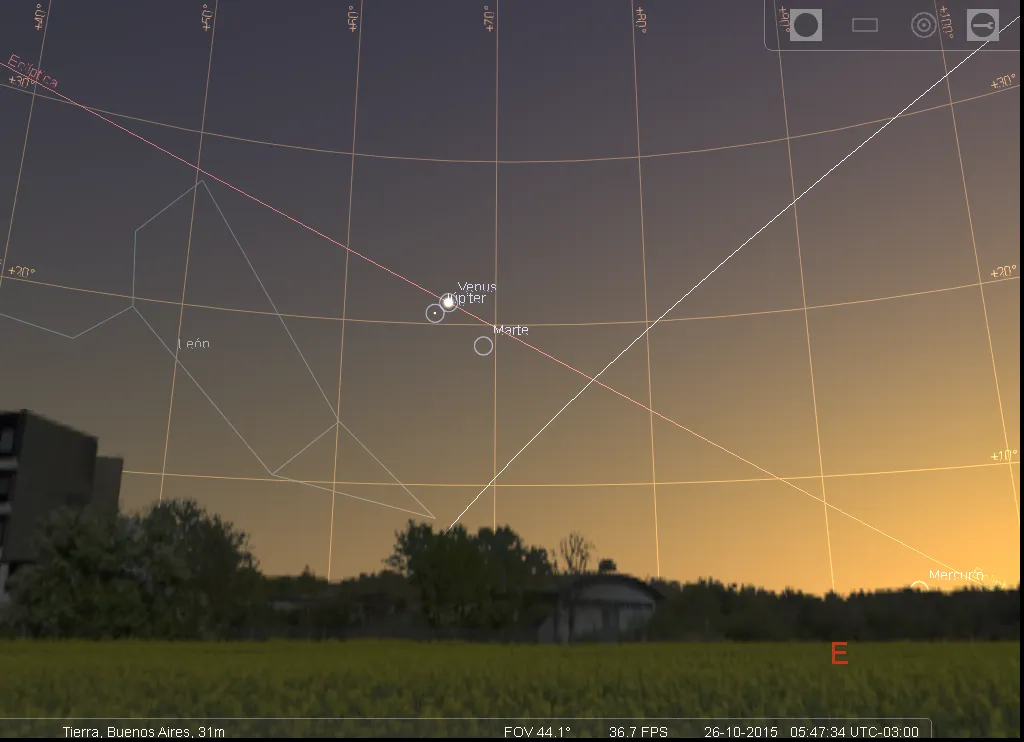
This apparent approach will be observable over the days, although as the month passes, it will be observable earlier, that is, with greater darkness, and one will be able to perceive the apparent motion of the objects in the sky, which will cause the greatest approach and separation of the planets and the moon, among themselves.
A conjunction, in astronomy, occurs when two or more objects, observed from Earth, are at the same celestial longitude. It is most common at new moon (inferior conjunction) and at full moon (superior conjunction). Perhaps it can be better understood with a diagram:
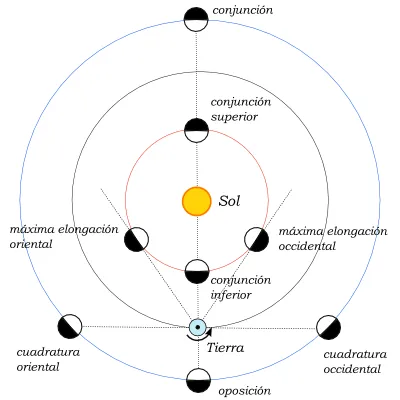
Furthermore, the planets will be in Leo, near the brightest star of that constellation, Regulus. Mercury, closer to the Sun, will follow them a little further "behind".
As the days go by, the planets will move away from Regulus and then after a little "dance", they will move away from each other, in an apparent manner.
If sometimes images are worth more than a thousand words, let's then show what will be observable. For that I used Stellarium, located in Buenos Aires:
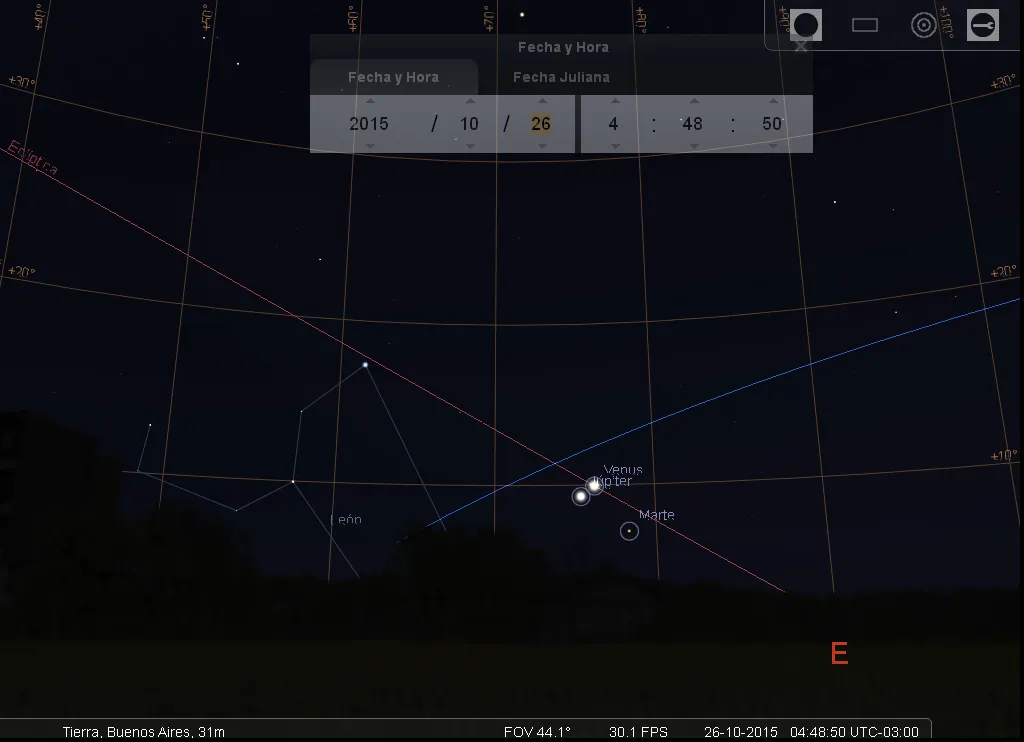
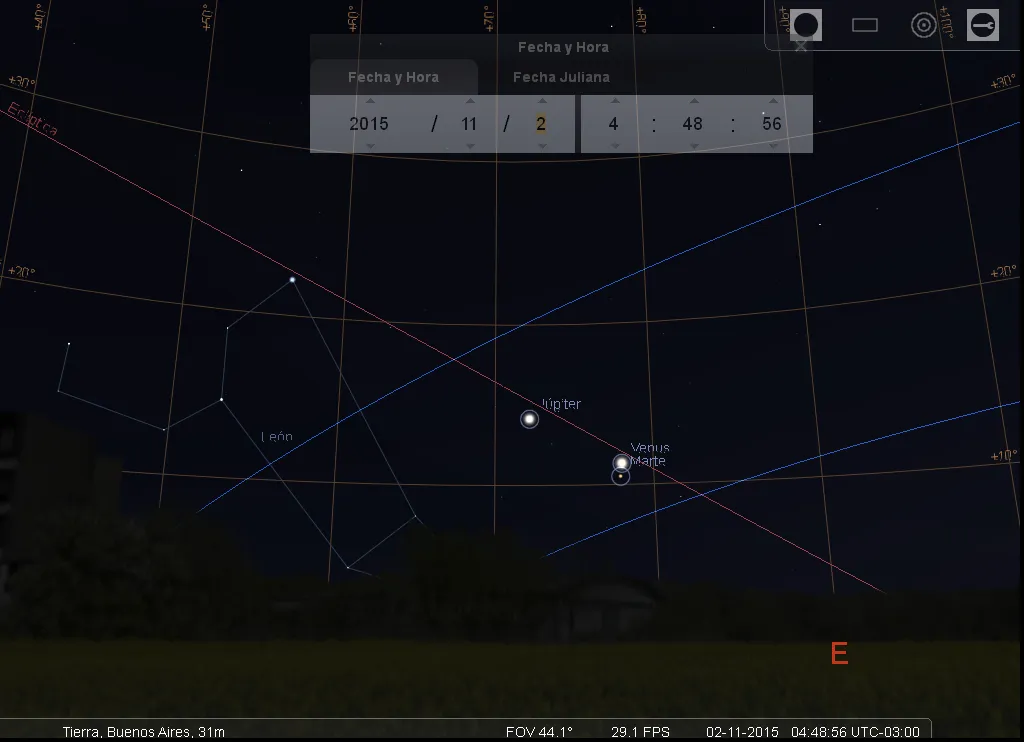
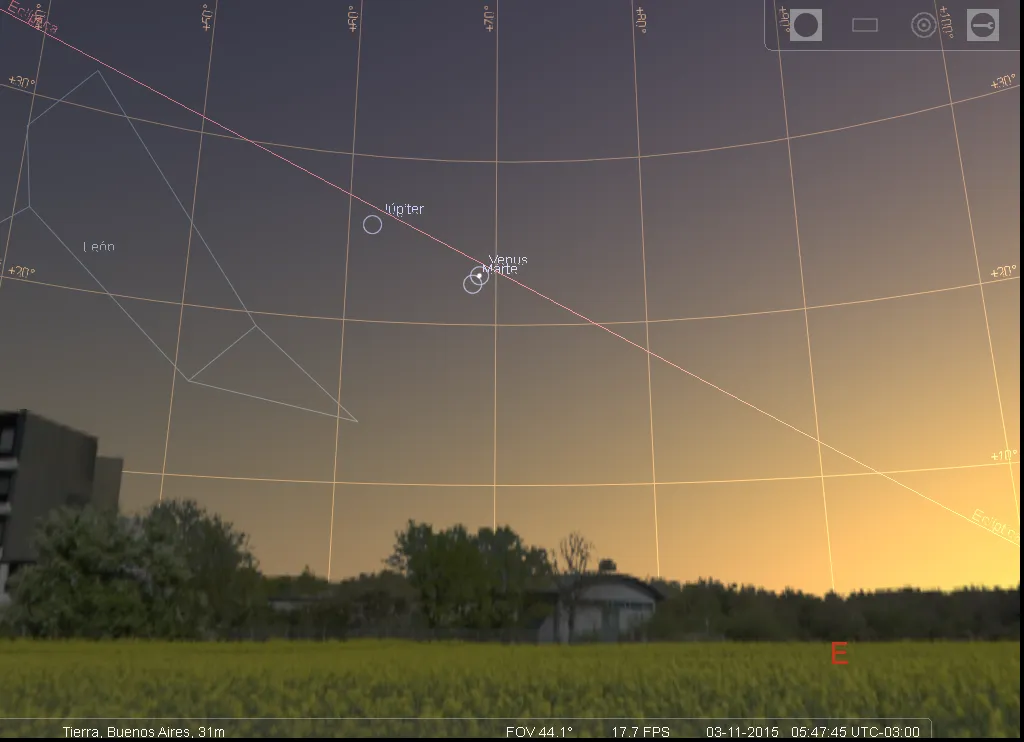
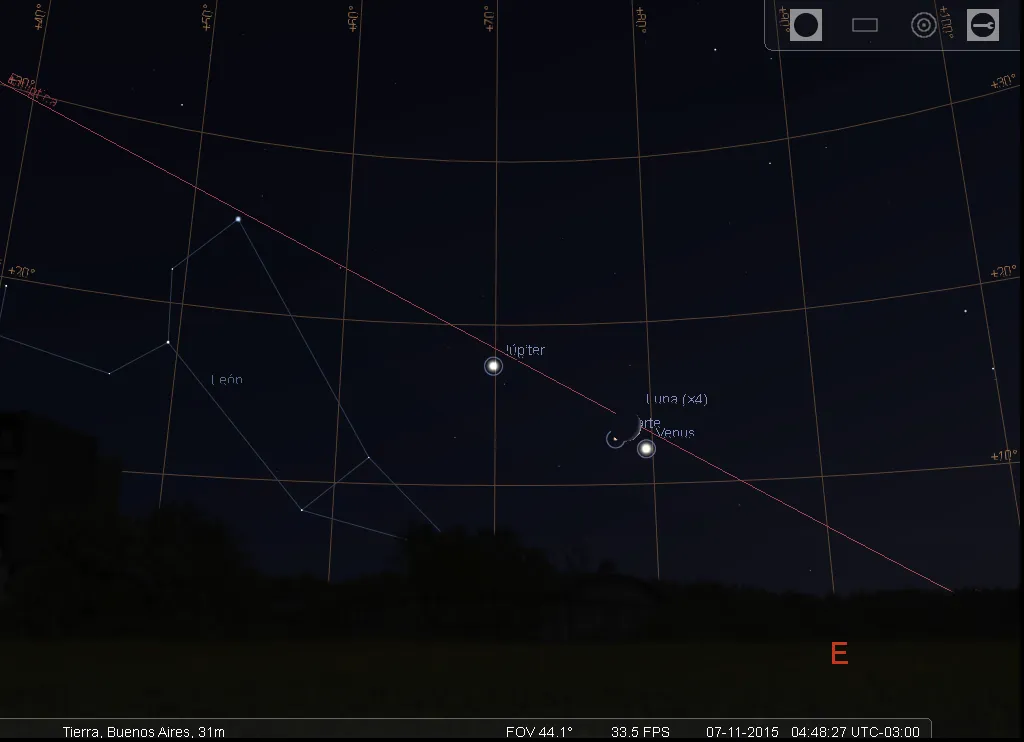
Sources and related links
- [1] Infobae.com: There will be a planetary conjunction similar to the day Jesus was born
http://www.infobae.com/2015/10/08/1760982-habra-una-conjuncion-planetaria-similar-al-dia-que-nacio-jesus - Surastronómico: The Moon, Venus, Mars and Jupiter
http://www.surastronomico.com/evento-426-la-luna-venus-marte-y-jupiter.html
About the images
All images are screenshots from Stellarium.
"Aspects of the planets". Published under the CC BY 2.5 license via Wikimedia Commons - https://es.wikipedia.org/wiki/Configuraci%C3%B3n_de_la_%C3%B3rbita_de_los_planetas