The Sun is minimally active at present, but this quiet state will not last long. In the coming years, the number of eruptions known as coronal mass ejections will increase until reaching a maximum in 2011 or 2012.
Those eruptions can impact our planet, affecting satellite communications, communications and power stations. Some even predict that the next solar cycle will be the most intense in 50 years. Scientists are trying to understand the mechanism behind solar flares in the hope of finally being able to predict them in a "space weather forecast".
The latest advances in understanding our favorite star come from the Hinode spacecraft and its X-ray telescope (XRT), an instrument designed and built by astronomers at the Smithsonian Astrophysical Observatory.
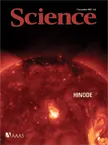
The new research is presented as the cover article in the December 7 issue of the journal Science.
Hinode observations indicate that X-ray jets contribute to the high-speed solar wind - a stream of plasma flowing from the Sun in all directions. Furthermore, the new research provides the first direct observation that magnetic waves, called Alfvén waves, play a critical role in the solar wind.
In the Sun's atmosphere, Alfvén waves are created when convection motions and sound waves push magnetic fields or when dynamic processes create currents that allow magnetic fields to change shape or reconnect.
"Until now, Alfvén waves have been impossible to observe due to the limited resolution of available instruments," says Alexei Pevtsov of the Hinode program.
Using the XRT, a team led by Dr. Jonathan Cirtain, a solar physicist at the Marshall Space Flight Center, observed a record number of X-ray jets. Previous research detected only a few jets per day. With Hinode, the team observed an average of 240 jets per day. They concluded that magnetic reconnection occurs frequently, forming Alfvén waves and plasma in X-ray jets.
"These observations show a clear relationship between magnetic reconnection and Alfvén waves forming in X-ray jets," says Cirtain.
Sources and related links
- Note at CfA
- Science magazine
- Hinode web site
- Hinode at NASA
- Here comes the sun, The Beatles on YouTube
About the images
Cover of Science magazine.