Cosmologists are challenging the world to solve a fascinating statistical problem, to bring us closer to understanding the nature of the dark energy and dark matter that make up up to 95% of the Universe. The GREAT08 PASCAL Challenge (named for GRavitational lEnsing Accuracy Testing 2008) is set by 38 scientists from 19 international institutions with the goal of tempting other researchers to solve it by April 30, 2009.

"The GREAT08 PASCAL Challenge will help us answer the most important question in cosmology today: What is the dark energy that seems to make up most of the universe? We realize that solving our image processing problem does not require knowledge of astronomy, so we are trying to attract new proposals from other disciplines," says Dr. Sarah Bridle from the Statistical Computing Center at University College London.
What is that statistical problem about?
It is an image analysis problem. Let's explain why.
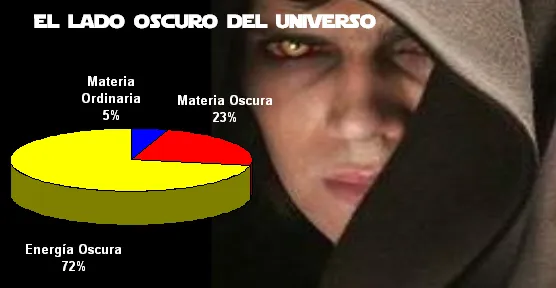
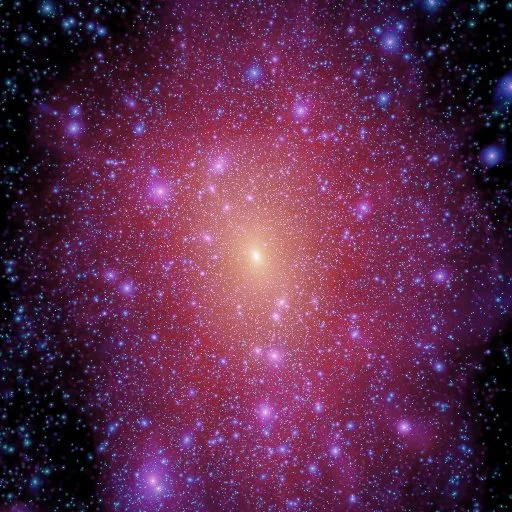
20% of our universe seems to be made of dark matter, an unknown substance that is fundamentally different from the material that forms our known world. The existence of this matter is inferred by its gravitational effects, so it is assumed to be there, but if it were "normal" material, that is, composed of atoms with nuclei of protons and neutrons and a cloud of orbiting electrons, it should behave like the rest of the known matter, and that is not the case. But that's not all. 75% of the universe seems to be made up of a completely mysterious form of energy called dark energy. Many explanations have been attempted for it, including that the current gravitational theories are wrong, but there is nothing certain about it.
The method with the greatest potential for discovering the nature of dark energy appeals to gravitational lenses, in which the shapes of distant galaxies are distorted by the intervening gravity of dark matter. Just as bathroom lights appear distorted when looking through the window glass and it is possible to use those distortions to learn about the variation in the thickness of the glass, in the same way, we can learn about the distribution of dark matter by looking at the shapes of distant galaxies, according to Bridle.
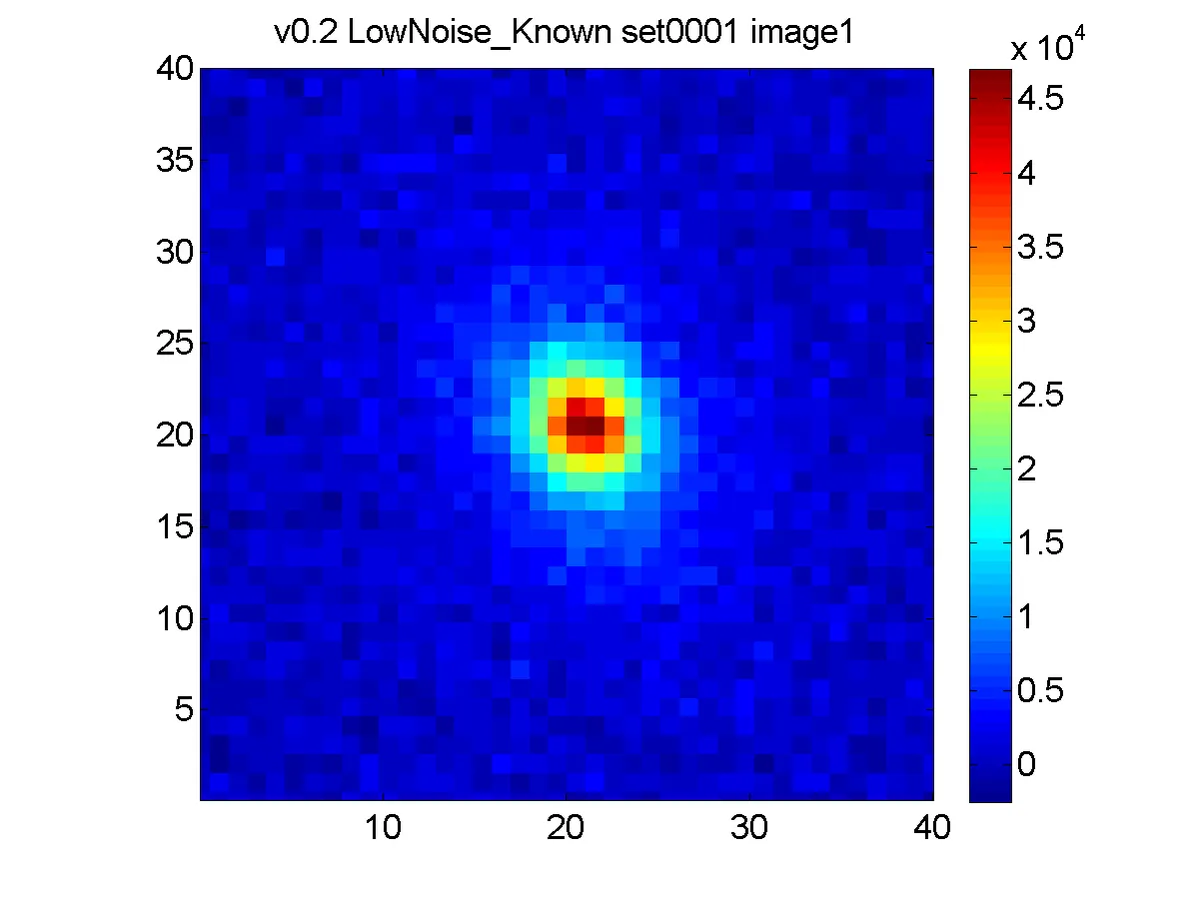
The images of galaxies then appear distorted when there is an object between Earth and the distant galaxies that acts as a lens. To learn about dark matter, then, it is necessary to analyze those distorted images. That involves analysis for which specific knowledge in astrophysics is not necessary, but rather in inferring statistics and solving problems.
Cosmologists hope the coming years will be exciting in interpreting results from new experiments designed to discover the nature of dark energy, including the Dark Energy Survey in Chile and Pan-STARRS in Hawaii. The methods developed to solve the GREAT08 Challenge will help in the analysis of that new data.
The GREAT08 Challenge contains 200 GB of simulated images, with 30 million galaxy images.
Sources and related links
About the images
GREAT08 PASCAL logo and sample image.